How Short a Bull Terrier’s Training Session Has to Be
One of the biggest frustrations Bull Terrier owners face when it comes to training is feeling like their clever, boisterous companion just isn't listening. You might start a training session with the best intentions, ready to practice "sit" and "stay," only to find your Bull Terrier has decided that an invisible speck on the floor is suddenly the most fascinating thing in the universe, or they've simply wandered off to "rearrange" a throw pillow. This guide is all about understanding why your Bull Terrier seems to have such a short attention span during formal training and, more importantly, how to structure sessions so you actually achieve real, lasting results.
Understanding the Bull Terrier Attention Span
The Bull Terrier is a unique breed, full of character, intelligence, and an undeniable zest for life. But that zest often comes with a delightfully short fuse when it comes to repetitive tasks. Understanding this inherent personality trait is the first step toward successful and enjoyable training.
The "Three-Year-Old in a Dog Suit" Mentality
Bull Terriers are famously intelligent, but they also possess a wonderful, sometimes exasperating, mischievous streak and are incredibly easily bored. They're often described as having the mental capacity and temperament of a perpetual three-year-old in a dog suit. This isn't meant as an insult or to imply a lack of smarts; rather, it’s a testament to their playful, sometimes stubborn, and always-curious nature. They approach life with a delightful, often hilarious, exuberance that means they're constantly looking for the next interesting thing. This inherent desire for novelty means sustained, intense focus on a repetitive task isn't usually their strong suit.
Unlike some working breeds who thrive on prolonged, intense training drills and can repeat a command flawlessly for many minutes, a Bull Terrier's mind is more akin to a brilliant but easily distracted toddler. They might grasp a concept in a flash – often surprising you with how quickly they "get it" – but asking them to repeat it a dozen times in a row, or to maintain a perfect heel for an extended period, is likely to result in them deciding that their shoelaces (or a particularly interesting piece of lint on the floor) are far more captivating than your voice. Their intelligence is absolutely there, but it's often paired with a strong independent streak and a powerful desire for novelty and fun. You'll find that Why a Bull Terrier Trains When It Sees the Point, and if the point isn't immediate and exciting, their mind will simply move on.
This distinctive personality doesn't mean Bull Terriers can't learn complex tasks; quite the opposite. They are very smart dogs and capable of impressive feats when motivated. However, their learning style benefits immensely from short, sharp bursts of instruction, followed by a break or a change of activity. Think of it like teaching a child – short, engaging lessons are far more effective and less likely to cause a meltdown than trying to force them through an hour of rote memorization. They need to see the value and the fun, and that value needs to be delivered quickly and excitingly to keep them engaged.
The Role of Novelty and Engagement
Bull Terriers crave novelty above almost all else. If a training exercise becomes too predictable, too routine, or too repetitive, their intelligent minds will quickly start wandering, sometimes quite dramatically. You might find your usually attentive Bull Terrier suddenly deciding to investigate a mysterious shadow in the corner, or perhaps attempting to "help" you by bringing you a random object from another room, rather than continuing to focus on "sit" for the tenth time. This isn't defiance; it's often a clear signal of boredom and a seeking of more stimulating or entertaining interaction. Their brain simply switches channels, often to something much more interesting to them.
To combat this natural inclination towards boredom, effective training with a Bull Terrier isn't just about what you teach, but even more critically, how you teach it. Keeping things fresh, exciting, and varied is paramount. You can achieve this by varying your training location (indoors, then in the yard, then a quiet park), changing up the types of rewards you use, and introducing new elements to familiar commands. Short sessions naturally support this approach, as you can introduce a concept, get a few good, successful repetitions, and then move on before boredom has a chance to set in.
This breed thrives on positive reinforcement and play-based learning. They love to interact with their people, and if training feels like a fun, interactive game where they get to earn exciting rewards – whether that's a tasty treat, a favorite squeaky toy, or a good ol' fashioned belly rub – they are far more likely to engage wholeheartedly. Long, drawn-out sessions, especially those that involve stern corrections or a heavy hand, can quickly extinguish their joyful spirit and make them switch off entirely. You don't want to make training a chore they associate with negativity, or you might find that How Long a Bull Terrier Holds a Grudge. Keep it light, keep it fun, and keep it short!
The Sweet Spot: Defining "Short" for a Bull Terrier
So, if long, drawn-out sessions are out, what exactly does "short" mean when it comes to training a Bull Terrier? It's less about a stopwatch and more about observation, but there are some general guidelines that can help.
The Ideal Timeframe
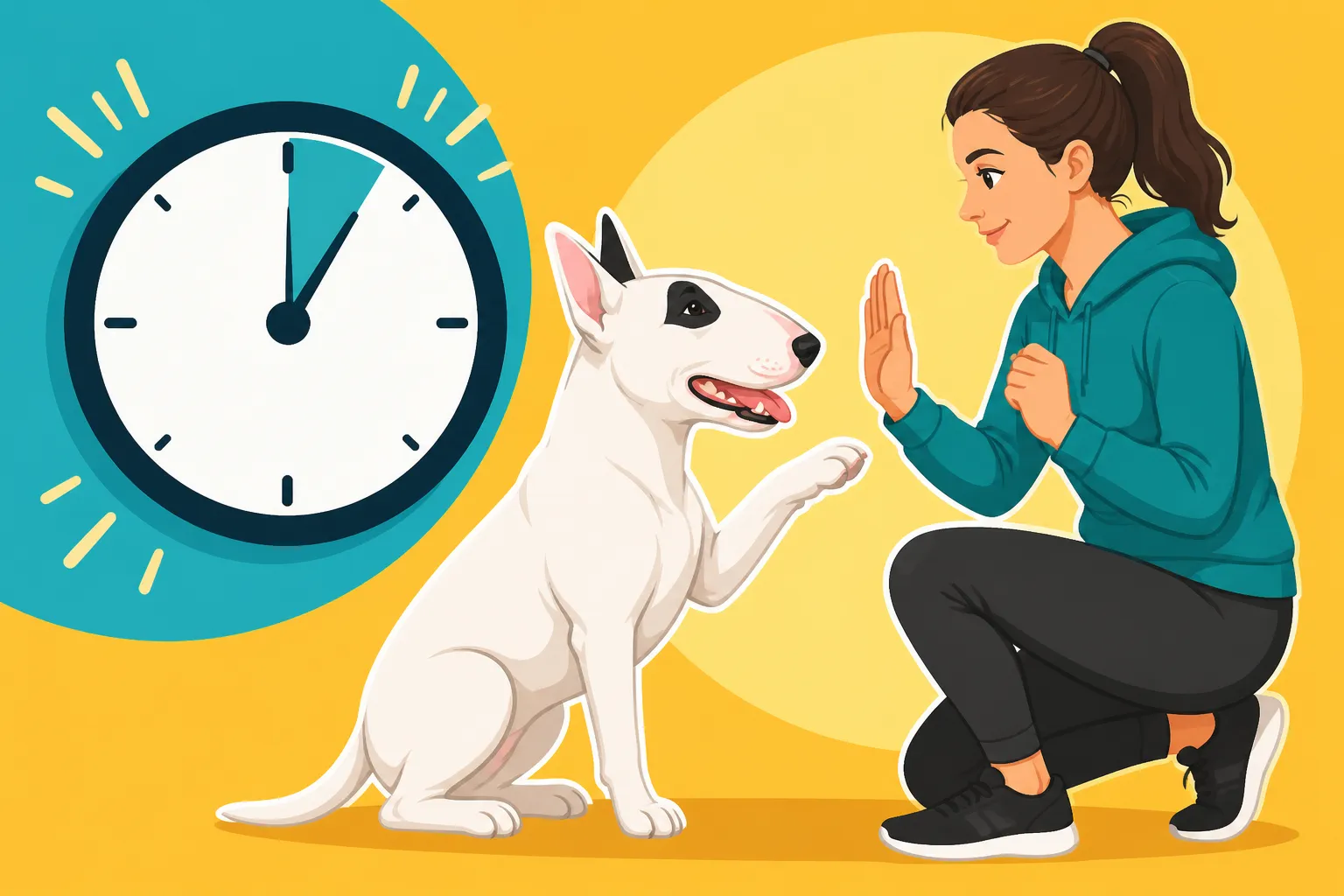
When we talk about "short" training sessions for a Bull Terrier, we're not talking about a single minute or two, but certainly not twenty or thirty minutes for a single focused exercise, especially not with a new skill. For a young Bull Terrier puppy, two to three minutes per session is often plenty, perhaps even shorter if they're particularly wiggly, easily distracted, or just having an "off" day. As they mature and their focus muscles develop, an individual training "burst" might extend to five to seven minutes. You'll rarely want to push it much longer than that if you want to maintain their peak engagement and enthusiasm.
The absolute key isn't adhering to a rigid timer, but rather keenly observing your dog for signs of engagement and disengagement. A good rule of thumb is to always end the session before your Bull Terrier loses interest, ideally on a high note with a successful execution of a command. This approach leaves them wanting more, builds a strong positive association with training, and makes them more eager and enthusiastic for the next session. It’s far better to have several very short, highly successful sessions spread throughout the day than one long, frustrating one where you're both left feeling defeated.
Think of these as "mini-lessons" rather than full, hour-long classes. You can easily have several mini-lessons spread across your day – perhaps one quick burst before breakfast, another after a potty break in the yard, a snappy two-minute session before going for a walk, and one more in the evening before winding down. Each one can address a specific skill, reinforce a few known commands, or just be a quick mental check-in. This distributed practice, often called "spaced repetition," is incredibly effective for Bull Terriers, keeping them mentally stimulated without ever overwhelming their attention span.
Quality Over Quantity
For a Bull Terrier, the quality of the engagement in a training session far, far outweighs the sheer quantity of time spent. Ten minutes of focused, enthusiastic interaction where your dog is actively thinking, trying, and succeeding is infinitely more valuable and productive than thirty minutes of half-hearted attempts, confused cues, and growing frustration on both sides. It’s about making every single second count and ensuring that those seconds are filled with positive, successful learning experiences.
This emphasis on quality means being prepared and intentional. Always have your high-value treats ready, choose an initially distraction-free environment (your quiet living room is perfect for starting), and have a clear, concise idea of what specific skill or command you want to work on. If you're fumbling for treats, getting distracted by your phone, or unsure of your next cue, those precious minutes of your Bull Terrier's peak attention will quickly dissipate. High-value rewards are also crucial; that bland, everyday kibble might not cut it when competing with the powerful urge to investigate an interesting smell or chew your favorite shoe. You need to know Which Reward Outranks a Bull Terrier's Own Idea for maximum impact.
A Bull Terrier will quickly tell you if the training isn't worth their while or if they're simply not "feeling it" at that moment. They’ll offer behaviors that aren't quite what you asked for, or they might simply wander off, giving you that classic Bull Terrier "I have better things to do, human" look. Prioritize high-energy, fun interactions. If you're bored or going through the motions, they're definitely bored and will check out. If you can make it a stimulating, rewarding game, they're all in, at least for a few glorious minutes. Your enthusiasm is contagious!
Signs Your Bull Terrier is Done with Training
Learning to read your Bull Terrier's body language and cues is paramount for successful and positive training. They communicate constantly, and understanding when they're mentally "checking out" allows you to end sessions on a high note and prevent frustration.
Subtle Cues of Disengagement
Bull Terriers are wonderfully expressive dogs, but sometimes their initial signs of disengagement can be surprisingly subtle. You might notice a slight shift in their gaze; instead of holding focused eye contact with you, their eyes might start scanning the room, looking at the door, or off into the distance. Their overall body language might become less "forward" and enthusiastic, perhaps shifting their weight, taking a small step back, or just seeming a bit less coiled and ready. A slower response to a known command is another early indicator; instead of a snappy "sit," you might get a languid slump or a delayed reaction.
Another common and often overlooked sign is sniffing the ground intently or turning their head away from you, sometimes accompanied by a small yawn or a lip lick. These are classic canine calming signals, often indicating stress, mild discomfort, or simply that they're trying to disengage from the current activity. They aren't trying to be rude or defiant; they're politely telling you their brain has hit its capacity for this particular task for the moment. It's their way of saying, "I need a mental break, please."
It's absolutely vital to learn to recognize these early, subtle signs. Pushing past them often leads to less productive training, increases frustration for both you and your dog, and can even sour your dog's overall attitude towards learning. Ending on a good note when you see these subtle cues, even if it feels like you've only just started, is far more beneficial than waiting for full-blown boredom, defiance, or frustration to set in. You want them to think, "Oh, that was fun, I can't wait for next time!"
Overt Displays of Boredom or Frustration
If you happen to miss those subtle cues – and let's face it, we all do sometimes – a Bull Terrier will often escalate their communication to clearer, more overt signals. Overt signs of being "done" with training might include simply walking away from the training area, lying down with a sigh, or starting to chew on something nearby that isn't their designated chew toy (your rug, a shoe, a chair leg – anything will do!). They might also begin to offer a flurry of incorrect behaviors in an attempt to guess what you want, or simply to get you to stop asking for the specific task at hand. Their thought process might be, "If I just offer everything I know, maybe one will be right and this will end."
For some Bull Terriers, especially those with higher energy levels or a lower frustration threshold, boredom or confusion can manifest as bouncing, playful mouthing, or even attempting to initiate a boisterous game as a way to change the activity. They might start to body slam you (Why a Bull Terrier Body Slams) or playfully nip at your hands. These aren't necessarily malicious behaviors, but they are incredibly clear signals that the focused mental energy is gone, and their desire for interactive play has taken over from structured learning. They're telling you they're bored and need something else to do.
Ignoring these clear signals can be detrimental. It can lead to a Bull Terrier developing a negative association with training, or even becoming genuinely "stubborn" or resistant in the face of repeated, unrewarding requests. It's important to remember that they aren't being difficult on purpose; they're simply communicating that their mental battery for that particular task is depleted. Respecting this communication helps build trust, strengthens your bond, and maintains their inherent enthusiasm for future training sessions.
Maximizing Short Training Sessions
Since short sessions are the way to go with a Bull Terrier, let's talk about how to make every single one of those precious minutes count. It's all about strategic planning and a good dose of fun!
High-Value Rewards and Enthusiasm
To make those short bursts of training truly impactful and memorable, you absolutely, unequivocally need high-value rewards. For a Bull Terrier, this often means soft, smelly, incredibly tasty treats that they don't get at any other time. Think small pieces of cooked chicken, cubes of cheese, tiny bits of hot dog, or a favorite commercially available soft training treat. Dry kibble rarely cuts it when you're asking for their full attention in a focused training moment. Varying the treats you use can also keep things exciting and prevent them from becoming predictable. Many owners find a wide selection of suitable treats through online retailers like Amazon.
Beyond tangible food rewards, your enthusiasm is an incredibly powerful motivator and reward in itself. Bull Terriers feed off their people's energy. A cheerful, upbeat tone of voice, exaggerated praise ("YES! GOOD PUPPY!"), and genuine excitement from you can be just as motivating as a treat, if not more so for some individuals. The best approach is to combine both: a tasty reward paired with effusive, heartfelt praise creates a super strong positive association with the training exercise and with you. Remember, they want to interact with you, and if you make it fun and rewarding, they'll want to participate.
Some Bull Terriers are also incredibly motivated by toys. A quick, energetic game of tug or a retrieve of their favorite squeaky toy can be a fantastic reward at the end of a successful mini-session. The key is to find what your individual Bull Terrier values most – is it food, toys, praise, or a combination? – and then leverage it strategically. Use their ultimate favorites for the most challenging tasks.
Focus on One or Two Skills
Trying to tackle too many new commands or concepts in one short session is a recipe for mental overload, confusion, and frustration for a Bull Terrier. Their brains work best when processing one or two things at a time. Instead, pick just one or two specific skills to work on during each mini-session. For example, one session might focus solely on perfecting "sit-stay" in a slightly distracting environment, while another might introduce the concept of "touch" (targeting your hand with their nose). Don't try to cram everything into one go.
This focused approach allows your Bull Terrier to grasp and consolidate new information without being overwhelmed or confused by multiple demands. Once they show a good understanding and consistent performance of a new skill, you can then weave in one or two previously learned commands as warm-ups or cool-downs. This helps reinforce their knowledge, builds their confidence, and keeps them engaged. For instance, you could start with a quick "sit" and "down" that they know perfectly, then move to three successful repetitions of a new trick, and end with a rock-solid "come" before a play break.
Remember, the goal is successful repetitions, not endless repetitions. If you're introducing something new and they get it right two or three times in a row, celebrate that success enthusiastically and then end the session on that high note. You can always pick it up again later in the day or tomorrow. This "little and often" approach, focusing on specific targets, is far more effective for the Bull Terrier's learning style and prevents them from getting bored or switching off.
Vary Location and Distractions Gradually
Initially, all training sessions, especially those introducing new skills, should take place in a low-distraction environment. Your quiet living room, a secluded hallway, or a fenced backyard with minimal interesting smells are ideal starting points. Once your Bull Terrier is reliably performing a command in this calm, predictable setting, then – and only then – should you gradually introduce mild distractions and new locations. This process is called generalization, and it's absolutely crucial for building real-world reliability and ensuring your Bull Terrier responds to cues no matter where you are.
For a Bull Terrier, "gradually" is the operative word. Don't jump from your quiet living room to a bustling dog park in one leap. That's setting them up to fail. Maybe move to a different, slightly busier room in your house, then your yard with a few sounds, then a very quiet street corner, then a slightly busier park at a quiet time. Each step up in distraction level should be accompanied by shorter sessions and even higher value rewards. The goal is to slowly build their ability to focus on you despite the exciting, stimulating world around them. This deliberate process teaches them to Teaching a Bull Terrier to Come Back Mid Zoomie even when the squirrels are calling.
If your Bull Terrier completely loses focus in a new environment, or seems overwhelmed, it means you've introduced too much distraction too quickly. There's no shame in it; simply go back to a slightly less distracting place where they can easily succeed, reinforce their good behavior heavily, and then try again with smaller, more manageable steps next time. This iterative process of building success, step by careful step, is key to building a truly reliable and well-trained Bull Terrier, one short, successful session at a time.
Incorporating Training into Daily Life
While formal, short training sessions are valuable, true mastery and a strong bond come from weaving training seamlessly into your everyday life. For a Bull Terrier, this constant, gentle reinforcement is far more powerful than sporadic, intense drills.
Everyday Opportunities for Learning
Training with a Bull Terrier doesn't have to be confined to formal "sessions" where you block out time and pull out your training bag. In fact, incorporating short bursts of training into your daily routine is one of the most effective ways to reinforce good habits, build strong manners, and keep their intelligent minds engaged. Every interaction you have with your Bull Terrier is a training opportunity, whether you realize it or not.
Think about the countless everyday moments where you can subtly integrate training: asking for a calm "sit" before you put down their food bowl, having them "wait" politely while you open the door to go outside, asking for a "down" before they get their favorite chew toy, or a "stay" while you retrieve the mail. These aren't long, drawn-out drills, but quick, meaningful repetitions that build consistent, polite behavior without feeling like work. They quickly learn that polite manners and listening to your cues lead directly to good things and the things they want, which keeps their minds ticking over and reinforces the value of paying attention to you.
Even your daily walks can be transformed into invaluable training opportunities. Instead of just letting them drag you along on the leash, practice a few seconds of loose-leash walking, reward heavily with a treat and praise, then allow them to sniff and explore for a moment before asking for focus again. This constant, gentle, and positive reinforcement, spread throughout the entire day, solidifies commands and good habits far more effectively than a single, lengthy, and potentially boring session. It’s also a key step in Teaching a Bull Terrier to Walk Without Pulling.
Play as Training
For a Bull Terrier, play is often the absolute best form of training. Their playful, energetic, and sometimes goofy nature means they learn exceptionally well when activities are framed as fun and engaging games rather than strict commands. Instead of just drilling a rigid "fetch" command, turn it into a game where they have to "sit" and "wait" patiently before you throw the ball, or learn to reliably "drop it" and "give" to get another throw or a treat. This makes the learning process enjoyable and taps into their natural instincts.
Games like hide-and-seek with treats or a favorite toy, teaching them to "find" specific items (like their leash or a specific toy), or even a structured game of tug where they learn to "take it" on cue and, crucially, "leave it" when asked, are all incredibly powerful training tools. These activities tap into their natural drives, intelligence, and desire for interaction, making learning feel like an enjoyable pastime rather than a chore or something they're forced to do.
Many positive reinforcement training programs, such as those offered by BAXTER & Bella, emphasize integrating training seamlessly into your lifestyle, using play and positive reinforcement methods that truly resonate with your dog. This approach aligns perfectly with the Bull Terrier's personality, transforming everyday interactions into valuable learning experiences that strengthen your bond and their understanding. Plus, it's a fantastic way to develop a positive relationship, much like How a Bull Terrier Bonds to a Child.
The Power of Short Breaks and Mental Stimulation
Just as important as the short, focused training sessions themselves are the short breaks and opportunities for independent mental stimulation in between. Bull Terriers need time to process new information, to relax, and to engage their minds in other appropriate ways. This could be a challenging puzzle toy, a structured chew session with a long-lasting treat, or even just a quiet nap in their crate after some mental effort.
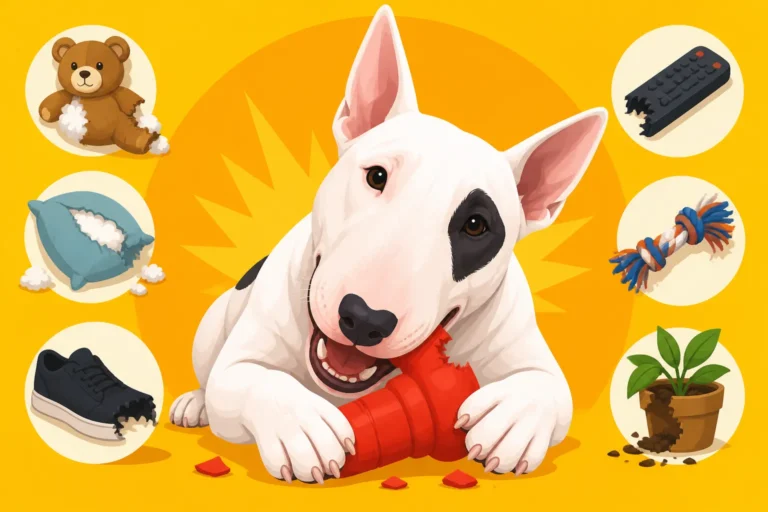
Mental stimulation is absolutely critical for preventing boredom-driven destructive behaviors, which Bull Terriers are famous for. If their intelligent, active minds aren't given appropriate outlets, they will find their own entertainment, and it's usually not something you'll appreciate (like chewing your furniture or digging craters in your yard). Providing appropriate puzzle toys or a long-lasting chew stick can be a fantastic way to keep them occupied and mentally satisfied after a short training burst, effectively reducing What a Bull Terrier Does When It Is Bored.
Remember, a tired Bull Terrier isn't just physically tired; they need to be mentally tired too. A balanced routine that includes sufficient physical exercise, short, engaging training sessions, and opportunities for independent mental work (like working on a KONG or sniffing enrichment toy) will create a happy, well-adjusted Bull Terrier who is much more receptive to learning when you do ask for their focus. It's all about balance and understanding their unique needs.
Comparing Effective vs. Ineffective Bull Terrier Training
To give you a clearer picture, here's a quick comparison of what works best for a Bull Terrier versus what often leads to frustration and disengagement:
| Aspect | Effective Bull Terrier Training | Ineffective Bull Terrier Training |
|---|---|---|
| Session Length | 2-7 minutes per focused burst, several times a day | 15-30+ minutes per single, drawn-out session |
| Rewards | High-value (cooked chicken, cheese, favorite toy), enthusiastic praise | Low-value (dry kibble only), bland verbal praise, no play |
| Focus | 1-2 specific skills per mini-session | Too many new commands, jumping between multiple skills |
| Environment | Start low-distraction, gradually increase distractions | Immediate high-distraction environments (e.g., dog park) |
| Engagement Cues | End before boredom/frustration sets in, always on a high note | Pushing past yawning, sniffing, wandering, or outright refusal |
| Frequency | Short, frequent sessions distributed throughout the day | Long, infrequent sessions that feel like a chore |
| Approach | Fun, game-based, positive reinforcement, patient, varied | Repetitive drills, harsh corrections, forced compliance, predictable |
Disclaimer
This article is for general informational purposes only and does not constitute professional advice. Laws, prices and regulations vary by location and change over time. Consult a qualified professional for guidance on your specific situation.