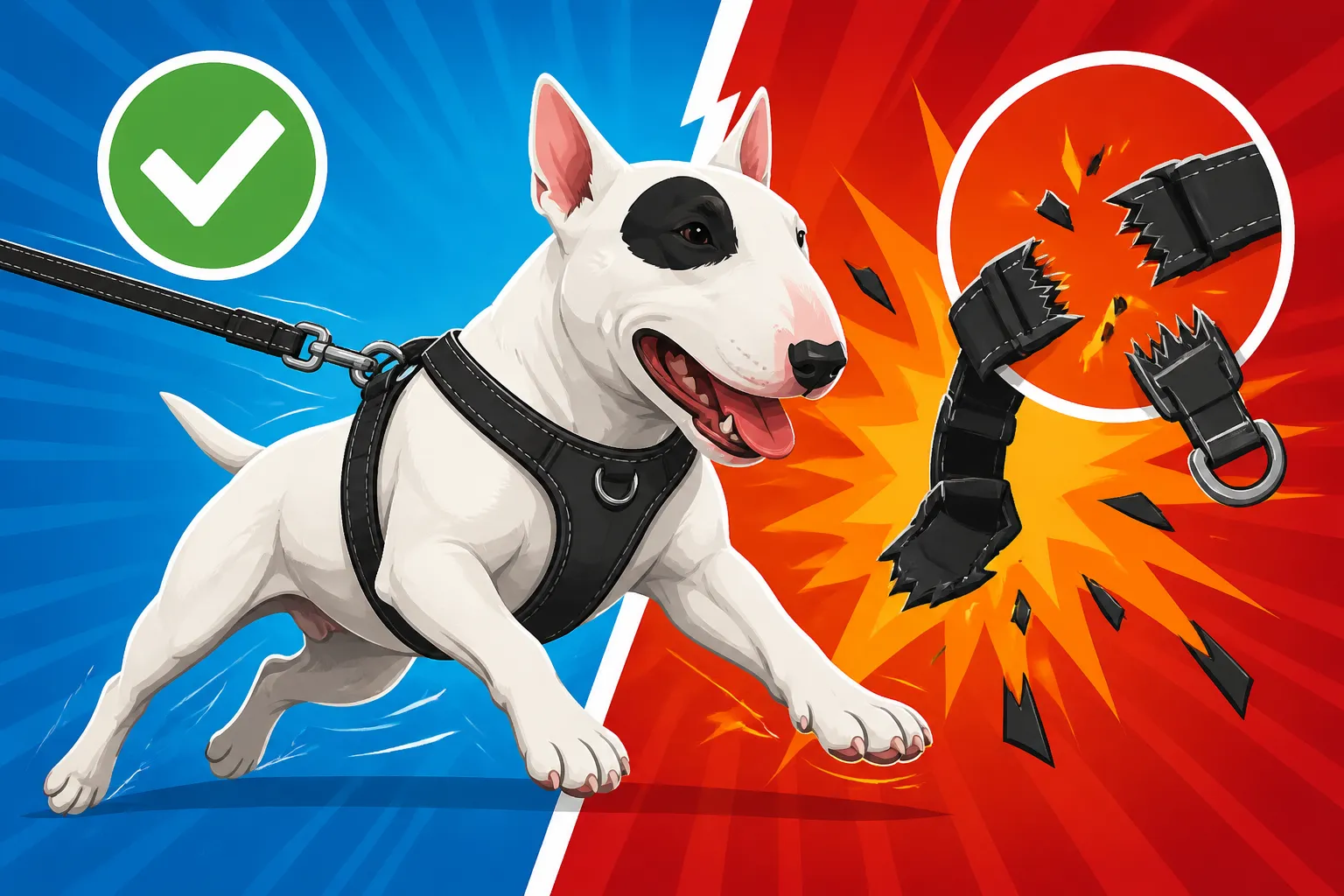
Whether a Bull Terrier Breaks a Standard Harness
If you're a Bull Terrier owner, you've probably experienced the sinking feeling of watching your beloved, sturdy companion effortlessly wriggle out of, or simply shred, yet another piece of "durable" dog gear. It's a common frustration, especially when it comes to harnesses, because many standard options simply aren't built to withstand the unique blend of power, enthusiasm, and sheer determination that is a Bull Terrier. This guide is here to shed some light on why your Bull Terrier might be making short work of those harnesses and what you can do to find one that actually stands up to the challenge.
The Bull Terrier's Unique Physique and Power
Let's face it, Bull Terriers aren't your average dog. They are built like brick houses, incredibly strong for their size, and possess a boundless energy that can surprise even experienced dog owners. This incredible physicality is often the first reason why standard harnesses fail them.
That Barrel Chest and Muscular Build
Take a good look at your Bull Terrier's physique. What do you see? A broad, deep chest that seems to power their entire being. A thick, muscular neck that connects to a surprisingly compact, yet immensely powerful, body. This isn't just for show; it's a testament to their heritage and their purpose. Standard harnesses are often designed with a more typical, slender dog in mind, perhaps a Labrador or a Golden Retriever, which have different proportions. For a Bull Terrier, these harnesses often either chafe uncomfortably behind their incredibly strong front legs, slip around on their barrel chest, or simply don't distribute pressure effectively.
When your Bull Terrier decides to lunge at a squirrel or pull towards a fascinating smell, that immense power from their chest and shoulders is concentrated on relatively thin straps. This isn't just uncomfortable for them; it puts an incredible strain on the harness itself. The stitching groans, the fabric stretches, and those plastic buckles—well, they suddenly seem very, very flimsy. It’s not that your Bull Terrier is deliberately trying to break things, it’s just that they are pure, concentrated power, and most gear isn’t designed for that level of robust application.
The "Three-Year-Old in a Dog Suit" Mentality
Beyond their physical strength, there's the Bull Terrier personality. Affectionately known as "a three-year-old in a dog suit," these dogs are known for their playful, sometimes stubborn, and incredibly determined nature. If a Bull Terrier wants to go somewhere, or doesn't want to go somewhere, they will often employ their full physical might to make their point. Why a Bull Terrier Is Called a Three Year Old in a Dog Suit
This "I want what I want, when I want it" attitude translates directly to their interaction with their gear. They test boundaries, whether it's with you, other dogs, or the harness that's supposed to keep them safely by your side. A sudden, enthusiastic surge forward when they spot a friend, or an abrupt stop because a particularly interesting leaf has captured their attention, puts immense, sudden strain on a harness. Their zoomies, those explosive bursts of energy, can involve unexpected twists and turns that no flimsy strap was ever meant to handle. It's not malice; it's just pure, unadulterated Bull Terrier joy and determination, and it means their harness needs to be as robust as their spirit. How Strong a Bull Terrier Is on a Leash
Why Standard Harnesses Fall Short for Bull Terriers
It’s not just your imagination; there’s a genuine mismatch between the average dog harness on the market and the unique demands of a Bull Terrier. Most standard harnesses simply aren't engineered for the specific challenges this breed presents.
Material Weaknesses and Stitching Fails
The market is flooded with harnesses made from lightweight nylon webbing, often with plastic buckles, thin D-rings, and minimal stitching. While these might be perfectly adequate for a dainty toy breed or a mellow older dog, they are no match for the Bull Terrier. Their sheer pulling power means that flimsy nylon straps can stretch, fray, and eventually snap under sustained pressure. Plastic buckles, especially those made from cheaper grades of plastic, are notoriously vulnerable to cracking or outright breaking, particularly in cold weather or if subjected to a sudden, strong force.
The weakest link is often the stitching. Many standard harnesses use single-pass stitching or low-quality thread that can unravel surprisingly quickly. A Bull Terrier's natural tendency to pull, combined with their strong jaws if they decide to give the harness a "test chew" when bored or frustrated, can quickly lead to a catastrophic equipment failure. It’s a disheartening experience to have your carefully selected harness suddenly fail mid-walk, leaving you scrambling to secure your adventurous Bull Terrier before they dash off into traffic or toward an irresistible distraction.
Ill-Fitting Designs and Escape Artist Tendencies
Another major issue is the design itself. Most harnesses are designed with a more "standard" dog shape in mind, meaning they assume a relatively narrow chest and a consistent body taper. A Bull Terrier's broad chest, deep keel, and relatively short back often mean that these harnesses simply don't fit well. They can restrict shoulder movement, causing discomfort and potentially altering their gait over time. More critically, a poorly fitting harness can create escape points.
Bull Terriers are surprisingly agile and clever when they want to be. If a harness is too loose around the neck or behind the front legs, they can, with surprising ease, back out of it, slip a leg through, or contort themselves until they've freed themselves. You might have seen your Bull Terrier do this: a sudden stop, a quick reverse wiggle, and poof, they're out! This isn't just an inconvenience; it's a serious safety hazard, especially in busy areas or near wildlife. Finding a harness with the right proportions, one that cups their chest securely without pinching their armpits, is crucial. Which Harness Holds a Bull Terrier
What to Look For in a Bull Terrier-Proof Harness
Since standard options often fall short, it’s vital to know what features make a harness truly suitable for a Bull Terrier. You need something that can match their strength and enthusiasm without compromising comfort or safety.
Heavy-Duty Materials and Construction
When shopping for a Bull Terrier harness, think "industrial strength" rather than "off-the-rack." Look for harnesses made from robust materials designed for serious use. Military-grade nylon or heavy-duty polypropylene webbing are excellent choices, as they offer superior tensile strength and resistance to tearing. You want thick, dense webbing that feels substantial in your hands, not flimsy or easily stretched.
Crucially, pay close attention to the hardware. Plastic buckles are almost always a weak point for a powerful Bull Terrier. Instead, seek out harnesses that feature metal buckles, ideally made from sturdy steel or aviation-grade aluminum. The D-rings where you attach the leash should also be solid metal, welded, and generously sized. Reinforced stitching is non-negotiable; look for multiple rows of stitching, often in a box-X pattern, at all stress points where straps connect or hardware is attached. Some high-quality harnesses even feature multiple layers of fabric in areas that bear the most pressure. When browsing online, a reliable retailer like Chewy often lists detailed material specifications, allowing you to compare durability before you buy.
Secure Fit and Multiple Adjustment Points
A harness is only as good as its fit, and for a Bull Terrier, this means a custom-like snugness that prevents escapes without restricting movement. Look for harnesses that offer multiple points of adjustment. This typically means adjustable straps around the neck (or chest, high up on the shoulders), behind the front legs (around the girth), and sometimes even a third strap around the belly for added security.
The goal is to find a harness that sits securely, with enough room for two fingers flat under the straps, but no more. It should cup the chest without sliding from side to side and should not chafe in the armpit area. Many Bull Terrier owners find that harnesses with a "Y" shape over the chest, rather than a horizontal strap directly across the throat, are more comfortable and safer, as they don't put pressure on the trachea. Consider whether a front-clip, back-clip, or dual-clip harness suits your needs. Front-clip harnesses can be excellent for discouraging pulling by redirecting your Bull Terrier's momentum, while a back-clip offers a traditional leash attachment point. Teaching a Bull Terrier to Walk Without Pulling
Comfort and Safety Features
Durability and fit are paramount, but comfort and safety should never be overlooked. A comfortable harness is one your Bull Terrier is more likely to accept and less likely to try to destroy or escape. Look for harnesses with padded areas, particularly under the chest strap and around the armpits. This extra cushioning can prevent chafing and irritation, which is especially important given that A Bull Terrier's Skin Is Its Weakest Point. Some Bull Terriers have quite sensitive skin, and a harness that rubs can quickly cause sores or hot spots.
Reflective stitching or material is a huge plus for safety, especially if you walk your Bull Terrier in low-light conditions. A sturdy top handle on the back of the harness can be invaluable for quickly grabbing and securing your dog in an emergency, like if you need to prevent a sudden lunge or guide them away from a hazard. These small features add up to a much safer and more pleasant walking experience for both you and your Bull Terrier.
Caring for Your Bull Terrier's Harness and Preventing Damage
Even the most robust harness needs a little TLC to last. Furthermore, a harness is just one tool in your management toolkit; good training and thoughtful care are equally important in keeping your Bull Terrier (and their gear) in top condition.
Regular Inspection and Maintenance
Think of your Bull Terrier’s harness like critical safety equipment – because it is! You wouldn't neglect your car's brakes, and you shouldn't neglect your dog's primary means of restraint during walks. Make it a habit to perform a quick inspection of the harness before every outing. Look for any signs of wear and tear: fraying straps, loose stitching, cracks in plastic components (if any), or bent metal hardware. Pay particular attention to the areas around buckles, D-rings, and where straps overlap.
Regular cleaning is also essential. Dirt, mud, sweat, and even natural oils from your dog's coat can degrade materials over time. Most heavy-duty harnesses can be hand-washed with mild soap and water, or sometimes even machine-washed on a gentle cycle in a laundry bag, then air-dried. Always follow the manufacturer's cleaning instructions. Cleaning not only extends the life of the harness but also prevents skin irritation for your Bull Terrier. If you spot significant damage, don't wait until it's too late; replace the harness immediately. A small fray can quickly become a major break, putting your Bull Terrier at risk.
Training and Management as Key Supplements
No matter how "Bull Terrier-proof" a harness claims to be, it's never a substitute for consistent training and good management. A harness is a tool, not a magic fix. Your Bull Terrier is smart and capable of learning, even if they sometimes prefer to march to the beat of their own drum. A Bull Terrier Trains When It Sees the Point Investing time in positive reinforcement training for loose-leash walking, recall, and impulse control will make a monumental difference in how much strain is put on their gear (and your arm!).
Teaching them to walk politely on a leash, rather than forging ahead like a freight train, reduces wear and tear on any harness. If your Bull Terrier has a tendency to chew on their harness when left unattended, consider providing appropriate and engaging chew toys. Brands like Ollie offer high-quality, durable treats and chews that can redirect that powerful jaw to something more appropriate. What a Bull Terrier Does When It Is Bored Furthermore, ensuring your Bull Terrier gets adequate physical and mental exercise can reduce boredom and destructive tendencies, which often lead to them gnawing on their equipment. How Much Exercise a Bull Terrier Actually Needs Finally, having pet insurance from providers like Healthy Paws can offer peace of mind, covering potential veterinary costs should an unexpected harness failure lead to an accident or injury for your adventurous Bull Terrier. Insuring a Bull Terrier Against What It Actually Gets
Here's a quick comparison to help you visualize the differences between standard and Bull Terrier-appropriate harnesses:
| Feature | Standard Harness (Common Retail) | Heavy-Duty Harness (Bull Terrier Appropriate) |
|---|---|---|
| Primary Material | Lightweight nylon or polyester webbing | Military-grade nylon, thick woven polypropylene |
| Buckles | Plastic quick-release buckles (often thinner plastic) | Metal (steel, aluminum) buckles, sometimes double-locking for security |
| D-Rings | Thin, often unwelded metal or plastic | Thick, welded steel D-rings |
| Stitching | Single-pass, basic machine stitching | Reinforced, multiple rows of stitching (box-X pattern) at stress points |
| Adjustability | Limited (one or two points) | Multiple points (neck, chest, girth) for custom fit |
| Padding | Minimal or none, can cause chafing | Padded chest plates or straps for comfort and pressure distribution |
| Durability | Prone to stretching, fraying, snapping under Bull Terrier strength | Built to withstand strong pulls, jumps, and everyday Bull Terrier antics |
| Intended Use | Casual walks, smaller/less powerful dogs, dogs with good leash manners | Active Bull Terriers, strong pullers, dogs prone to testing gear limits |
Disclaimer
This article is for general informational purposes only and does not constitute professional advice. Laws, prices and regulations vary by location and change over time. Consult a qualified professional for guidance on your specific situation.