Whether a Bull Terrier Breeder Will Show BAER Results
Navigating the world of Bull Terrier breeders can feel like walking through a minefield, especially when you're trying to ensure your future family member is as healthy as possible. One of the biggest worries, particularly for those adorable white Bull Terriers, is congenital deafness, and knowing if a breeder is truly transparent about their health testing, specifically BAER results, is a huge concern for prospective owners. This guide is here to walk you through exactly what to expect from a reputable Bull Terrier breeder when it comes to demonstrating their commitment to healthy puppies and how to decipher those all-important BAER test results.
The Critical Role of the BAER Test in Bull Terriers
Bringing a Bull Terrier puppy into your home is a dream for many, but the excitement can quickly turn to heartbreak if you discover your new companion has a significant health issue that could have been prevented or, at least, predicted. One such concern that's quite prevalent in our beloved egg-headed friends, especially those with that stunning pure white coat, is deafness. This isn't just a minor inconvenience; it profoundly impacts a dog's life and requires dedicated care and training. This is precisely where the Brainstem Auditory Evoked Response, or BAER, test comes into play as an absolutely non-negotiable health screening.
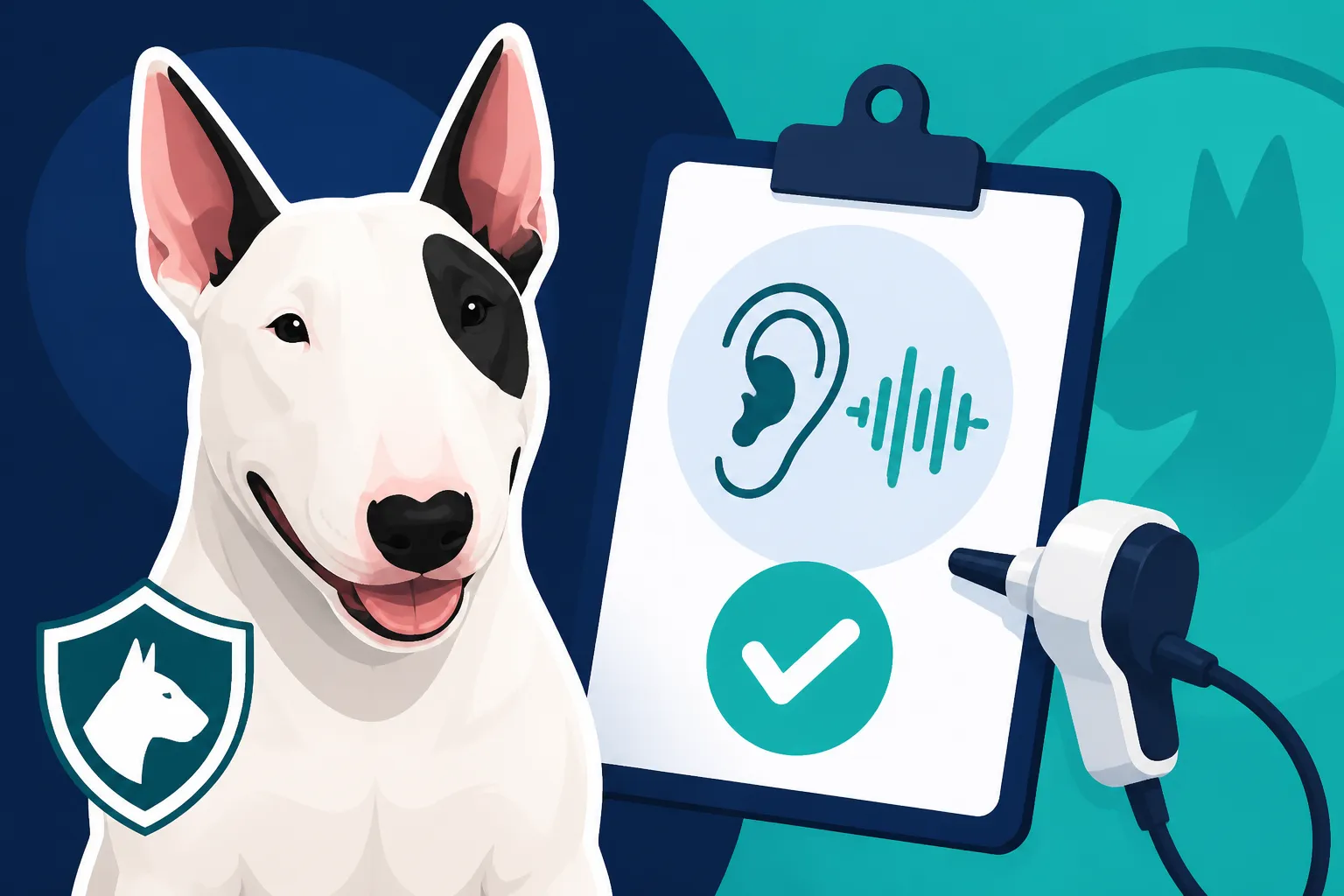
The BAER test is not just some optional extra; it's a critical tool for detecting congenital deafness in puppies as young as six weeks old. It works by measuring the electrical activity in the cochlea and auditory pathways in the brain in response to auditory stimuli. Essentially, tiny electrodes are placed on the puppy's head, and a series of clicks are played into each ear. A computer then records the brain's response. It’s a completely non-invasive and painless procedure, usually done while the puppy is awake or lightly sedated to keep them calm and still, ensuring accurate readings. Understanding What a BAER Test Tells a Bull Terrier Owner is fundamental for any responsible buyer.
For Bull Terriers, particularly those with white pigmentation, the connection to deafness is a well-documented genetic trait. The gene responsible for producing that beautiful white coat is also linked to the development of the cells in the inner ear responsible for hearing. When these cells don't develop properly, or degenerate early, it results in deafness. This makes it imperative for a breeder to conduct a BAER test on every single puppy in a litter, regardless of their coat color, though it's especially critical for white puppies. You might be surprised to learn How Many White Bull Terriers Are Born Deaf, which underscores why this test is so vital. Reputable breeders understand this and make BAER testing a standard part of their puppy care routine, usually before puppies go to their new homes, typically around The Age a Bull Terrier Puppy Can Be BAER Tested.
Breeder Transparency: Asking for BAER Results
When you're looking for a Bull Terrier puppy, the transparency of a breeder should be one of your top considerations. It's not enough for them to say their puppies are healthy; they should be able to prove it with verifiable documentation. When it comes to BAER testing, a reputable breeder will not only conduct the tests but will be eager to share the results with prospective buyers. In fact, if a breeder seems hesitant, evasive, or claims they don't test, that should immediately raise a red flag about What an Untested Bull Terrier Puppy Signals.
A truly ethical breeder understands the anxieties of potential puppy owners and wants to ensure you're making an informed decision. They will proactively offer to show you the BAER certificates for both the individual puppy you're interested in and often for the entire litter. These certificates are typically issued by the veterinary clinic or specialist audiologist who performed the test and will clearly state the date of the test, the puppy's identification (microchip number or tattoo), and the results for each ear. It’s not uncommon for these breeders to participate in health programs or registries, which further validates their commitment. Always remember that asking for these documents isn't being pushy; it's being responsible.
If a breeder tells you that BAER testing isn't necessary, or that they can "tell" if a puppy hears by clapping their hands, politely but firmly explain that this isn't sufficient. While a severely deaf puppy might be obvious, unilateral deafness (deafness in one ear) is notoriously difficult to detect without a proper BAER test. A puppy with one good ear can often compensate remarkably well and appear to hear perfectly fine, only for the issue to become apparent later. This is precisely why Why a White Bull Terrier Should Be BAER Tested is such a fundamental piece of advice for anyone considering this breed. If you encounter resistance, it's generally a strong indicator to walk away and find a breeder who prioritizes the health and well-being of their dogs, demonstrating their adherence to established breed health protocols.
Decoding BAER Test Outcomes and Breeder Responsibility
Once a breeder presents you with BAER test results, understanding what you're looking at is key. The results will typically be recorded as "normal" or "pass" for a hearing ear, and "deaf" or "fail" for a non-hearing ear. Importantly, you'll see a result for both the left and right ears. This distinction is crucial because deafness can be unilateral (one ear deaf) or bilateral (both ears deaf).
Here's a simple breakdown of what those results mean:
| Result Type | Left Ear | Right Ear | Implications for Puppy & Owner | Breeder Responsibility |
|---|---|---|---|---|
| Normal Hearing | Pass | Pass | Puppy has excellent hearing in both ears. Ideal outcome. | Should be considered for breeding (if all other health tests clear). |
| Unilateral Deafness | Pass | Fail | Puppy hears normally in one ear. Can live a full, normal life with minimal adjustments. May startle easily from the deaf side. | Should not be bred, but can be placed in a pet home with full disclosure. |
| Bilateral Deafness | Fail | Fail | Puppy is completely deaf. Requires specific training methods and a dedicated home. Cannot be left off-leash in unsecured areas. | Should not be bred, and placed in a very carefully selected pet home with extensive support. |
A Bull Terrier with unilateral deafness can lead a perfectly happy and fulfilling life, often adapting so well that many owners don't even realize their dog is deaf in one ear without the BAER test. However, it's still vital that this information is disclosed, as it can affect how you approach training and safety. For example, a dog deaf in one ear might not hear you call from a certain side, making them more prone to startling. Learning Whether a Unilaterally Deaf Bull Terrier Lives Normally can ease concerns, but transparency remains paramount.
For puppies diagnosed with bilateral deafness, the situation requires more specialized care. These dogs thrive in loving homes, but they need owners committed to using visual cues, vibration collars, and careful supervision, especially outside. A responsible breeder will make sure such a puppy is placed in a home fully prepared for the challenges and rewards of living with a deaf dog, and will offer ongoing support. They would never consider breeding a deaf dog, as this condition is hereditary. This is why discussing Whether a Deaf Bull Terrier Should Be Placed in a Home is an important conversation to have with any potential breeder. Insurance providers like Healthy Paws can be a valuable partner in covering unexpected veterinary costs, but it's important to understand how they handle pre-existing conditions if a diagnosis is made after policy inception. Therefore, getting all health information upfront from your breeder is always your best bet.
Choosing a Reputable Breeder Who Prioritizes Health
Finding an exceptional Bull Terrier breeder goes beyond just seeing adorable puppy pictures. It's about finding someone who is deeply committed to the health, temperament, and future of the breed. This means they adhere to stringent health testing protocols, not just for BAER, but for all known hereditary conditions in Bull Terriers, which can include kidney and heart issues. Knowing What a Bull Terrier Breeder Should Have Tested is crucial for any potential buyer.
A truly reputable breeder will be actively involved in the Bull Terrier community, perhaps through national or local breed clubs. These clubs often establish guidelines for responsible breeding, including recommended health screenings. They won't just test; they'll use those results to make informed breeding decisions, striving to improve the health of future generations. This includes carefully considering pairings to avoid doubling up on undesirable traits or genes that could lead to conditions like deafness. They will openly share their breeding philosophies and be transparent about any health issues that have appeared in their lines, even if they are minor.
When you speak with a breeder, ask about their entire health testing regimen. Inquire where they get their BAER tests done – typically it’s at a veterinary specialist clinic or a university veterinary teaching hospital. Reputable breeders will be able to provide the contact information for the vet who performed the tests. Some even offer video footage of the puppies undergoing the BAER test. Don't be shy about asking specific questions, such as Where to Get a Bull Terrier BAER Tested or about specific conditions like Hereditary Nephritis Takes Bull Terriers in Their Prime. A good breeder will welcome your questions and appreciate your diligence, as it shows you are also committed to responsible dog ownership.
Consider it a significant red flag if a breeder doesn't mention health testing at all, dismisses its importance, or makes excuses about why their particular puppies haven't been tested. While some delays can occur with large litters or scheduling, a committed breeder will communicate openly about these and provide a plan for testing before puppies go to their new homes. Furthermore, a breeder who takes ethical breeding seriously will never intentionally breed a deaf Bull Terrier, understanding the genetic implications, as highlighted in discussions around Whether a Deaf Bull Terrier Should Be Bred. Their commitment to health goes hand-in-hand with their reputation and the future well-being of the breed. They might even recommend pet insurance plans from providers like Healthy Paws, knowing how valuable they can be down the line.
Ultimately, your goal is to find a breeder who is an open book about their practices and whose dedication to health shines through. This transparency is your best assurance that you’re bringing home a happy, well-adjusted Bull Terrier puppy with the best possible start in life.
Disclaimer
The information provided in this article is for general informational purposes only and does not constitute veterinary advice. Always consult with a qualified veterinarian for any health concerns or before making any decisions about your Bull Terrier's care.