Whether Bull’s Eye in Oliver Twist Is a Bull Terrier
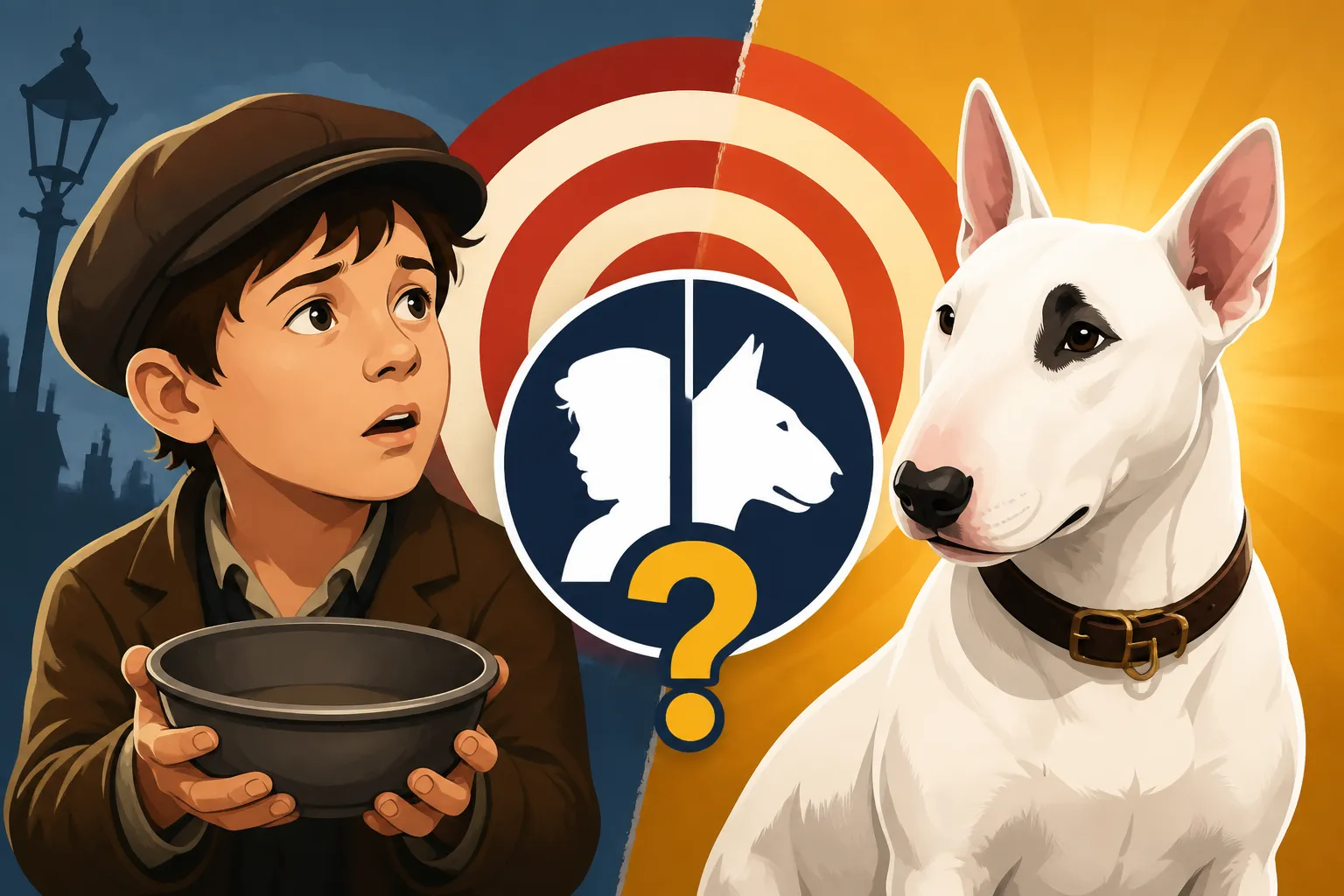
Bull’s-eye, Bill Sikes’s dog in Oliver Twist, is often pictured as a Bull Terrier—but the novel does not give him a clear breed pedigree. That distinction matters: Dickens’s description is brief, and later illustrations and adaptations have shaped what many readers imagine. Here’s what the book actually says, why the Bull Terrier association stuck, and what the character does—and does not—tell us about the breed.
What Dickens says about Bull’s-eye
The novel describes the dog, not a verified breed
Bull’s-eye belongs to Bill Sikes, the violent criminal in Oliver Twist. Dickens gives the dog a memorable name and describes his appearance, including a white, shaggy coat and a face marked with scars. But the description does not establish a modern, formally registered breed or provide the kind of detail that would let a reader identify a dog’s ancestry with confidence.
That leaves room for interpretation. A white, muscular dog with a damaged face may bring a Bull Terrier to mind, especially to readers familiar with later illustrations. But resemblance is not the same as proof. The safest answer to “Is Bull’s-eye a Bull Terrier?” is that the text itself does not definitively say so.
It also helps to remember that people in Dickens’s time did not always use dog names and breed labels in the same precise way modern owners and kennel organizations do. A character’s appearance, a general type, and a recorded pedigree are three different things. The novel supplies a vivid character sketch, not a registration document.
Bull’s-eye’s appearance invites more than one reading
The familiar image of Bull’s-eye often blends a few visual details: a pale coat, a sturdy body, a rough or scarred face, and an intense expression. Those features can suggest a Bull Terrier, but they are not exclusive to that breed. Without a more complete description of the dog’s head, proportions, and lineage, a reader cannot reliably distinguish a Bull Terrier from other dogs or mixes that might have shared a similar look.
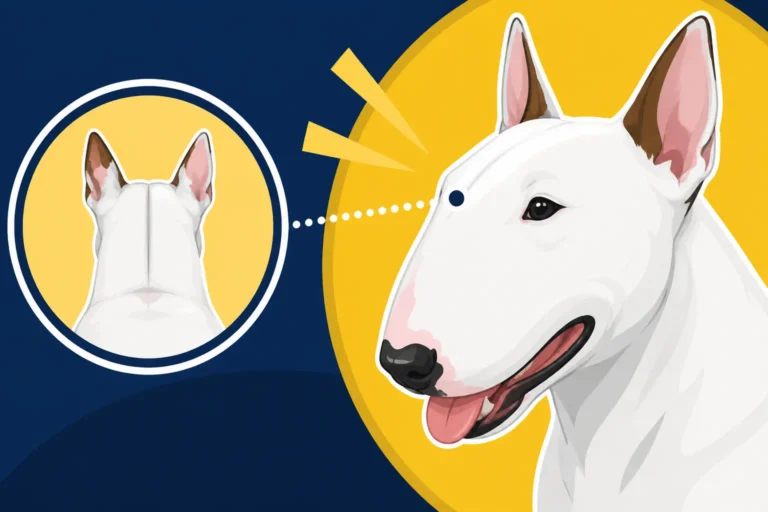
There is another wrinkle: the Bull Terrier most readers picture today has a distinctive egg-shaped head and a particular body outline. The breed’s appearance has changed over time, and historical dogs did not necessarily look like the modern show-ring ideal. The breed’s development is part of why the question is harder than it first appears; How the Bull Terrier's Head Changed Over Time gives useful context for that shift.
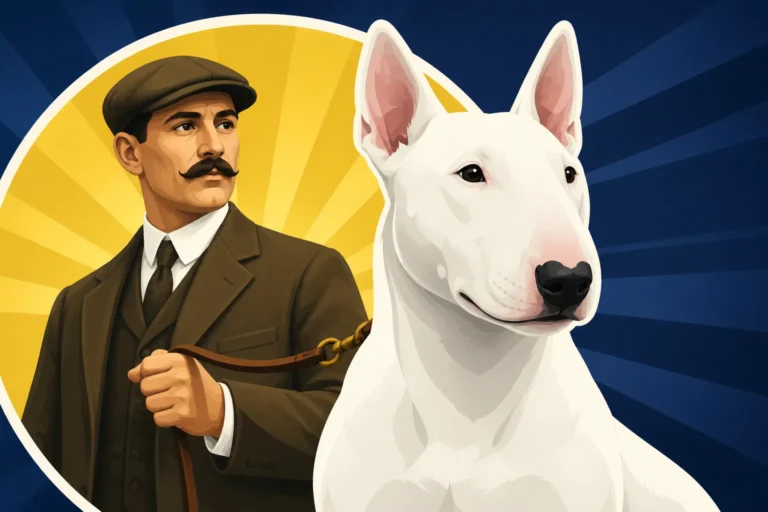
So, if an illustration shows Bull’s-eye with a recognizable modern Bull Terrier profile, that may be an artistic choice rather than a detail Dickens supplied. Artists have to make a character visible on the page or screen. They may draw on popular dog types, contemporary tastes, or the way a previous illustrator depicted the animal.
A famous name is not the same as a breed label
Bull’s-eye’s name has become so closely tied to the dog that it can feel as if the breed must be equally settled. It isn’t. The character is famous; his exact breed is not conclusively specified in the novel.
This is a common source of confusion with fictional dogs. Readers encounter an image in a film, a stage production, or a book cover, then carry that image back into the original story. Over time, the adaptation can become more familiar than the text. The same thing happens when people debate famous real and fictional dogs in Which Famous Bull Terriers Everyone Remembers.
A careful way to put it is: Bull’s-eye is often portrayed as a Bull Terrier or a Bull Terrier-like dog, but Dickens’s description does not confirm that he is one. That answer leaves room for the familiar interpretation without presenting it as a fact the novel proves.
Why Bull’s-eye is often called a Bull Terrier
Illustrations and adaptations fill in the blanks
A novel can leave a dog’s appearance partly to the reader’s imagination. A stage production or film cannot. The animal has to be cast or represented, and visual storytellers choose a specific look. If an adaptation gives Bull’s-eye a Bull Terrier-like build, audiences may assume that the dog’s breed was specified in the book.
Illustrations can have the same effect. One artist’s interpretation may show a broad, compact dog; another may emphasize a rough coat or a threatening expression. Those images are not necessarily evidence about Dickens’s intent. They are interpretations of a character whose description leaves room for creative decisions.
The result is a feedback loop: an adaptation influences what readers expect, and those expectations influence later illustrations. A Bull Terrier-looking Bull’s-eye can become the “obvious” version even though the original text does not settle the matter. This is one reason to distinguish a character’s literary description from the animal shown in a particular production.
Historical dog types do not map neatly onto modern breeds
Modern breed names can make the past seem tidier than it was. Dogs that looked broadly similar might be described by a general type, a local name, or a working role. Meanwhile, named breeds were developing and changing. The Bull Terrier’s background itself involves a mix of influences, explored in Which Breeds Went Into the Bull Terrier.
That history does not prove Bull’s-eye belonged to the breed. It simply helps explain why a modern label may not fit neatly onto a dog described in an earlier work. If the dog resembles a Bull Terrier, that resemblance can be worth noting while still acknowledging that the novel gives no documented lineage.
It is also useful to separate “Bull Terrier-like” from “a Bull Terrier.” The first describes an impression; the second makes a claim about breed identity. When a fictional dog’s physical details are limited, the more cautious phrase is usually the more accurate one.
The breed’s old reputation can color the interpretation
Bull Terriers have a complicated history, and readers sometimes bring assumptions about that history to a character like Bull’s-eye. The breed’s origins and changing roles are more nuanced than a simple label suggests. For a broader look at that history, see Whether the Bull Terrier Was a Fighting Dog and Whether a Bull Terrier Was Bred to Start Fights.
Bull’s-eye is a threatening presence in a story shaped by violence, but that is a narrative role, not evidence about the temperament of an entire breed. Dickens uses the dog as part of the world around Sikes. The character’s behavior belongs to the story and its dramatic purpose; it should not be treated as a reliable description of how Bull Terriers behave as pets.
That distinction is important because fictional portrayals can reinforce stereotypes. A dog that looks intimidating on screen may be remembered as proof that a breed is naturally aggressive. In reality, a dog’s behavior is influenced by many factors, including individual temperament, learning, health, and how people handle and care for the animal.
Bull’s-eye as a character, not a guide to Bull Terrier temperament
The dog helps establish the world around Sikes
Bull’s-eye is more than a visual accessory. His presence adds to the atmosphere around Sikes and reflects the harsh, threatening world the character inhabits. The dog’s scars and aggressive presentation make him memorable, while his attachment to Sikes reinforces the roughness of the household and the danger surrounding Oliver.
That literary purpose matters when readers ask whether Bull’s-eye represents a real breed. Fictional animals are often given behaviors that support the plot: they may serve as companions, warnings, comic relief, or threats. Their conduct is written to make a scene work, not to provide a balanced account of a breed’s everyday behavior.
Bull’s-eye should therefore be read as an individual fictional dog shaped by Dickens’s story. Even if an adaptation chooses to show him as a Bull Terrier, that casting does not turn his actions into a temperament profile for the breed.
A fictional dog cannot predict how a real dog will behave
People sometimes see a dog in an old novel or film and use it to make quick judgments about the real breed. That can lead to unfair assumptions in either direction. One dramatic character cannot tell you whether a particular dog will be friendly, easy to train, comfortable around other animals, or suited to a specific home.
If you are curious about the actual breed, look at its history, individual variation, and care needs rather than relying on a villain’s dog in a story. For example, What People Get Wrong About the Bull Terrier can help separate popular impressions from practical breed information. And if you are trying to understand the breed’s distinctive profile, What a Bull Terrier's Downface Is explains one feature often emphasized in modern depictions.
The same principle applies to any breed: appearance alone does not reveal personality. A dog’s behavior needs to be understood in context, and responsible ownership means assessing the individual dog rather than assuming that a fictional portrayal tells the whole story.
A literary association is not an ownership recommendation
A reader who admires Bull’s-eye’s memorable role may become interested in Bull Terriers. That curiosity is a fine starting point, but choosing a dog involves far more than liking a character or a certain look. Prospective owners should learn about exercise, training, health, grooming, and the way a particular dog fits their household.
If you are preparing for a real dog, everyday supplies are only one part of that plan. Retailers such as Chewy can be one place to browse basic items, but product shopping does not replace learning about the breed or talking with a veterinarian and responsible breed sources. A sturdy leash, suitable toys, and grooming supplies are practical considerations; they are not a shortcut to deciding whether a Bull Terrier is right for you.
Someone comparing supplies through Chewy should also think about the dog’s actual needs rather than buying based on a fictional image. For a new owner, the best preparation is to understand the individual dog and build a safe, consistent routine. Chewy may help with finding everyday pet essentials, while careful research helps answer the much bigger question of whether the breed suits your life.
How to answer whether Bull’s-eye is a Bull Terrier
Separate what the text says from what later versions show
When you see Bull’s-eye described as a Bull Terrier, ask where that identification comes from. If it comes from a particular film, illustration, or stage adaptation, it describes that version’s visual interpretation. If someone claims the novel definitively names the breed, check whether they can point to an explicit breed description in the text.
A useful distinction is:
| Question | Careful answer |
|---|---|
| Does Dickens clearly identify Bull’s-eye as a Bull Terrier? | No; the novel describes the dog but does not establish a definitive breed pedigree. |
| Is Bull’s-eye often depicted as a Bull Terrier? | Yes; later visual interpretations commonly give him a Bull Terrier-like appearance. |
| Does that portrayal prove the dog’s breed in the novel? | No; an adaptation’s casting or illustration is an interpretation. |
| Does Bull’s-eye represent the temperament of real Bull Terriers? | No; he is a fictional character serving the story. |
This approach lets you acknowledge the familiar association without overstating it. It also makes discussions with other readers easier: “Often portrayed as a Bull Terrier, but not explicitly identified as one in the novel” is more precise than an unqualified yes or no.
Keep the short answer accurate
If someone asks, “Was Bull’s-eye in Oliver Twist a Bull Terrier?” the most balanced response is: “He is often shown as one, but the novel does not clearly confirm his breed.” That phrasing accounts for both the text and the many images that have shaped the character’s popular appearance.
The question is still interesting because Bull’s-eye is such a striking fictional dog. His look may bring the Bull Terrier to mind, and adaptations may make that resemblance even stronger. But the dog’s role in the novel is more certain than his pedigree: he is Sikes’s dog, a memorable part of the story, and not a reliable guide to the history or temperament of a modern breed.
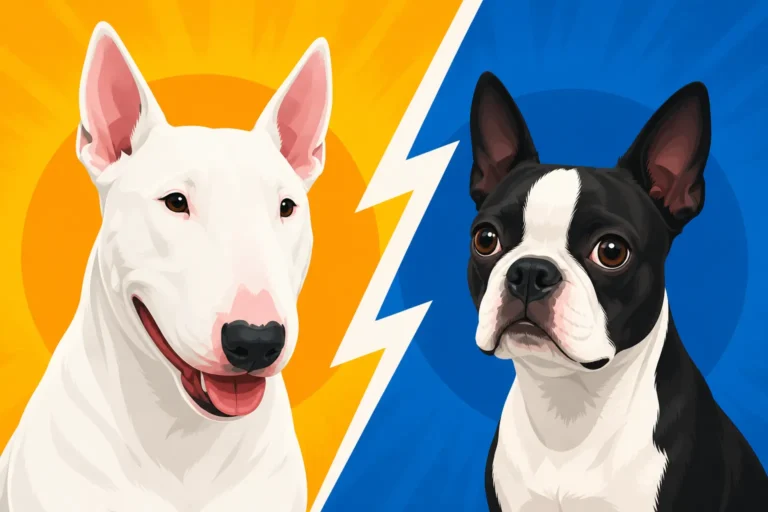
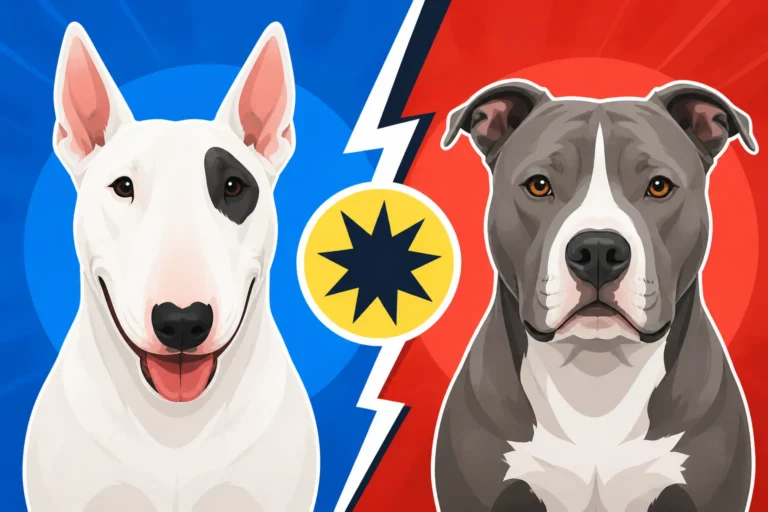
For further reading, How a Bull Terrier Differs From a Staffordshire Bull Terrier can help explain why different bull-type dogs are sometimes confused in popular conversation. Whether a Bull Terrier Is a Bully Breed also explores how broad labels can obscure the differences between individual breeds and their histories.
Disclaimer
This article is for general informational purposes only and does not constitute professional advice. Laws, prices and regulations vary by location and change over time. Consult a qualified professional for guidance on your specific situation.