Which Bull Terrier General Patton Owned
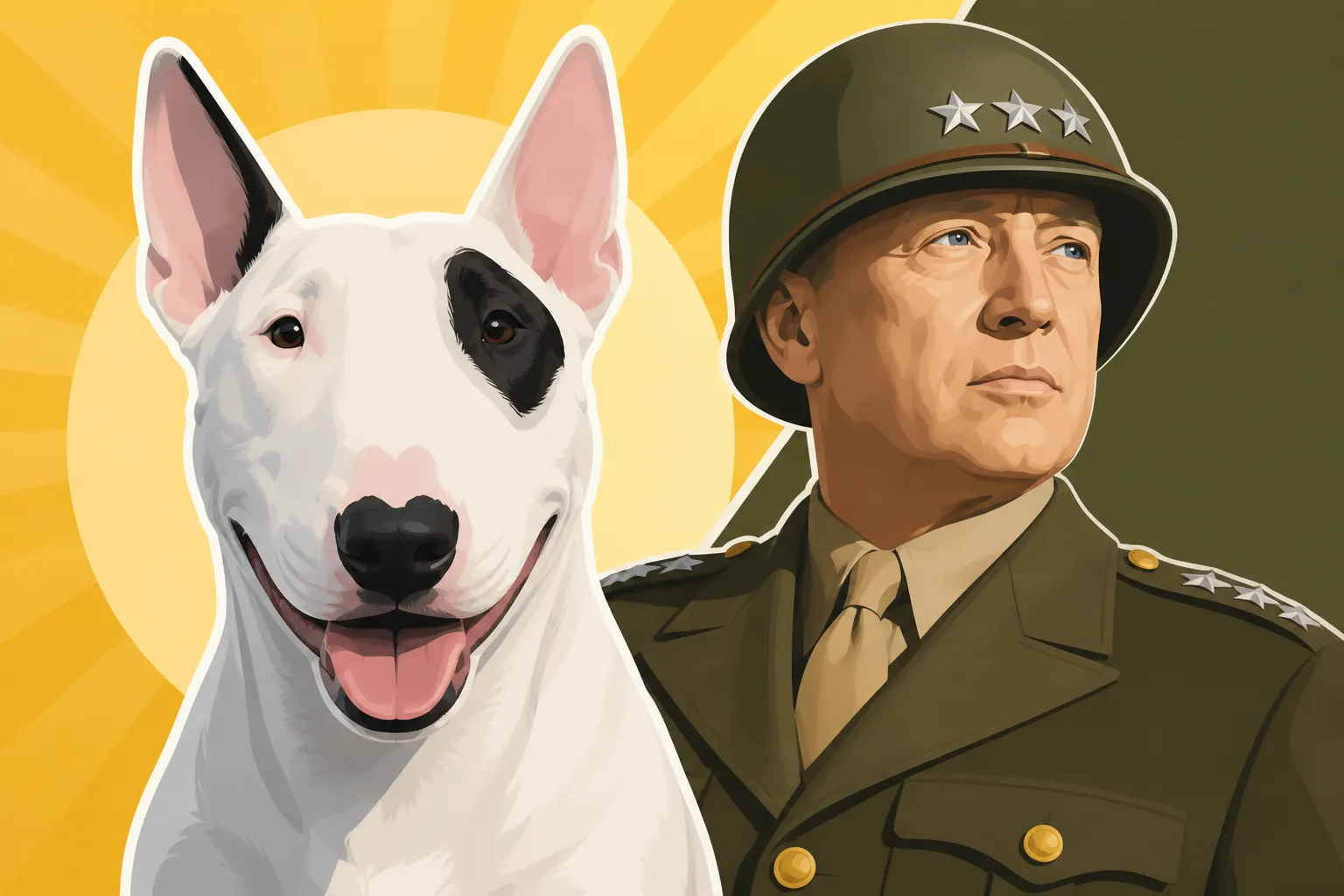
George S. Patton’s dog was Willie, a Bull Terrier whose full name was William the Conqueror. The dog became a familiar companion to the American general during World War II, but stories about him can blur documented history with later retellings. Here’s what is known about Willie, how he fit into Patton’s life, and why the pair still capture people’s imaginations.
Which Bull Terrier Did General Patton Own
Willie was William the Conqueror
General George S. Patton owned a Bull Terrier named Willie, short for William the Conqueror. The name suited Patton’s theatrical style, but the dog was more than a colorful detail in the general’s public image. Willie traveled with Patton during the Second World War and became closely associated with him.
Patton was a career soldier who moved frequently and lived under the demands of military command. A companion dog could offer a little familiarity amid unfamiliar quarters, long journeys, and constant changes in routine. Willie’s presence is remembered partly because it showed a more personal side of a commander often described through his forceful manner and battlefield reputation.
The basic identification is straightforward: Willie was a Bull Terrier, not a Staffordshire Bull Terrier or an American Pit Bull Terrier. Those breeds are distinct, even though their names and general “bull-and-terrier” history can lead to confusion. For a closer look at the breed’s origins, see Where the Bull Terrier Comes From.
Willie became part of Patton’s public story
Patton’s relationship with Willie has lasted in the popular imagination because it gives a human-scale detail to a figure usually remembered through maps, uniforms, and wartime decisions. A photograph or anecdote about a dog can make a famous person seem more approachable, but it can also invite embellishment. The most reliable core is that Willie was Patton’s Bull Terrier and accompanied him during the war.
The dog’s name also helped make him memorable. “William the Conqueror” sounds grand and slightly comic when attached to a compact, muscular terrier. That contrast is part of the appeal: a powerful general with a dog whose formal name could have belonged to a medieval ruler.
When you encounter a story about Willie, it helps to separate the parts that are widely repeated from details that may depend on a particular retelling. The dog’s breed, name, and connection to Patton are the central points. Specific claims about exactly when he joined Patton, every location he visited, or the circumstances of his later life should be treated carefully unless a reliable historical record supports them.
What Willie’s Story Says About Patton
A companion amid military upheaval
Patton’s wartime life involved travel, command responsibilities, and periods away from familiar surroundings. Willie was a companion within that demanding life, though it would be too simple to imagine the dog as a mascot who merely followed the general from one famous event to another. Military travel and wartime conditions were complicated, and the practical details of caring for an animal in those circumstances mattered.
A dog’s ordinary routines can be grounding even when a person’s schedule is anything but ordinary. Feeding, walking, and spending time with a pet create familiar moments. For someone living through upheaval, that everyday connection may carry particular meaning. It is one reason the story of Willie resonates beyond its historical curiosity.
At the same time, a famous owner does not tell us everything about a dog’s daily experience. A photograph cannot show the full routine, the people who helped care for Willie, or how he adjusted to unfamiliar settings. It is fair to say he accompanied Patton and became part of his life; it is less responsible to fill in every missing detail with a vivid but unverified scene.
A glimpse beyond the general’s image
Patton’s reputation was shaped by his leadership, public statements, and role in the war. Willie adds a domestic detail to that picture. The dog reminds readers that historical figures also had relationships and routines outside the moments that appear in military histories.
That does not mean Willie should be used to make Patton seem gentler or to excuse his decisions. A pet can show a personal attachment without settling broader judgments about its owner. The interesting point is more modest: even a commanding public figure could have a recognizable bond with a dog.
Bull Terriers are often remembered for their distinctive appearance and energetic, determined personalities. That may help explain why Willie remains memorable, but it is best not to assume that every modern Bull Terrier behaves exactly as he did. Breed traits can offer context, not a complete account of an individual dog. For more examples of the breed’s place in public life, see Which Famous Bull Terriers Everyone Remembers.
Separating History From Popular Retellings
What is safe to say about Willie
The most dependable summary is also the simplest: Willie was General Patton’s Bull Terrier, his name was William the Conqueror, and he accompanied Patton during World War II. Those details are enough to answer the question without turning uncertain anecdotes into established fact.
| Detail | What can be stated confidently | Why care is useful |
|---|---|---|
| Dog’s name | Willie, short for William the Conqueror | Some accounts use only the nickname |
| Breed | Bull Terrier | The name is sometimes confused with related breeds |
| Owner | General George S. Patton | The dog is commonly identified through his connection to Patton |
| Historical setting | World War II | Claims about specific movements or dates need separate support |
| Long-term significance | Willie remains a memorable historical dog | Later retellings may add details beyond the basic record |
This kind of distinction matters because a story can become more dramatic every time it is retold. One account may say a dog was present at a particular place; another may turn that into a detailed scene. Unless the detail can be traced to a reliable record, it is better to describe it as an anecdote rather than a confirmed event.
There is also a difference between saying Willie “served” alongside Patton and suggesting he had an official military role. The first phrase is sometimes used casually to describe his presence with the general. It should not be taken to mean Willie held a rank or performed a formal military duty.
Claims that deserve a second look
Be cautious with precise claims about Willie’s birth date, how he came into Patton’s possession, the exact places he traveled, and the date or circumstances of his death. These details may appear in secondary retellings, but repeated wording does not automatically make a detail certain. A careful account should distinguish well-established identification from information that varies among sources.
The same caution applies to stories about Patton’s emotional response to the dog. It is natural to wonder how Patton felt about Willie, especially given the pressures of war, but a touching interpretation is not the same as a documented quotation or event. When an account supplies a vivid conversation or dramatic scene, look for evidence before treating it as fact.
Patton was not the only American president or public figure associated with a Bull Terrier. Comparing these stories can be useful, but the details should remain distinct. See Whether Theodore Roosevelt Kept a Bull Terrier and Whether Woodrow Wilson Kept a Bull Terrier for other examples of dogs linked with prominent Americans.
Why the Patton and Willie Story Still Matters
The Bull Terrier as a companion
Willie’s place in history fits into a longer image of the Bull Terrier as a companion dog. The breed’s past is more complicated than a single role or reputation, and it should not be reduced to old stereotypes. The phrase “bull and terrier” refers to historical breed development, but it does not explain the temperament or behavior of every individual dog today.
A dog’s life is shaped by its upbringing, health, social experiences, and care, as well as by inherited tendencies. That is as true for a Bull Terrier in a modern home as it was for Willie in extraordinary circumstances. If you are curious about the breed’s changing reputation, Whether a Bull Terrier Was a Gentleman's Companion offers useful historical context, while Whether a Bull Terrier Was Meant to Take a Fight addresses a common misconception.
For a present-day owner, the practical lesson is not that a Bull Terrier will behave like Patton’s dog. It is that breed history can make a story interesting, but individual needs should guide real-life decisions. A prospective owner should consider training, exercise, veterinary care, and the dog’s fit with the household rather than choosing a breed because it belonged to a famous person.
A famous dog remembered beyond the photograph
Willie remains interesting because the story brings together history, personality, and the recognizable companionship of a dog. The name William the Conqueror is easy to remember, and the image of a Bull Terrier beside a major wartime figure gives the story an immediate hook. But the value of the story does not depend on adding dramatic details that cannot be confirmed.
It is also a reminder that famous dogs often become part of public memory in their own right. Their stories can lead people to explore breed history, the lives of their owners, or the way animals fit into ordinary routines during extraordinary events. For another example of how a Bull Terrier can become widely recognized, see Which Bull Terrier Played Spuds MacKenzie.
In short, General Patton owned Willie, a Bull Terrier also known as William the Conqueror. Willie accompanied him during World War II and became an enduring part of Patton’s personal story. The clearest account is the one that keeps those well-known facts intact while treating more detailed anecdotes with appropriate care. For more on the breed’s image and reputation, see What People Get Wrong About the Bull Terrier.
Disclaimer
This article is for general informational purposes only and does not constitute professional advice. Laws, prices and regulations vary by location and change over time. Consult a qualified professional for guidance on your specific situation.