Whether Bull Terriers Do Well in the Ring
A Bull Terrier’s unmistakable head can turn heads at a dog show, but appearance alone does not win a class. Owners often discover that a strong, playful dog may need careful conditioning and ring practice to stand still and move smoothly. This guide explains what judges look for, what makes the breed challenging to show, and how to prepare realistically.
Can Bull Terriers Succeed in Conformation Shows
Yes. Bull Terriers can do well in conformation shows when they closely match the breed standard, move soundly, and are comfortable being examined and handled. But no breed trait guarantees a win, and being handsome at home is not the same as presenting well in a busy ring.
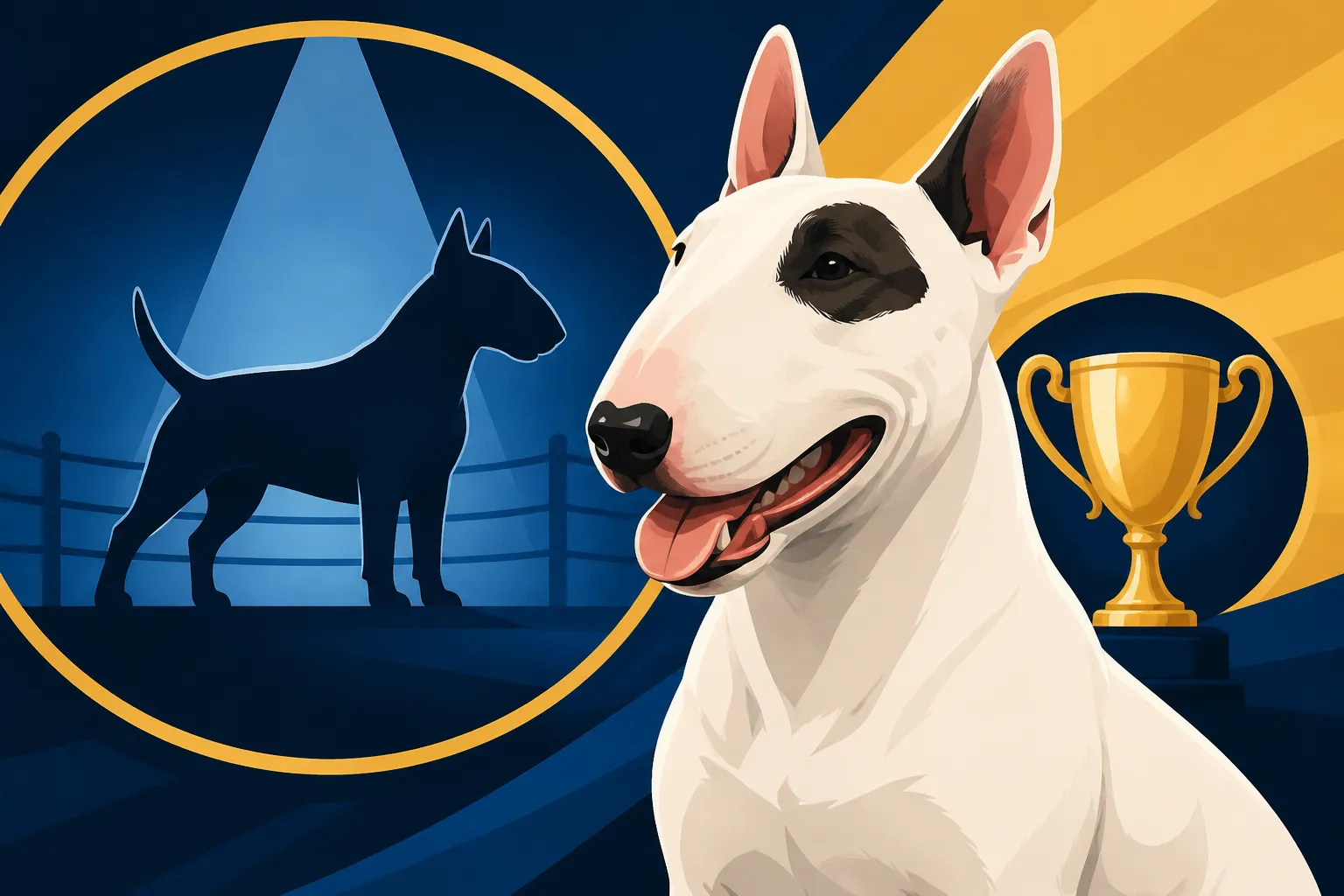
Conformation judging is about how closely an individual dog fits the written standard for its breed. A Bull Terrier is not being judged against a different breed’s ideal; the judge assesses the dog against the characteristics expected of a Bull Terrier. Those include overall balance, structure, movement, coat, and the breed’s distinctive expression and outline.
What judges look for in a Bull Terrier
The breed’s profile is one of its most recognizable features. Judges assess the head as a whole, including its shape and downfaced outline, rather than treating one striking feature as enough to make a dog a strong example. You can learn more about this distinctive profile in What a Bull Terrier's Downface Is and Why a Bull Terrier Has No Stop.
The eyes also contribute to the breed’s expression. Their shape and placement are part of the overall picture, but a judge evaluates the complete dog, not just the feature people may notice first. The Bull Terrier Is the Only Breed With a Triangular Eye explains why this detail is so closely associated with the breed.
Judges also assess the dog’s body and movement. A Bull Terrier should look balanced and move comfortably, with no obvious stiffness or awkwardness. An appealing head cannot compensate for movement that looks uncomfortable, just as a powerful body does not automatically make a dog a good match for the standard. Size and proportions matter too; What a Bull Terrier Weighs and How Tall It Stands offers useful background on the breed’s general build.
Why being a good pet is not the same as being a show prospect
A wonderful companion may not be the strongest conformation candidate. A dog might be healthy, affectionate, and full of the comic enthusiasm Bull Terrier owners love while still having features that differ from the show standard. That is not a judgment on the dog’s worth; it simply means conformation is a particular kind of evaluation.
A show prospect needs more than a striking look. The dog should be able to tolerate a stranger examining its body, stand in a controlled position for a short time, and move around the ring without pulling, jumping, or shutting down. Those skills can be taught, but a dog that finds the experience overwhelming may not enjoy showing even if it has an excellent outline.
It is also worth separating show success from overall breed quality. A title does not tell you everything about a dog’s health, temperament, or suitability as a family companion. Likewise, a Bull Terrier that never enters a show ring can still be a treasured, well-bred dog.
What Makes the Bull Terrier Challenging to Show
Bull Terriers are bright, physical, and often very opinionated. That combination can be delightful at home and a little complicated in a show ring, where a handler may need the dog to wait quietly, accept examination, and repeat familiar movements amid unfamiliar noise and activity.
The challenge is usually not that a Bull Terrier cannot learn. It is that the dog may have its own ideas about what is interesting. A dropped treat, another dog, a spectator leaning over the barrier, or simply the opportunity to bounce can compete with the handler’s request to stand still.
Energy, attention, and ring manners
A young Bull Terrier may arrive at a show with plenty of energy and very little interest in standing like a statue. Short, upbeat practice sessions tend to be more useful than long drills. Practise a few seconds of standing, reward the dog, take a break, and gradually build duration as the dog understands the game.
Use rewards carefully. A small treat can help a dog focus, but repeated coaxing may create a dog that keeps shifting, mugging the handler, or looking for food instead of settling into position. If you use treats, choose something the dog can eat easily and reserve it for practice. Chewy may be one place owners look for training treats, but the important part is finding a suitable reward and using it consistently.
Socialization matters, too. A dog that has only practised in the living room may find a crowded venue startling. Build familiarity gradually: practise around calm people, different surfaces, and modest distractions before expecting the dog to cope with a busy show environment. Keep early outings short enough that the dog can leave while still relaxed.
Examination and handling
During judging, a dog may be approached and examined by a stranger. Some Bull Terriers love meeting people but become wiggly when someone touches their back, legs, or mouth. Others are perfectly comfortable at home but tense when the same handling happens in a noisy venue.
Practise gentle handling at home without turning it into a wrestling match. Briefly touch the dog’s shoulders, back, legs, and feet, then reward calm behavior. Ask trusted friends to practise approaching and handling the dog in a predictable way. If the dog pulls away or becomes uncomfortable, pause and make the next practice easier rather than forcing the interaction.
A grooming routine can make handling practice more familiar. Get the dog used to being brushed, having its nails checked, and standing calmly for a quick coat inspection. Basic grooming supplies are easy to find through pet retailers such as Chewy, but choose tools suited to a short coat and a dog that may not enjoy being fussed over. Keep sessions brief, especially at first.
Preparing a Bull Terrier for the Show Ring
Preparation is about more than learning a show stance. A dog needs gradual conditioning, a comfortable relationship with handling, and enough practice in different settings to keep its head when the environment gets busy. The handler also needs to learn the ring routine and the rules for the show they plan to enter.
If you are new to showing, ask a responsible breeder, breed club, or experienced local exhibitor whether you can observe a show or attend a handling class. Watching several dogs can help you see how handlers set them up, move them, and respond when a dog gets distracted. It can also help you decide whether your own dog enjoys that kind of activity.
Build the skills in small steps
Start with simple behaviors at home: standing briefly, following a treat or toy, walking at a comfortable pace, and allowing gentle examination. Reward the behavior you want, then stop before the dog becomes bored. For a Bull Terrier that gets silly after several repetitions, a few successful attempts are better than drilling until attention disappears.
Next, practise in places that are slightly more distracting. A quiet sidewalk or a friend’s yard may be enough at first. Add new people and surfaces gradually, and keep the dog on a secure lead. If the dog cannot focus, make the exercise easier instead of demanding more.
Physical conditioning should also be gradual and appropriate to the dog’s age and health. Regular walks and controlled movement help build stamina, but the goal is not to exhaust the dog before a show. Ask your veterinarian about exercise if the dog is young, recovering from an injury, or has a health concern. A Bull Terrier should be able to move comfortably rather than being pushed through a strenuous routine.
Grooming, equipment, and show-day comfort
A short coat does not mean preparation can be ignored. Check the coat, skin, nails, ears, and general cleanliness before an event. If you already use a brush or grooming mitt, practise with it at home so show-day grooming does not feel like a new, stressful ritual. Chewy is another possible source for everyday grooming tools, but the best tool is one your dog tolerates and that suits its coat.
Plan for the practical parts of the day as well. Bring water, a secure lead, waste bags, and a familiar resting place. A travel crate or mat can give the dog a quiet break between classes, provided the dog has already learned to settle there. Chewy may carry travel bowls and other common pet supplies; whatever you use, test it before show day rather than introducing unfamiliar equipment at the venue.
Keep the dog’s comfort ahead of the perfect photograph or a last-minute training push. A dog that is thirsty, overheated, tired, or frightened is unlikely to present its best. Offer quiet breaks, avoid crowding the dog with constant greetings, and give it room to decompress away from the ring when possible.
| Preparation area | What to practise | What to watch for |
|---|---|---|
| Standing | Brief, calm stands with rewards | Fidgeting, leaning, or frustration |
| Movement | Walking at a steady, comfortable pace | Pulling, stumbling, or reluctance |
| Handling | Gentle examination by familiar people, then trusted visitors | Tensing, pulling away, or guarding |
| Grooming | Short coat checks, nail handling, and brushing | Sensitivity or dislike of a particular tool |
| Show environment | Gradual exposure to people, dogs, and noise | Over-arousal, fear, or inability to settle |
Choosing a Show and Setting Realistic Expectations
Show rules and entry requirements depend on the organization and event. Before entering, check the show’s official information and confirm that your dog is eligible. Registration status, age, class options, and other requirements can vary, so do not rely on a friend’s experience at a different event.
The breed’s color and classification can affect how classes are arranged. Do not assume that white and colored Bull Terriers will be handled identically at every show; check the applicable standard and event rules. Which Colors a Bull Terrier Comes In and Whether Colored and White Bull Terriers Are Judged Apart provide helpful context about color and judging.
What to expect at an event
A first show can be a lot for both dog and handler. There may be unfamiliar dogs close by, people moving around, announcements, and long stretches of waiting. If possible, attend as a spectator first. You can see the venue, talk with exhibitors, and learn the rhythm of the day without asking your dog to cope with it immediately.
On the day, focus on presenting your dog calmly rather than trying to control every detail. If the dog loses focus, recover patiently. If the dog is uncomfortable, step away when you can. A relaxed, attentive presentation is more useful than a polished stance achieved through pressure.
It helps to define success in more than one way. For a beginner, a successful first outing might mean the dog entered the ring without fear, accepted a brief examination, and left in good spirits. Placements and ribbons are enjoyable, but they are not the only measure of whether showing is worthwhile.
Can a Bull Terrier win major shows
Bull Terriers can compete in conformation and may earn recognition when judges consider them strong examples of the breed. Still, outcomes depend on the individual dog, the class, the competition, and the judge’s assessment on that day. No article, breeder, or handler can promise that a particular dog will win.
A show result also needs context. A dog may have a successful day without winning the top award, and a single placement does not define its value as a companion or breeding prospect. If you are interested in the breed’s history in major competition, see Whether the Bull Terrier Has Won Westminster. For a broader look at the dogs people remember, Which Famous Bull Terriers Everyone Remembers offers additional perspective.
A Bull Terrier that enjoys training and handling may be a pleasure to show, while another equally lovable dog may prefer walks, games, and a quiet afternoon at home. Both are perfectly good outcomes. Showing works best when the experience suits the dog, the handler is willing to practise, and expectations remain grounded in the individual animal rather than the breed’s dramatic appearance.
Disclaimer
This article is for general informational purposes only and does not constitute professional advice. Laws, prices and regulations vary by location and change over time. Consult a qualified professional for guidance on your specific situation.