Who Bred the First Downfaced Bull Terrier
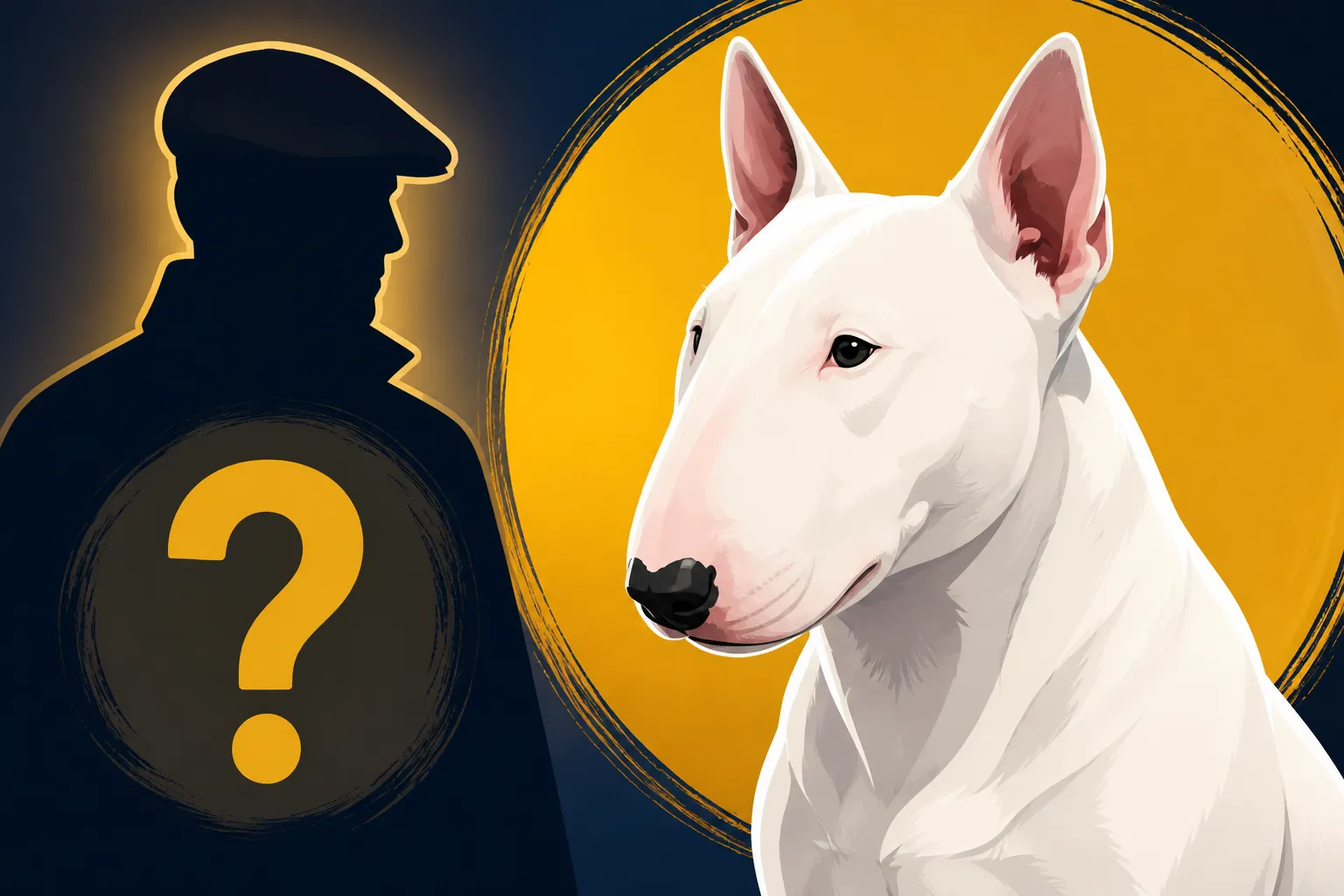
The Bull Terrier’s dramatic downward-curving profile is so distinctive that it’s natural to wonder who bred the first dog with that look. The short answer is that no single breeder can be reliably credited with creating the first fully downfaced Bull Terrier. James Hinks established the breed, but its familiar head shape developed gradually through the work of later breeders.
The short answer on the first downfaced Bull Terrier
James Hinks founded the breed, but not its finished head type
James Hinks is widely credited with developing the Bull Terrier in Birmingham, England, during the 1860s. His breeding helped establish the dog as a distinct breed, and his early Bull Terriers were important ancestors of the dogs we know today. But being the breed’s founder does not mean Hinks produced the first Bull Terrier with the modern, pronounced downface.
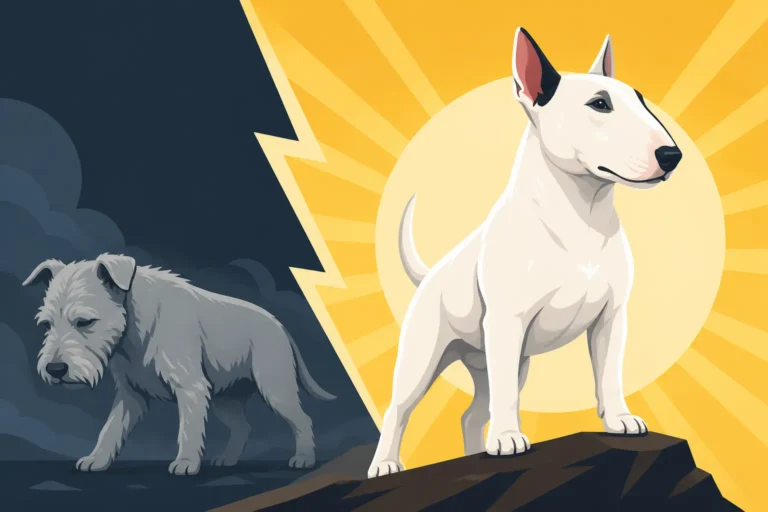
Early Bull Terriers did not all have the long, continuous curve from the top of the skull to the tip of the nose that is prized in the modern show ring. Their heads were more conventional in profile, with a more noticeable transition between forehead and muzzle. The breed’s appearance changed over generations as breeders selected dogs with particular features.
That distinction matters because the question is often framed as if one breeder made a single, decisive change. The historical record supports a more gradual story: Hinks helped establish the breed, while later breeders shaped its developing type. For more on the breed’s beginnings, see Where the Bull Terrier Comes From and Who James Hinks Was.
No single breeder has a settled claim to the first complete downface
A breeder may be credited with producing a dog that showed an early version of a feature without having created the finished look. That is especially true of the Bull Terrier’s head, which changed incrementally. A dog might have had a flatter profile than its predecessors, while still lacking the smooth, full curve that people now associate with the breed.
Historical photographs and descriptions also make comparisons tricky. Pictures can differ in angle, lighting, and quality, and older descriptions did not always use today’s terms consistently. One writer might call a head “Roman” or “downfaced” while another would reserve those words for a more pronounced shape.
So, the most careful answer is that there is no universally accepted, well-documented first breeder of the fully modern downfaced Bull Terrier. James Hinks is the founder of the breed, but the distinctive profile emerged over time through generations of selection. The broader changes are explored in How the Bull Terrier's Head Changed Over Time.
What breeders mean by a Bull Terrier downface
The profile is a smooth curve rather than a sharp angle
A downface describes the Bull Terrier’s characteristic head profile. Seen from the side, the line runs from the top of the skull toward the nose in a gradual curve that slopes downward. The ideal is not a sharply pinched angle or a dip in the middle, but a continuous, well-filled outline.
That flowing shape is one reason the Bull Terrier’s head can be hard to describe if you have only seen the breed from the front. From that angle, you may notice the oval outline and distinctive eyes; from the side, the profile becomes clearer. The muzzle and skull appear to blend rather than meet at an obvious stop.
The word “downface” can be confusing because it sounds as if the dog’s face simply points downward. In breed discussions, it refers more specifically to the profile and the relationship between the skull and muzzle. What a Bull Terrier's Downface Is explains the term in more detail, while Why a Bull Terrier Has No Stop looks at another feature that contributes to the smooth outline.
A Roman finish describes the same general impression
You may also hear people use the phrase “Roman finish” when talking about the Bull Terrier’s head. It refers to the curved profile, not to a separate breed type or a particular historical dog. The phrase is sometimes used loosely, so it helps to ask what a speaker means: a gentle curve, or the more pronounced profile seen in some modern show lines.
A Bull Terrier’s head is more than a curved nose line. Breed type also involves the overall shape and balance of the skull, muzzle, eyes, and jaw. Focusing on one feature in isolation can make the head seem exaggerated in a way that does not reflect the whole dog.
The feature is also a matter of degree. Some Bull Terriers have a more pronounced curve than others, and a dog’s profile can look different depending on how it is standing or how a photograph was taken. For a closer explanation of the term, see What a Roman Finish Means on a Bull Terrier.
| Feature | What it describes | Why it matters when discussing history |
|---|---|---|
| Downface | The smooth, downward-curving profile from skull toward nose | It developed gradually, rather than appearing all at once |
| Stop | The indentation where the forehead meets the muzzle in many breeds | The Bull Terrier is known for having little or no pronounced stop |
| Roman finish | A term often used for the curved profile | It may be used differently by different writers or breeders |
| Egg-shaped head | The overall oval impression of the modern Bull Terrier head | It reflects a broader evolution in head type, not just the nose line |
How the Bull Terrier’s head changed over time
Early Bull Terriers did not look exactly like modern dogs
The Bull Terrier has changed in appearance since its early development. Early examples could have a more obvious division between the skull and muzzle, and their profiles did not consistently show the pronounced, unbroken curve familiar from many modern photographs.
That does not mean the early dogs were somehow “wrong.” Breed appearance evolves as breeders make choices about which traits to preserve and emphasize. Over time, features that were once less consistent can become more recognizable, especially when breeders repeatedly select dogs with similar outlines.
It is also worth remembering that a single old photograph cannot tell the whole story. A side-on image may make a curve appear stronger or weaker; a dog’s posture can change the apparent line of its head. When comparing old and modern Bull Terriers, it is more useful to look at multiple examples and descriptions than to rely on one striking picture. Whether Early Bull Terriers Looked Like Today's explores that comparison.
The egg-shaped head is the result of gradual selection
The familiar egg-shaped head is related to the downface, but the two terms do not mean precisely the same thing. “Downface” refers mainly to the profile. “Egg-shaped head” describes the broader impression of the skull and muzzle when viewed from the side and from other angles.
As breeders selected for a more continuous profile and a particular balance of head features, the modern outline became more recognizable. There was no switch from one generation of ordinary-headed dogs to a generation of fully finished modern heads. The change was a progression, with individual dogs showing some features more strongly than others.
This is why it is difficult to name a single person as the creator of the finished head. A breeder can influence a line, but the breed-wide change reflects decisions made by many people over time. To follow the development of that recognizable outline, see When the Bull Terrier's Egg Head Appeared and How Long It Took to Fix the Bull Terrier Type.
How to understand claims about the first downfaced dog
Treat “first” as a claim that needs a clear definition
When someone says a particular dog was “the first downfaced Bull Terrier,” the key question is what they mean by downfaced. Are they referring to any noticeable downward curve, an early example of a smooth profile, or a head that would be considered close to the modern ideal? Those definitions can point to different dogs.
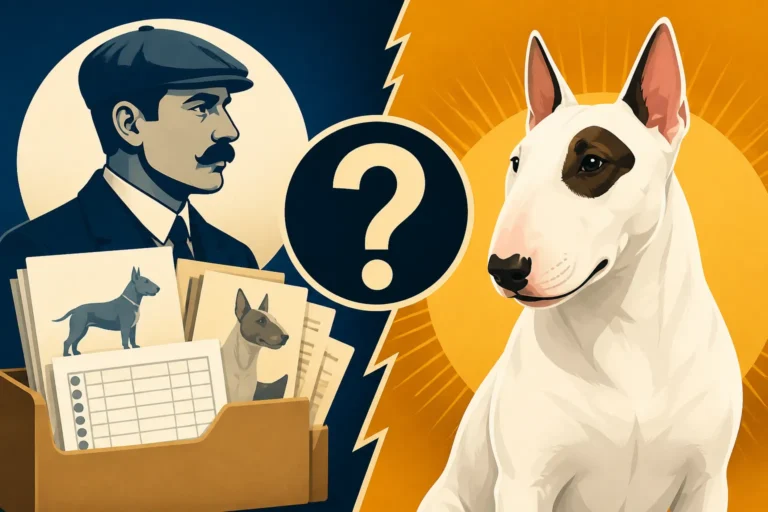
The word “first” also depends on the evidence being used. A claim may be based on a show photograph, a breeder’s account, a pedigree, or a later historical summary. These are not interchangeable. A photograph can show appearance, but it does not establish who bred the dog unless reliable records identify the breeder.
That does not make old breed stories useless. They can help illustrate how people understood the Bull Terrier’s changing appearance. It simply means that a specific name should not be treated as settled fact unless the claim is supported by clear records and a consistent definition.
Separate the breed’s founder from the breeders who refined its type
It is helpful to keep three ideas distinct: who founded the breed, who bred a particular influential dog, and who contributed to the development of a feature over time. In the Bull Terrier’s history, those answers do not have to be the same person.
James Hinks belongs in the story as the breeder associated with establishing the Bull Terrier. Later breeders contributed to the breed’s evolving appearance, including the increasingly distinctive head. But without a dependable record identifying one individual as the producer of the first fully downfaced dog, assigning that credit to a single breeder risks turning a gradual history into a neat but uncertain anecdote.
So if you are looking for a name, the most accurate response is James Hinks for the breed’s foundation, not for a definitively documented first modern downface. The signature profile was refined over generations, and the first dog to meet today’s idea of a complete downface cannot be named with confidence. That is less tidy than a one-person origin story, but it better reflects how breeds actually develop.
Disclaimer
This article is for general informational purposes only and does not constitute professional advice. Laws, prices and regulations vary by location and change over time. Consult a qualified professional for guidance on your specific situation.