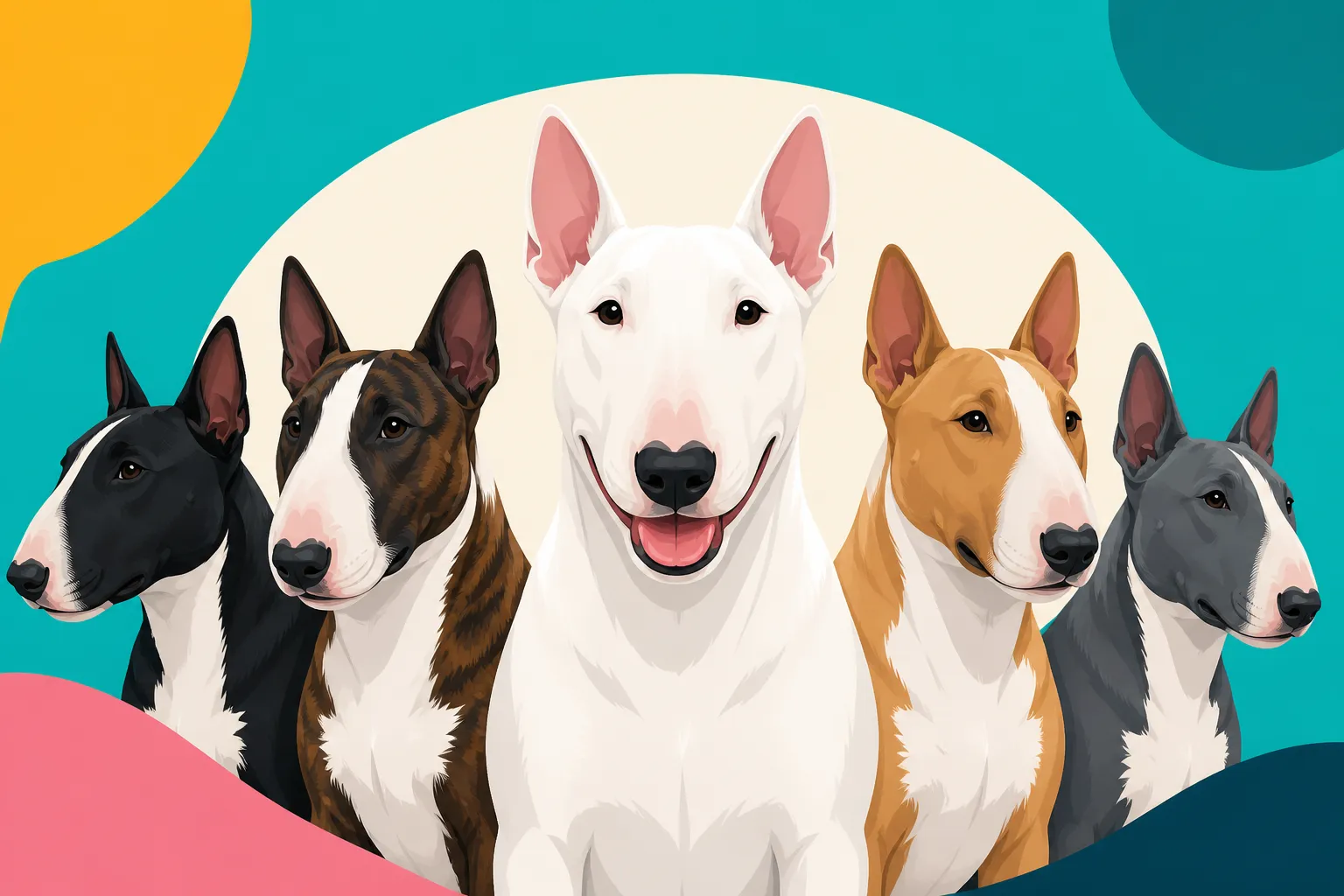
Which Colors a Bull Terrier Comes In
One of the most common questions I hear from folks considering bringing a Bull Terrier into their lives, or even just admiring them from afar, is about their coat colors. It's not as straightforward as you might think, and there's a lot of misunderstanding out there about what's "standard," what's rare, and what actually impacts a Bull Terrier's health. This guide is going to walk you through the fascinating spectrum of Bull Terrier colors, from the classic white to the rich brindles and striking tri-colors, explaining the history, the breed standard, and the health considerations that sometimes go hand-in-hand with certain hues.
The Original White Cavalier: A Look at the Iconic White Bull Terrier
When you picture a Bull Terrier, chances are the first image that springs to mind is that striking, pure white dog with those distinctive triangular eyes and egg-shaped head. This isn't a coincidence; the white Bull Terrier is the breed's foundational color and, for a long time, was the only color recognized as truly "typey." It’s an iconic look that captured the hearts of many, earning the breed the noble moniker of "The White Cavalier."
The Historical Significance of White
The story of the Bull Terrier begins in 19th-century England with James Hinks, who set out to create a gentleman's companion from the rough-and-tumble bull-and-terrier crosses of the day. He meticulously bred for an all-white coat, believing it signified purity and elegance. This was a deliberate choice, intended to distinguish his new breed from its more utilitarian ancestors and elevate its status. For decades, only white Bull Terriers were accepted in the show ring, and they were truly a sight to behold, standing out with their impeccable appearance and spirited demeanor. Their dazzling white coats were seen as a mark of distinction, a testament to Hinks’ vision and the breed's evolving purpose from pit dog to fashionable companion.
The early Bull Terrier was defined by this pristine white coat, a stark contrast to the often mismatched or darker colors of the working dogs from which they descended. This commitment to an all-white appearance wasn't just aesthetic; it was a statement about the breed's refinement and its new role in society. For those early fanciers, a Bull Terrier simply had to be white. It was non-negotiable, a point of pride, and a characteristic that cemented the breed's identity in the burgeoning world of dog shows. You can read more about this legacy in The White Cavalier: Why the Bull Terrier Never Started Fights.
Deafness and the White Coat Connection
While the pure white coat was undeniably beautiful and historically significant, it also came with a significant genetic challenge: congenital deafness. It's a heartbreaking reality for many white animals across different species, and Bull Terriers are no exception. The gene responsible for the absence of pigment in the coat (and often in the skin and iris) can also affect the development of the auditory canals and nerve cells in the inner ear. This means that a significant percentage of white Bull Terriers are born deaf, either unilaterally (in one ear) or bilaterally (in both ears). This isn't a fault of breeding but an unfortunate genetic link that breeders must constantly monitor.
Responsible breeders understand this connection intimately. They know that How Many White Bull Terriers Are Born Deaf is a question with a real, measurable answer, and it's why every white Bull Terrier puppy should undergo a BAER (Brainstem Auditory Evoked Response) test before going to its new home. This test, typically performed around 6-8 weeks of age, is the only reliable way to determine a puppy's hearing status. It’s an essential step, as a deaf Bull Terrier requires a different approach to training and living, and prospective owners need to be fully aware of a puppy's capabilities from the start.
The Rise of Colored Bull Terriers: History and Acceptance
While white Bull Terriers held sway for many years, the presence of color in the breed's ancestry meant that colored puppies would occasionally appear in litters. Initially, these were often culled or simply not recognized by the breed fancy. However, over time, a determined group of enthusiasts recognized the value and beauty of these colored variations, leading to a long and sometimes contentious battle for their official acceptance.
The Fight for Recognition
The struggle for colored Bull Terriers to gain recognition was a long and arduous one, stretching for decades after the breed's initial establishment. Imagine the scene: pure white champions gracing the show rings, while their colored siblings were relegated to the sidelines, despite possessing all the other desirable Bull Terrier traits. This created a division within the breed's enthusiasts, with some fiercely protective of the all-white ideal and others advocating for the inclusion of color. It wasn't just about aesthetics; it was about genetic diversity and broadening the gene pool to potentially mitigate some of the health issues associated with extreme inbreeding for the white coat.
Eventually, the tide began to turn. Breeders recognized that incorporating colored lines could introduce new vigor and possibly reduce the incidence of deafness. The push came from dedicated individuals who believed that a good Bull Terrier was a good Bull Terrier, regardless of its coat color. Their persistence paid off, but it was a testament to their passion and foresight that When Colored Bull Terriers Were Accepted finally arrived, marking a significant milestone in the breed's history and expanding the visual tapestry of the Bull Terrier world.
Ted Lyon and the Brindle Influence
A key figure in the acceptance of colored Bull Terriers was Ted Lyon, a breeder whose influence cannot be overstated. He was instrumental in demonstrating the quality and type of colored Bull Terriers, meticulously developing lines that proved they could meet the breed standard in every way except for their hue. Lyon's efforts were pivotal in showcasing that color did not diminish the Bull Terrier's essential characteristics or working ability. He was a trailblazer, pushing against established norms and showing the world that these dogs deserved their place. You can learn more about his significant contributions in Who Ted Lyon Was to the Bull Terrier.
Lyon specifically focused on the brindle pattern, a striking tiger-stripe effect that proved particularly popular. By carefully breeding and exhibiting these dogs, he helped to shift public perception and eventually paved the way for the various colored Bull Terriers we see today. His work not only diversified the breed's appearance but also helped to strengthen its genetic foundation by allowing a wider range of healthy individuals to contribute to future generations. This focus on brindle set a precedent, opening the door for other recognized colors to follow.
Standard Bull Terrier Colors and Markings
Today, the Bull Terrier breed standard recognizes a variety of colors and patterns, reflecting the rich genetic history of the breed. While the pure white remains iconic, a spectrum of colored coats is now celebrated, each with its own charm and distinctive appeal.
Recognized Solid Colors
While "solid" might be a bit of a misnomer, as most colored Bull Terriers will have some white markings, the primary recognized solid colors refer to the dominant pigment of the coat. These are typically deep, rich hues that showcase the Bull Terrier's sleek, short coat beautifully.
- Red: These Bull Terriers sport a vibrant, often rusty red coat that can range from a light golden red to a deep, rich mahogany. It's a warm and eye-catching color that stands out in the show ring and on the street. Red Bull Terriers often have white markings, particularly on the chest, feet, and tip of the tail, which only adds to their appeal.
- Fawn: A beautiful, soft tan or yellowish-brown, fawn is a gentler color than red but equally striking. It can vary in intensity, from a pale creamy fawn to a deeper, richer shade. Fawn Bull Terriers also commonly feature white markings, which can create a lovely contrast against their light coats.
- Black Brindle: While not truly a "solid" color, black brindle is so distinctive it often feels like one. It's a dark base coat with lighter stripes, giving a striking, tiger-stripe effect. More on brindle below, but when the black is dominant, it presents as a dark, intense color.
- Tri-Color: This is a combination of black, tan, and white. Typically, a tri-color Bull Terrier will have a black body with tan points (like eyebrows, cheeks, and legs) and white markings. The interplay of these three colors creates a sophisticated and visually appealing coat.
It’s important to note that even with these "solid" colors, small patches of white are not just allowed but quite common. The standard usually specifies where white is permissible and to what extent, but the emphasis is on the overall impression and the dominance of the primary color.
Brindle and Tri-Color Patterns
These patterns add a layer of complexity and beauty to the Bull Terrier's coat. They are highly sought after by many enthusiasts for their unique visual appeal.
- Brindle: This is a fascinating pattern where stripes or streaks of color are superimposed on a lighter base. In Bull Terriers, you typically see a dark base color (often black, red, or fawn) with lighter stripes of the alternate color. What a Brindle Bull Terrier Looks Like is truly a sight to behold, with patterns resembling tiger stripes or swirling marble. The intensity and width of the stripes can vary greatly from one dog to another, making each brindle Bull Terrier truly unique. The stripes should be clearly defined, offering a dynamic visual texture to the coat.
- Tri-Color: As mentioned, tri-color Bull Terriers combine black, tan, and white. The black usually forms the main body color, with distinctive tan markings appearing on the muzzle, above the eyes (like eyebrows), on the chest, and on the legs. White markings are also present, typically on the chest, paws, and tail tip. What a Tricolor Bull Terrier Looks Like is a dog of striking contrasts, with each color clearly delineated, creating a bold and elegant appearance. The tan points are often quite rich and expressive, adding depth to their facial features.
These patterns are not merely aesthetic; they are part of the breed's heritage, reflecting the diverse genetic contributions from its ancestors. They offer a rich alternative to the pure white, allowing for a broader appreciation of the Bull Terrier's physical form.
Markings on White Bull Terriers
Even our beloved "White Cavaliers" can carry a bit of color, and the breed standard has specific allowances for this. It's a common misconception that a white Bull Terrier must be absolutely, completely spotless.
- Colored Markings: A completely pure white coat, while historically ideal, can sometimes be exceptionally difficult to achieve without intense inbreeding. The breed standard does permit some colored markings on white Bull Terriers, typically on the head or ears. These markings are usually small patches of black, brindle, or red. They are generally seen as acceptable, provided they do not detract from the dog's overall appearance and "whiteness." The key is that the white must be the predominant color, accounting for the vast majority of the coat.
- Placement and Size: The ideal placement for these colored markings is usually on the head, often around an eye or on an ear. A small patch on the body might be acceptable, but large patches, especially on the body, can be considered faults in the show ring, as they deviate from the predominant white expectation. The standard typically outlines that color on a white Bull Terrier, particularly on the body, should be minimal and certainly not cover a significant area. So, if you see a white Bull Terrier with a little black patch over one eye, similar to the iconic Target dog, that's generally considered acceptable and often quite charming. It’s a point worth clarifying for new owners asking Whether Markings on a White Bull Terrier Are Allowed.
Understanding Non-Standard and Disqualifying Colors
While the breed standard embraces a variety of colors today, there are still certain hues and patterns that are considered non-standard or even disqualifying in the show ring. These distinctions are important for breeders and those interested in showing, but they don't necessarily mean the dog is unhealthy or unsuitable as a companion.
Colors You Won't See in the Ring
Certain colors, while genetically possible, simply aren't recognized by the official breed standards of major kennel clubs. These dogs are still purebred Bull Terriers and can make wonderful pets, but they wouldn't be competitive in conformation events.
- Blue: This dilute color, often appearing as a grayish-blue, is not accepted in the Bull Terrier standard. While beautiful and sometimes seen in other breeds, Whether a Bull Terrier Can Be Blue is a question that, in a show context, carries a definitive "no." Dogs carrying the dilute gene that expresses as blue are not considered standard and would be disqualified from the ring.
- Liver: Another dilute color, liver (a reddish-brown, often with amber eyes and a brown nose) is also not recognized. Similar to blue, liver pigmentation is a genetic dilute that deviates from the accepted color palette for the breed. These colors, while genetically natural, simply fall outside the carefully defined parameters that breed clubs have established to maintain the unique appearance of the Bull Terrier.
It's crucial for prospective owners to understand that a "non-standard" color does not mean a dog is unhealthy or poorly bred for temperament. It simply means it doesn't conform to the aesthetic criteria set by the show world. For a family seeking a loving companion, a blue or liver Bull Terrier can be just as wonderful as any other color, provided its health testing is sound.
Why Some Colors Are Disqualified
Disqualification in the show ring is a serious matter, usually reserved for traits that are considered severe deviations from the breed standard, or that might indicate an underlying health issue or a departure from the breed's fundamental characteristics.
- Excessive Ticking or Patches: While small markings on white Bull Terriers are allowed, extensive ticking (small flecks of color) or large, asymmetrical patches of color on a predominantly white dog can be disqualifying. The emphasis on "predominantly white" is key for the white variety.
- Any Color Not Specified: Broadly, any color or pattern not explicitly mentioned as standard is considered disqualifying. This is why blue and liver coats fall into this category. The purpose of a breed standard is to provide a blueprint, and significant departures from that blueprint lead to disqualification. This isn't about shaming the dog, but about maintaining the integrity and defined appearance of the breed in competitive contexts.
For most pet owners, these disqualifications are irrelevant. A disqualifying color in the show ring has no bearing on a dog's ability to be a fantastic, loving, and healthy family member. The main takeaway here is that if you're looking for a show dog, you need to be extremely particular about color and markings. If you're looking for a pet, your focus should always be on health, temperament, and the reputation of the breeder, regardless of the precise shade of their coat.
The Impact of Color on Health and Temperament
While many Bull Terrier colors are simply a matter of aesthetics, there are some important considerations when it comes to health, particularly concerning white coats. Debunking myths about color and temperament is also crucial for responsible ownership and informed choices.
White and Deafness Revisited
We touched on this earlier, but it bears repeating with emphasis: the link between the white gene and deafness in Bull Terriers is a very real, scientifically established connection. It's not a myth, and it's not something to be ignored. The genetic mechanisms involved in pigment production in the coat and skin are closely related to the development of the structures in the inner ear. When there’s a severe lack of pigment, as in a pure white coat, these auditory structures can fail to develop properly, leading to partial or complete deafness.
This means that Why a White Bull Terrier Should Be BAER Tested isn't just a suggestion, it's a fundamental responsibility for any reputable breeder. A BAER test provides definitive answers about a puppy's hearing in each ear. Owners of unilaterally deaf (deaf in one ear) Bull Terriers often report that their dogs live perfectly normal lives, adapting remarkably well. Bilaterally deaf Bull Terriers, however, require specialized training and management. They can thrive in the right homes, but it's a commitment that requires understanding and patience, primarily relying on hand signals and visual cues. Being prepared for this potential challenge is part of being a responsible Bull Terrier owner.
Myths About Color and Temperament
It's astonishing how many old wives' tales persist about dog breeds, and Bull Terriers are no exception. One common myth suggests that certain coat colors are associated with specific temperaments or personalities. For instance, you might hear someone claim that "red Bull Terriers are more stubborn" or "brindles are softer." Let me be clear: there is no scientific basis whatsoever for these claims. Coat color genes are entirely separate from temperament genes.
A Bull Terrier's personality is shaped by a complex interplay of genetics (their breed-specific traits, inherited from all their ancestors, not just those of a particular color), early socialization, training, and environment. A well-bred Bull Terrier from a reputable breeder, regardless of its color, should exhibit the characteristic clownish, intelligent, and sometimes mischievous temperament that makes the breed so unique. Differences in individual personality are far more likely due to genetic lineage, early experiences, and training approaches than the color of their fur. So, don't let a color myth sway your decision; focus on meeting the parents (if possible), observing the puppies, and ensuring you're getting a dog from a breeder who prioritizes sound health and temperament.
Choosing a Bull Terrier Based on Color: Ethical Considerations
When searching for your next Bull Terrier, the kaleidoscope of colors might be appealing, but it's vital to approach your choice with ethical considerations at the forefront. Prioritizing health, temperament, and responsible breeding practices should always come before a specific aesthetic preference.
Prioritizing Health Over Hue
It's completely natural to have a preference for a certain look – perhaps you've always dreamed of a striking brindle, or the classic white Bull Terrier calls to your heart. However, it is absolutely paramount to remember that a Bull Terrier’s health and well-being should always take precedence over its coat color. Falling in love with a specific hue and then compromising on health clearances or breeder ethics can lead to heartbreak and significant financial strain down the line. We've already discussed the deafness link in white Bull Terriers, but there are other breed-specific health concerns to be aware of, regardless of color. What a Bull Terrier Breeder Should Have Tested includes conditions like hereditary nephritis, heart issues, and patellar luxation, none of which are linked to coat color but are crucial for a healthy dog.
A truly responsible breeder will focus on producing healthy, well-socialized puppies, and their breeding choices will be guided by comprehensive health testing, not just popular demand for a certain color. Don't be swayed by breeders offering "rare" or "exclusive" colors at inflated prices, especially if they can't provide verifiable health clearances for the parents and puppies. A beautiful coat is lovely, but a healthy dog that lives a long, happy life is invaluable. You'll find yourself needing to stock up on dog food and supplies at places like Chewy, regardless of color, so ensuring a healthy start is always the best investment.
Finding a Reputable Breeder
This is the golden rule for acquiring any purebred dog, and it's especially true for Bull Terriers. A reputable breeder is your best defense against inherited health problems and temperament issues, far more so than any specific coat color. They will be transparent about their breeding practices, eager to answer your questions, and focused on placing their puppies in appropriate homes. They'll also be upfront about potential issues like deafness in white lines and have the necessary tests done.
Here's what to look for:
- Health Testing: They should provide clear documentation of health screenings for both parent dogs, including BAER tests for white Bull Terriers, and cardiac and kidney screenings for all their breeding stock. Ask to see the actual certificates.
- Transparency and Questions: A good breeder will ask you many questions about your lifestyle and experience, and they'll happily answer all of yours. They won't pressure you and will be open about their breeding philosophy.
- Environment: The puppies should be raised in a clean, stimulating home environment, not in isolated kennels. They should be well-socialized and appear healthy, curious, and playful.
- Lifetime Support: A reputable breeder will offer ongoing support and advice for the lifetime of your dog. They will also typically have a contract that stipulates the dog must be returned to them if you can no longer care for it.
- Waitlists: Expect to be on a waitlist for a well-bred puppy. This isn't a sign of unavailability but a sign of demand for quality. Instant availability, especially with specific color promises, can be a red flag.
- Registration: Puppies should be registered with a recognized kennel club (like the AKC in the United States), though not necessarily for showing, but as proof of purebred lineage.
- Contract and Guarantee: A clear contract outlining health guarantees and responsibilities from both parties.
When you purchase food, treats, or toys from a trusted retailer like Chewy, you expect quality and transparency. You should demand the same, if not more, from a Bull Terrier breeder. Don't just pick a puppy from an online ad because of its cute face or "rare" color; do your due diligence and choose a breeder who truly cares for the welfare of the breed.
Comparing Bull Terrier Color Categories
Here's a simple table to help clarify the main color categories recognized within the Bull Terrier breed standard:
| Color Category | Description | Accepted in Show Ring? | Common Health Concerns (Color-Related) |
|---|---|---|---|
| White | Pure white coat, minimal or no markings. | Yes | Higher risk of congenital deafness |
| Red | Ranging from golden red to deep mahogany, often with white markings. | Yes | None directly linked to color |
| Fawn | Pale cream to rich tan/yellowish-brown, often with white markings. | Yes | None directly linked to color |
| Brindle | Dark base coat with lighter stripes (e.g., black brindle, red brindle). | Yes | None directly linked to color |
| Tri-Color | Black body with tan points and white markings. | Yes | None directly linked to color |
| Black & White | Predominantly black with significant white markings (often considered part of Brindle/Tri-Color spectrum if tan points are absent or minimal). | Yes | None directly linked to color |
| Blue | Dilute gray/blue coat. | No (Disqualifying) | None directly linked to color |
| Liver | Reddish-brown coat with lighter eyes/nose. | No (Disqualifying) | None directly linked to color |
Remember, even with accepted colors, the quality of the dog's structure, health, and temperament always takes precedence. Whether you’re getting a vibrant red, a striking brindle, or a classic white, a Bull Terrier is an exceptional companion. Just make sure you’re choosing wisely, prioritizing the overall well-being of your future family member. You'll probably be ordering all sorts of fantastic Bull Terrier-proof items from Chewy, so you'll want a companion ready to enjoy them!
Disclaimer
This article is for general informational purposes only and does not constitute professional advice. Laws, prices and regulations vary by location and change over time. Consult a qualified professional for guidance on your specific situation.