The Bull Terrier Is the Only Breed With a Triangular Eye
One of the most instantly recognizable features of a Bull Terrier, something that genuinely sets them apart from every other breed you’ll encounter, is that truly unique head. But beyond the iconic egg shape and the Roman finish, it’s often the eyes that capture people's attention, sometimes causing a little confusion or even misinterpretation. This guide will dive deep into the fascinating anatomy and history behind the Bull Terrier's distinctive eyes, explaining why they appear triangular and what that means for our beloved, quirky companions.
The Iconic Bull Terrier Head: A Study in Uniqueness
Let's be real, a Bull Terrier's head is a work of art, a masterpiece of canine architecture that prompts double-takes and conversations wherever they go. It’s not just distinct; it’s utterly unparalleled in the dog world. This unique silhouette is a hallmark of the breed, carefully cultivated over generations to create that quintessential profile we all adore. Understanding the head is key to understanding the eyes, as they are inextricably linked in forming the Bull Terrier's overall appearance and expression. It's a combination that gives them that "Bull Terrier look" that's impossible to mistake.
The Egg-Shaped Cranium and Roman Finish
When you look at a Bull Terrier, the first thing that often strikes you is that smooth, unbroken curve of the skull. It’s famously described as egg-shaped, and it truly is. From the tips of the ears right down to the nose, there are no sudden dips or angles, just a continuous, flowing line. This isn't accidental; it's a carefully bred trait. The fullness of the skull, particularly between the ears, contributes to this rounded, almost football-like appearance when viewed from the front. It’s robust, powerful, and perfectly suited to the dog's strong, muscular build. There's a real sense of ancient strength in that solid dome.
This distinctive cranial shape isn't just for looks; it provides ample room for a powerful jaw and the muscles that operate it, a nod to the breed's origins. The "Roman finish" refers to that elegant downward curve from the top of the skull to the end of the muzzle, completing the egg shape. There's no abrupt stop, no sudden change in plane, just a smooth, continuous arch. This combination gives the Bull Terrier its strong, characteristic profile. Where the Bull Terrier's Egg Shaped Head Came From is a fascinating read if you want to delve deeper into the origins of this unique feature. It's a hallmark that breeders strive for, and it immediately communicates the breed to anyone who sees it.
Why "Downface" Defines the Bull Terrier Profile
The term "downface" is often used to describe the unique profile of the Bull Terrier's head, and it's intrinsically tied to that Roman finish. It means that the line of the muzzle and skull slopes gently downwards from the top of the head to the nose, without any indentation or "stop" where the forehead meets the muzzle. Imagine drawing a perfectly smooth, slightly arched line from the back of the skull to the tip of the nose – that's the downface. This elegant curve is a defining characteristic, giving the Bull Terrier a powerful yet sophisticated appearance. It’s not just a flat plane; it has a subtle convexity.
This downward slope is a critical part of the breed standard and contributes significantly to the Bull Terrier's powerful jaw and unique expression. Without it, the head wouldn't have that distinctive "egg" or "Roman" quality. It's a feature that really distinguishes them from other terrier types, which often have a more pronounced stop and a flatter forehead. The downface exaggerates the sense of strength and determination in their profile, making them look formidable yet undeniably handsome. It's a subtle but powerful detail that makes all the difference in their overall silhouette.
The Lack of a Stop: A Smooth Transition
As we just touched upon, a defining characteristic of the Bull Terrier's head, and one that directly influences the appearance of its eyes, is the complete lack of a "stop." In most dog breeds, the stop is the indentation or angle between the forehead and the muzzle, right where the eyes are set. Think of a Labrador or a German Shepherd – they have very distinct stops. Not the Bull Terrier. Their profile is a seamless, unbroken curve from the top of the skull right down to the tip of the nose.
This absence of a stop creates a smooth, continuous plane that makes the eyes appear even smaller and more deeply set within the skull. It's this smooth transition, combined with the full, egg-shaped cranium, that contributes to the triangular appearance of the eyes, which we'll explore in detail next. The lack of a stop is crucial for the breed's overall head type, contributing to its distinct and powerful look. It’s not just an aesthetic choice; it’s fundamental to the entire structure of the Bull Terrier’s face, making everything flow in a harmonious, albeit unusual, way.
Unpacking the Triangular Eye: Anatomy and Aesthetics
So, we come to the star of the show: the "triangular eye." It’s the phrase that’s often used, and it’s what draws so much curiosity to the breed. But here's a little secret: a Bull Terrier's actual eyeball isn't triangular. That would be quite a feat of genetics! The triangular appearance is an optical illusion, a clever trick played by the unique combination of the skull shape, eye placement, and surrounding musculature. It’s a testament to how all these elements work together to create something truly distinctive in the canine world.
The Small, Deep-Set, and Dark Eye
A Bull Terrier's eyes are actually quite small in comparison to the size of their head, and they are set deeply within the skull. This deep-set placement offers a degree of protection, which was likely beneficial in the breed’s historical roles. The eyes should be as dark as possible, preferably black, and possess a lively, keen, and intelligent expression. A Bull Terrier's gaze is rarely dull; it often holds a mischievous spark or a look of intense concentration, depending on their mood. Why a Bull Terrier's Eye Is the Smallest of Any Breed delves into this in more detail.
The small size and deep setting mean there isn't a lot of "white" of the eye visible, which further emphasizes their dark, piercing quality. This combination gives them an almost almond-shaped appearance if you look closely at the iris and pupil. It’s not a wide-open, round eye, but rather a compressed, intense one. This anatomical structure, more than any actual triangular shape of the eyeball itself, is what forms the basis for the unique visual effect.
The Myth of the "Triangular" Shape: It's All About Placement
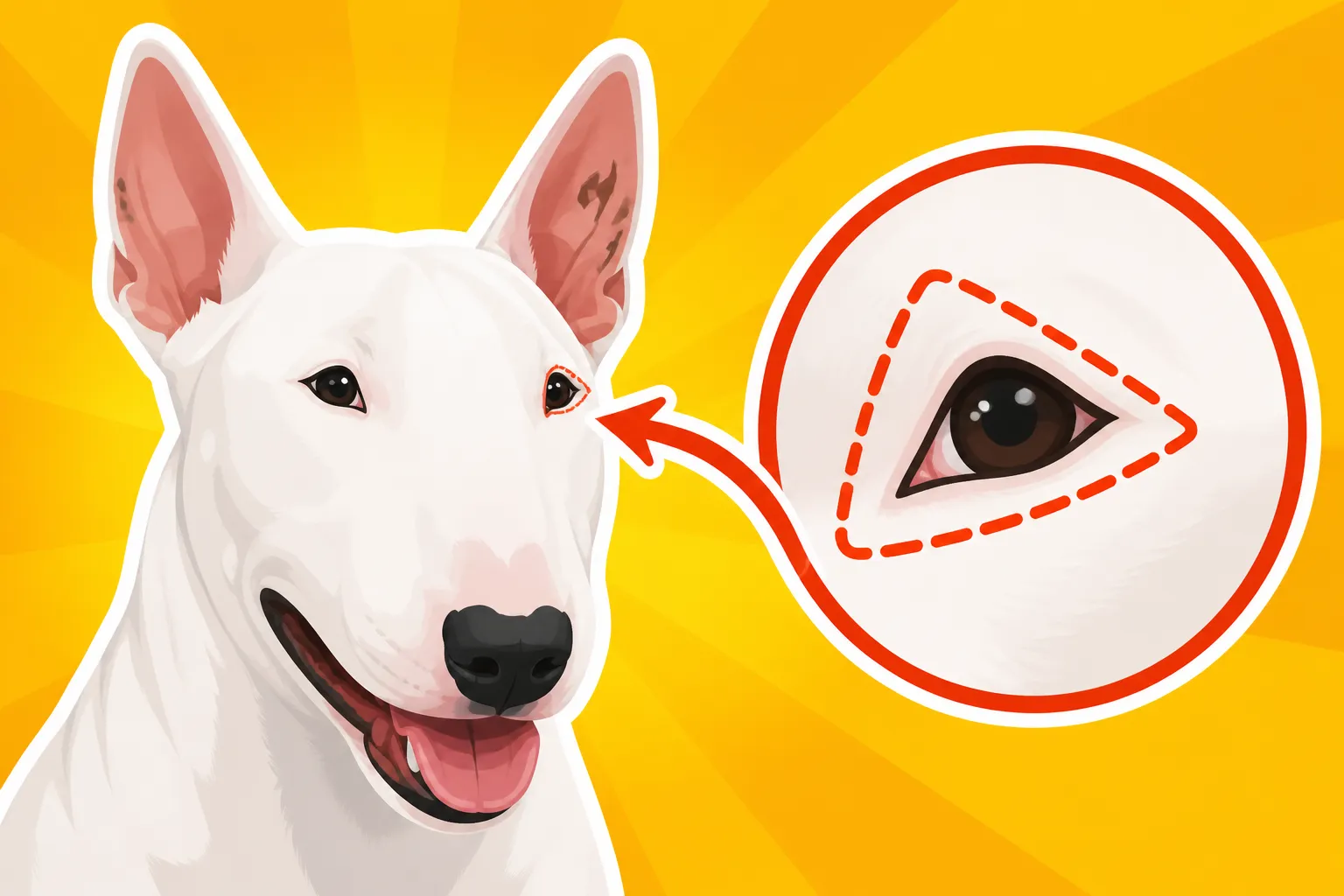
Here’s where we clear up the biggest misconception: the Bull Terrier's eye itself is not triangular. Instead, it's the opening of the eye, created by the position of the eyelids and the surrounding bone structure, that gives the illusion of a triangle. Imagine looking at an almond, then imagine placing it deeply within a rounded socket. The way the skin and bone meet at the outer and inner corners, combined with the slight tilt and deep setting, creates that distinctive "triangular" effect. It's less about the shape of the globe and more about how the skin stretches around it.
Specifically, the outer corner of the eye typically points upwards, while the inner corner remains lower, close to the nose. This slight upward slant, combined with the relatively straight top eyelid and the curved lower lid, forms what appears to be a triangular outline. It’s a subtle but critical detail. This is what the breed standard refers to, and it’s why a Bull Terrier's eyes are often described using this unique descriptor. The Bull Terrier Is the Only Breed With a Triangular Eye is exactly what we're discussing here, and it’s a fascinating aspect of their unique appearance.
How the Eye Contributes to the Breed's Expression
The eyes are often called the windows to the soul, and for the Bull Terrier, their distinctive triangular eyes play a massive role in shaping their overall expression and character. That keen, dark, and deeply set gaze contributes to an appearance that can be simultaneously alert, intelligent, mischievous, and sometimes, well, a little bit goofy. There's a certain intensity to their stare, a focused quality that can make them seem incredibly serious when they're actually just contemplating whether to steal your sock.
When a Bull Terrier gives you "the look," those triangular eyes are central to it. They can convey a surprising range of emotions – from playful curiosity to stubborn determination, or even a soft, loving adoration for their chosen people. This unique eye shape, set within that egg-shaped head, is a key component of what makes their expressions so captivating and, let's be honest, often comical. It’s a huge part of their charm and why Bull Terrier owners fall so hard for them.
Vision and Function: Is the Unique Eye an Advantage or Disadvantage?
It’s natural to wonder if such a uniquely shaped and placed eye affects a Bull Terrier's vision. After all, most dogs have a more "standard" eye shape and placement. The truth is, while their vision is generally good, there are certain considerations that come with those deep-set, triangular peepers. It’s not necessarily a disadvantage, but it does mean their visual field might differ slightly from other breeds, and specific health checks are always a good idea.
Field of Vision: What a Bull Terrier Sees
The deep-set nature of the Bull Terrier's eyes, combined with the robust bone structure of their skull, means they might have a slightly narrower field of vision compared to breeds with more prominent or forward-facing eyes. This isn't usually a significant problem in their day-to-day lives, but it means they might have a larger blind spot directly behind them or to their immediate sides. They often rely on their excellent hearing and strong sense of smell to compensate for any minor visual limitations. Think about how they might swivel their whole head to get a better look at something.
Despite this, their central vision and ability to track objects moving forward are excellent. They are very adept at observing their environment, whether it's spotting a squirrel darting across the yard or anticipating a throw during a game of fetch. Whether a Bull Terrier Can See Straight Ahead discusses how their eye placement allows for good binocular vision, essential for judging distance. They might not have panoramic sight, but what they do see, they see well and with purpose.
Eye Health Concerns Associated with the Breed
While the unique shape is primarily cosmetic, Bull Terriers can be prone to certain eye conditions, just like any breed. It's not necessarily because of the triangular shape, but rather breed-specific predispositions. Conditions like Primary Lens Luxation (PLL) can be a concern, where the lens of the eye detaches, potentially leading to glaucoma and blindness. Another condition sometimes seen is entropion, where the eyelid rolls inward, causing irritation as the eyelashes rub against the eye.
While these conditions aren't directly linked to the 'triangular' appearance, their deep-set eyes can sometimes make it harder for owners to spot early signs of irritation or discomfort. Regular veterinary check-ups are crucial for early detection and management of any potential eye health issues. Being vigilant about any changes in discharge, redness, or how your Bull Terrier is holding their eye is incredibly important. You might find specific eye drops or cleaning solutions at stores like Chewy that can help with minor irritations, but always consult your vet first for anything serious.
The Importance of Regular Eye Checks
Given the potential for certain eye conditions, and just as part of responsible pet ownership, regular eye checks are paramount for Bull Terriers. This means not only your annual vet visit but also regular at-home inspections. Look for any signs of redness, discharge, cloudiness, or excessive blinking or pawing at the face. If your dog seems to be bumping into things more often or hesitates on stairs, it could be a sign of vision impairment.
Reputable breeders will often screen their breeding stock for genetic eye conditions like PLL, providing certifications that can give prospective owners peace of mind. When choosing a puppy, always ask about the parents' eye health clearances. An early diagnosis of any issue can make a significant difference in managing the condition and preserving your Bull Terrier's quality of life. What a Bull Terrier breeder Should Have Tested will outline all the critical health screenings, including those for eyes, that a responsible breeder should provide.
Historical Development of the Bull Terrier's Head and Eyes
To truly appreciate the Bull Terrier’s unique head and eyes, we need to take a step back in time and understand how these features evolved. They didn’t just appear out of nowhere; they were the result of deliberate breeding choices by visionary individuals who sought to create a distinct and elegant canine companion. It's a fascinating journey from the rough-and-tumble fighting dogs of old to the "White Cavalier" we know today.
James Hinks' Vision for the White Cavalier
The story of the modern Bull Terrier begins with James Hinks, a dog dealer from Birmingham, England, in the mid-19th century. Hinks sought to refine the existing "Bull and Terrier" type, which was a formidable but somewhat coarse dog used for fighting and ratting. His vision was to create a dog that was equally courageous and powerful but possessed a refined appearance, with a clean, all-white coat and a more elegant silhouette. He wanted a gentleman's companion, a striking dog that would stand out.
Hinks’ breeding program is believed to have involved crossing the Old English Bulldog with the now-extinct English White Terrier, and possibly infusing genes from Dalmatians and even Spanish Pointers to achieve the desired grace and structure. It was this careful selection, focusing on specific physical traits, that began to shape the head and eyes towards what we see today. James Hinks Built the Bull Terrier in Birmingham in the 1860s provides a wonderful historical account of his efforts. He was truly an artist with dogs as his medium.
Evolution from Bull-and-Terrier to the Modern Head
The original "Bull and Terrier" dogs were stout, powerful, and often had rounder heads with more pronounced stops and larger, rounder eyes, typical of the Bulldogs of the era. Hinks's influence dramatically shifted this. He began selecting for the longer, cleaner head, gradually introducing the "downface" and the egg-shaped cranium that would become synonymous with the breed. The eyes, too, became smaller, darker, and more deeply set, nestled within that evolving skull structure.
This wasn't an overnight transformation; it was a gradual process spanning several decades. Breeders following Hinks's lead continued to refine these characteristics, aiming for consistency in type. The goal was always that smooth, unbroken profile and the distinctive eye set that contributed to the Bull Terrier's intelligent yet somewhat enigmatic expression. How the Bull Terrier's Head Changed Over Time illustrates this fascinating progression beautifully, showing how the breed standards solidified over the years.
The Influence of Selective Breeding on Eye Shape
The "triangular" appearance of the Bull Terrier's eyes is a direct consequence of this intense selective breeding. As breeders favored dogs with longer, more smoothly curving heads and deeper eye sockets, the surrounding bone structure and skin naturally began to shape the eye opening into that distinctive upward-slanted, triangular form. It wasn't about changing the eyeball itself, but about altering the framework around it.
This process highlights the power of selective breeding to sculpt physical traits over generations. The aesthetic preferences of early breeders for a refined, strong, yet gentlemanly dog led to the unique features we cherish today. Every time you marvel at a Bull Terrier's distinctive gaze, you're seeing centuries of careful breeding manifesting in their eyes. It's a truly unique evolutionary path in the dog world, resulting in a look that truly belongs to the Bull Terrier alone.
Breed Standard and Showing: What Judges Look For
For those involved in the world of dog shows, adhering to the breed standard is paramount. The standard is essentially the blueprint for the ideal Bull Terrier, detailing every physical characteristic, including, of course, the head and eyes. Judges scrutinize these features closely, looking for how well a dog embodies the desired traits. Understanding these specifics helps us appreciate the nuances of the breed's appearance.
Understanding the Desired Eye Placement and Shape
The official breed standard typically describes the Bull Terrier's eyes as "small, dark, and deeply set," with a "triangular appearance." The darkness of the eye is important, with black preferred, to give that piercing, intelligent expression. The depth of set is also critical; eyes that are too prominent can be considered a fault. The "triangular appearance" comes from the placement of the eyelids and the angle at which they meet, creating that characteristic upward slant towards the outer corner.
A judge will assess how these elements contribute to the overall expression of the dog, ensuring they convey the breed's hallmark character – alert, keen, and full of fire. They look for symmetry and consistency, making sure both eyes exhibit the desired shape and placement. Eyes that are too round, too light in color, or set too shallowly would be considered deviations from the ideal.
Disqualifications and Faults Related to the Eyes
While most variations are considered "faults" that might lower a dog's score in the show ring, some extreme deviations can lead to disqualification. For example, blue eyes in a Bull Terrier are considered a serious fault, and in some breed standards, a disqualification, even though it doesn't necessarily impact vision. Other faults might include eyes that are too light (e.g., yellow or amber), overly large or prominent eyes (known as "buggy" eyes), or a lack of pigment around the eyelids.
These standards are put in place to preserve the unique aesthetic of the Bull Terrier, ensuring that the defining characteristics are maintained over generations. It's not just about winning ribbons; it's about safeguarding the breed's integrity and recognizing the lineage of purposeful breeding. Understanding these specific criteria helps owners appreciate the subtle distinctions that make a show-quality Bull Terrier truly stand out from the crowd. Whether a Blue Eyed Bull Terrier Can Be Shown offers more insight into this specific topic.
How the Eye Contributes to Overall Type
The distinctive eye shape and placement are not isolated features; they are integral to the Bull Terrier's overall "type." "Type" refers to the characteristics that define a breed and distinguish it from all others. For the Bull Terrier, the combination of the egg-shaped head, the downface, and those unmistakable triangular eyes creates a silhouette and expression that is singularly Bull Terrier.
Without the correct eye shape and placement, the entire head, and therefore the dog's overall look, would be diminished. The eyes add character, intensity, and a touch of mischief to the Bull Terrier's appearance. They complete the picture, giving the breed that confident, knowing gaze that so many owners adore. It's a fundamental part of their identity and what makes them such visually captivating dogs.
Living with the Look: Owner Perspectives and Common Misconceptions
As Bull Terrier owners, we often get asked about our dogs' unique appearance, and the eyes are a frequent topic of conversation. While we adore their distinctive look, it can sometimes lead to misunderstandings or misinterpretations from people unfamiliar with the breed. It's part of the Bull Terrier ownership experience to navigate these reactions and proudly educate others about our wonderful companions.
The "Mischievous" or "Piercing" Gaze
Many Bull Terrier owners will tell you that their dog's eyes have a truly captivating quality. That small, dark, and deeply set "triangular" eye can convey an incredible range of emotions. It's often described as mischievous, intelligent, or even piercing. When a Bull Terrier fixes its gaze on you, it can feel incredibly intense, as if they are looking right into your soul and simultaneously planning their next hilarious antic.
This isn't just anthropomorphism; there’s a genuine alertness and expressiveness in their eyes that draws people in. They are highly intelligent dogs, and their eyes reflect that inner life. Whether they’re intently watching a treat, plotting a play session, or simply soaking up some affection, those unique eyes are always conveying something. It’s part of What a Bull Terrier's Temperament Is Really Like – they're always thinking and observing.
Dealing with Public Perceptions and Breed Stereotypes
Unfortunately, the unique appearance of the Bull Terrier, including its powerful head and intense gaze, can sometimes contribute to negative stereotypes. People unfamiliar with the breed might perceive them as aggressive, intimidating, or even "mean" because of their strong build and focused look. This is a common frustration for Bull Terrier owners, as the reality is often quite the opposite – they are famously clownish, affectionate, and people-oriented.
It's a challenge we face, having to constantly educate people and demonstrate the true nature of our dogs. Their "triangular" eyes are often part of the perceived "tough" image, even though they’re just being their wonderfully quirky selves. It's why socialization and positive public interactions are so important, helping to break down these misconceptions one friendly Bull Terrier interaction at a time. What People Get Wrong About the Bull Terrier is a topic I could write about for days!
Appreciating the Unique Beauty of Your Bull Terrier
For those of us who share our lives with Bull Terriers, their unique eyes are not a flaw or a source of concern (beyond health checks, of course!), but a point of pride and admiration. That distinct triangular look, nestled within the egg-shaped head, is part of what makes them so utterly captivating and endearing. It's a visual signature that is truly one-of-a-kind.
We learn to read the subtle nuances in their gaze, understanding when they're being playful, when they're curious, or when they're simply melting our hearts with their devotion. The beauty of a Bull Terrier isn't just in their physical form; it's in how that form perfectly encapsulates their vibrant, larger-than-life personality. Their eyes are a crucial piece of that puzzle, reflecting the intelligent, courageous, and endlessly amusing spirits within.
Color and the Bull Terrier Eye: Does It Make a Difference?
When we talk about Bull Terrier eyes, color inevitably comes up. Does the color of their coat affect their eye color? Are certain eye colors healthier than others? These are valid questions that delve into the fascinating genetics and breed standards. For Bull Terriers, while the preferred eye color is very specific, there are some interesting variations that occur.
The Impact of Coat Color on Eye Pigmentation
For Bull Terriers, the ideal eye color, regardless of coat color, is dark, preferably black. This deep pigmentation is desired to enhance that keen, intelligent expression. However, genetics mean that some variations can occur. Dogs with lighter colored coats, especially those with less overall pigment in their skin (think very pale brindle or even white dogs with limited patches of color), can sometimes have lighter eyes, though this is considered a fault in the show ring.
The pigment that gives an eye its color is melanin, and the amount and type of melanin are tied to a dog's overall genetic blueprint for pigmentation. So, while a white Bull Terrier should still have very dark eyes according to the standard, a dog with dilute genes might have eyes that are lighter, perhaps amber or hazel, which isn't desirable. It's a delicate balance of genetics that breeders work hard to maintain, aiming for consistency in eye color across all acceptable coat patterns.
Blue Eyes in Bull Terriers: A Rare Occurrence
Blue eyes in a Bull Terrier are quite rare, and when they do occur, they are generally considered a fault, and in many breed standards, a disqualification for showing. While undeniably striking, blue eyes are not part of the established Bull Terrier type. This is often linked to the presence of genes associated with reduced pigmentation, which can also be connected to deafness in some breeds (though not directly caused by blue eyes in Bull Terriers).
It's important to differentiate between the presence of blue eyes and the actual health implications. A blue-eyed Bull Terrier is not inherently unhealthy or less capable of being a wonderful companion. They are simply not conforming to the breed's aesthetic standard. If you come across a blue-eyed Bull Terrier, they are certainly unique, but it means they wouldn't be competitive in conformation events. Their health and temperament are far more important than their eye color for a pet owner.
Deafness and Eye Color: Unrelated But Often Confused
This is a critical point to clarify: while deafness is a known concern in white Bull Terriers, it is not directly linked to eye color. The gene that causes pigment-related deafness in white dogs affects the cells in the inner ear, but it doesn't cause blue eyes in Bull Terriers specifically. How Many White Bull Terriers Are Born Deaf sheds more light on this specific health challenge.
It's a common misconception that blue eyes mean deafness, but for Bull Terriers, while both can be related to pigmentation genes, one doesn't directly cause the other. A white Bull Terrier can be deaf and have perfectly dark, triangular eyes. Similarly, a colored Bull Terrier with standard dark eyes can still carry genes for deafness, though it's less common than in all-white individuals. This is why a BAER (Brainstem Auditory Evoked Response) test is so important for all Bull Terrier puppies, regardless of their coat or eye color, to check their hearing. What a BAER Test Tells a Bull Terrier Owner explains this crucial screening. It's always about the overall health, not just a single physical trait.
Care Considerations for Those Unique Eyes
Caring for a Bull Terrier's eyes isn't vastly different from caring for any dog's eyes, but their unique structure means you might need to be a little more observant. Those deep-set, small, and "triangular" eyes are generally robust, but like any part of a dog, they need regular attention to stay healthy and bright. It’s all about preventative care and knowing what to look for.
Daily Observation and Gentle Cleaning
Part of your daily routine with a Bull Terrier should include a quick glance at their eyes. You’re looking for anything out of the ordinary: excessive tearing, redness, discharge (especially if it’s thick, colored, or copious), or if they seem to be squinting or holding one eye shut. A little bit of clear discharge or "sleep" in the morning is perfectly normal and can be gently wiped away with a soft, damp cloth or a special eye wipe designed for dogs.
Since their eyes are deep-set, dust or irritants might not always flush out as easily as with more prominent eyes. If you notice anything unusual, it's always best to contact your veterinarian. Avoid using harsh chemicals or human eye drops without veterinary guidance. Gentle, dog-specific solutions are readily available at pet supply stores like Chewy and are formulated to be safe for canine eyes. Ears, Eyes and Tail: the Parts of a Bull Terrier to Check is a great resource for general care.
Protecting Eyes from Injury
Due to their deep-set nature, a Bull Terrier's eyes are somewhat protected from direct trauma compared to breeds with bulging eyes. However, no eye is completely immune to injury. When they're romping through bushes, playing rough, or investigating something with their nose to the ground, there's always a risk of scratches or foreign objects getting into the eye. Their enthusiasm for life sometimes outstrips their caution!
Be mindful of their environment, especially during walks or playtime in areas with sharp branches or debris. If you notice your Bull Terrier pawing at their face, rubbing it on the carpet, or showing any sign of discomfort, it’s crucial to investigate immediately. Eye injuries can progress rapidly and often require prompt veterinary attention to prevent serious complications. Even a tiny scratch on the cornea can be incredibly painful and, if left untreated, can lead to infection or ulceration.
Addressing Tear Staining and Discharge
While Bull Terriers typically don't have the pronounced tear staining issues seen in some brachycephalic (short-nosed) breeds, some individuals might experience a reddish-brown discoloration under their eyes. This staining is caused by porphyrins, iron-containing molecules excreted in tears, which turn reddish-brown when exposed to air. It’s usually more noticeable on white or very light-colored Bull Terriers.
If you notice significant tear staining, it's worth a vet check to rule out any underlying issues like blocked tear ducts, allergies, or an infection. Sometimes, the triangular shape of the eye, combined with slight entropion or an eyelash anomaly, can contribute to excess tearing. Once any medical causes are ruled out, keeping the area clean and dry with gentle wiping is key. There are also specific tear stain removers available, but always choose reputable brands and follow instructions carefully, keeping them out of the eye itself.
The Bull Terrier Eye in Popular Culture and Beyond
The Bull Terrier's distinctive appearance, particularly its head and eyes, has not gone unnoticed in popular culture. From advertising campaigns to classic literature, the breed's unique look has captured the imagination and been immortalized in various forms. This presence further highlights just how singular and recognizable the "triangular" eye truly is.
Spuds MacKenzie and Bullseye: Iconic Bull Terriers
Perhaps the most famous Bull Terrier in popular culture is Spuds MacKenzie, the canine mascot for Bud Light in the late 1980s. Spuds, with that unmistakable head and those keen, triangular eyes, became an instant sensation, known for being the "original party animal." While the campaign was controversial, Spuds solidified the Bull Terrier's image in the public consciousness as a cool, charismatic, and undeniably unique dog. Which Bull Terrier Played Spuds MacKenzie is a fun look back at this cultural phenomenon.
Another iconic Bull Terrier is Bullseye, the loyal and ever-present mascot for Target Corporation. With a red bullseye painted around its left eye, Bullseye's distinctive look, dominated by that classic Bull Terrier head and eye, has made it one of the most recognizable corporate mascots in the world. These roles have cemented the breed's visual identity, making those triangular eyes synonymous with charm, spirit, and a touch of mischief. These dogs truly represent the breed's unique visual appeal.
Bull Terriers in Art and Literature
Beyond advertising, Bull Terriers and their unique features have found their way into various forms of art and literature. Their striking appearance makes them compelling subjects for artists, who often emphasize the strong lines of their head and the intensity of their gaze. You'll find them in paintings, sculptures, and illustrations, often depicted with a noble or contemplative expression that highlights their character.
In literature, Bull Terriers have been featured in stories that appreciate their distinctive personality and appearance. Their loyal, spirited, and sometimes stubborn nature, combined with that unforgettable face, makes them memorable characters. The "triangular" eye, even if not explicitly named, is often alluded to through descriptions of their piercing or intelligent gaze, contributing to the mystique of the breed.
The Broader Impact of Their Distinctive Features
The collective impact of the Bull Terrier’s unique features, particularly its head and eyes, extends beyond just breed recognition. It plays a role in fostering conversations, dispelling myths, and ultimately, educating the public about this wonderful breed. When people ask about the "dog with the triangular eyes," it opens a door to talk about their temperament, their history, and the joy they bring to their families.
While the look might be unusual, it’s rarely forgotten. This distinctiveness helps the Bull Terrier stand out in a crowded field of dog breeds, ensuring they capture attention and generate curiosity. For us owners, it's a constant reminder of the incredible individuality of our companions, and a feature we wouldn't trade for anything. It’s part of what makes a Bull Terrier, well, a Bull Terrier.
Conclusion: Embracing the Uniqueness of the Bull Terrier Eye
The Bull Terrier's "triangular eye" is far more than just a quirky physical trait; it’s a defining characteristic that embodies the breed's fascinating history, meticulous development, and spirited personality. It's not an actual triangular eyeball, but rather a brilliant optical illusion created by the perfectly formed egg-shaped head, the elegant downface, and the precise placement of the small, dark, and deeply set eyes. This unique combination gives the Bull Terrier a gaze that is at once intelligent, mischievous, and utterly captivating.
As owners, we don't just see a triangular shape; we see the soul of our companions, reflecting their humor, loyalty, and boundless energy. While their distinctive look might sometimes invite questions or misconceptions from those unfamiliar with the breed, it's also a powerful conversation starter, an opportunity to celebrate and educate others about the wonderful world of Bull Terriers. So, next time you gaze into those unique eyes, remember the rich tapestry of history and careful breeding that created this truly one-of-a-kind canine masterpiece.
| Feature | Description (Standard) | Role in "Triangular" Effect | Importance |
|---|---|---|---|
| Eye Size | Small in proportion to the head | Creates a narrow opening | Enhances intensity and distinctiveness |
| Eye Color | Dark, preferably black | Provides contrast, depth, and keen expression | Key for breed standard and visual impact |
| Eye Set | Deeply set within the skull | Shields the globe, contributing to narrow opening | Protection, part of the "tough" appearance |
| Eyelid Shape/Angle | Outer corner points slightly upward | Forms the illusion of a triangular opening | Primary contributor to the "triangular" look |
| Skull Shape | Egg-shaped, full between ears, downface | Provides the framework for eye placement | Integral to the overall Bull Terrier head |
| Lack of Stop | Smooth, continuous curve from skull to nose | Minimizes interruption of the "downface" | Contributes to deep-set eye appearance |
Disclaimer
This article is for general informational purposes only and does not constitute professional advice. Laws, prices and regulations vary by location and change over time. Consult a qualified professional for guidance on your specific situation.