Puss, the Bull Terrier That Won a Wager Without a Scratch
Many people hear "Bull Terrier" and, unfortunately, immediately conjure up images of a tough, aggressive fighting dog. It’s a frustrating and deeply unfair stereotype that overshadows the breed's true history, remarkable temperament, and the incredible dedication that went into its creation. But what if I told you that one of the most foundational tales in Bull Terrier lore actually proves the exact opposite? This guide will dive deep into the legendary story of Puss, the Bull Terrier who, through a daring and unconventional wager, helped redefine the breed's public image by demonstrating a profound lack of aggression, winning without a single scratch, and cementing the ideal of the "White Cavalier."
The Bull Terrier's Early Reputation: More Than Just a Fighter
Let's be honest, the name "Bull Terrier" itself doesn't do the breed many favors in the court of public opinion. People hear "bull" and automatically jump to conclusions about aggression, strength, and an unbreakable will to fight. It's a stereotype that has plagued the breed for generations, often leading to unfair restrictions and misunderstandings about their true nature. The truth, however, is far more nuanced and, frankly, much more interesting than the simple label of a "fighting dog."
Dispelling the "Fighting Dog" Stereotype
The historical roots of many terrier breeds, including the ancestors of the Bull Terrier, are indeed intertwined with blood sports like bull-baiting and dog-fighting, which were tragically popular in past centuries. This is a fact that cannot be ignored, but it's crucial to understand that the Bull Terrier as we know it today was specifically developed to move away from this brutal heritage. When James Hinks began his work, the general public still often associated any "bull and terrier" type dog with pit fighting, and this perception was a huge hurdle to overcome. They were seen as gladiators, not as companions. This legacy continues to haunt them, even though modern Bull Terriers are far removed from those violent beginnings, bred for temperament and companionship above all else. Whether the Bull Terrier Was a Fighting Dog is a question that merits deep historical exploration, and the answer often surprises people.
James Hinks' Vision: The Gentleman's Companion
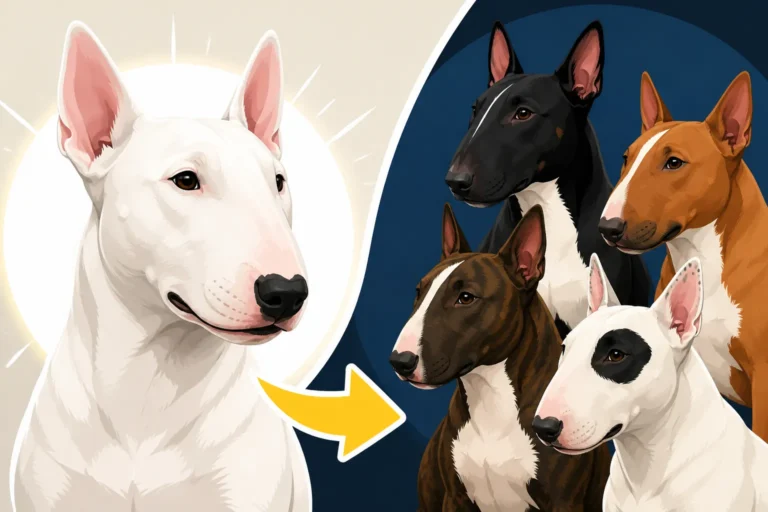
James Hinks, the visionary breeder from Birmingham in the 1860s, had a very specific goal: to create a dog that possessed the strength and courage of its ancestors but combined it with elegance, intelligence, and a reliable, companionable nature. He wanted a "gentleman's companion," a striking white dog that could hold its own in appearance and presence, but without the savage temperament often found in the old bull-and-terrier crosses. Hinks sought to refine the breed, selecting for good nature and a striking appearance, including the signature egg-shaped head and triangular eyes we cherish today. His creation, the White Cavalier, was meant to be a dog of distinction, a loyal and protective companion for respectable citizens, capable of grace and loyalty rather than just brute force. This dedication to temperament over aggression was a radical idea at the time and is a testament to his foresight. You can learn more about his foundational work in James Hinks Built the Bull Terrier in Birmingham in the 1860s.
Setting the Stage: Victorian Society and Dog Challenges
To truly appreciate the significance of Puss's wager, we need to transport ourselves back to Victorian England, a time of immense social change, rigid class structures, and a rather peculiar fascination with public spectacles, including those involving animals. It was an era where dog ownership was burgeoning in popularity, and with that came a curious blend of newfound appreciation for pedigree dogs and lingering traditions of less savory "sporting" events.
The Popularity of Wagers and Sporting Feats
In 19th-century England, public challenges and wagers were a popular form of entertainment and social interaction. Gentlemen would bet on everything from horse races to bare-knuckle boxing, and yes, even on the prowess of their dogs. These events often took place in public houses, private clubs, or specially constructed arenas, drawing crowds eager for excitement and the chance to witness a display of skill, strength, or, in some cases, sheer ferocity. For many, these wagers were not just about money, but about proving the superiority of their breeding lines, their training methods, and ultimately, their own social standing. Dogs were frequently tested in various "feats" – ratting pits were common, as were trials of strength or agility. The perception of a dog's "gameness" was highly valued, but Hinks sought to redefine what "gameness" truly meant for his new breed.
The Infamous Cremorne Gardens
The stage for Puss's famous display was set at Cremorne Gardens, a renowned pleasure garden in Chelsea, London. In its heyday, Cremorne was a vibrant, often extravagant hub for entertainment, attracting a diverse crowd from all walks of life. It hosted everything from fireworks displays and balloon ascents to concerts and, yes, even dog shows and sporting challenges. It was a place where reputations could be made or broken, where the latest trends in entertainment and fashion were showcased, and where a daring wager could capture the attention of an entire city. For James Hinks, showcasing his Bull Terriers at such a prominent venue was not just about winning a bet; it was about making a powerful public statement about his breed, challenging entrenched prejudices, and elevating the Bull Terrier from the realm of the pit to the pedestal of a respectable companion. It was an audacious move, one that required immense confidence in his dogs and his breeding philosophy.
Puss's Moment: A Wager That Changed Perceptions
Within this bustling, opinionated Victorian world, James Hinks found himself in a position to truly put his breeding philosophy to the test. He was not just selling dogs; he was selling an idea: the White Cavalier, a dog of courage and spirit, but also of unparalleled refinement and good nature. And he was willing to put his money where his mouth was, creating a legend in the process.
The Challenge Laid Down by James Hinks
The story goes that in 1862, at the height of a dog show or sporting exhibition at Cremorne Gardens, a rival breeder or perhaps just a skeptical onlooker publicly challenged Hinks. The challenge was simple yet profound: could Hinks's Bull Terrier, Puss, prove its worth against multiple adversaries without resorting to aggression or sustaining injury? The widespread belief was that any "bull and terrier" type dog, regardless of its pedigree, would inevitably be drawn into a brutal fight. Hinks, with the quiet confidence of a man who knew his dogs intimately, accepted the wager. He was betting not just on Puss, but on the very integrity of his breeding program and the revolutionary temperament he had painstakingly cultivated. He aimed to demonstrate that courage didn't have to equal savagery, and that a truly game dog could prevail through skill and controlled instinct, rather than mere brute force.
The Expectations of the Crowd
Imagine the scene: the excited chatter, the scent of pipe tobacco and damp earth, the eager anticipation of a crowd primed for a display of animal combat. Many in the audience would have been veterans of dog fights and ratting pits, expecting Puss to live up to the rough-and-tumble reputation of its ancestors. They likely anticipated a flurry of teeth and a grim determination to subdue any opponent, no matter the cost. When Hinks's Puss, a pristine white Bull Terrier, stepped into the arena, it presented a striking contrast to the darker, more rough-hewn dogs often seen in such challenges. People were likely skeptical, perhaps even dismissive, believing that Hinks's "White Cavalier" was merely a pretty face, lacking the true "gameness" required for such a test. Their expectations were firmly rooted in the old ways, and Hinks was about to shatter those preconceptions. This wager was a public relations masterstroke in the making, proving that his vision for the Bull Terrier was achievable.
The Unconventional Victory: Puss's Demonstration of Temperament
The moment arrived. Puss was led into the ring, the crowd hushed with anticipation. What transpired next would etch Puss's name into the annals of Bull Terrier history, not for its ferocity, but for its remarkable self-control and intelligence. This wasn't a fight to the death; it was a carefully orchestrated demonstration of Hinks's vision for the breed.
Facing Multiple "Adversaries" with Poise
The wager, in its most famous telling, involved Puss being put into a pit with a variety of small animals – often cited as rats, and sometimes even a badger. The expectation was that a dog of its type would immediately engage in a furious attack, tearing into its opponents. However, Puss's response was entirely different. Instead of a bloodthirsty charge, Puss moved with a calculated agility, demonstrating an almost balletic grace. It didn't rush in for the kill; it used its speed and intellect. Accounts describe Puss dispatching the rats not through savage bites, but with quick, precise nips that stunned rather than mangled, or by simply cornering them without ever laying a tooth on them. The badger, a famously tenacious and dangerous opponent, was met with similar composure. Puss reportedly focused on evasion and control, circling, feinting, and maneuvering its larger, more aggressive opponent without ever engaging in a full-scale brawl. This wasn't about violence; it was about mastery and restraint. Even Chewy, the popular online pet retailer, emphasizes that a Bull Terrier’s strength lies in its intelligence and engaging personality, not brute force.
The Art of Winning Without Biting
The critical detail of the wager, and what made Puss's victory so groundbreaking, was that the dog emerged from the challenge "without a scratch." This wasn't a fluke; it was the entire point of Hinks's demonstration. Puss proved that a Bull Terrier could be courageous, effective, and dominant without inflicting or receiving harm. This was the embodiment of the "White Cavalier" ideal: a dog that possessed the strength and spirit to face any challenge, but with the refinement and control to do so without unnecessary aggression. Puss's win wasn't about being the fiercest dog in the pit; it was about being the smartest and most composed. It showcased a temperament that prioritized skill and strategy over raw, unthinking violence. This was a direct repudiation of the brutal reputation that had clung to the bull-and-terrier types for so long, and a powerful statement about the elevated nature of Hinks's new breed. It showed that a Bull Terrier could be a formidable presence without being a danger, a concept that continues to resonate with responsible owners today.
Why "Without a Scratch" Mattered So Much
In an era where a dog's worth was often measured by its ferocity in a fight, Puss's unblemished victory was nothing short of revolutionary. It wasn't just a win for Hinks; it was a win for the entire Bull Terrier breed, forever altering its trajectory and public perception. The absence of a single scratch was the ultimate proof point.
Proving the Breed's True Character
Puss's flawless performance shattered the prevailing notion that a dog of its lineage had to be a vicious fighter. It demonstrated that James Hinks had succeeded in breeding out the indiscriminate aggression that characterized many of the old bull-and-terrier types, replacing it with a discerning intelligence and a controlled temperament. This was a dog that chose not to fight, even when provoked, showing restraint and strategic thinking instead. This public display effectively announced to the world that the Bull Terrier was a new kind of dog – a brave companion, yes, but one that was dependable and good-natured, not a mindless aggressor. It allowed Hinks to confidently promote his dogs as the "White Cavaliers," dogs that were noble and honorable, a far cry from the bloodthirsty fighters of yesteryear. It was a powerful testament to the careful selection and vision that had gone into the breed's development. What the White Cavalier Name Meant became perfectly clear through Puss's actions.
A Triumph of Breeding and Training
Puss's victory wasn't just about the dog's innate character; it was a triumph for James Hinks's meticulous breeding program and his belief in positive training and socialization. It proved that genetics could be harnessed to shape not just physical appearance, but also temperament. Hinks wasn't just throwing dogs together; he was carefully selecting individuals with the desired traits, consistently aiming for a stable, courageous, and companionable nature. This historic wager underscored the impact of responsible breeding, highlighting that a dog's behavior is a product of both its inherent predispositions and the environment and guidance it receives. Puss's success showed the public that a well-bred and well-trained Bull Terrier could be a true gentleman, capable of remarkable control even in challenging situations. This commitment to temperament remains a cornerstone of good breeding practices today, ensuring that Bull Terriers continue to be the loyal, loving companions we know them to be. For any owner, understanding The Bull Terrier's Temperament Is Really Like means appreciating this deep history.
Puss's Enduring Legacy: The White Cavalier Ideal
The impact of Puss's wager rippled through Victorian society and continues to influence the breed's identity even now. The story became a foundational myth, shaping how people viewed the Bull Terrier and what future breeders would strive for. It wasn't just a win; it was the birth of an ideal.
How One Dog Shaped a Breed's Future
Puss's dramatic, bloodless victory solidified the image of the Bull Terrier as the "White Cavalier" – a dog of impeccable character, noble bearing, and unwavering courage, but without the brutality of its predecessors. This single event provided tangible proof of Hinks's claims and helped distance the nascent Bull Terrier breed from the unsavory reputation of earlier bull-and-terrier crosses. It encouraged further development of the breed along lines of temperament and companionship, rather than just fighting prowess. Breeders and owners could now proudly champion their Bull Terriers as loyal and affectionate members of the family, capable of being excellent guards and companions without being aggressive. This shift in perception was critical for the breed's acceptance into polite society and its eventual recognition by kennel clubs as a distinct and valued breed. The anecdote served as a blueprint for the breed's future, emphasizing intelligence and good nature. Where the Bull Terrier Comes From is deeply tied to this story of refinement.
The Modern Bull Terrier: A Testament to Temperament
Today's Bull Terriers are a direct lineage of Hinks's vision, refined over generations. While they still possess the robust build and courageous spirit that characterized their ancestors, their primary purpose is that of a loyal and loving companion. Modern Bull Terriers are renowned for their playful, clownish personalities, their unwavering devotion to their families, and their often surprisingly gentle nature with those they trust. The "White Cavalier" ideal lives on in breeders who prioritize stable temperaments, ensuring that each Bull Terrier puppy is not just physically sound but also mentally balanced. While individual personalities vary, the breed as a whole is a testament to the fact that with careful breeding and responsible ownership, a dog with a powerful lineage can be transformed into a wonderful, affectionate family member. Organizations and resources, like those you can find on Chewy, promote responsible pet ownership, highlighting the importance of training and positive reinforcement for Bull Terriers, building on this historical foundation of good temperament.
Debunking Myths: What This Story Teaches Us Today
In a world still grappling with breed stereotypes and misconceptions, the story of Puss remains incredibly relevant. It serves as a powerful reminder that judging a book by its cover, or a dog by its historical name, can lead to deeply unfair conclusions.
Beyond the "Fighting Dog" Label
The greatest lesson from Puss's wager is the importance of looking beyond superficial labels and inherited stereotypes. The term "fighting dog" still unfairly clings to the Bull Terrier, along with other "bully breeds," leading to breed-specific legislation and unwarranted fear. Puss demonstrated, over a century and a half ago, that a Bull Terrier's inherent courage and strength do not equate to aggression. Rather, they can be channeled into loyalty, playfulness, and unwavering protection of their loved ones. This story challenges us to question our preconceived notions and to judge individual dogs on their own merits and temperaments, rather than on outdated and often inaccurate historical generalizations. It’s a call for empathy and understanding, urging us to educate ourselves and others about the true nature of breeds like the Bull Terrier. What a Bull Terrier's Temperament Is Really Like can only truly be understood by spending time with one.
The Importance of Responsible Ownership and Celebrating Uniqueness
Puss's story also underscores the enduring impact of responsible ownership and breeding. Hinks's unwavering commitment to developing a good-natured dog, coupled with his willingness to demonstrate it publicly, laid the groundwork for the modern Bull Terrier. Today, it falls to every Bull Terrier owner and breeder to continue this legacy. This means prioritizing socialization, consistent training, and providing a loving, enriching environment. It also means advocating for the breed, educating others about their unique qualities, and celebrating the intelligent, affectionate, and sometimes goofy companions that Bull Terriers truly are. They are a breed unlike any other, with their distinctive appearance – like The Bull Terrier Is the Only Breed With a Triangular Eye – and their larger-than-life personalities. Embracing their uniqueness, rather than letting ancient stereotypes define them, is the best way to honor the legacy of Puss and James Hinks.
| Aspect | Historical Context (Pre-Puss) | Puss's Demonstration (1862) | Modern Bull Terrier Reality (Post-Puss) |
|---|---|---|---|
| Breed Perception | "Fighting dog," aggressive, brutal | Capable of control, intelligent, refined | "White Cavalier," loyal companion, playful |
| Primary Trait | Unchecked aggression, brute force | Strategic thinking, controlled instinct | Affectionate, courageous, sometimes stubborn |
| Wager Outcome | Expected injury/death for combatants | Victory "without a scratch" | Thrives on positive reinforcement, training |
| Breeding Focus | Gameness for fighting | Temperament, elegance, stability | Health, temperament, adherence to standard |
| Social Role | Pit dog, working dog for dangerous tasks | Gentleman's companion, show dog | Family pet, therapy dog, active companion |
Internal Links
- James Hinks Built the Bull Terrier in Birmingham in the 1860s
- The White Cavalier: Why the Bull Terrier Never Started Fights
- Where the Bull Terrier Comes From
- Whether the Bull Terrier Was a Fighting Dog
- What the White Cavalier Name Meant
- How a Bull Terrier Gets On With Other Dogs
- What a Bull Terrier's Temperament Is Really Like
- The Bull Terrier Is the Only Breed With a Triangular Eye
- What Bull Terrier Owners Wish They Had Known
- Which Breed Brought Color Back Into the Bull Terrier
- Whether a Bull Terrier Is a Gentleman's Companion
- Whether a Bull Terrier Is a Bully Breed
Disclaimer
This article is for general informational purposes only and does not constitute professional advice. Laws, prices and regulations vary by location and change over time. Consult a qualified professional for guidance on your specific situation.