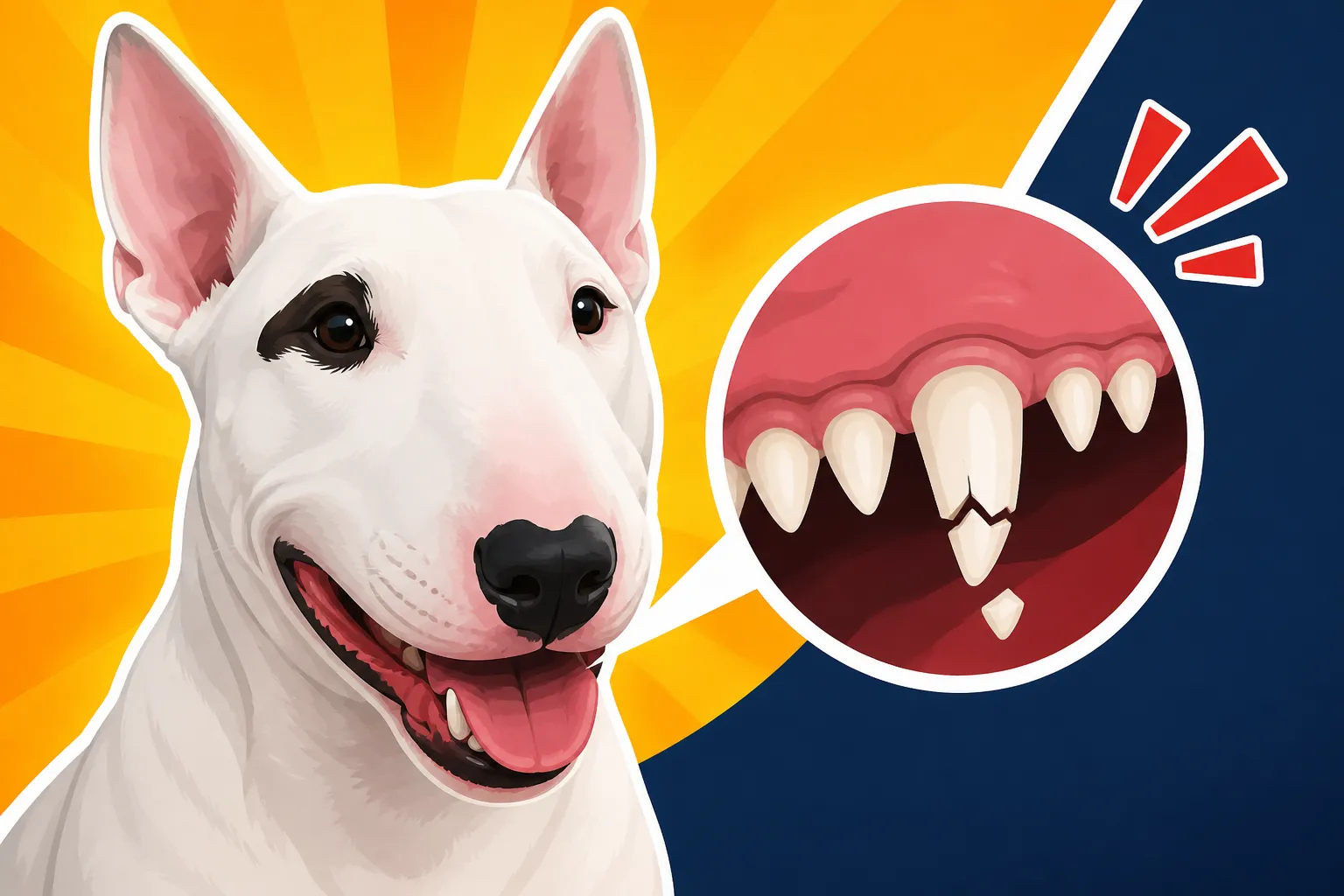
How Often a Bull Terrier Breaks a Tooth
It’s a heart-stopping moment for any Bull Terrier owner: you’re playing fetch, or your beloved blockhead is happily gnawing on a chew, and then you see it—a jagged edge, a missing piece, or a tell-tale streak of blood. Our Bull Terriers have incredibly powerful jaws, but that strength, combined with their enthusiastic chewing, can unfortunately lead to a broken tooth. This guide will walk you through just how common this issue can be, what causes it, how to spot the signs, and most importantly, how to prevent this painful problem for your unique companion.
The Bull Terrier's Jaw: A Force to Be Reckoned With
When you look at a Bull Terrier, one of the most striking features is that magnificent, strong head and jaw. It’s built for power, designed for gripping, and often admired for its unique "egg-shaped" profile. But with great power comes great responsibility, especially when it comes to what your Bull Terrier uses those formidable choppers for. Owners often underestimate just how much force their dog can exert, leading to some surprising dental damage.
Anatomy of a Power Chewer
A Bull Terrier’s jaw isn't just visually impressive; it's an anatomical marvel. Their bite force is substantial, allowing them to make short work of toys, bones, and sometimes, even furniture. This incredible strength is what makes them such dedicated chewers, and it's also why they can easily destroy items that would last other breeds for months. Think about the sheer muscle power behind that distinctive head; it’s all geared towards that crushing bite. This isn’t a dog with a delicate bite, and their dental health needs to be managed with that reality firmly in mind. You simply can't treat their teeth like you would a smaller, less powerful breed's.
The "Egg Head" and Its Dental Implications
The Bull Terrier's unique "egg-shaped" or "down-faced" head, which lacks a defined stop, contributes to the alignment of their teeth. While visually distinct and part of their breed standard, it doesn't necessarily make their teeth more fragile. However, the sheer density of bone and muscle in that skull means that when they put pressure on a hard object, the force distributed through their teeth can be immense. This is less about the shape itself causing weakness, and more about the structural integrity that allows them to apply so much force. It means that objects that might bend or break under the force of another dog's bite will simply crack a Bull Terrier's tooth. It's a testament to their strength, but also a warning to owners to be extremely mindful of what they allow their Bull Terrier to chew on.
Common Culprits: What Breaks a Bull Terrier's Teeth
It’s often not a dramatic accident but rather a cumulative effect or a single, ill-advised chew toy that leads to a broken tooth in a Bull Terrier. Their strong instinct to chew, coupled with their incredible jaw power, means that certain items are just too risky for their dental health, no matter how much they seem to enjoy them. Understanding these common culprits is the first step in prevention.
Dangerous Chews and Toys
This is probably the biggest offender when it comes to broken Bull Terrier teeth. As a rule of thumb, if you can’t make an indentation in it with your thumbnail, it’s too hard for your dog's teeth. Think about natural bones (especially cooked ones), antlers, hooves, nylon bones, and even some very hard-pressed rawhide. While many owners swear by these for keeping their Bull Terriers occupied, they are often a leading cause of slab fractures—where a piece of the tooth, usually a premolar or molar, breaks off. These breaks often expose the sensitive pulp chamber, leading to pain and infection. Your Bull Terrier doesn't care if a chew is good for them; they just want to chew, and they'll chew with all their might. Many of these super-hard chews, while advertised as "indestructible," are often only indestructible to the chew, not to the teeth doing the chewing. You might find appropriate, softer chews on sites like Chewy or Amazon, but always read reviews and assess the hardness yourself. For more insights on this, you might find Which Chews Are Safe for a Bull Terrier a helpful read.
Accidents and Hard Objects
Beyond specific chews, Bull Terriers can also break teeth through accidents or by chewing on inappropriate household objects. Imagine a Bull Terrier excitedly trying to gnaw on the leg of a solid oak coffee table, or attempting to "help" you with a home improvement project by mouthing a brick or a metal pipe. Sometimes, a tooth can be fractured during rough play with another dog, especially if they clash jaws. Even something as seemingly innocent as picking up a rock in the yard and crunching down on it can spell disaster. Their relentless nature means they'll often continue to try and break down an object long after a less determined dog would give up, increasing the risk of dental injury. This is where vigilant supervision and a well-How to Bull Terrier Proof a Room comes into play.
Wear and Tear Over Time
While less common for acute fractures, chronic wear and tear can also predispose teeth to breakage. Aggressive chewers, even on "safe" chews, can gradually grind down their teeth over years. This isn't usually a clean break, but rather a slow erosion of enamel, which can eventually expose the pulp chamber or weaken the tooth structure, making it more susceptible to fracturing from a lesser impact. Bull Terriers who are obsessive lickers or grinders (sometimes a sign of anxiety or a behavioral issue) might also experience accelerated wear. It's a reminder that dental health isn't just about avoiding sudden trauma; it's about long-term care, from a young age all the way through to Caring for an Old Bull Terrier.
Spotting a Problem: Signs of a Broken Tooth
A broken tooth isn’t always immediately obvious, especially with a breed as stoic as the Bull Terrier, who can often hide pain surprisingly well. However, there are typically signs, both visible and behavioral, that can alert you to a problem. Early detection is crucial to prevent further pain, infection, and more complicated treatment down the line.
Visible Damage and Bleeding
The most straightforward sign is, of course, being able to see the damage. This might be a visible crack, a jagged edge, or a missing cusp on a tooth. Sometimes, a piece of the tooth might be completely gone. You might notice bleeding around the gum line of the affected tooth, or even dried blood on their lips or toys. Keep an eye out for any discoloration on the tooth itself, which could indicate nerve damage or pulp exposure. Remember to check all the teeth, not just the front ones, as molars and premolars are frequently fractured due to their position and the pressure they endure during chewing. This is part of The Weekly Skin Check Every Bull Terrier Needs, which should really extend to a full head-to-tail inspection.
Behavioral Clues and Pain Signals
Bull Terriers are known for their high pain tolerance, but even they will show signs of discomfort if a broken tooth is causing them trouble. These might be subtle at first:
- Reluctance to chew on one side: You might notice them favoring one side of their mouth when eating or chewing.
- Dropping food: If they pick up food and then drop it, or struggle to chew hard kibble.
- Changes in eating habits: A sudden decrease in appetite, especially for harder foods, or preferring wet food over dry.
- Paw at mouth: They might repeatedly paw at their mouth or rub their face against furniture.
- Irritability: Any unexplained grumpiness or reluctance to be handled around their face can be a red flag.
- Bad breath: A sudden onset of unusually foul breath could indicate infection around a damaged tooth.
- Swelling: Facial swelling, particularly under an eye or along the jaw, is a serious sign of infection requiring immediate veterinary attention.
It's vital to remember that these signs might not be dramatic. Your Bull Terrier might still wag their tail and seem generally happy, but a keen eye will pick up on these changes.
The Importance of Regular Home Checks
Because Bull Terriers can be so good at masking discomfort, regular home checks are invaluable. Make it a routine to lift their lips and quickly inspect their teeth and gums a few times a week, especially after a vigorous chewing session. Look for:
- Missing teeth or fragments.
- Discoloration (dark spots can indicate dead pulp).
- Red, inflamed, or bleeding gums.
- Excessive tartar buildup (though this is more of a chronic issue).
- Any unusual growths or swelling.
A good way to do this is when they're relaxed, maybe during a cuddle session. Gently lift their lips to get a view of their premolars and molars. The more familiar you are with what their healthy mouth looks like, the quicker you'll spot any abnormalities. If your Bull Terrier resists, this itself could be a sign of pain or discomfort. Understanding A Bull Terrier's Teeth and That Enormous Jaw better can help you know what to look for.
| Sign of a Broken Tooth | Description | Urgency |
|---|---|---|
| Visible Crack/Chip | A piece of tooth is clearly missing, or a line is present. | High |
| Exposed Pulp | A dark spot (pink/red/brown/black) at the center of the fracture, indicating nerve exposure. | Immediate |
| Bleeding Gums/Mouth | Blood on teeth, gums, or toys, especially after chewing. | High |
| Facial Swelling | Swelling around the jaw, under an eye, or on the cheek. | Immediate |
| Reluctance to Chew | Hesitation to eat hard food, or chewing only on one side. | Moderate |
| Paw at Mouth | Repeatedly touching their mouth with a paw. | Moderate |
| Bad Breath | Sudden onset of unusually foul odor from the mouth. | Moderate |
| Increased Drooling | More drool than usual, especially if thick or discolored. | Moderate |
If you suspect a broken tooth, contact your veterinarian immediately. It’s not something that will heal on its own, and delaying treatment can lead to significant pain, infection, and even more complex and costly procedures.
Prevention is Key: Protecting Your Bull Terrier's Pearly Whites
The best way to deal with a broken tooth is to prevent it from happening in the first place. Given the Bull Terrier’s powerful jaws and enthusiastic chewing habits, prevention requires conscious effort and careful selection of chews and toys, alongside consistent dental hygiene practices. You want to satisfy their need to chew without putting their teeth at risk.
Choosing Safe Chews and Toys
This is where you can make the biggest impact. Focus on chews that are flexible, yield to pressure, or are designed to be consumed gradually and safely.
- Rubbery Toys: High-quality, durable rubber toys like those from Kong or Goughnuts are excellent. They provide resistance for chewing but are pliable enough not to chip teeth. Ensure they are appropriately sized for your Bull Terrier's powerful jaws to prevent swallowing or choking.
- Dental Chews: Many dental chews are designed to be abrasive enough to help clean teeth but soft enough not to cause fractures. Always supervise your Bull Terrier with these and choose brands with good reputations.
- Frozen Treats: Ice cubes (in moderation), frozen carrots, or even frozen stuffed Kongs can be great for cooling and occupy your Bull Terrier without posing a tooth-breaking risk.
- "Edible" Chews (with caution): For digestible chews, look for softer, easily broken down options. However, always supervise, as even these can pose choking hazards or digestive upset if swallowed in large chunks. Avoid anything that feels rock-hard. You might find a good selection of safer alternatives on Chewy or even Amazon.
Absolutely avoid:
- Real Bones (especially cooked): These can splinter, cause impactions, or are simply too hard.
- Antlers, Hooves, and Hard Nylon Bones: These are infamous for fracturing molars.
- Ice: While an occasional ice cube might be fine for some, crunching on large pieces of ice can lead to cracks.
The general rule: if you wouldn't hit your knee with it, your Bull Terrier shouldn't chew it. And if it's harder than their teeth, their teeth are going to lose that battle.
Dietary Considerations and Dental Health
While diet alone won't prevent a broken tooth from a hard chew, it plays a role in overall dental health, which can indirectly help. A balanced diet contributes to strong bones and teeth. Some premium dog food brands, like Ollie (which often offers fresh, human-grade food), focus on high-quality ingredients that support overall health, including dental. However, no kibble, no matter how "dental-specific," can prevent a fracture from an inappropriate chew.
Regularly brushing your Bull Terrier's teeth is also a crucial part of long-term dental care. While it won't stop them from breaking a tooth on a rock, it will keep their gums healthy and prevent tartar buildup, reducing the risk of periodontal disease, which can weaken tooth structure over time. For more on this, check out A Bull Terrier's Teeth and That Enormous Jaw and Whether a Bull Terrier's Teeth Need Brushing.
Professional Dental Care and Vet Checks
Routine veterinary check-ups should always include a thorough oral examination. Your vet can spot signs of wear, hairline fractures, or other issues you might miss. If your Bull Terrier is an especially aggressive chewer, or if you've noticed any of the behavioral signs mentioned earlier, make sure to bring it up with your vet. They can often recommend specific dental care products or advise on a professional dental cleaning if tartar buildup is an issue. Regular professional care, combined with diligent home care and careful chew selection, forms the best defense against dental problems. This is an essential part of What Care a Bull Terrier Needs Its Whole Life.
Remember, your Bull Terrier relies on you to make smart choices for their health. While their powerful jaws are impressive, protecting their teeth means choosing safety over perceived indestructibility.
Disclaimer
This article is for general informational purposes only and does not constitute professional advice. Laws, prices and regulations vary by location and change over time. Consult a qualified professional for guidance on your specific situation.