How Many Calories a Bull Terrier Needs
Figuring out exactly how many calories your Bull Terrier needs can feel like a guessing game, a constant tightrope walk between keeping them energetic and preventing them from getting chunky. It’s a common frustration for us Bull Terrier owners, especially with their unique build and boundless enthusiasm. This guide is here to unravel the mystery, helping you understand the factors that influence your Bull Terrier's caloric intake and how to adjust their diet to keep them at their prime.
Understanding Your Bull Terrier's Unique Metabolism and Build
Bull Terriers aren't your average dog. They're compact powerhouses, built with a surprising amount of muscle packed into their sturdy frames. This distinctive physique, combined with their often high-octane personalities, means their energy requirements can be quite specific and easily misunderstood. It's not just about size; it's about their unique blend of strength and sometimes, sheer goofiness.
The Muscular Advantage
When you look at a Bull Terrier, you see muscle. They're naturally athletic, even if their idea of exercise sometimes involves launching themselves off the sofa. This lean muscle mass burns more calories at rest than fat does, meaning a healthy, well-conditioned Bull Terrier might naturally need a bit more fuel than a dog of similar size but different composition. It's why they can seem to eat a surprising amount without getting pudgy, especially when they're active. However, this also means that if they become less active, those extra calories can quickly lead to weight gain, and it can be difficult to tell How to Tell Bull Terrier Muscle From Fat.
Think of it like a small but mighty engine; it needs quality fuel to keep running efficiently. If your Bull Terrier is a couch potato more often than a playful clown, their muscle mass might still be there, but the activity burning those calories is not. We often hear about dogs needing X calories per pound, but for a Bull Terrier, that formula needs a nuanced approach, considering their dense build rather than just their number on the scale.
Energy Levels and Breed Tendencies
Bull Terriers are known for their bursts of energy, often followed by deep, contented naps. They're not always "go-go-go" all day like some working breeds, but when they decide it's playtime, they commit with their whole heart. This means their daily calorie needs can fluctuate based on their activity. A morning romp in the park, an afternoon spent wrestling with a favorite toy, or even an intense session of How Far a Bull Terrier Should Walk Before It Gets Silly can significantly impact how much fuel they've burned.
It's also worth remembering that some Bull Terriers are more naturally inclined to be active than others. Just like people, they have individual personalities and energy drives. Some are champion spinners, which is a medical problem and not just play, and others are content with a few good zoomies a day. Owners of a particularly energetic Bull Terrier might find they need a bit more sustenance to maintain their weight and stamina, whereas a more laid-back individual might need fewer calories to prevent unnecessary weight gain. Always observe your own dog's specific energy output, not just general breed stereotypes.
Factors Influencing Your Bull Terrier's Calorie Needs
Determining your Bull Terrier's exact calorie needs isn't a one-size-fits-all equation. It's a dynamic calculation influenced by a variety of factors, some of which change throughout their lives. Missing even one of these pieces can throw the whole balance off, leading to weight issues that can impact their overall health and longevity.
Age and Life Stage
A Bull Terrier puppy has vastly different caloric requirements than an adult or a senior dog. Puppies are growing at an incredible rate, putting all their energy into bone development, muscle growth, and generally exploring their world with boundless enthusiasm. They need more calories per pound of body weight to support this rapid development. What a Bull Terrier Puppy Eats at Four Months is a lot, and they continue to need careful nutritional management as they transition to adulthood.
As your Bull Terrier matures, typically around 12-18 months, their growth slows down, and their caloric needs per pound will decrease. An adult Bull Terrier needs enough calories to maintain their ideal weight and energy levels. Then, as they enter their senior years, usually around eight years old, their metabolism can start to slow down. They might become less active, too, meaning their caloric intake will likely need to be reduced to prevent unwanted weight gain. Caring for an Old Bull Terrier involves many adjustments, and diet is a big one. It's a journey, not a destination, when it comes to their feeding plan.
Activity Level and Exercise Regimen
This is perhaps the most significant variable in a Bull Terrier's daily caloric equation. A highly active Bull Terrier who spends hours running, playing, and training will naturally burn far more calories than one who primarily enjoys lounging on the sofa. If your Bull Terrier is doing intense agility training, running with you, or engaging in long, vigorous play sessions, they will need a higher caloric intake. Conversely, if bad weather keeps you indoors, or your dog is recovering from an injury, their calorie needs will temporarily decrease.
It's easy to overestimate how much exercise our dogs are actually getting. A quick walk around the block, while important for mental stimulation, might not be enough to classify your Bull Terrier as "highly active" in terms of calorie expenditure. Be honest about their daily routine. Do they get consistent, strenuous exercise, or is it more moderate play and shorter walks? How Much Exercise a Bull Terrier Actually Needs can be surprising for many owners, and it directly impacts their food requirements. Consistency in their activity helps you fine-tune their diet.
Spay/Neuter Status and Health Conditions
Spaying or neutering your Bull Terrier significantly impacts their metabolism. Many dogs experience a metabolic slowdown after the procedure, meaning they require fewer calories to maintain their weight. If their food intake isn't adjusted, weight gain can be a quick and unwelcome side effect. It's a good idea to discuss this with your vet shortly after the procedure so you can begin making appropriate dietary changes.
Furthermore, certain health conditions can dramatically alter your Bull Terrier's calorie needs. For instance, a Bull Terrier dealing with kidney disease might need a specific diet that's lower in protein and phosphorus, which also changes their overall caloric density. Which Diet Suits a Bull Terrier With Kidney Disease is a critical question for owners. Conditions like hypothyroidism can slow metabolism, leading to weight gain despite a normal diet. Conversely, some illnesses might increase energy demands or lead to malabsorption, requiring more calories. Always consult your veterinarian when any health condition arises, as they can provide the most accurate dietary recommendations tailored to your dog's specific medical needs. This isn't just about weight; it's about supporting their treatment and quality of life.
Calculating a Baseline: Starting Points and Adjustments
Knowing all the variables is one thing, but how do you actually put a number on it? This is where we start with some veterinary formulas, but it’s crucial to remember that these are just starting points. Every Bull Terrier is an individual, and the real art comes in observing and adjusting.
Resting Energy Requirement RER
The Resting Energy Requirement (RER) is the amount of energy your Bull Terrier needs to perform basic bodily functions while at rest, such as breathing, heart circulation, and maintaining body temperature. It's the bare minimum, the calories they'd burn just existing. This calculation gives us a fundamental number to build upon.
To calculate RER in kcals (kilocalories, often just called "calories" on pet food labels), you can use a formula based on your Bull Terrier's body weight in kilograms:
RER (kcals/day) = 70 x (Body Weight in kg)^0.75
Don't worry, you don't need a fancy calculator for the exponent part. There are online RER calculators that can do this for you. First, convert your Bull Terrier's weight from pounds to kilograms (1 lb = 0.453592 kg). So, if your Bull Terrier weighs 50 lbs, that's approximately 22.7 kg.
Let's say for a 50 lb (22.7 kg) Bull Terrier:
RER ≈ 70 x (22.7)^0.75 ≈ 70 x 9.8 ≈ 686 kcals/day.
This 686 kcals is what they need if they literally just lay around all day. It’s a foundational number, but very few Bull Terriers are that inactive, thankfully. It’s more of a scientific starting point than a practical feeding guideline.
Maintenance Energy Requirement MER
The Maintenance Energy Requirement (MER) is the number we're usually aiming for. This takes the RER and multiplies it by a factor that accounts for your Bull Terrier's actual activity level, life stage, and other factors like whether they're spayed/neutered. This is where the individuality truly comes into play.
Here's a general table of common MER multipliers, but remember these are averages:
| Bull Terrier Status | MER Multiplier (x RER) |
|---|---|
| Neutered/Spayed Adult | 1.6 |
| Intact Adult | 1.8 |
| Weight Loss | 1.0 – 1.2 |
| Weight Gain | 1.7 – 2.0 |
| Lightly Active Adult | 1.8 – 2.0 |
| Moderately Active Adult | 2.0 – 2.5 |
| Highly Active/Working | 2.5 – 5.0 |
| Puppy (0-4 months) | 3.0 |
| Puppy (4 months to adult) | 2.0 – 2.5 |
| Senior (less active) | 1.4 |
| Senior (active) | 1.6 |
Let's use our 50 lb (22.7 kg) Bull Terrier with an RER of 686 kcals/day.
If this dog is a neutered, moderately active adult:
MER ≈ 686 kcals/day x 2.0 = 1372 kcals/day.
If they're a highly active intact adult Bull Terrier, perhaps training for a sport:
MER ≈ 686 kcals/day x 2.5 = 1715 kcals/day.
See how quickly these numbers can change? This is why you cannot just go by a blanket statement. You need to consider your Bull Terrier. These multipliers are incredibly helpful, but they still need to be fine-tuned based on real-world observation. Your vet is truly the best resource for helping you determine the most appropriate MER for your Bull Terrier, especially if there are any underlying health concerns or significant weight goals.
Practical Feeding Strategies and Monitoring
Once you have a baseline calorie target, the real work begins: putting it into practice and constantly monitoring your Bull Terrier. It's an ongoing process of observation, adjustment, and collaboration with your vet to ensure optimal health.
Choosing the Right Food
Not all dog foods are created equal, especially when it comes to caloric density. Some foods are packed with calories per cup, while others are less dense. This means a half-cup scoop of one brand might have the same calories as a full cup of another. Always check the "guaranteed analysis" and caloric information on your chosen dog food bag. Most reputable brands will provide kcals/cup or kcals/gram. Whether you feed traditional kibble, raw, or a fresh food diet like Ollie, understanding the caloric content of that specific food is paramount. You might find a great deal on Chewy for a high-quality food, but that's only helpful if you know its energy density.
Feeding a food specifically formulated for active adults or for weight management will also make a difference. For instance, a performance dog food will likely have a higher fat content and thus more calories, whereas a senior or weight-control formula will be leaner. For Bull Terriers, who can be prone to skin issues, some owners find Whether a Bull Terrier's Skin Improves With Diet when on certain foods, which might also factor into your choice. Always choose a high-quality, complete, and balanced diet appropriate for your Bull Terrier's life stage and health needs.
How to Measure and Adjust
Precision is key. Resist the urge to eyeball portions. Invest in a proper kitchen scale to weigh food, or at the very least, use a standard measuring cup, not a random scoop that came with a bag of treats. Weighing food is the most accurate way to ensure your Bull Terrier is getting exactly the calories you've calculated. Over-feeding by even a small amount each day can lead to significant weight gain over time.
Once you start with your calculated MER, monitor your Bull Terrier's body condition and weight weekly. Are they gaining, losing, or maintaining? You should be able to easily feel their ribs without seeing them, and they should have a discernible waistline when viewed from above. If you notice unwanted weight changes, adjust their food intake by 10-15% increments and continue to monitor. For example, if they're gaining weight, reduce their daily calories by about 10-15% for a week or two, then reassess. If they're losing too much, increase it. This iterative process is how you find the "sweet spot" for your individual Bull Terrier.
The Role of Treats and Chews
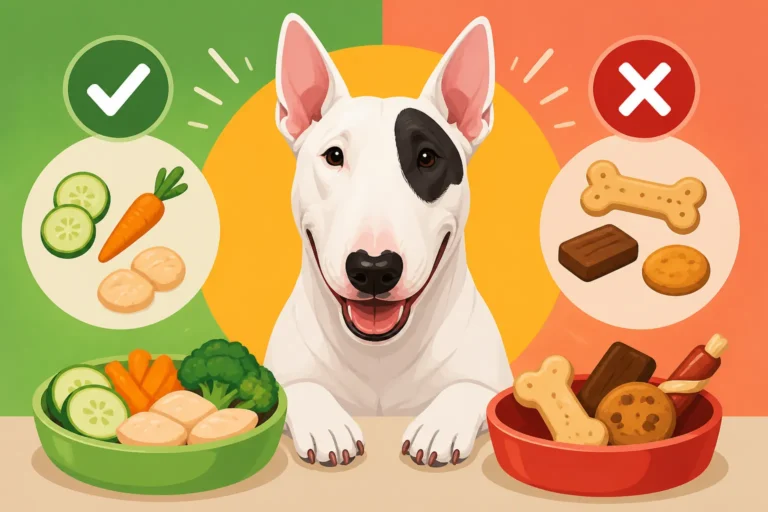
Treats and chews are often overlooked calorie bombs. Those little rewards for good behavior or the dental chew before bed add up quickly! Many owners don't account for these extra calories, which can completely throw off an otherwise well-planned diet. If your Bull Terrier is prone to Why a Bull Terrier Eats Things It Should Not, then treats become even more important as a safe outlet for chewing, but their caloric load still counts.
Make sure to factor in all caloric intake, including training treats, dental chews purchased from places like Amazon, and any human food scraps. If treats make up more than 10% of their daily calories, it's generally recommended to reduce their main meal proportionally. Opt for low-calorie treats, especially during training sessions, or break larger treats into smaller pieces. Remember, every bite counts!
Regular Veterinary Check-ups
Your veterinarian is your best partner in managing your Bull Terrier's weight and overall nutrition. During routine wellness exams, your vet will perform a physical assessment, including evaluating their body condition score, and can discuss any necessary dietary adjustments. They can also rule out any underlying medical conditions that might be affecting your Bull Terrier's weight.
If you're struggling to find the right balance, or if your Bull Terrier has significant weight challenges (either overweight or underweight), a veterinary nutritionist might be able to offer specialized guidance. They can help formulate a precise diet plan tailored to your Bull Terrier's unique needs, especially if there are multiple health concerns or complex dietary requirements. Never hesitate to bring up your Bull Terrier's diet and weight concerns at their How Often a Bull Terrier Needs a Wellness Exam. It’s a crucial conversation for their long-term health.
Disclaimer
This article is for general informational purposes only and does not constitute professional advice. Laws, prices and regulations vary by location and change over time. Consult a qualified professional for guidance on your specific situation.