How Many Cups a Day an Adult Bull Terrier Eats
Figuring out exactly how many cups of food your adult Bull Terrier needs each day can feel like a guessing game, and trust me, you're not alone in that frustration. It’s not as simple as glancing at the back of a dog food bag and calling it a day, because every Bull Terrier is a unique individual with their own energy levels, metabolism, and health considerations. This guide is here to unravel the mystery, helping you understand the myriad factors that influence your Bull Terrier's ideal daily food intake and empowering you to make informed decisions for their health and happiness.
Factors Influencing Your Bull Terrier's Daily Food Intake
It’s tempting to just follow the chart on the dog food bag, but those are general recommendations at best, and often they lean towards overfeeding. Your Bull Terrier isn't a generic dog; they have specific needs that can change based on a variety of personal circumstances. Understanding these factors is the first step in tailoring their diet to perfection.
Age and Life Stage
While we're focusing on adult Bull Terriers, it's important to remember that their needs evolve. A young adult Bull Terrier, perhaps still burning off puppy energy, might require slightly more calories than a truly mature adult who has settled into a more predictable routine. Conversely, a senior Bull Terrier, typically considered past the age of eight, will likely have a slower metabolism and reduced activity levels, requiring fewer calories to maintain a healthy weight.
The transition from puppy food to adult food is a significant one. Puppies, with their rapid growth and boundless energy, have much higher caloric and nutrient demands per pound of body weight than adults. Once your Bull Terrier reaches maturity, usually between 12 to 18 months, their growth slows significantly, and their dietary needs shift. If you keep feeding a grown Bull Terrier puppy food amounts, you're almost guaranteed to see weight gain. Knowing When a Bull Terrier Puppy Moves to Adult Food is a critical point in managing their long-term health.
Activity Level and Energy Expenditure
This is arguably one of the biggest variables. Think about your own Bull Terrier's daily life. Do they spend most of their day napping on the sofa, with just a couple of leisurely walks? Or are they a whirlwind of activity, joining you for long hikes, romping endlessly in the yard, or perhaps training for dog sports like obedience or even scent work? An active Bull Terrier will naturally burn far more calories than a sedentary one.
A dog that's consistently on the go, whether it's daily runs or intense playtime, needs more fuel. Conversely, if your Bull Terrier is more of a "couch potato," providing them with the same amount of food as a highly active counterpart will lead to excess weight. It's about matching energy input with energy output. Understanding How Much Exercise a Bull Terrier Actually Needs can give you a better grasp of where your dog falls on this spectrum.
Metabolism and Individual Differences
Just like people, every Bull Terrier has a unique metabolism. Some dogs are like furnaces, burning through calories at an incredible rate, seemingly never gaining an ounce even with generous portions. Others might gain weight just by looking at an extra kibble. These individual metabolic rates are influenced by genetics, body composition (muscle burns more calories than fat), and even subtle hormonal differences.
You might have two Bull Terriers, same age, same activity level, eating the same food, and one is lean while the other trends chunky. This isn't unusual! It means you simply can't treat them identically when it comes to feeding. Paying close attention to your Bull Terrier's specific body condition and energy levels, rather than just comparing them to another dog, is crucial.
Health Status and Special Dietary Needs
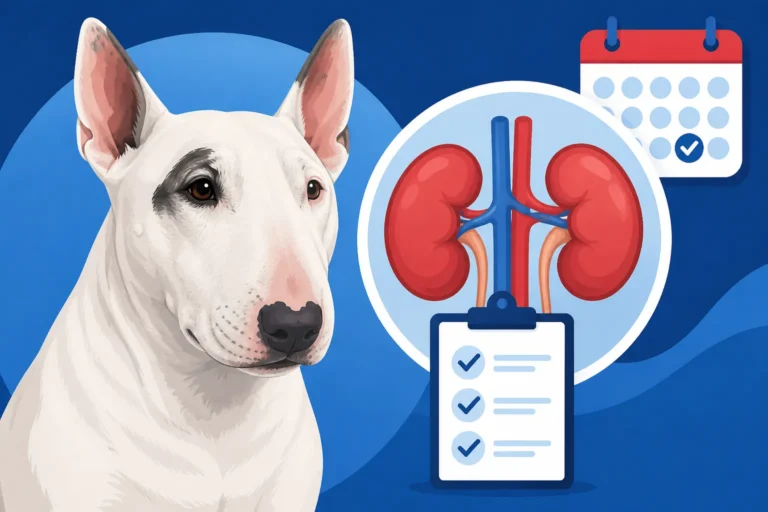
A Bull Terrier's health can dramatically impact their nutritional requirements. Dogs with certain medical conditions might need specialized diets that influence the quantity and type of food they consume. For instance, a Bull Terrier with kidney disease would require a specific renal diet, which often means different caloric densities and nutrient profiles, and the amount fed would be carefully managed by your vet. Which Diet Suits a Bull Terrier With Kidney Disease is a conversation you'll have with your vet, not a decision to make on your own.
Similarly, if your Bull Terrier has allergies, a sensitive stomach, or is prone to certain issues, their food might be formulated differently, and the volume needed could vary. A vet will always be your best resource for guidance on therapeutic diets. If you notice Signs a Bull Terrier Is Overweight, that's another clear signal that their current feeding regimen needs adjustment, possibly with a vet's input to rule out underlying medical issues.
Food Type and Caloric Density
The type of food you offer makes a huge difference in "how many cups." Not all dog foods are created equal, and their caloric density—the number of calories per cup or per gram—can vary wildly. A high-quality, nutrient-dense kibble might have more calories per cup than a cheaper brand filled with fillers, meaning your dog needs less of it to meet their energy requirements. Similarly, wet food generally has a lower caloric density by volume because of its high moisture content, while raw or fresh food diets (like those offered by Ollie) can be very calorie-dense.
Always check the nutritional information on your chosen dog food packaging. It will typically provide a "kcal/cup" or "kcal/kg" figure. This number is vital for calculating exact portions. Don't assume that because two bags are the same size, the food inside is calorically equivalent. Even within the same brand, different formulas (e.g., puppy vs. adult, active vs. senior, weight management) will have different calorie counts. Knowing How Many Calories a Bull Terrier Needs is really about knowing the calorie content of their specific food.
General Guidelines for Adult Bull Terrier Feeding
Alright, now that we've covered the individual variables, let's talk about how to actually get to a starting point for feeding your adult Bull Terrier. It's not an exact science from the get-go, but there are solid principles to follow.
Starting Point Recommendations
The feeding guidelines on your dog food bag should absolutely be treated as a starting point and nothing more. These charts usually provide a range based on weight, for example, "2-4 cups for a 50-70lb dog." For a Bull Terrier, which typically falls into the 45-65 pound range, this might mean anywhere from 2 to 3.5 cups of a standard, good quality kibble per day, split into two meals. However, this is heavily dependent on the caloric density of your specific food and your Bull Terrier's activity.
When you bring a new bag of food home, calculate the recommended daily intake based on your dog's ideal weight (not necessarily their current weight, especially if they're overweight or underweight) and their general activity level. Err on the side of feeding slightly less than the maximum recommended amount, then adjust from there. It's always easier to add a little more food than to take weight off an already chunky Bull Terrier. You might find a good selection of foods and even portion guides on a site like Chewy, but remember to always cross-reference with your vet.
The Role of Food Quality
The quality of your Bull Terrier's food plays a significant role in how much they need to eat. A premium dog food, formulated with high-quality protein sources, healthy fats, and digestible carbohydrates, provides more nutrition per bite. This often means your Bull Terrier can feel satisfied and meet their nutritional needs with a smaller volume of food compared to a cheaper brand that relies on fillers.
Investing in a high-quality food means less waste, better absorption of nutrients, and often, better overall health for your Bull Terrier. Look for foods where a named meat source (e.g., "chicken meal," "lamb") is among the first ingredients, and try to avoid excessive corn, soy, or unnamed "meat by-products" if your dog has sensitivities. While it might seem more expensive per bag, the long-term benefits for your dog's health and the potentially smaller portions often balance the cost.
Splitting Meals for Optimal Digestion
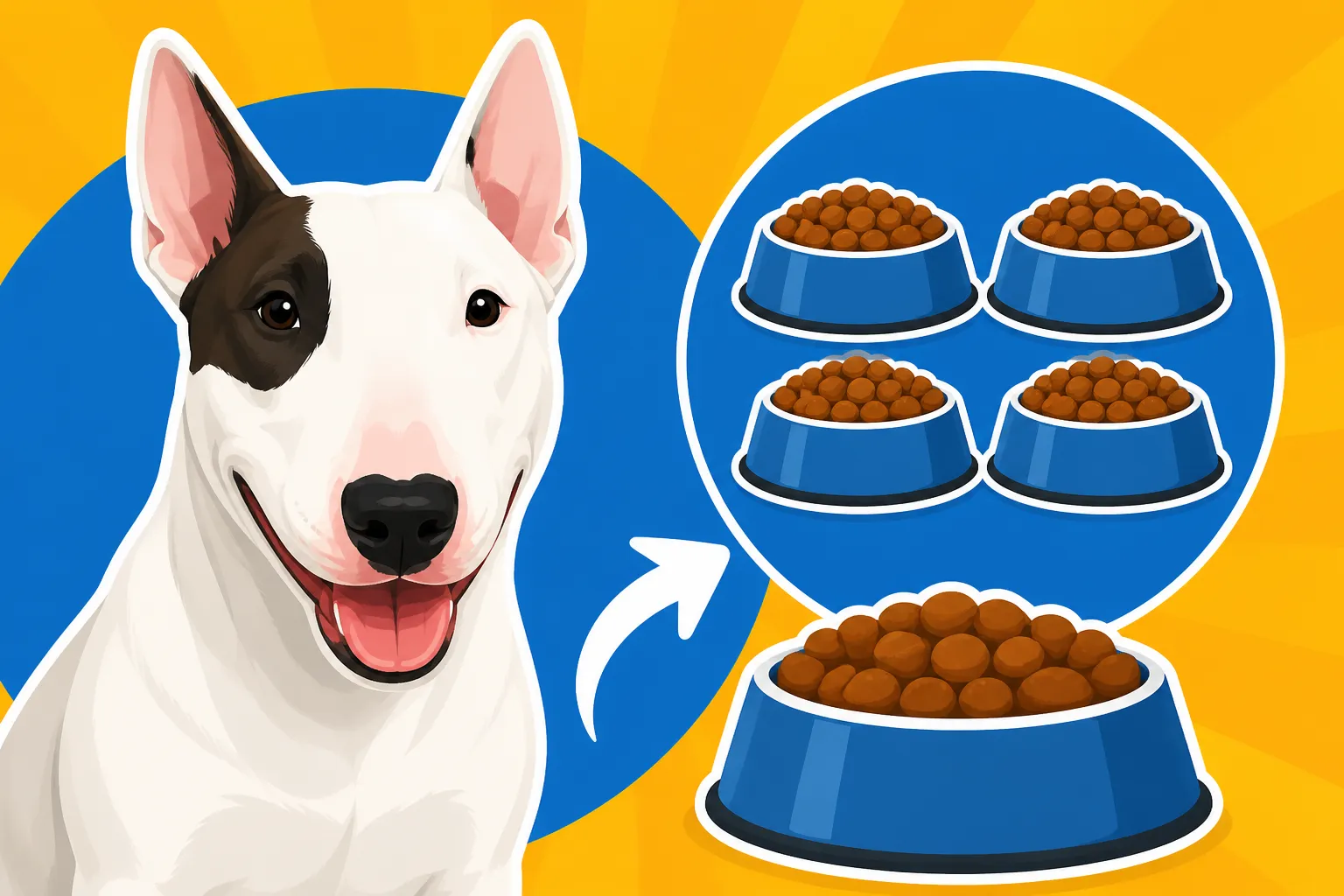
For most adult Bull Terriers, splitting their daily food allowance into two meals is ideal. This usually means a morning meal and an evening meal. There are several benefits to this approach. Firstly, it helps to regulate their metabolism throughout the day, providing a steady stream of energy. Secondly, it can reduce the likelihood of overeating at one sitting, which is particularly helpful for Bull Terriers who are prone to eating their food at lightning speed. How Many Meals a Day a Bull Terrier Needs is usually twice a day once they're adults.
While bloat (Gastric Dilatation-Volvulus) is a more common concern in deep-chested breeds, feeding smaller, more frequent meals can still be a good practice for overall digestive health. It also helps manage hunger, meaning your Bull Terrier is less likely to beg or raid the counter between meals. Consistent meal times also establish a routine, which Bull Terriers, despite their clownish nature, appreciate.
The Importance of Monitoring and Adjusting Portions
Feeding your Bull Terrier isn't a "set it and forget it" task. Their needs will change over time, and continuous monitoring is key to ensuring they maintain a healthy weight and condition throughout their lives.
Body Condition Scoring
This is one of the most practical and important tools you have. Learning to assess your Bull Terrier's body condition by sight and touch is far more effective than relying solely on the scale. You want to aim for a body condition score that indicates a healthy weight, neither too thin nor too heavy.
Here’s how to do it:
- Ribs: You should be able to easily feel your Bull Terrier's ribs when you run your hands along their side, without pressing hard. They shouldn't be visibly prominent (too thin), nor should you have to dig to feel them (too heavy). How to Feel a Bull Terrier's Ribs is a skill every owner should master.
- Waist: Look down at your Bull Terrier from above. You should see a noticeable "waist" or tuck behind their rib cage. If they look like a solid cylinder, they're likely overweight.
- Abdominal Tuck: From the side, their abdomen should tuck up slightly from their chest, not hang low.
Regularly performing this quick check will give you immediate feedback on whether your feeding amounts are appropriate. If you start to feel less definition around the ribs or notice their waistline disappearing, it's time to reduce their food slightly.
Weighing Your Bull Terrier Regularly
While body condition scoring is excellent, regular weighing provides concrete data. A consistent weight check, perhaps once a month, can help you catch subtle changes before they become significant. For smaller Bull Terriers, you might be able to use a regular bathroom scale by weighing yourself, then weighing yourself holding your dog, and subtracting the difference. For larger or more squirmy Bull Terriers, a trip to the vet's office (most are happy for you to just pop in and use their scale) or a dedicated pet scale might be necessary. You can even find accurate pet scales on Amazon.
Keep a record of their weight. Trends are more important than any single reading. A gradual upward trend over a few months, even if it's only a pound or two, indicates a need for dietary adjustment. This is particularly important as your Bull Terrier ages, as How Often an Aging Bull Terrier Should Be Weighed can help preempt health issues.
Adjusting for Weight Fluctuations
Once you have a baseline and are regularly monitoring their body condition and weight, you'll be able to make informed adjustments. If your Bull Terrier is gaining weight, reduce their daily food intake by about 10-15% and re-evaluate in a few weeks. If they're too thin, increase by a similar small percentage.
Resist the urge to make drastic changes. Sudden, large changes can upset their digestive system and make it harder to pinpoint the right amount. Consistency is key. Remember that treats also contribute to their daily caloric intake, so if you're giving a lot of treats, you might need to reduce their meal portions further.
Consulting Your Veterinarian
Your veterinarian is your most valuable partner in your Bull Terrier's health. During annual check-ups, discuss your Bull Terrier's diet, weight, and activity level. They can provide personalized recommendations based on their breed, age, and any specific health concerns. If your Bull Terrier has significant weight issues (either too high or too low), or if you suspect an underlying health condition is affecting their appetite or metabolism, don't hesitate to seek vet advice immediately.
Regular vet visits, especially as your Bull Terrier gets older, are crucial. They might recommend specific blood work or other tests to ensure there are no medical reasons for weight gain or loss. For instance, What a Bull Terrier's Yearly Bloodwork Should Cover often includes checks for thyroid function, which can affect metabolism. A professional opinion is always best when you're unsure.
Addressing Common Feeding Challenges
Bull Terriers, with their unique personalities, can present some specific feeding quirks. It’s not always just about the amount of food, but also how they eat it.
Dealing with a Bull Terrier Who "Inhales" Food
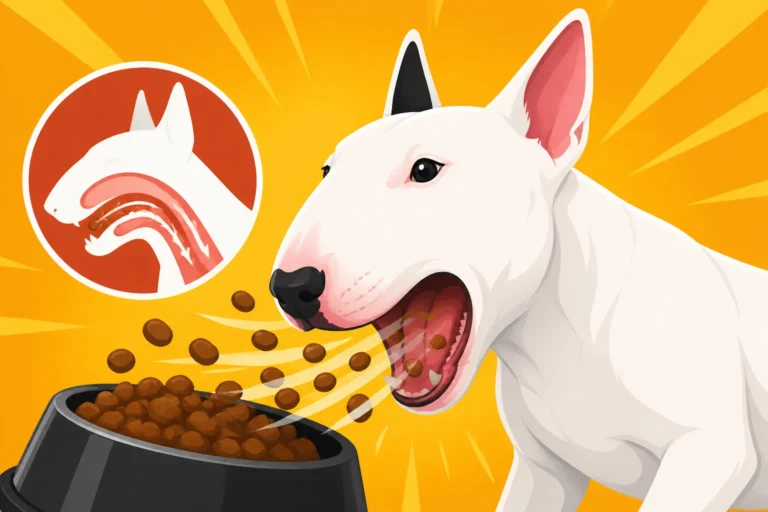
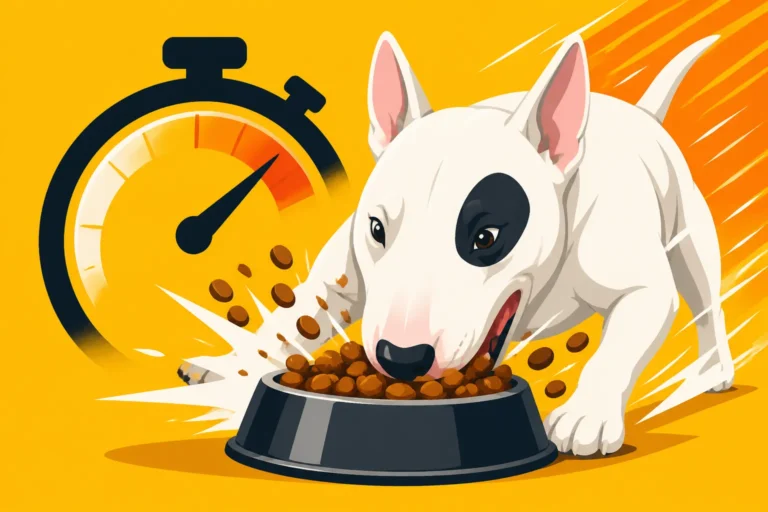
Ah, the Bull Terrier vacuum cleaner! Many Bull Terriers eat their food so fast you wonder if they even tasted it. While this might seem harmless, rapidly eating can lead to indigestion, gas, and in some cases, a higher risk of bloat. Plus, it just isn't very satisfying for them.
The solution here often lies in making them work for their food. Slow feeder bowls are a fantastic invention for this purpose. They have ridges or obstacles that force your Bull Terrier to eat around them, significantly slowing down their mealtime. Puzzle toys or food dispensing toys (many options are available on Chewy or Amazon) can also be used for meals or portions of meals, turning eating into an enriching mental activity. Some owners even spread a portion of wet food on a lick mat, which can take a surprising amount of time to get through. For Why a Bull Terrier Inhales Its Food, it's often a combination of genetics and competition if they were in a litter.
Managing Treats and Extras
Treats are wonderful for training, bonding, and just spoiling your Bull Terrier a little, but they are often a hidden source of extra calories. If you're giving many treats throughout the day, you must account for them in their overall caloric intake. A good rule of thumb is that treats should make up no more than 10% of your Bull Terrier's daily calories.
Consider using low-calorie treats, or even pieces of their regular kibble for training. If you're going to use higher-value treats, remember to reduce the portion of their next meal accordingly. For Bull Terriers on a weight management plan, finding Which Treats Suit a Bull Terrier on a Diet becomes even more important. Opt for crunchy vegetables like carrot sticks or apple slices (without seeds) as healthy, low-calorie alternatives.
The Bored or Picky Eater
While Bull Terriers are often known for their hearty appetites, some can be surprisingly picky, or simply lose interest if their food isn't exciting. First, rule out any medical issues with your vet. A sudden loss of appetite is always a red flag. If they get a clean bill of health, then it might be a matter of boredom or preference.
You can try adding a splash of warm water to their kibble to release aromas, or a small amount of low-sodium broth (check ingredients carefully). Some owners use a tiny bit of plain canned pumpkin or yogurt (again, plain and unsweetened) as a topper. However, be mindful of How Sensitive a Bull Terrier's Stomach Is to avoid digestive upset. Consistency in food type can also help; frequent changes can sometimes encourage pickiness. Ensure their bowls are clean and that they have a quiet, comfortable place to eat without distractions or competition from other pets.
Approximate Daily Food Intake for Adult Bull Terriers (Standard Kibble)
This table provides a very general guideline based on a standard, good-quality kibble (roughly 350-400 kcal per cup). Always adjust based on your specific food's caloric density and your Bull Terrier's individual needs.
| Activity Level | Ideal Weight Range (lbs) | Approximate Daily Cups (split into 2 meals) |
|---|---|---|
| Sedentary/Low | 45-55 lbs | 2.0 – 2.5 cups |
| (Light walks, naps) | 55-65 lbs | 2.5 – 3.0 cups |
| Moderate | 45-55 lbs | 2.5 – 3.0 cups |
| (Daily walks, play) | 55-65 lbs | 3.0 – 3.5 cups |
| Active/High | 45-55 lbs | 3.0 – 3.5 cups |
| (Long hikes, sports) | 55-65 lbs | 3.5 – 4.0+ cups |
Remember: These are starting points. Always monitor your Bull Terrier's body condition and adjust accordingly.
Disclaimer
This article is for general informational purposes only and does not constitute professional advice. Laws, prices and regulations vary by location and change over time. Consult a qualified professional for guidance on your specific situation.