Whether an Aging Bull Terrier Needs Help on Stairs
It’s a heart-wrenching moment for any Bull Terrier owner: seeing your once-boundless, energetic companion hesitate at the bottom of a staircase, maybe even stumble or whine softly. Our beloved, goofy Bull Terriers often seem invincible, but time, like for all of us, eventually takes its toll. This guide is here to walk you through the subtle, and not-so-subtle, signs that your aging Bull Terrier might be struggling with stairs, what's often behind these difficulties, and how you can gently and effectively help them navigate their world with more comfort and confidence.
Recognizing the Subtle Signs Your Bull Terrier Needs Stair Assistance
Bull Terriers are notorious for their stoic nature; they often try to push through discomfort, a trait that makes it even harder for us to spot when they're hurting. It’s not always a dramatic fall that signals trouble. Often, it's a collection of small, gradual changes that we, as their devoted caretakers, need to learn to observe. Catching these early can make a huge difference in their quality of life.
Hesitation and Reluctance at the Stairs
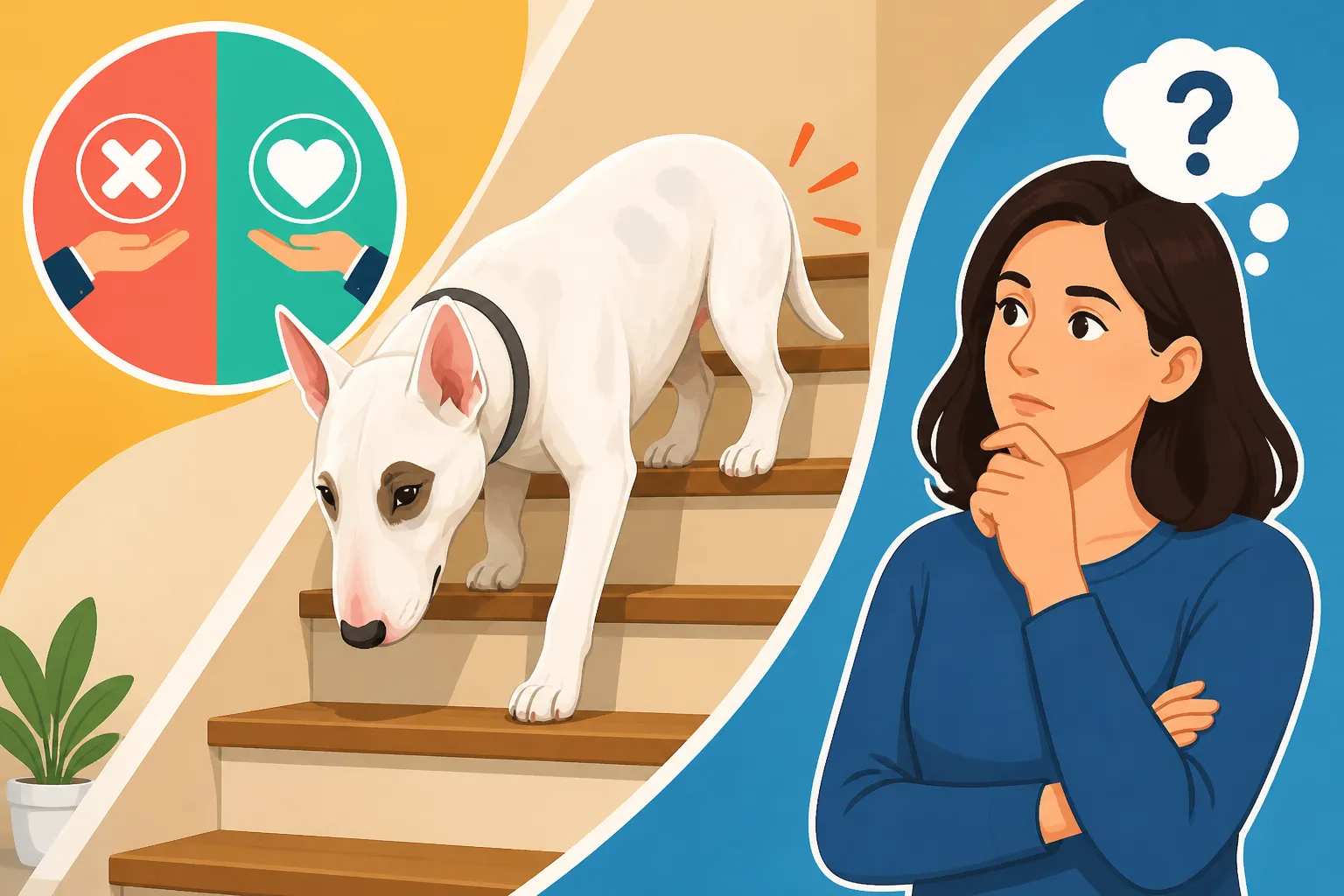
One of the first indicators that your Bull Terrier is finding stairs challenging isn't necessarily a physical stumble, but a mental pause. You might notice them walking up to the bottom step, pausing, looking up, and then perhaps looking back at you with a slightly worried expression. It’s not outright refusal, but a clear hesitation where there used to be effortless bounding. This reluctance can manifest as them trying to find an alternative route, even if it’s less convenient, or simply sitting down and waiting for you to intervene. They might not whine or cry, but their body language speaks volumes. They might even try to "psych themselves up," taking a deep breath before attempting the climb or descent.
Perhaps your Bull Terrier used to fly down the stairs to greet you at the door, but now they slowly pick their way, one deliberate step at a time, or wait for you to come to them. This change in their typical pattern of movement is a significant red flag. It’s their way of telling you that the action that was once instinctual and easy now requires conscious effort and potentially brings discomfort. Pay attention to how they start and finish their climb—do they lean heavily on one side, or struggle with the final push onto the landing? These observations are key to understanding the extent of their difficulty.
Changes in Gait and Posture on Stairs
Beyond hesitation, you might start seeing distinct alterations in how your Bull Terrier moves on the stairs. Instead of their usual smooth, powerful ascent or descent, they might adopt a more awkward, stiff, or even bunny-hopping gait. When going down, they might lean heavily on the railing side if one is present, or drag their paws slightly. Some dogs will try to take two steps at once, or skip steps, to minimize the impact or effort on a particular joint.
For instance, an aging Bull Terrier might begin to "plow" down the stairs, bracing their front legs and sliding rather than stepping cleanly. This is often a sign of hind leg weakness or pain. Conversely, when going up, they might push off with their front legs more, dragging their back end or taking very short, choppy steps with their hind legs. Watch for any signs of shaking or trembling in their legs, especially after a stair climb, as this indicates muscle fatigue or pain. Observing these specific changes can help your veterinarian pinpoint the exact joints or muscles that are causing trouble. They might be trying to avoid putting weight on a painful hip, or their knees might be giving them trouble. Spondylosis in an Aging Bull Terrier can make it painful for them to arch their back, which is crucial for stair navigation.
Vocalizations and Pain Signals
While Bull Terriers are masters at hiding pain, an aging dog struggling with stairs might occasionally let out subtle vocalizations. This could be a soft grunt, a sigh, or a low whimper when navigating a particularly steep or challenging step. It’s rarely a loud yelp, but more of a quiet acknowledgment of discomfort. You might also notice them licking their lips, panting more heavily than usual after a short climb, or even drooling.
Beyond vocalizations, watch their body language closely. A tense body, ears pinned back, or a tail tucked slightly can all be indicators of pain or anxiety associated with the stairs. Some Bull Terriers might even snap or growl if you try to help them up or down the stairs in a way that exacerbates their pain, which is completely out of character for their usually happy-go-lucky disposition. This isn't aggression; it's a clear signal that they are hurting and feeling vulnerable. Understanding How a Bull Terrier Hides Pain is crucial for recognizing these subtle cues.
Understanding Why Stairs Become a Challenge for Senior Bull Terriers
The reasons behind a senior Bull Terrier's struggle with stairs are often multi-faceted, combining the natural effects of aging with breed-specific predispositions. It's rarely just one thing, but rather a combination of physical and sometimes even cognitive changes that make climbing or descending a challenge.
Joint Disease and Arthritis
The most common culprit for stair difficulties in aging dogs is undoubtedly joint disease, primarily osteoarthritis. Just like in humans, the cartilage cushioning their joints begins to wear down over time, leading to bone-on-bone friction, inflammation, and pain. For a breed like the Bull Terrier, known for their sturdy build and active nature, years of running, jumping, and their signature "zoomies" can take a toll on joints like hips, knees (patellas), elbows, and spine. Caring for an Old Bull Terrier often involves managing these age-related joint issues.
When a Bull Terrier has arthritis, each step on a staircase can send a jolt of pain through their affected joints. Going up requires significant push-off power from the hind legs, while going down places immense stress on the front legs and spine as they absorb impact. This can make them hesitant, stiff, and even reluctant to use the stairs at all. The discomfort can worsen in cold or damp weather, making a staircase feel even more insurmountable on a chilly morning. Ignoring these signs can lead to further joint damage and a significant reduction in their quality of life.
Muscle Atrophy and Weakness
Aging inevitably brings a loss of muscle mass, a condition known as sarcopenia. Even in a powerful breed like the Bull Terrier, muscle strength and endurance diminish with age, particularly in the hindquarters. These muscles are absolutely essential for propelling them up stairs and stabilizing them on the descent. If those muscles are weak, your Bull Terrier will struggle to generate the necessary power, leading to hesitation, instability, and an increased risk of falls. Whether an Aging Bull Terrier Loses Muscle is a very real concern for senior dogs.
Think about it: climbing stairs is a full-body workout. Weakness in their core muscles can make it harder to maintain balance, while diminished strength in their glutes and quadriceps means they simply can't push themselves up each step with ease. This isn't just about general fitness; it's about the specific muscle groups required for such a demanding physical act. They might try to compensate by relying more on their front legs, which can then strain their shoulders and elbows. This muscle loss can create a vicious cycle: pain leads to less movement, which leads to more muscle loss, making the stairs even harder.
Impaired Vision and Proprioception
As Bull Terriers age, their senses can decline, and vision is no exception. Cataracts, glaucoma, or other eye conditions can make it difficult for them to accurately judge the depth and height of each step, especially in dimly lit areas or if there are patterned carpets on the stairs. This visual impairment can cause them to miss a step or place their paw incorrectly, leading to stumbles or falls.
Beyond vision, proprioception – the sense of where their body parts are in space – can also diminish with age. This is particularly important for navigating uneven surfaces like stairs, where precise foot placement is critical. If your Bull Terrier's brain isn't getting accurate feedback from their paws and limbs, they might misstep, lose balance, or feel generally unsteady. This can be especially noticeable when going down stairs, as they rely heavily on this spatial awareness to confidently place each paw. A combination of poor vision and reduced proprioception makes stairs a truly daunting obstacle.
Here's a quick look at common reasons an aging Bull Terrier struggles with stairs:
| Symptom Displayed | Potential Underlying Cause | How It Impacts Stairs |
|---|---|---|
| Hesitation, reluctance | Joint pain (arthritis), generalized weakness, anxiety | Fear of pain, lack of confidence in physical ability, past negative experience |
| Stiff, awkward gait | Arthritis (hips, knees, spine), muscle stiffness | Reduced range of motion, discomfort with flexing/extending joints |
| Slipping, loss of grip | Weakness, neurological issues, poor paw pad grip | Inability to stabilize body, diminished coordination, worn paw pads |
| Bunny hopping up | Hind leg weakness, hip pain (dysplasia, arthritis) | Attempting to move both hind legs together to reduce strain on one side |
| Trembling, shaking | Muscle fatigue, pain, weakness, neurological conditions | Muscles struggling to cope with exertion, involuntary responses to pain or effort |
| Whining, grunting | Pain, discomfort, fear | Direct vocalization of pain or distress during movement |
| Difficulty going down | Front leg pain, core weakness, visual impairment, fear | Increased impact on front limbs, instability due to vision, difficulty judging descent |
| Difficulty going up | Hind leg pain, general weakness, spinal issues | Lack of propulsion, strain on back, inability to lift body weight effectively |
| Stumbling, misplacing feet | Proprioceptive deficits, vision loss, neurological issues | Inaccurate spatial awareness, inability to see steps clearly, poor coordination of limbs |
Practical Solutions and Home Adaptations for Stair Navigation
Once you’ve identified that your senior Bull Terrier is struggling with stairs, the next step is to implement practical solutions to make their life easier and safer. This isn't just about comfort; it's about preventing injuries and maintaining their independence for as long as possible.
Veterinary Consultation and Pain Management
Your very first port of call should always be your veterinarian. They can conduct a thorough examination to accurately diagnose the underlying cause of your Bull Terrier’s stair difficulties. This might involve X-rays, blood tests, or other diagnostics to identify arthritis, spinal issues, or other health problems. They can then recommend an appropriate pain management plan, which is often the cornerstone of helping an older dog.
This plan might include non-steroidal anti-inflammatory drugs (NSAIDs) to reduce pain and inflammation, joint supplements like glucosamine and chondroitin, or other medications to support joint health. Your vet might also suggest physical therapy, acupuncture, or even laser therapy to alleviate discomfort and improve mobility. Sometimes, just getting their pain under control makes a world of difference, allowing them to use the stairs more confidently. Discussing a medication regimen is essential, as managing chronic pain is a long-term commitment that How Long a Bull Terrier Lives After a Nephritis Diagnosis can be impacted by, or at least how well they live.
Ramps and Gates for Safety
For many aging Bull Terriers, the safest and most effective solution for stairs is to eliminate the need to use them altogether, or to provide an easier alternative. Ramps are fantastic for this, especially for external steps or shorter indoor staircases. Look for sturdy, non-slip ramps that can be placed over existing stairs or used as a standalone solution. Companies like Chewy and Amazon offer a wide range of pet ramps designed for various sizes and weights, ensuring you can find one that can handle your robust Bull Terrier.
If ramps aren’t feasible for your main staircase, then gates become your best friend. Install sturdy pet gates at the top and bottom of staircases to prevent your Bull Terrier from attempting them unsupervised. This is particularly important at night or when you’re not home. A Bull Terrier’s stubborn streak might lead them to try the stairs even when it’s painful, so clear boundaries are crucial. Ensure the gates are tall and strong enough to withstand your Bull Terrier's lean, as they are known for their strength and determination!
Non-Slip Surfaces and Improved Lighting
Slippery stairs can be terrifying for an older dog, exacerbating any existing balance or weakness issues. Carpeted stairs are generally safer than hardwood or tiled ones. If your stairs are hard-surfaced, consider installing non-slip treads or carpet runners. These provide much-needed traction, giving your Bull Terrier more confidence with each step. Make sure the treads are securely fastened and cover the entire width of the step.
Good lighting is also paramount. Poorly lit staircases can be confusing and dangerous for dogs with declining vision. Install brighter light fixtures, or consider adding motion-sensor lights at the top and bottom of the stairs, particularly if your Bull Terrier needs to navigate them at night. This ensures they can clearly see each step and avoid misjudging distances. A well-lit, non-slip staircase can significantly reduce anxiety and the risk of falls for your senior Bull Terrier.
Assisted Lifting and Support Harnesses
For dogs with severe mobility issues, or during times of acute pain, manual assistance might be necessary. This doesn't mean carrying your Bull Terrier (unless they are a Mini Bull!), but rather using a supportive harness to help them up and down the stairs. There are several types of harnesses specifically designed for rear-end support, like those from Help 'Em Up or similar brands available on Amazon. These harnesses allow you to take some of the weight off their hindquarters, making the effort less strenuous and more stable.
Learning proper lifting techniques is also important to avoid injuring both your dog and yourself. If your Bull Terrier is still relatively mobile but just needs a little boost, a sling or towel placed under their belly can offer support. Always ensure you are supporting their weight evenly and not putting undue pressure on any painful areas. For full-body support, a sturdy handle harness can be invaluable, especially if you have a larger Bull Terrier. Remember, the goal is to assist, not replace, their movement.
Long-Term Management and Quality of Life for Your Senior Bull Terrier
Helping your aging Bull Terrier with stairs isn't a one-time fix; it's an ongoing commitment to their comfort and well-being. Proactive management, regular veterinary check-ups, and a consistent routine can help ensure their golden years are as enjoyable and pain-free as possible.
Maintaining a Healthy Weight and Diet
One of the most impactful things you can do for an aging Bull Terrier with joint issues is to keep them at a healthy weight. Extra pounds put immense stress on already compromised joints, making every step, especially on stairs, more painful and difficult. Work with your vet to determine the ideal weight for your Bull Terrier and establish a suitable diet plan. This might involve reducing calorie intake or switching to a senior-specific or weight-management food.
A diet rich in omega-3 fatty acids can also help reduce inflammation and support joint health. Some high-quality senior dog foods are specifically formulated with joint-supporting ingredients. Brands like Ollie often offer customized meal plans that can be adjusted for a senior dog's specific needs, including ingredients that support joint health and manage weight. Consistent, appropriate nutrition is a cornerstone of senior feeding (Whether an Aging Bull Terrier Needs Softer Food) as they age, even beyond just teeth issues. It's about providing the right fuel for their changing body.
Gentle Exercise and Physical Therapy
While stairs might be out, gentle, regular exercise remains crucial for maintaining muscle mass, joint flexibility, and overall well-being. Short, controlled walks on level surfaces are ideal. Swimming can be an excellent low-impact activity, providing buoyancy that takes pressure off their joints while still strengthening muscles. Avoid high-impact activities or anything that encourages sudden twists or jumps.
Your vet might also recommend a canine physical therapist. These specialists can design a tailored exercise program to strengthen specific muscle groups, improve range of motion, and reduce pain. Exercises might include therapeutic stretches, balance work, and hydrotherapy. These interventions can significantly improve your Bull Terrier’s mobility and comfort, even if they can no longer navigate stairs independently. This holistic approach ensures their body remains as functional as possible for as long as possible. How Far an Aging Bull Terrier Should Still Run is a question that needs individual assessment, but generally, less intensity and more consistency is better.
Regular Veterinary Check-ups and Monitoring
Consistent veterinary care is non-negotiable for an aging Bull Terrier. Senior dogs should have wellness exams at least twice a year, as their health can change rapidly. During these visits, your vet can assess their mobility, check for new or worsening arthritis, monitor their weight, and evaluate their overall health. Early detection of issues allows for prompt intervention, which can prevent problems from escalating.
It’s important to discuss any changes you observe in your Bull Terrier’s behavior, appetite, or mobility, no matter how subtle they seem. Regular blood work and urine tests are also vital, as issues like kidney disease can affect their overall health and energy levels. How Often an Aging Bull Terrier's Kidneys Should Be Checked is something your vet will advise on, as renal function is a common concern in aging Bull Terriers. These proactive check-ups are your best tool for ensuring your beloved companion maintains the highest possible quality of life in their senior years.
Home Modifications Beyond Stairs
Helping your Bull Terrier with stairs is often part of a broader need for home modifications. Think about other areas where they might struggle. Non-slip mats on slippery floors throughout your home can prevent slips and falls. Raised food and water bowls can make mealtime more comfortable, reducing strain on their neck and back. Orthopedic beds provide better support for aching joints.
Consider blocking off access to furniture if jumping on and off is causing discomfort, or provide a ramp or steps for them to safely access their favorite sofa or bed. Even small changes, like ensuring their walking routes are clear of clutter, can make a big difference in their daily comfort and safety. The goal is to create an environment where your senior Bull Terrier can move with confidence and dignity, allowing them to enjoy their golden years surrounded by love and comfort. What Changes in a Bull Terrier After Eight can include a range of needs, and adapting your home is a key part of responding to them.
Disclaimer
This article is for general informational purposes only and does not constitute professional advice. Laws, prices and regulations vary by location and change over time. Consult a qualified professional for guidance on your specific situation.