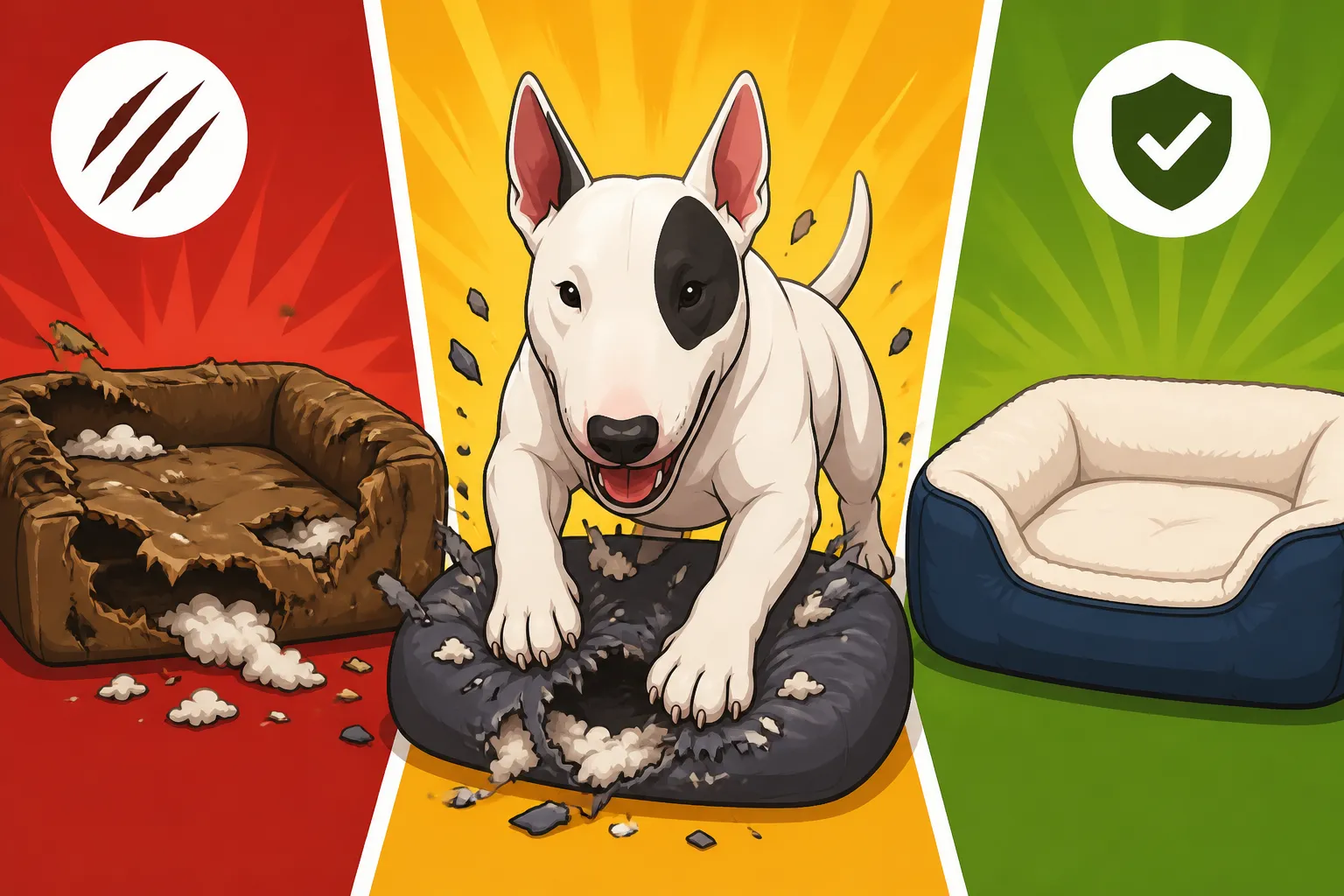
Which Bed Survives a Bull Terrier
If you’ve ever come home to a shredded dog bed, stuffing strewn across the living room like a winter wonderland, and a Bull Terrier looking entirely too innocent, you know the unique frustration of finding a bed that actually survives your beloved companion. It’s a common lament among Bull Terrier owners, feeling like you’re constantly throwing money away on beds that claim to be tough but crumble under the mighty Bull Terrier jaw. This guide is here to help you understand why your Bull Terrier is such a bed-destroying champion and, more importantly, what kind of bedding truly stands a fighting chance against their determined demolition efforts.
The Bull Terrier Bed Wrecking Ball Phenomenon
Let’s be honest, Bull Terriers are incredible dogs, full of personality, strength, and an almost unparalleled ability to make short work of anything they set their minds to. This includes, very often, their beds. It’s not usually out of malice, but a combination of their physical attributes and mental makeup that turns plush bedding into confetti. Understanding this is the first step toward finding a lasting solution.
The Power Behind the Play: Jaw Strength and Energy
A Bull Terrier’s jaw is a force to be reckoned with. Bred for strength and tenacity, they possess an incredibly powerful bite. This isn't just for eating; it's a tool they use to explore, play, and sometimes, to alleviate boredom or stress. A soft, fluffy bed, with its easily penetrable fabric and inviting bulk, becomes a prime target for a Bull Terrier looking for something to engage those powerful jaws. They don't just chew; they rip, tear, and systematically deconstruct. Many owners describe it as their dog seeing a challenge, and every seam or loose thread becomes an invitation to conquer. It’s an instinctive behavior, a legacy of their heritage, that manifests as a fluffy explosion in your home.
Beyond their formidable jaws, Bull Terriers are also high-energy dogs. They need plenty of exercise and mental stimulation to keep them content. If that energy isn't channeled appropriately, it can easily turn into destructive behaviors. A lack of physical activity or engaging mental puzzles can leave them with a surplus of energy and a need to "do something." What better "something" than taking apart the most accessible, softest item in the house? They are not just destroying; they are working, creating, and exercising those impressive muscles. This energy, when misdirected, can be the catalyst for the systematic dismantling of a brand new, expensive dog bed.
Boredom, Anxiety, and Instinct
While some bed destruction might be pure sport, it often stems from deeper issues like boredom or anxiety. A Bull Terrier left alone for long periods without sufficient mental enrichment or physical exercise can quickly become bored. Boredom, for a smart and active breed like the Bull Terrier, isn't just lying around; it's an itch that needs scratching. Chewing, ripping, and tearing are immensely satisfying outlets for this pent-up energy. They might start with a gentle nibble and quickly escalate to full-on demolition mode once they realize how much fun it is. This is where you really see What a Bull Terrier Does When It Is Bored.
Separation anxiety is another major culprit. Bull Terriers are highly social dogs who thrive on companionship. When left alone, especially if they haven't been properly acclimated to solitude, they can experience significant stress. This anxiety often manifests as destructive behavior, particularly around items that smell strongly of their human, like a bed. The act of chewing can be self-soothing, a way to cope with their distress. It’s a cycle: they get anxious, they chew, they feel a momentary release, and the bed pays the price. Understanding this difference – whether it's boredom or anxiety – is crucial for addressing the root cause, not just the symptom of a destroyed bed. Many dogs that struggle with being left alone exhibit behaviors like this, and you might want to look into Whether a Bull Terrier Gets Separation Anxiety.
Beyond "Indestructible" Claims
You’ve probably seen all the marketing claims: "chew-proof," "indestructible," "military-grade durability." As a Bull Terrier owner, you’ve likely learned these claims often fall short. What works for a Labrador or a Golden Retriever might last an hour with a determined Bull Terrier. The problem isn't necessarily the marketing being dishonest; it's that these products are often designed for typical chewers, not the unique intensity of a Bull Terrier. Their strong jaws, combined with a persistent, problem-solving mindset, means they will find any weakness. A single loose thread, a slightly weaker seam, or a zipper that isn't fully concealed can be the Achilles heel of an otherwise "durable" bed.
It's a tough lesson to learn, often costing a fair bit of money in replacement beds. Owners often cycle through countless beds, hoping to find "the one" that can withstand the assault. It’s less about finding a truly indestructible object (because, let's face it, very few things are truly impervious to a determined Bull Terrier) and more about finding the most resistant options and pairing them with smart management strategies. You’ll be surprised at The Destruction Budget Nobody Warns a Bull Terrier Owner About when you add up all the destroyed items, beds included!
What Makes a Bed Truly "Bull Terrier Proof"?
When it comes to Bull Terriers, you need to think beyond your average pet store bed. "Bull Terrier proof" isn't just a buzzword; it's a specific set of characteristics that allow a bed to withstand their particular brand of determined destruction. It’s about material science, clever engineering, and an understanding of how these dogs operate.
Materials That Matter: Durability and Resistance
The material of the bed is your first line of defense. Forget plush fleece or delicate cotton blends; you need industrial-strength fabrics.
- Ballistic Nylon: This is often the gold standard for chew-resistant beds. Originally developed for military use (think body armor), ballistic nylon is incredibly dense, tightly woven, and resistant to tears, abrasions, and punctures. It's not inherently "unchewable," but it's significantly harder for a Bull Terrier's teeth to get a purchase on, and even if they do, it takes a monumental effort to rip. Look for high-denier counts (e.g., 1280D or higher) for maximum resistance. These beds often feel stiff and rough, which is exactly what you want—less appealing for chewing than a soft, yielding surface.
- Ripstop Fabric: Similar to ballistic nylon, ripstop fabrics are woven with a special reinforcing technique that makes them resistant to tearing and ripping. If a tear does occur, the weave prevents it from spreading further. This can be found in some bed covers and provides a good level of durability.
- Heavy-Duty Canvas or Cordura: While not as extreme as ballistic nylon, very heavy-duty canvas or Cordura can also offer good resistance. These materials are thick, tightly woven, and difficult to puncture. They might be a bit more breathable than ballistic nylon, which can be a consideration in warmer climates.
The key is the density and strength of the weave. The harder it is for their teeth to sink in and tear, the longer the bed will last. Many brands on platforms like Chewy offer beds made with these materials, but it’s crucial to read reviews from owners of powerful chewers, not just general dog owners.
Construction: Seams, Zippers, and Reinforcements
Even the toughest material can fail if the construction is shoddy. Bull Terriers are masters at finding weak points, and more often than not, these are the seams and zippers.
- Reinforced Stitching: Look for beds with double or even triple-stitched seams. Flat-felled seams, where the raw edges are tucked under and stitched down, are particularly strong. Every stitch should be tight and consistent, leaving no loose threads that invite chewing. Weak seams are like an open invitation for a Bull Terrier to start their deconstruction project.
- Concealed Zippers: A visible or exposed zipper is a Bull Terrier’s playground. They will methodically work on it until it breaks, giving them access to the tempting stuffing inside. The best chew-resistant beds will have zippers that are either fully recessed, covered by a protective flap, or even hidden on the underside of the bed, away from curious mouths. Some beds skip zippers entirely, opting for a design where the cover is permanently sealed around the stuffing.
- No Accessible Stuffing: The stuffing inside a bed is often the ultimate prize for a Bull Terrier. The satisfaction of tearing it out and scattering it is immense. Therefore, a truly durable bed minimizes access to the internal components. Some beds use solid foam inserts that are hard to shred, while others have separate internal liners made of the same tough material, adding another layer of protection even if the outer cover is breached.
When evaluating a bed, run your hand along all seams and check the zipper design carefully. If it looks like a Bull Terrier could get their formidable teeth around it, they probably will.
Design Features for the Determined Digger and Chewer
Beyond materials and construction, certain design elements can significantly improve a bed's longevity when faced with a Bull Terrier.
- Elevated Cot Style: These beds are often made with a sturdy metal or PVC frame and a taut, durable fabric sleeping surface, like heavy-duty mesh or ballistic nylon. The key advantage here is that there's no stuffing to tear out. The elevated design also keeps your dog off cold or hard floors and provides excellent airflow. Many Bull Terriers love these because they're cool and comfortable, and the lack of soft edges can deter chewing. You can find these from various brands, sometimes specialized for camping or heavy outdoor use, which means they are built to last.
- Seamless, Bolster-Free Designs: While bolsters can be comfortable for some dogs, they are often the first part of a bed to be attacked by a chewer. The raised edges provide an easy target for gripping and tearing. For extreme chewers, a simple, flat mat or a bed with very firm, integrated bolsters (rather than soft, separate ones) will fare better.
- Armored Frames: Some ultra-durable beds feature internal or external aluminum or steel frames. These are less like traditional beds and more like heavy-duty crates with a comfortable sleeping surface. They are designed to prevent the dog from getting to the fabric edges or corners where chewing typically begins. These options are usually at the higher end of the price spectrum but can be a worthwhile investment if you're tired of constantly replacing beds.
| Bed Type | Key Materials | Construction Highlights | Bull Terrier Benefit | Potential Downsides |
|---|---|---|---|---|
| Elevated Cot | Metal/PVC frame, Ballistic Nylon/Mesh | No stuffing, elevated design | No stuffing to shred, good airflow, difficult to grip | Less plush comfort, might take up more space |
| Ballistic Nylon Bed | High-denier Ballistic Nylon | Reinforced seams, concealed zipper | Extremely tear-resistant, tough surface | Can be less soft, might retain heat |
| Aluminum Frame Bed | Aluminum frame, durable fabric | Frame prevents access to edges | Virtually chew-proof frame, internal fabric protected | Highest cost, rigid design, heavier |
| Heavy-Duty Canvas Mat | Thick Canvas/Cordura | Simple, flat design, durable stitching | No bolsters to attack, often affordable | Less orthopedic support, less padding |
Top Contenders: Beds That Stand a Chance
Okay, so you know the theory. Now, what are the actual types of beds that have a prayer against the sheer will and jaw power of a Bull Terrier? We’re talking about beds designed with extreme durability in mind, often backed by guarantees that speak volumes about their confidence in their product.
Elevated Cot-Style Beds
These are often the unsung heroes for Bull Terrier owners. Elevated cots, sometimes called "Coolaroo" beds (though that's a brand name, it's become a bit generic for the style), remove the central problem of internal stuffing entirely. They consist of a sturdy frame – usually made of steel, aluminum, or heavy-duty PVC – and a durable, taut fabric stretched across it.
The frame keeps the fabric off the ground, which is great for air circulation, keeping your Bull Terrier cool in summer and off cold floors in winter. More importantly, the lack of accessible edges for chewing and the absence of fluffy stuffing mean there's very little for your Bull Terrier to destroy. They can’t "nest" in it or dig, which often deters the initial urge to shred. Many dogs take to them quickly, enjoying the hammock-like comfort and the elevated vantage point. For a Bull Terrier that constantly goes through traditional stuffed beds, an elevated cot can be a game-changer. You might find a wide selection of these, and other pet essentials like Which Toy a Bull Terrier Will Work For, through retailers like Chewy.
Chew-Resistant Bolstered Beds
If your Bull Terrier absolutely needs the feeling of a bolster for comfort or security, there are options that attempt to make this design chew-resistant. These typically employ ballistic nylon or equally tough materials for the entire cover, including the bolsters. The key here is that the bolsters themselves are usually very firmly packed or even made with a dense foam core, making them harder to tear into.
Look for brands that specifically market their bolstered beds for "power chewers" and offer a strong warranty. The bolsters should be seamlessly integrated or have extremely well-protected zippers if they are removable. Some advanced designs feature internal frames within the bolsters to maintain shape and prevent collapse, further deterring chewing. While no soft bed is truly impervious, these types are built with the Bull Terrier's destructive tendencies in mind, aiming to make it as difficult as possible to get a grip and start tearing.
Specialty Beds with Guarantees
Some manufacturers are so confident in their chew-resistant designs that they offer guarantees, sometimes even lifetime warranties, against chewing damage. These beds are usually at the top tier of durability and price. They often incorporate industrial-grade materials like aircraft-grade aluminum frames, ballistic nylon, and often proprietary, super-tough fabrics. The design is meticulously thought out to eliminate weak points, with hidden hardware and tightly secured fabric.
These guarantees are a huge peace of mind for Bull Terrier owners who have been through countless destroyed beds. While the initial investment might be higher, the potential savings from not having to replace beds every few months can make them a very cost-effective solution in the long run. When considering one of these, always read the fine print of the guarantee to understand what it covers and for how long. Remember, even with the toughest beds, providing adequate mental and physical stimulation, along with training, will always be your best defense against bed destruction. Consider also that if your Bull Terrier is getting a healthy diet, perhaps even a fresh food option like Ollie, they are generally in a better state of mind and body, which can sometimes reduce anxiety-related chewing.
More Than Just a Bed: Holistic Solutions for a Bull Terrier
While finding the right bed is critical, it’s only one piece of the puzzle when you’re dealing with a Bull Terrier who sees bedding as a fun challenge. Addressing the underlying reasons for destruction is just as important, if not more so, than the bed itself. A truly "Bull Terrier proof" solution involves a comprehensive approach that considers their physical, mental, and emotional needs.
Mental and Physical Enrichment
A bored Bull Terrier is a destructive Bull Terrier. These dogs are intelligent and energetic, and they thrive on having a "job" or something to focus their minds and bodies on. If they aren’t getting enough exercise, both physical and mental, that excess energy has to go somewhere, and often it goes into tearing apart their environment, including their bed. Aim for at least an hour or two of vigorous exercise daily. This isn't just a leisurely stroll; it could involve brisk walks, running, fetch, or even How Far a Bull Terrier Can Run With You.
Mental enrichment is equally vital. Puzzle toys, snuffle mats, and training sessions can engage their minds and tire them out in a different way. Rotate their toys frequently to keep things novel and interesting. Give them durable chew toys that are appropriate for their powerful jaws, redirecting their chewing instincts to acceptable objects. Many Bull Terrier owners swear by heavy-duty rubber toys or antlers. Regularly engaging their minds and bodies can drastically reduce the likelihood of them turning their attention to their bed for entertainment. You might also want to explore How Many Chews a Bull Terrier Needs a Week to keep their jaws busy on appropriate items.
Training and Management Strategies
Consistency in training and smart management of their environment are absolutely key. Begin training early, focusing on impulse control and teaching them what is and isn’t appropriate to chew. Supervise your Bull Terrier, especially when they are young or new to a bed, to interrupt any attempts at chewing before they escalate. If you catch them chewing their bed, immediately redirect them to an appropriate chew toy. Praise and reward them when they chew the right item.
Crate training can also be a valuable tool, but it must be done positively and correctly. A crate, when introduced properly, becomes a safe den for your Bull Terrier, not a punishment. When they are crated, ensure they have their durable chew toys and maybe a puzzle toy to keep them occupied. The crate itself should be one they cannot break, as Bull Terriers are known for their strength. You might be interested in Which Crate Holds a Bull Terrier for more details. If your Bull Terrier struggles with separation anxiety when left alone, a professional behaviorist can provide tailored strategies and help address the root cause, rather than just the destruction. If issues arise that require veterinary intervention, remember that pet insurance from providers like Healthy Paws can help manage unexpected costs.
The Role of Diet and Overall Health
While it might seem unrelated, a Bull Terrier's overall health and diet can indirectly influence their behavior, including destructive tendencies. A dog experiencing discomfort, anxiety due to health issues, or even nutritional deficiencies might be more prone to stress-related chewing. Ensure your Bull Terrier is on a high-quality, balanced diet appropriate for their age, activity level, and any specific health needs. Some owners find that a wholesome, fresh diet contributes to better overall well-being, which can reflect in calmer behavior.
Regular veterinary check-ups are important to rule out any underlying medical conditions that might be contributing to behavioral problems. Certain health issues, for instance, can cause discomfort or anxiety, leading to destructive chewing as a coping mechanism. Knowing What a Bull Terrier's Yearly Bloodwork Should Cover and keeping up with general wellness exams ensures that any health concerns are caught early. A healthy dog, both physically and mentally, is much less likely to engage in chronic bed destruction.
Disclaimer
This article is for general informational purposes only and does not constitute professional advice. Laws, prices and regulations vary by location and change over time. Consult a qualified professional for guidance on your specific situation.