Whether a Bull Terrier Can Be Liver
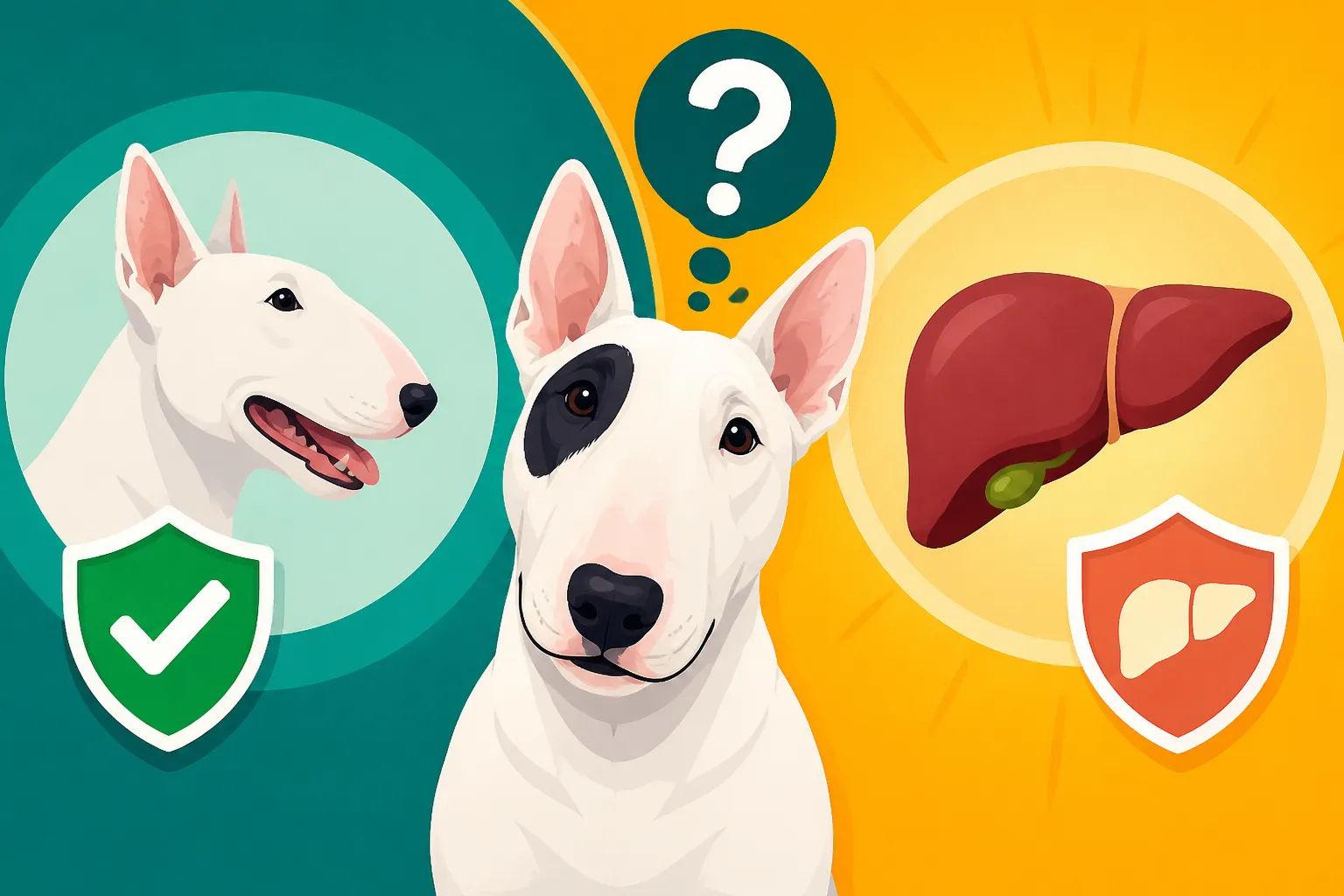
A Bull Terrier can be liver in the sense that its coat and exposed pigment may show a brown shade instead of black, but the color is uncommon and considered highly undesirable in some breed standards. That does not automatically mean a dog is unhealthy or poorly cared for. Here’s how to recognize liver coloring, separate it from similar shades, and assess a dog without judging it by color alone.
What liver means in a Bull Terrier
Liver is a pigment color, not simply a brown coat
“Liver” describes a form of brown pigment. In a dog with liver coloring, areas that would usually be black—such as the nose, eye rims, and paw pads—may instead be brown. The coat can also look brown, but the exact shade varies with the dog’s pattern and other inherited color genes.
The word can be confusing because people use “brown” casually to describe many different coat shades. A warm red Bull Terrier, a brindle with dark stripes, and a dog with liver pigment are not necessarily the same thing. Coat color alone can be hard to interpret, especially in a puppy whose coat is changing or in a dog with white areas that conceal some of its markings.
Liver coloring is associated with inherited changes in pigment production. In simplified terms, a dog generally needs to inherit the relevant recessive form from both parents for liver pigment to show. A dog can carry a color variant without visibly being liver itself. That is one reason two dogs’ appearances do not always tell the whole story about the colors they may pass to their puppies.
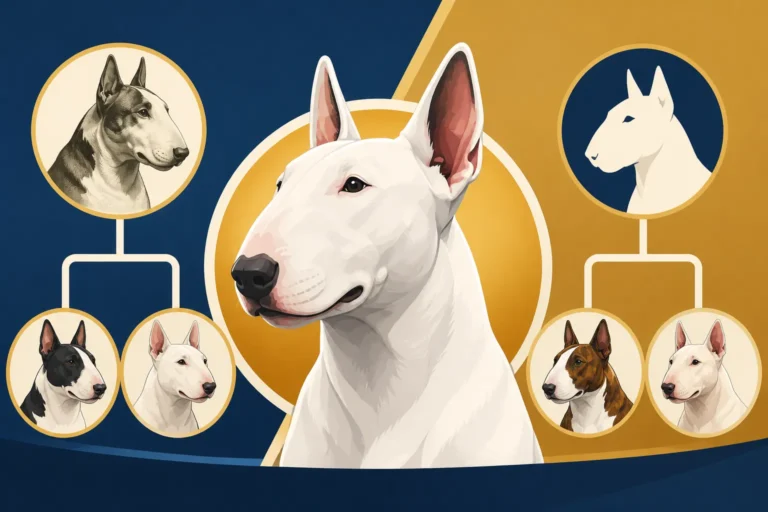
For a broader look at the breed’s recognized shades and patterns, see Which Colors a Bull Terrier Comes In. Color descriptions are useful, but they should not be treated as a substitute for a careful look at the whole dog, its pedigree, and any available health information.
Liver is different from red, fawn, brindle, and blue
A liver Bull Terrier may be mistaken for a red or fawn dog, especially in photographs where lighting warms the coat. Red and fawn describe coat colors; liver refers to brown pigment where black pigment would otherwise be present. A red dog can have a black nose, for example, while liver coloring involves brown pigment in the nose and related areas.
Brindle is a pattern of darker stripes over a lighter background. A brindle coat may look brownish from a distance, but that does not by itself establish liver pigment. Likewise, “red smut” refers to dark shading on a red coat and is not the same as liver coloring. Looking at the nose, eye rims, and pads along with the coat helps, although a breeder or veterinarian may be better placed to assess an ambiguous case.
Blue is another color people sometimes group with liver because both can look unusual beside the familiar black-and-white or brindle Bull Terrier. Blue generally refers to a diluted-looking gray tone, while liver is brown pigment. If you are comparing the two, Whether a Bull Terrier Can Be Blue explains why these terms are not interchangeable.
| Feature | Liver coloring | Red or fawn coloring | Brindle pattern |
|---|---|---|---|
| What the term describes | Brown pigment in place of black pigment | A coat shade | Dark stripes over a lighter coat |
| Nose and other exposed pigment | May appear brown | Often black, though appearance varies | Usually follows the dog’s underlying pigment |
| What to avoid assuming | That every brown-looking coat is liver | That a warm coat means brown pigment | That dark stripes mean liver |
| Best way to assess it | Consider coat, nose, pads, and reliable records together | Assess the coat shade and pigment separately | Look for a striped pattern, not just a dark appearance |
Is liver an accepted Bull Terrier color
Breed standards may discourage it
Breed standards describe the appearance expected in the show ring. Some standards identify liver coloring as highly undesirable, even while permitting many other colors in colored Bull Terriers. The precise wording and how a judge applies it can depend on the organization and the current standard, so anyone considering showing a dog should check the rules of the relevant kennel club.
“Highly undesirable” does not mean a dog is not a Bull Terrier, nor does it mean the dog is automatically sick. It signals a preference about breed appearance. A dog can be a much-loved companion regardless of whether its color fits a show-ring preference.
This distinction matters when you are speaking with a breeder. A seller may describe liver coloring as “rare,” “exclusive,” or especially valuable. Those are marketing claims, not proof of superior health, temperament, or quality. A responsible breeder should be able to discuss the dog’s parents, health screening, and care needs without making unusual color the main selling point.
If you are comparing puppies, keep the focus on the overall breeding choices and documentation. Which Breed Brought Color Back Into the Bull Terrier offers useful background on how color has figured in the breed’s history, while Whether Color Affects a Bull Terrier's Price at All helps separate appearance-driven pricing from the factors that matter in responsible ownership.
A rare color is not proof of a rare or better dog
A striking coat can make a puppy stand out in a litter, and it is understandable to feel drawn to a particular look. But “rare” can be used to create urgency or justify a premium without giving you meaningful information about the dog. Ask what health tests were completed, whether the results are available, and what support the breeder provides after the puppy goes home.
Do not assume a liver puppy has been selectively bred with health in mind simply because its color is unusual. Nor should you assume that a dog with a standard color is automatically from a responsible breeding program. Health, temperament, early care, and transparent records are separate questions from coat color.
A useful way to keep the conversation grounded is to ask the same questions you would ask about any Bull Terrier puppy: What health concerns are relevant in the line? What examinations or tests were done? Can you meet the dam, or learn about her temperament and health? What does the contract say about the dog’s welfare and return if circumstances change?
A dog’s color may affect its show prospects under a particular standard, but it does not tell you whether it will be a good fit for your home. For a wider discussion of health and color, see Whether a Colored Bull Terrier Is Healthier.
Does liver coloring cause health problems
Color alone does not diagnose a health condition
Liver coloring by itself is not a diagnosis. A brown nose or brown coat does not establish that a Bull Terrier has a medical problem, and color alone cannot tell you whether the dog is healthy. A veterinarian assesses the dog through its history, physical examination, and any tests that are appropriate to its symptoms and age.
It is also worth avoiding the reverse assumption: a dog should not be dismissed as healthy just because it looks bright-eyed and energetic. Ask about routine veterinary care, vaccination and parasite-prevention history, and screening relevant to Bull Terriers. If a puppy has skin irritation, repeated infections, poor growth, or other concerning signs, those deserve attention regardless of its coat color.
The breed has health issues that are unrelated to whether the coat is liver. For example, a responsible owner should learn about heart screening and kidney monitoring. Relevant background includes The Heart Murmur a Bull Terrier Puppy Should Be Checked For and The Yearly Urine Test Every Bull Terrier Owner Should Book. These topics are more useful to a health discussion than treating an unusual color as a shortcut to judging risk.
White areas and visible pink skin do deserve sensible sun care, but that is a separate issue from liver pigment. A Bull Terrier with pale or exposed skin may need shade and protection during sunny periods. See Why a White Bull Terrier Sunburns for more on that concern. When looking for a dog-safe sunscreen or other skin-care supplies, you might compare options from your veterinarian or a retailer such as Chewy, checking the label to make sure the product is intended for dogs.
Ask for evidence when color genetics matter
If you need to know whether a dog is genetically liver or carries a relevant color variant, visual guesses may not be enough. A canine genetic test may provide information about particular coat-color genes, but the right test depends on the question being asked. A result should be interpreted in context rather than treated as a broad statement about the dog’s health.
For a pet owner, testing may not be necessary simply because a dog has a brown-looking coat. For a breeder, however, understanding inherited color can help explain how a trait may pass through a line. That conversation should include the welfare of the dogs and the purpose of the breeding—not just the chance of producing a fashionable shade.
If a breeder says a puppy is liver, ask how they reached that conclusion and whether they have documentation. If a color claim is central to the sale, it is reasonable to ask for clear photographs in natural light and to have your veterinarian assess the puppy after purchase. A seller should not pressure you to decide before you can review the available information.
For routine care, choose gentle grooming products suited to the individual dog’s skin rather than buying something based on coat color alone. If you browse shampoos or skin-care items at Chewy or another retailer, check ingredients and ask your veterinarian before using a medicated product. More on the breed’s everyday coat care is covered in What a Bull Terrier's Coat Is Like.
How to assess a liver Bull Terrier responsibly
Look at the whole dog, not just the coat
If you are meeting a dog described as liver, look at the coat in daylight and note whether the nose, pads, and eye rims are brown as well. Photos can shift colors dramatically: indoor lighting may make red look brown, while shadows can make brindle markings appear darker than they are.
Then move beyond appearance. Ask about the dog’s behavior, daily routine, socialization, veterinary records, and any known medical concerns. With a puppy, ask what the breeder has done to prepare it for ordinary household experiences and how they support new owners. With an adult dog, ask about its history, comfort around people and other animals, and any care needs that may affect your household.
If the dog is a rescue, incomplete records do not mean it should be ruled out. They do mean you should plan for a veterinary examination and ask the rescue what is known. A retailer such as Chewy may be one place to compare basic supplies after adoption, but choosing food, supplements, or skin treatments should be based on the dog’s actual needs and veterinary advice—not on the claim that a particular color requires special products.
Use a practical checklist before making a decision
A few calm, specific questions can help you separate reliable information from sales language:
- What does “liver” mean in this dog’s case? Ask whether the description refers to brown pigment, a brown-looking coat, or simply a seller’s color label.
- Can I see the dog’s records? Review veterinary history and any health screening relevant to the dog and its family.
- What are the parents like? Ask about their health and temperament, not only their colors.
- Is unusual coloring being used to justify a higher price? Compare the full value of the breeder’s care and transparency rather than paying extra simply for a rare-sounding label.
- What does the dog need day to day? Consider training, exercise, skin care, and the time you can realistically provide.
- Can my veterinarian examine the dog? A veterinary visit can help you establish a baseline and discuss any concerns after bringing the dog home.
A liver Bull Terrier can be an appealing companion, but the color is only one small part of the decision. Focus on the dog in front of you: its health information, temperament, needs, and the care behind its breeding or rescue placement. A responsible decision comes from those details—not from the coat shade alone.
Disclaimer
This article is for general informational purposes only and does not constitute professional advice. Laws, prices and regulations vary by location and change over time. Consult a qualified professional for guidance on your specific situation.