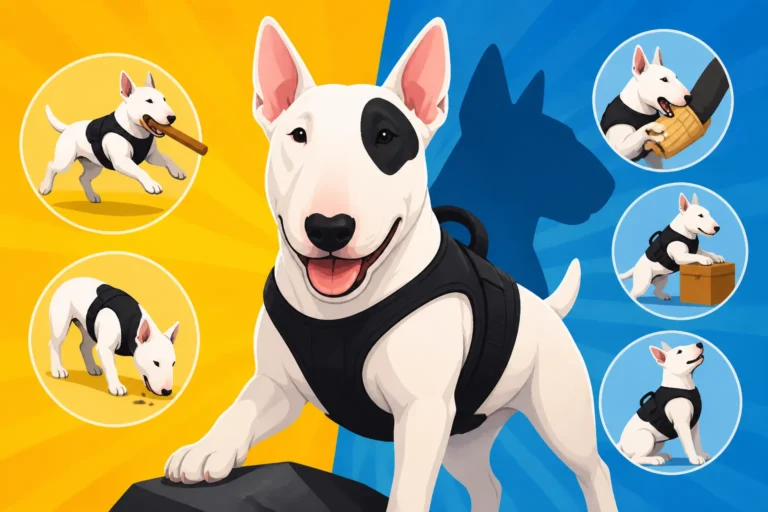
How a Bull Terrier Guards Its Person
One of the most heartwarming aspects of living with a Bull Terrier is their incredible devotion to their family. They bond deeply with their people, and part of that deep connection often manifests as a strong, sometimes overwhelming, instinct to guard them. While it’s comforting to feel your Bull Terrier has your back, it can also lead to tricky situations if not understood and managed, especially when their protective nature spills over into reactivity towards guests or strangers. This guide will help you understand the nuances of a Bull Terrier's guarding behavior and how to navigate it for a harmonious home.
Understanding the Bull Terrier's Protective Instincts
Bull Terriers, with their distinctive egg-shaped heads and powerful physiques, carry a history deeply rooted in companionship and loyalty, rather than outright aggression. Yet, their dedication to their humans can ignite a potent protective instinct. It's not about being inherently aggressive, but rather an intense desire to keep their beloved people safe.
The Root of Their Loyalty
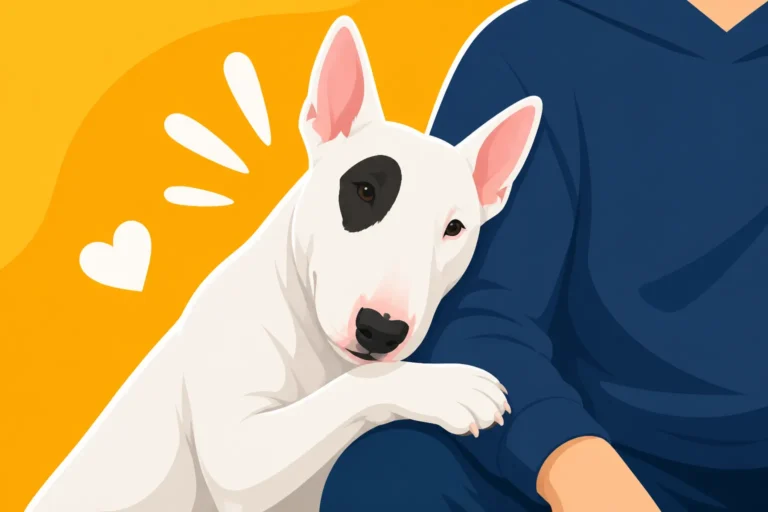
When we look back at the origins of the Bull Terrier, we see a dog developed not just for sport, but as a gentleman's companion. They were prized for their courage, yes, but also for their unwavering loyalty and charming, sometimes clownish, disposition. This deep-seated bond means that their primary focus quickly becomes their human family. They thrive on being involved in your life, sharing your space, and often, quite literally, leaning into you. This closeness fosters an instinct to protect what they hold most dear – you. It's an extension of their natural pack dynamic; you are their most valuable resource, and they are hardwired to protect their resources. For many Bull Terrier owners, this intense loyalty is one of the most cherished aspects of the breed. They truly become a shadow, a confidante, and a fiercely loyal guardian.
Distinguishing Protection from Aggression
It's vital to understand the difference between a Bull Terrier displaying protective instincts and one exhibiting true aggression. Protection, in its healthy form, often looks like increased vigilance: a low grumble when a stranger approaches too quickly, a body block between you and an unfamiliar person, or an alert bark when someone comes to the door. It's a communication, a warning, often without the intent to harm. Aggression, on the other hand, is a more direct threat—lunging, snapping, biting, or sustained, intense barking with a hard stare. It often stems from fear, poor socialization, or a lack of clear boundaries. A protective Bull Terrier is saying, "I'm watching; be careful," while an aggressive one might be saying, "Get away from my person, or else." The subtle signs can be tricky to read, but understanding your dog's body language is key. Are their hackles raised? Is their tail tucked? Are they frozen, or are they pacing? These cues tell a very different story.
Signs Your Bull Terrier is Guarding You
Your Bull Terrier might show their protective side in various ways. It could be subtle, like them placing themselves between you and a perceived threat – maybe the delivery person or a new visitor. They might lean against your legs or sit on your feet when someone else enters the room, creating a physical barrier. Sometimes, it's a soft, rumbling growl under their breath when a stranger gets too close, almost as if they're muttering a quiet warning. They may also stare intently at the person or dog they are concerned about, keeping a watchful eye.
Consider your Bull Terrier's behavior when you are out and about. If you're walking your Bull Terrier and someone approaches to chat, does your dog shift their body to block access to you? Do they perhaps stiffen, or let out a low "woof" that isn't their usual happy greeting? This isn't necessarily a bad thing, but it is a sign they see you as something to be guarded. It’s their way of communicating that their human is off-limits or that they need to assess the situation before letting anyone get too close. This can be especially pronounced in situations where they perceive you might be vulnerable, such as if you're sitting on a park bench and someone approaches you from behind. Pay attention to these cues; they're valuable insights into your Bull Terrier's mindset.
Common Scenarios and How Bull Terriers React
Bull Terriers are not just protective on walks; their guarding instincts can manifest in everyday home life, sometimes leading to surprising or challenging situations. It’s important to anticipate these scenarios and understand why your Bull Terrier reacts the way they do.
The Doorbell Dilemma
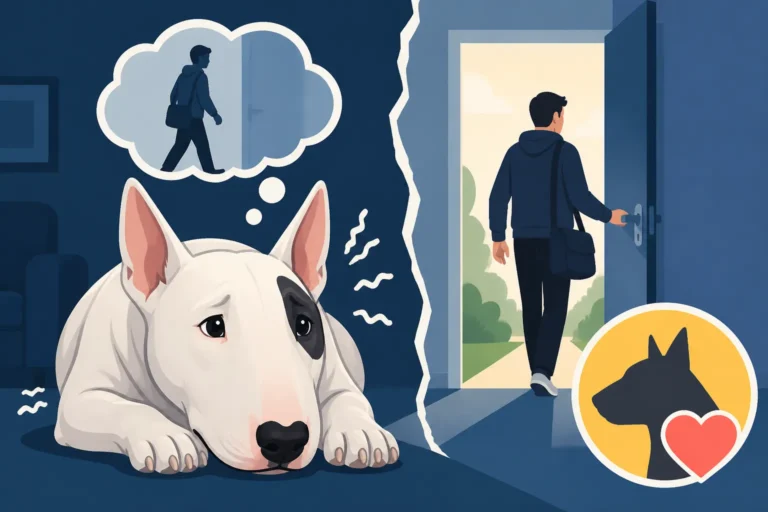
Ah, the doorbell – the nemesis of many a Bull Terrier owner! For a Bull Terrier, that sudden chime isn't just a sound; it's a siren announcing an intruder on their territory, or more specifically, your territory. Many Bull Terriers will launch into a flurry of barks, body slams against the door, and sometimes even a growl directed at the invisible threat on the other side. This isn't necessarily aggression, but rather an intense alarm system kicking into high gear. They see it as their job to alert you and to stand guard until you, their beloved person, deem the situation safe.
The frustration for owners comes when the excited barking and jumping become overwhelming, making it hard to even open the door. You might find your Bull Terrier wedging themselves between you and the door, making eye contact with the person outside, or even trying to sniff or bark through any crack. It's their protective instinct overriding their manners, and it can be a real challenge to manage, especially if you have frequent visitors. Understanding that this behavior stems from their desire to guard you and their home can help you approach it with empathy, rather than just irritation. They're not trying to be naughty; they're doing what they believe is their duty.
Protecting You on Walks
Taking your Bull Terrier for a stroll can be a delightful experience, but it can also become a test of their protective nature. When you're out and about, you're their whole world, and they might perceive any stranger or even another dog as a potential threat to your safety. This can look like your Bull Terrier stiffening up when someone walks past a little too closely, emitting a low growl or a sharp bark, or even pulling on the leash to create distance between you and the perceived "threat." They might position themselves between you and the other person or animal, almost like a four-legged shield.
This behavior can be particularly challenging if your Bull Terrier has a strong prey drive or if they are not naturally inclined to be overly friendly with other dogs, which is not uncommon for the breed. A Bull Terrier With Other Dogs is a delicate balance, and their protective instincts can amplify any existing wariness. They might interpret another dog’s playful approach towards you as an invasion of your personal space, prompting them to react. It's not about them wanting to start a fight, but rather a firm declaration that you are theirs, and others should keep their distance. Learning to read these signals and intervene proactively is crucial for peaceful walks.
Guarding Your Space
Inside the home, a Bull Terrier's guarding behavior can be more subtle but just as prevalent. They might become your self-appointed shadow, following you from room to room, especially if there are guests present. If you're sitting on the sofa, they might insist on being right next to you, perhaps even leaning against you or resting their head on your lap. When a guest approaches you for a conversation or a hug, your Bull Terrier might insert themselves into the interaction. This could mean nudging the guest away, giving a low growl, or even body slamming them playfully to divert attention, which can be quite startling given their strength. Living With a Bull Terrier That Body Slams You for Fun is something many owners learn to navigate.
They see you as their cherished possession, and anyone else infringing on that connection can trigger their possessive side. This can extend to guarding your immediate vicinity – if you're working at your desk, they might nap right under your feet, keeping a vigilant eye on the room. If a new partner comes to stay, your Bull Terrier might initially be wary or even try to disrupt moments of affection, not out of malice, but from a deeply ingrained instinct to protect their primary bond. It’s essential to set clear boundaries and teach them that while their loyalty is appreciated, not every friendly interaction is a threat.
Managing and Channeling Protective Behavior
While your Bull Terrier's protective nature is a testament to their loyalty, it needs careful management to ensure it doesn't become problematic. Channeling these instincts in a healthy way is key to having a well-adjusted dog and a peaceful home.
Early Socialization and Training
The foundation for managing any Bull Terrier behavior, including guarding, is robust early socialization and consistent training. A well-socialized Bull Terrier puppy is exposed to a wide variety of people, sights, sounds, and other friendly dogs during their critical developmental period. This helps them learn that most new experiences are not threats. Introduce them to men, women, children, people with hats, people on bikes, and people of different ethnicities and ages. Make every interaction positive and rewarding.
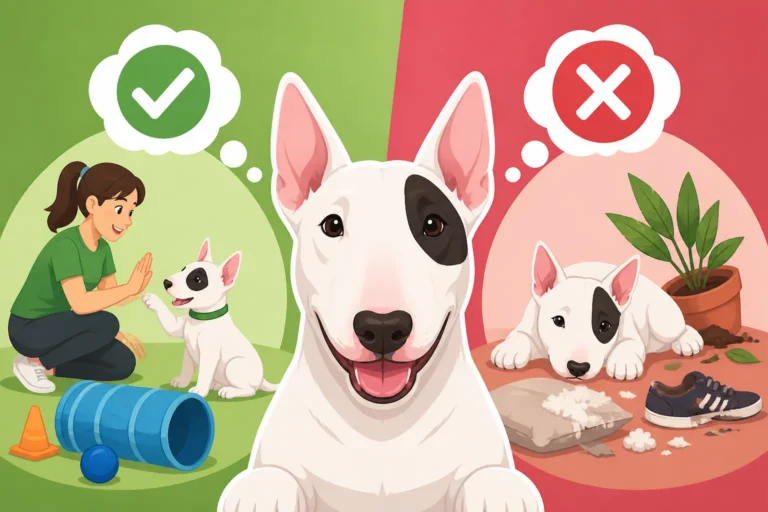
Training is equally crucial. Your Bull Terrier needs to understand that you are the leader and that you will handle situations. A Bull Terrier Trains When It Sees the Point, so positive reinforcement and clear, consistent commands are essential. Teaching a solid "leave it," "stay," and a reliable recall will give you invaluable tools for managing their protective urges. You might consider an online training program like BAXTER & Bella, which offers comprehensive puppy and dog training courses. Their structured approach can provide the guidance needed to systematically expose your Bull Terrier to new experiences in a controlled environment, helping them build confidence without resorting to over-protection. By learning to trust your judgment, your Bull Terrier will be less inclined to take on the "guard duty" themselves in inappropriate situations.
Establishing Clear Boundaries
Setting boundaries is paramount for a Bull Terrier prone to guarding. They need to understand that while their loyalty is valued, not every situation requires their intervention. Start by teaching them a "place" command, where they go to a designated spot (like their bed or crate) when guests arrive or when you need them to relax. This gives them a job and a secure space without demanding they be constantly vigilant. Reward them heavily for calmly staying in their place while you interact with others.
It’s also crucial to control access to you. If your Bull Terrier is trying to wedge themselves between you and a guest, gently redirect them. If they’re guarding your lap, teach them to wait for an invitation to get on the furniture. This isn't about harsh punishment, which can actually make a Bull Terrier shut down or become more anxious and thus more protective; What a Harsh Correction Does to a Bull Terrier is rarely productive. Instead, it’s about consistent, gentle leadership, showing them that you are in charge of social interactions and that they don’t need to shoulder that responsibility. Consistency from every family member is vital so the Bull Terrier receives the same message from everyone.
Tools and Techniques for Management
Managing a Bull Terrier's protective instincts often involves a combination of smart management tools and ongoing training techniques. On walks, where they might feel the need to protect you from passersby or other dogs, a sturdy leash and harness are non-negotiable. Teaching a Bull Terrier to Walk Without Pulling is essential, as a Bull Terrier that's dragging you around makes it harder to control their reactions. Consider a front-clip harness, which can give you more control over their pulling and body direction, helping to redirect their focus.
At home, especially with the doorbell dilemma, a solid, heavy-duty crate can be a lifesaver. Brands readily available on Amazon offer robust crates that even a determined Bull Terrier will find difficult to break. Training your Bull Terrier to calmly go to their crate when the doorbell rings gives them a safe den and removes them from the stressful situation at the door. You can also work on counter-conditioning the doorbell sound – associating it with positive things like treats or a favorite toy, rather than simply a call to arms. A long-lasting chew toy can also be a useful distraction. When visitors arrive, have your Bull Terrier on a leash initially, or behind a baby gate, to manage greetings and keep them from guarding you or the entrance directly.
| Behavior Type | Description | Management Strategy |
|---|---|---|
| Appropriate Protection | Alert bark at a perceived threat, body blocking, remaining vigilant near you. | Acknowledge, praise for calm alert, redirect to "place" command. |
| Mild Guarding | Low growl when strangers approach, leaning into you during interactions. | Socialization, positive reinforcement for calm behavior, clear boundaries. |
| Problematic Guarding | Lunging, snapping, persistent barking/growling at guests, nipping. | Professional behaviorist, structured desensitization, management tools. |
| Resource Guarding (Person) | Preventing others from approaching/touching you, pushing people away. | "Place" command, managing interactions, professional guidance if severe. |
When Protective Behavior Becomes Problematic
While a degree of protectiveness is natural and even endearing in a Bull Terrier, there's a fine line between loyalty and aggression. When those protective instincts escalate into genuine threats or uncontrollable reactivity, it’s time to take serious action.
Recognizing Escalation
You know your Bull Terrier best, and you'll be the first to notice when their protective behaviors begin to cross a line. What might start as a low grumble could escalate to persistent, frantic barking and lunging. A body block might turn into a snap or a bite if someone doesn't respect their boundaries. Pay close attention to changes in their body language: increased tension, a hard stare, raised hackles, a stiff tail, or a sudden lunge with teeth bared. If your Bull Terrier is showing these signs consistently, especially towards people who pose no real threat, then their protective instincts have moved beyond acceptable bounds.
This escalation can be incredibly stressful for everyone involved. It makes having guests over a nightmare, and can turn walks into anxious events. If your Bull Terrier is showing genuine aggression or fear-based reactivity that could lead to injury, it's not something to ignore or try to "fix" on your own with guesswork. This is especially true if they are exhibiting unprovoked aggression, or if their reactions are out of proportion to the situation. Recognizing this escalation promptly is crucial, not just for the safety of others, but for your Bull Terrier's own well-being, as intense stress and anxiety often underpin these behaviors.
Seeking Professional Help
If you've noticed your Bull Terrier's protective behaviors escalating, or if you're feeling overwhelmed and unsure how to manage them, the absolute best course of action is to seek professional help. Don't feel like you've failed; many owners face this challenge, and a qualified expert can provide invaluable guidance. Look for a certified professional dog trainer specializing in behavior modification or a veterinary behaviorist. These professionals have the knowledge and experience to assess your Bull Terrier’s individual situation, identify the root cause of the problematic behavior (which can range from fear to lack of confidence or even an underlying medical issue), and develop a safe, humane, and effective training plan.
They can help you implement specific desensitization and counter-conditioning protocols, teach you advanced leash handling techniques, and provide strategies for managing your Bull Terrier in real-world scenarios. Trying to correct serious behavioral issues on your own can often make things worse, inadvertently reinforcing the unwanted behavior or damaging your bond with your dog. Investing in professional help not only ensures the safety of others but also significantly improves your quality of life and your Bull Terrier's overall happiness and confidence. Hiring a behaviorist (Whether a Bull Terrier Owner Should Hire a Behaviorist) is not a sign of failure, but a commitment to responsible ownership.
Disclaimer
This article is for general informational purposes only and does not constitute professional advice. Laws, prices and regulations vary by location and change over time. Consult a qualified professional for guidance on your specific situation.