Why a Bull Terrier Chases Its Tail
Bull Terrier tail chasing spans playful puppy behavior to obsessive spinning driven by stress, anxiety, or medical issues.
Know what to watch for.
Breed-specific conditions, screening and DNA tests, what surgery actually costs, and the daily habits that stretch a healthy lifespan.
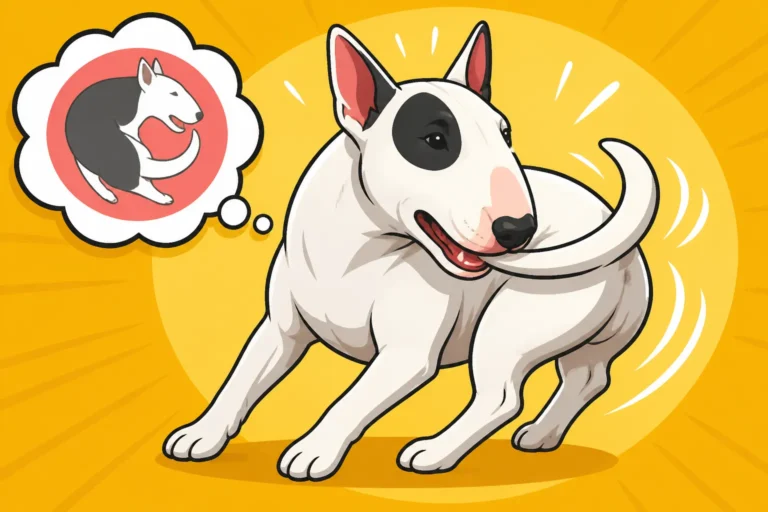
Bull Terrier tail chasing spans playful puppy behavior to obsessive spinning driven by stress, anxiety, or medical issues.
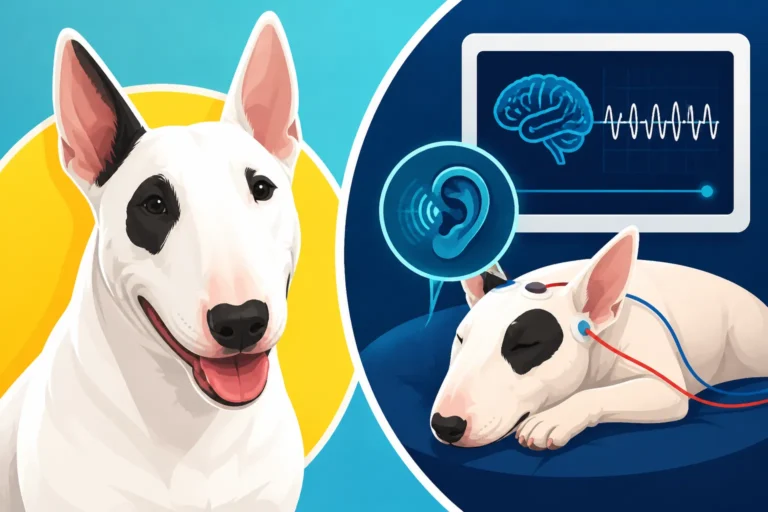
The BAER test reveals congenital sensorineural deafness results for Bull Terriers, explaining unilateral and bilateral hearing risks.

Colored Bull Terrier hearing loss happens because inner ear pigment cell defects affect hearing regardless of coat color.

White Bull Terrier congenital deafness rates reveal high hearing loss links to genetics, white coat color, and inner ear cell loss.
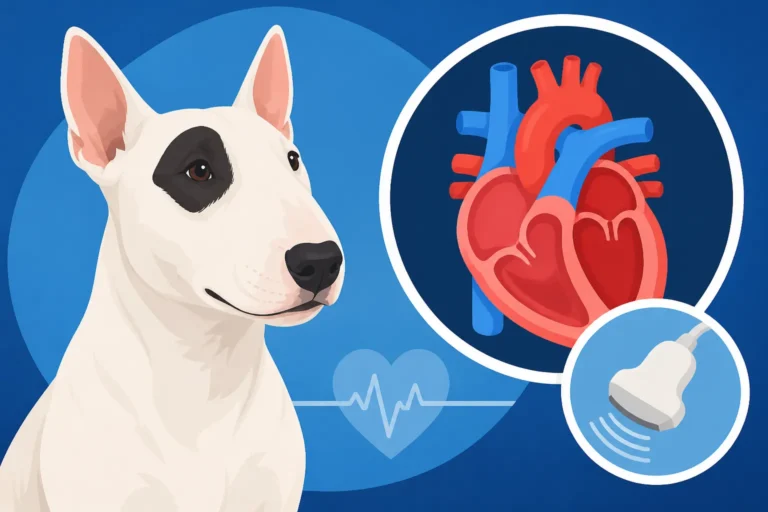
Bull Terrier heart health screening explains when your dog needs an echocardiogram for conditions like mitral valve dysplasia.
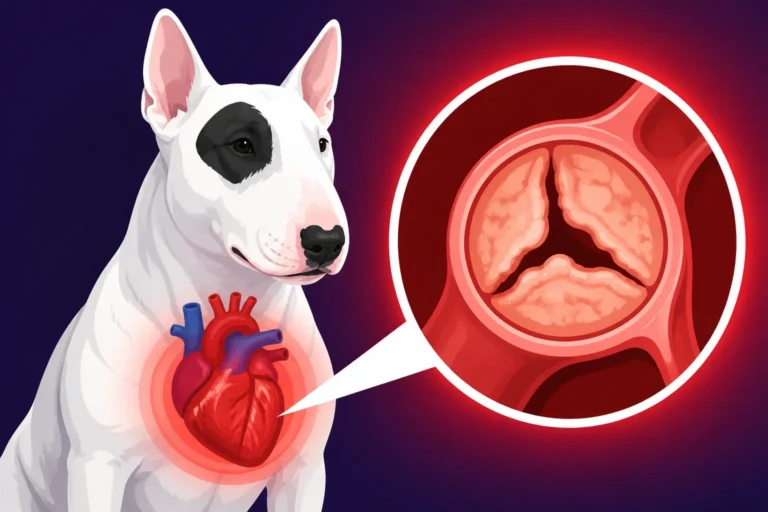
Aortic Stenosis creates a congenital narrowing of the aorta in Bull Terriers, forcing the left ventricle heart muscle to overwork.
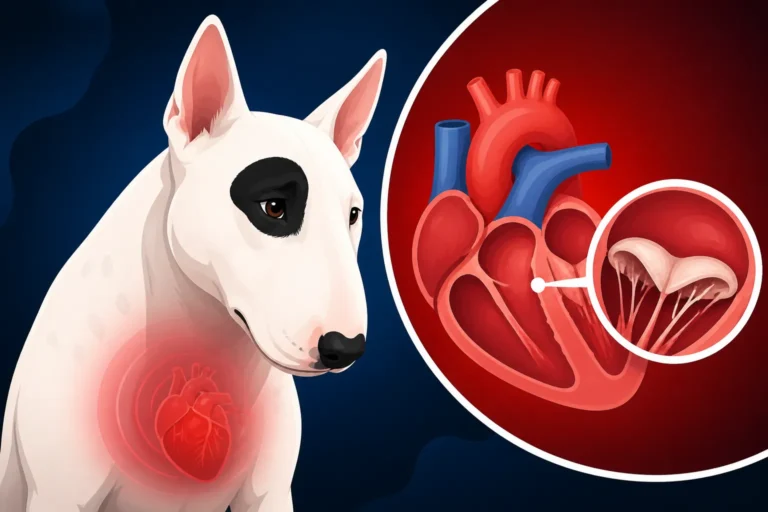
Mitral valve dysplasia in Bull Terriers is a congenital heart defect causing blood to leak backward and strain the heart.
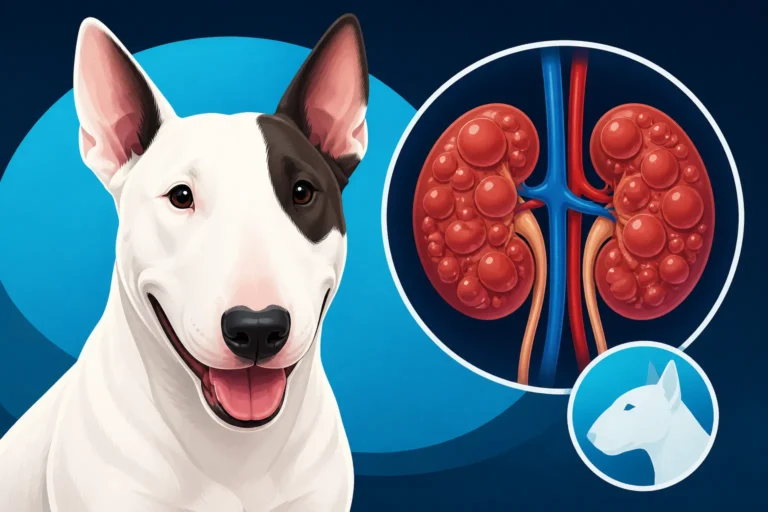
Polycystic Kidney Disease in Bull Terriers is a hereditary condition causing fluid-filled cysts that impair kidney function.
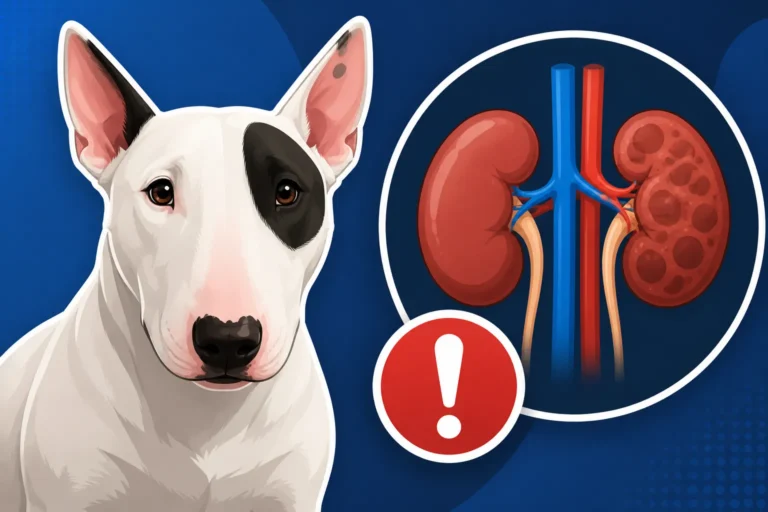
Hereditary nephritis and kidney failure in Bull Terriers cause toxin buildup, requiring early urine tests and veterinary screening.

Annual urine testing for Bull Terriers prevents progressive kidney disease by tracking protein leakage and the UPC ratio.