Whether Neutering Calms a Bull Terrier
The boundless energy and spirited antics of a Bull Terrier can be both utterly charming and, let's be honest, completely overwhelming at times. Many a Bull Terrier owner has found themselves wondering if their beloved, albeit boisterous, companion will ever truly settle down, and often, the question of neutering comes up as a potential solution for managing that high-octane personality. This guide is here to unravel the truth about whether neutering can genuinely calm your Bull Terrier, looking beyond the myths to what you can realistically expect for your distinctive companion.
The Bull Terrier's Innate Energy and Personality
Before we even dive into the surgical side of things, it’s absolutely vital to understand the fundamental wiring of a Bull Terrier. These aren't your couch potatoes by design; they are a breed brimming with personality, intelligence, and a whole lot of zest for life. Trying to understand how to manage their energy without acknowledging their core temperament is like trying to sail a ship without understanding the ocean currents.
Understanding the Bull Terrier Temperament
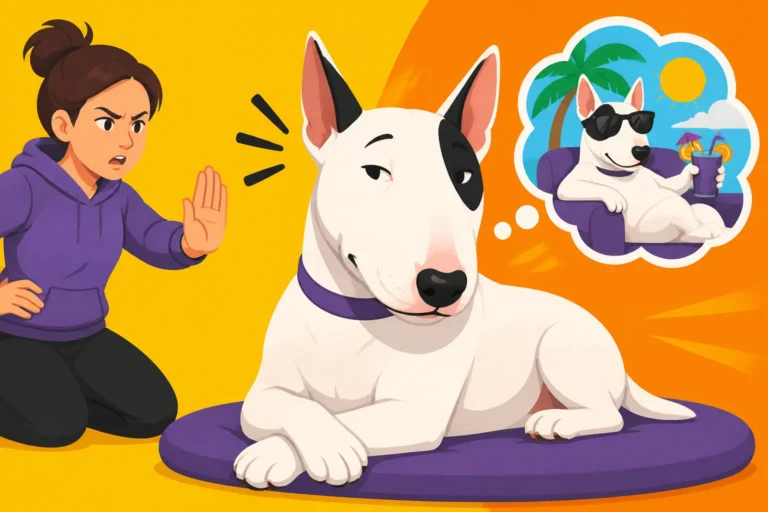
Bull Terriers are often affectionately, and quite accurately, called "a three-year-old in a dog suit." They possess a unique blend of playful clownishness, remarkable stubbornness, and an insatiable curiosity that can lead them into all sorts of mischief. They aren't inherently "calm" dogs in the traditional sense. Their idea of a good time often involves robust play, investigating every nook and cranny, and generally being the center of attention. They have a strong will and a definite opinion on everything, which is part of their charm but also what makes them so challenging to train for the faint of heart.
This isn't to say they don't have an "off switch" or enjoy a good snuggle, but their default mode is usually one of enthusiastic engagement. Their energy isn't just physical; it's mental, too. If they're not mentally stimulated, that clever brain will find its own (often destructive) entertainment. This underlying drive is a breed characteristic, something woven into their very DNA, and it's present regardless of their reproductive status. You might have heard Why a Bull Terrier Is Called a Clown, and it perfectly sums up their exuberant nature.
When Hormones Come Into Play
Now, layer reproductive hormones on top of this already vibrant personality, and you can see why some behaviors become amplified or take on new dimensions. For intact male Bull Terriers, the surge of testosterone, especially during adolescence, can manifest in several ways. You might notice increased territorial marking, where every lamppost and bush becomes a billboard for their presence. They might exhibit a stronger urge to roam, driven by the instinct to seek out females in heat, potentially leading to escape attempts that could put them in harm's way. Some intact males also display increased reactivity or aggression towards other intact males, a natural part of their competitive drive.
For females, going through heat cycles brings its own set of challenges, including attracting intact males, potential behavioral changes due to hormonal fluctuations (some become more anxious or irritable), and the obvious risk of unwanted pregnancies. While a female in heat might not seem "less calm" in the same way an intact male might pace or vocalize, the hormonal shifts can still impact their overall demeanor and focus. These are specific, hormone-driven behaviors, distinct from the general Bull Terrier zest for life.
The Real Impact of Neutering on Bull Terrier Behavior
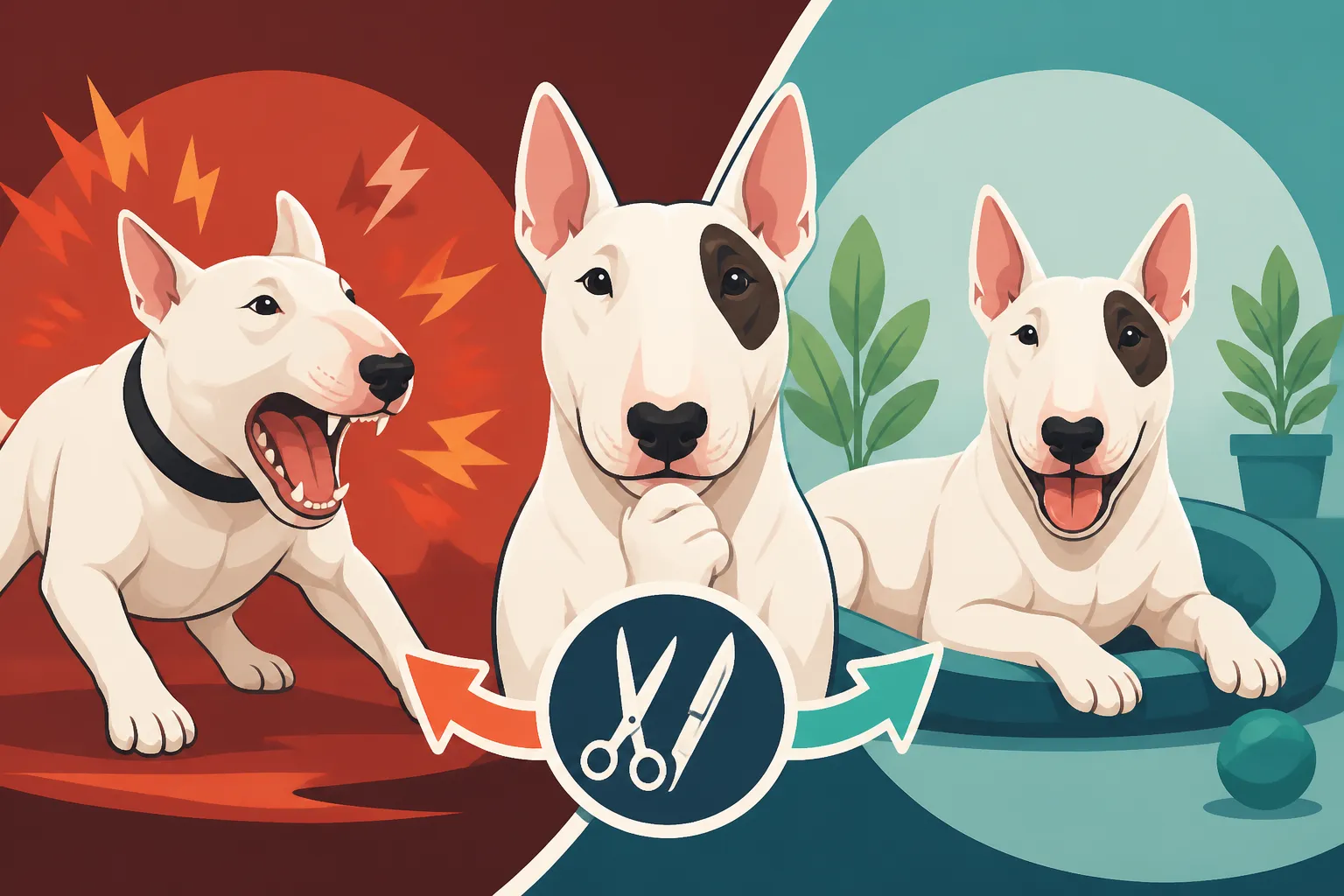
So, knowing all this, where does neutering fit in? It’s crucial to approach this with realistic expectations. Neutering is a surgical procedure that removes the testes in males or the ovaries and uterus in females, thereby eliminating most sex hormone production. This can have a profound effect on behaviors that are directly linked to those hormones, but it's not a magic "calm-down" pill for every Bull Terrier.
What Neutering Can Help With
Neutering primarily targets behaviors that are hormonally influenced. For male Bull Terriers, you're most likely to see a reduction in:
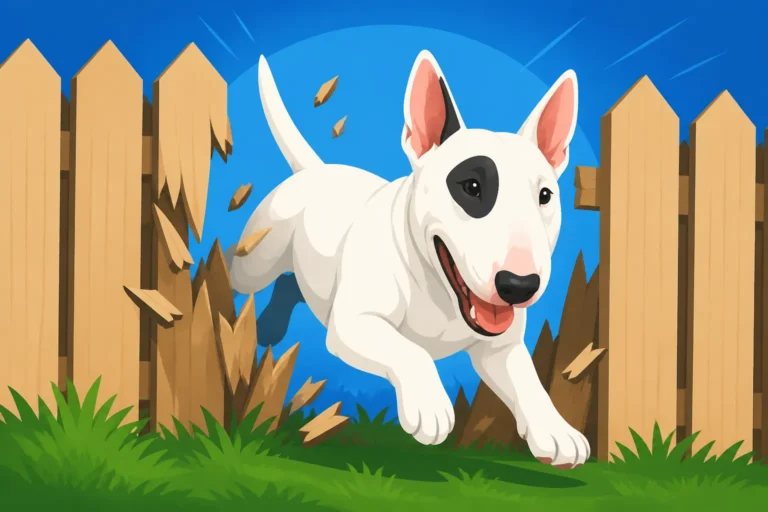
- Roaming and Escaping: The powerful drive to find a mate significantly diminishes, making them less likely to bolt out the door or dig under the fence in pursuit of a scent. This is a huge safety benefit.
- Marking Behavior: While some learned marking might persist, the incessant need to mark territory with urine often decreases. This can be a huge relief for homeowners tired of indoor accidents or stained outdoor furniture.
- Humping/Mounting: If this behavior is driven by sexual urges, it's very likely to decrease or stop entirely. However, humping can also be a display of excitement, stress, or a learned habit, in which case neutering alone might not resolve it.
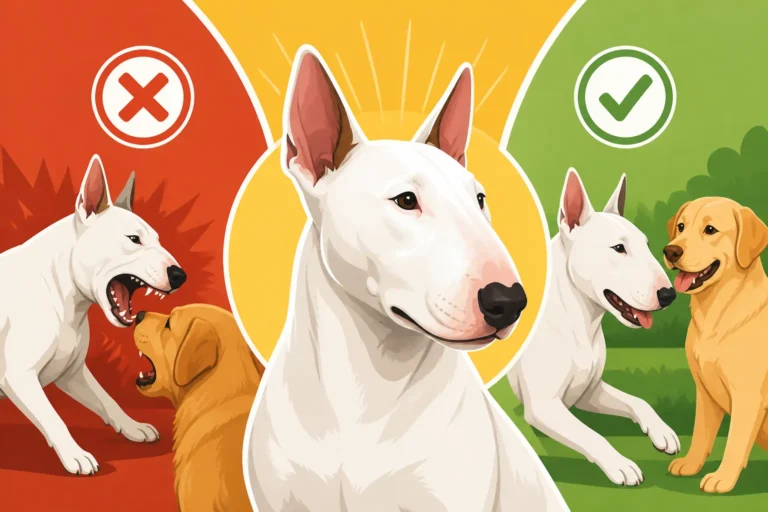
- Inter-male Aggression: If your intact male Bull Terrier is reactive or aggressive towards other intact males, especially in competitive situations, neutering can often reduce this tension. It lessens their drive to challenge rivals for breeding rights.
For female Bull Terriers, spaying completely eliminates heat cycles, which means no more bleeding, no more attracting intact males, and no more the mood swings some females experience during their cycles. It also eliminates the risk of certain cancers, like mammary and uterine cancer, which is a significant health benefit.
It’s important to remember that the success of neutering in altering these behaviors depends heavily on how ingrained the behavior is and how long it has been practiced. If an intact male has been marking for years, it might take more than neutering to completely break the habit, though the drive to do so will be lessened.
What Neutering Won't Change
This is where many owners harbor unrealistic expectations. Neutering does not fundamentally change a Bull Terrier's inherent personality, energy level, or intelligence. If your Bull Terrier is a rambunctious, energetic goofball before neutering, they will likely remain a rambunctious, energetic goofball afterward. What you're seeing in their daily zoomies, their persistent digging, or their focused prey drive are core Bull Terrier traits, not just hormone-fueled outbursts.
Consider these aspects that neutering is unlikely to address:
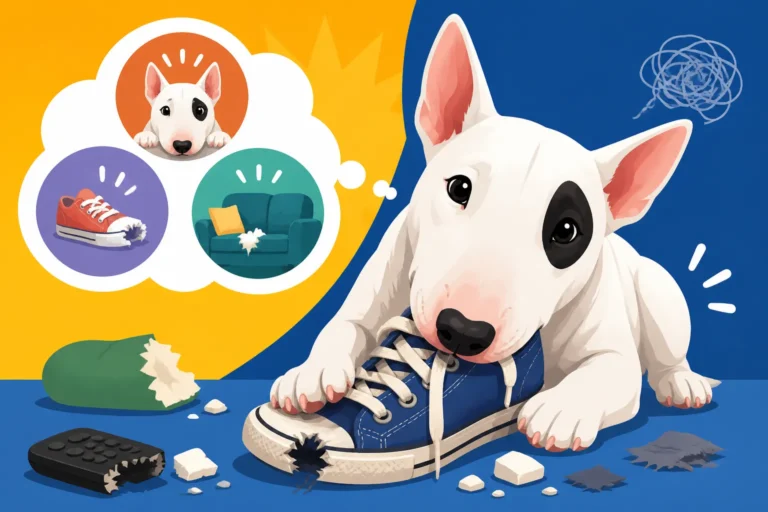
- Inherent Energy Levels: A Bull Terrier's need for vigorous exercise and mental stimulation is hardwired. Neutering won't magically turn a high-energy dog into a lazy one. If your Bull Terrier is prone to chewing through furniture when bored, that behavior will persist without proper outlets. What a Bull Terrier Does When It Is Bored is a direct consequence of this energy.
- Playfulness and "Clowning": Their famous "clownish" nature and playful body slams are expressions of joy and exuberance. Neutering won't dampen their spirit or make them less inclined to seek out fun interactions.
- Prey Drive: That intense focus on squirrels, rabbits, or even blowing leaves is an instinctual drive, not directly controlled by reproductive hormones. A neutered Bull Terrier will still likely chase anything that moves.
- Learned Behaviors: If your Bull Terrier has learned to pull on the leash, jump on guests, or demand attention by barking, these are learned behaviors that require consistent training and management, not hormonal adjustments.
- Anxiety or Fear-Based Behaviors: Neutering will not resolve separation anxiety, generalized anxiety, or fear-based aggression. In fact, for some anxious or fearful dogs, removing hormones can, in rare cases, make anxiety worse as testosterone can have a calming effect. If your Bull Terrier struggles when left alone, Whether a Bull Terrier Gets Separation Anxiety is a complex issue requiring behavioral intervention.
In essence, neutering helps manage hormone-driven behaviors. It is not a cure-all for all behavioral issues, nor is it a guaranteed tranquilizer for an otherwise energetic and lively breed like the Bull Terrier. The core of their temperament remains the same.
Beyond Neutering: Holistic Approaches to a Calmer Bull Terrier
Given that neutering isn't a silver bullet for calming a Bull Terrier, it's important to understand the multifaceted approach required to cultivate a well-behaved, settled companion. Their well-being and "calmness" (or rather, appropriate energy outlets) come from a combination of physical, mental, and emotional care.
Structured Exercise and Mental Stimulation
This is, arguably, the single most important factor in having a "calmer" Bull Terrier. These dogs were bred for activity and tenacity. They need more than just a quick walk around the block. They need purpose, challenge, and significant physical exertion to truly be content.
- Daily Physical Activity: Aim for at least 60-90 minutes of vigorous exercise daily. This could include long, brisk walks, runs, secure off-leash play in a fenced yard, or even dog sports like agility or flirt pole sessions. A tired Bull Terrier is a good Bull Terrier, and a well-exercised one is far less likely to be destructive or hyperactive indoors. You can find robust flirt poles and other high-energy toys on Amazon that can stand up to a Bull Terrier's enthusiasm. You might be surprised to learn How Much Exercise a Bull Terrier Actually Needs.
- Mental Engagement: Bull Terriers are smart, and their brains need a workout too. Puzzle toys, interactive feeders, scent work, and training sessions are invaluable. These activities tire them out mentally, which is just as important as physical exhaustion. Look for durable Which Puzzle Toys Occupy a Bull Terrier on Amazon to keep their minds busy and prevent boredom-induced mischief. Even simple games like hide-and-seek with their kibble can make a big difference.
Consistent Training and Management
A well-trained Bull Terrier understands boundaries and expectations, which leads to a more harmonious household. Consistency is key, given their stubborn streak!
- Positive Reinforcement: Bull Terriers respond best to positive reinforcement methods. Harsh corrections or force can make them shut down or become more resistant. Reward desired behaviors enthusiastically with high-value treats or their favorite toys.
- Early Socialization: Exposing your Bull Terrier puppy to a variety of sights, sounds, people, and appropriate dogs from a young age is crucial for developing a confident, well-adjusted adult.
- Impulse Control: Teach commands like "leave it," "stay," and "settle." These foundational skills are vital for managing their impulsive nature. Resources from online training platforms like BAXTER & Bella can be incredibly helpful for structured puppy and adolescent training, guiding you through these exercises step-by-step.
- Leash Manners: Given their strength and enthusiasm, teaching a Bull Terrier to walk politely on a leash is paramount. A good front-clip harness or head halter can be invaluable tools during this process.
- Establishing Routine: Dogs thrive on routine, and Bull Terriers are no exception. Predictable feeding times, potty breaks, exercise sessions, and training slots help them feel secure and reduce anxiety.
Addressing Specific Behavioral Issues
Sometimes, despite your best efforts, particular behavioral issues may arise that go beyond general high energy. These require a targeted approach, often with professional guidance.
- Anxiety: If your Bull Terrier exhibits excessive chewing, vocalization, or destructive behavior when alone, it might be separation anxiety. This is a complex issue that neutering does not resolve and often requires a multi-modal approach with a vet or certified professional.
- Reactivity/Aggression: If you're dealing with aggression towards other dogs, people, or resource guarding, consult a certified professional dog trainer or veterinary behaviorist immediately. These issues need careful management and tailored behavior modification plans.
- Compulsive Behaviors: Behaviors like excessive licking, flank sucking, or spinning (like Why a Bull Terrier Chases Its Tail) can be compulsive disorders, sometimes with a genetic component. These are not resolved by neutering and often require veterinary assessment and specific behavioral or medical interventions.
Neutering is a responsible choice for population control and offers health benefits, but it should be viewed as one piece of the puzzle, not the entire solution, for managing your Bull Terrier's dynamic personality. The journey to a calm, well-adjusted Bull Terrier is a rewarding one, built on understanding, commitment, and a whole lot of love.
To help visualize the difference, here's a quick overview of what behaviors neutering is likely to influence versus those that require consistent training and management:
| Behavior Characteristic | Likely Impact of Neutering | Primarily Addressed By |
|---|---|---|
| Roaming/Escape Attempts | Significant Reduction | Training, Secure Environment |
| Urine Marking | Significant Reduction | Training, Clean-up, Management |
| Humping (Sexual) | Significant Reduction | Training, Redirection, Management |
| Inter-Male Aggression | Potential Reduction | Training, Socialization, Management |
| Heat Cycles (Females) | Eliminated | N/A |
| General Energy Levels | Minimal to No Change | Exercise, Mental Stimulation |
| Playfulness | No Change | Appropriate Outlets |
| Prey Drive | No Change | Leash Training, Management |
| Destructive Chewing | No Change | Mental Stimulation, Appropriate Chews (Amazon) |
| Separation Anxiety | No Change | Behavior Modification, Professional Help |
| Jumping on People | No Change | Training, Consistency |
| Leash Pulling | No Change | Training, Equipment |
Disclaimer
This article is for general informational purposes only and does not constitute professional advice. Laws, prices and regulations vary by location and change over time. Consult a qualified professional for guidance on your specific situation.