Whether a Bull Terrier Is Safe With Chickens
The dream of a harmonious homestead, complete with clucking chickens and a beloved Bull Terrier companion, often runs headlong into the stark reality of canine instinct. Many Bull Terrier owners find themselves wrestling with the fundamental question of whether their quirky, strong-willed dog can ever truly be trusted around poultry. This guide aims to explore the deep-seated prey drive common in Bull Terriers and offer practical, realistic advice on managing the risks, ensuring the safety of your feathered friends, and understanding when separation is the only viable option.
Understanding the Bull Terrier's Innate Prey Drive
When you welcome a Bull Terrier into your home, you're not just getting a "clown in a dog suit"; you're also inviting a long history of selective breeding that, while aimed at creating a loyal companion, also inadvertently amplified certain traits. Among these, a strong prey drive can be a significant challenge, especially when small, fast-moving animals like chickens are involved.
Instinctual Roots and Breed History
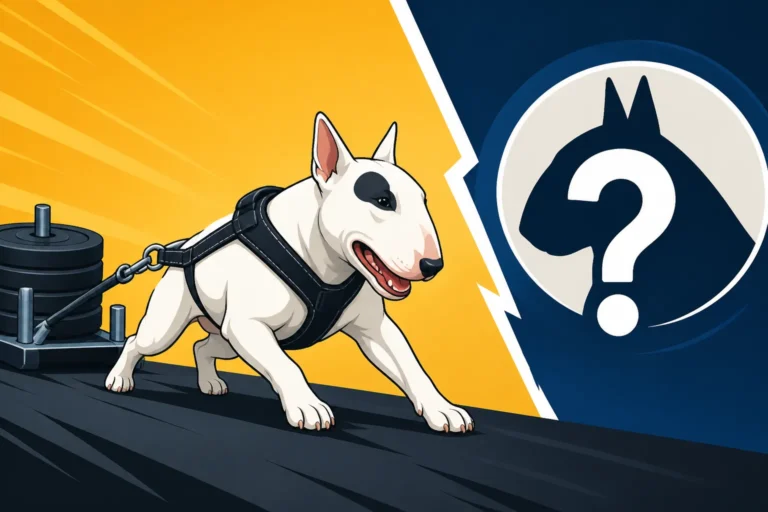
Bull Terriers, much like their terrier ancestors, were originally bred for tasks that required tenacity, grit, and a keen focus on small, scurrying prey. While the breed's purpose evolved from fighting pit dogs to gentleman's companions, that underlying drive to chase, catch, and dispatch small animals never truly disappeared. It's etched into their genetic code. It's not a sign of a "mean" dog; it's simply a Bull Terrier being a Bull Terrier. Expecting a Bull Terrier to ignore a chicken is often like expecting a Border Collie to ignore a flock of sheep – it goes against their very nature. This isn't about training out a bad habit as much as it is about managing a powerful, inborn instinct. Understanding How Strong a Bull Terrier's Prey Drive Is is the first step in addressing this complex issue.
Recognizing Signs of a High Prey Drive
For owners unfamiliar with a high prey drive, the signs can sometimes be subtle before becoming overtly dangerous. Does your Bull Terrier stare intently at squirrels in the yard, freeze, and then explode into a chase? Do they fixate on birds flying overhead or small critters darting through bushes? These behaviors, often accompanied by rigid body language, pricked ears, and a low, focused crouch, are classic indicators. Even the slightest movement from a chicken – a flutter of wings, a quick run – can trigger this powerful sequence. It's not always about aggression; it's often about the thrill of the chase and the fulfillment of a deeply ingrained hunting pattern.
Why Chickens Are Particularly Tempting
Chickens, with their erratic movements, flapping wings, clucking sounds, and often small size, unfortunately hit all the right notes for a dog with a high prey drive. They mimic the exact type of prey that Bull Terriers' ancestors would have pursued. The combination of motion, sound, and scent can be an irresistible cocktail. For a Bull Terrier, a chicken isn't a pet; it's a moving target, an object of intense fascination that triggers a hardwired instinct. This makes the situation inherently more challenging than, say, introducing a dog to a slow-moving, larger animal that doesn't trigger the same predatory sequence.
Assessing Your Individual Bull Terrier's Suitability
While prey drive is a breed trait, every Bull Terrier is an individual. Some may have a higher drive than others, and their previous experiences play a crucial role. It's vital to objectively assess your dog's temperament and past behavior rather than relying on wishful thinking.
Early Socialization and Exposure
The common wisdom is that early socialization helps. And it absolutely does for many things, like getting A Bull Terrier with Other Dogs or being comfortable in new environments. However, when it comes to prey animals like chickens, early exposure isn't a guarantee of safety. A Bull Terrier puppy might ignore chickens or even show gentle curiosity, but as they mature, often between 6 months and 2 years, their prey drive can fully develop and intensify. What was once a curious sniff can turn into a deadly chase. While positive early exposure can potentially help some dogs learn to tolerate the presence of chickens, it rarely extinguishes the predatory instinct itself. It just teaches them to suppress it, which is not the same as eliminating it.
Observed Behavior Around Small Animals
Have you ever seen your Bull Terrier around cats, rabbits, or even small dogs? How do they react? If they show intense fixation, stiff body language, or a sudden burst of speed towards these animals, it's a huge red flag for chicken safety. Even if they haven't harmed an animal, the intensity of their interest is what matters. A Bull Terrier that stalks a squirrel for twenty minutes is likely to do the same with a chicken, given the opportunity. Pay close attention to subtle cues like lip licking, panting, or a hyper-focused gaze, as these can indicate stress or an escalating predatory interest before any physical action occurs. If you notice signs of stress or obsessive focus, it’s a clear indication that direct interaction with chickens would be highly risky.
Temperament and Trainability
Bull Terriers are intelligent, but they are also notoriously stubborn. They tend to "train when they see the point," as many owners will attest. Their independent nature means that even a well-trained Bull Terrier might choose to ignore commands if the siren song of a flapping chicken is too strong. A Bull Terrier's powerful will and physical strength mean that if they decide to go after a chicken, it can be incredibly difficult, if not impossible, to physically restrain them, especially without specialized equipment or advanced training. Consider your dog's overall reliability under distraction. If their recall isn't 100% bombproof in a low-distraction environment, it certainly won't be around chickens.
Strategies for Managing Risk and Attempting Coexistence
If you're determined to have both Bull Terriers and chickens, your approach must be rooted in unwavering vigilance, physical barriers, and a realistic understanding of your dog's limitations. Safety, above all, must be the guiding principle.
Secure Enclosures: Your First Line of Defense
This cannot be stressed enough: your chickens need an escape-proof fortress. This means more than just a flimsy wire fence. A Bull Terrier can easily chew through or dig under standard fencing, and their determination is legendary. Your chicken coop and run need to be constructed with heavy-gauge welded wire or solid materials, buried deep (at least 12-18 inches) to prevent digging, and tall enough to deter jumping. Think Fort Knox for your flock. Even then, consider double-gating systems to prevent accidental escapes by either dog or chicken. Many owners underestimate the ingenuity and sheer force a motivated Bull Terrier can exert when something tantalizing is just out of reach. For robust fencing and coop materials, you might find suitable options on Amazon.
Supervised Interactions: Proceed with Extreme Caution
Some owners might attempt highly supervised interactions, but this should only be considered after extensive training, with a dog that has a demonstrably low prey drive, and always with multiple layers of safety. This means your Bull Terrier is on a sturdy leash, perhaps even wearing a muzzle designed for safety, not just barking deterrence, and under constant, active supervision by a calm, confident handler.
Here's a crucial point: "supervision" means your eyes are always on your dog and the chickens, and you are actively managing the situation. It doesn't mean you're casually watching while texting. Even a split second of inattention can lead to tragedy. This is not a situation for beginners or for dogs with a known history of even minor predatory interest. For many Bull Terriers, any direct, unsupervised interaction will invariably end badly for the chickens.
Training and Desensitization: Managing the Instinct, Not Eliminating It
Can you train a Bull Terrier to ignore chickens? Perhaps, but it's an uphill battle that requires immense dedication and consistency. The goal isn't to remove the instinct, but to teach your dog to make better choices and defer to your commands. This involves:
- High-Value Rewards: You'll need treats or toys that are more motivating than a live chicken. Good luck!
- "Leave It" Command: This command needs to be ironclad, practiced in increasingly distracting environments, long before you ever introduce chickens.
- Redirection: Teaching your dog to focus on you or a toy instead of the chickens.
- Desensitization: Slowly exposing your dog to the sight and sound of chickens at a distance they can tolerate, rewarding calm behavior. This takes weeks, if not months, and often involves working with a professional trainer who understands breed-specific traits.
Online training platforms like BAXTER & Bella can offer structured programs for building foundation obedience, but always remember that a virtual lesson cannot substitute for hands-on, expert guidance when dealing with high-stakes behaviors like prey drive. The ultimate goal is a dog that will consistently choose to engage with you rather than the chickens, which is a monumental ask for many Bull Terriers. You might find resources on How a Bull Terrier Trains When It Sees the Point helpful here.
Management Tools: Essential for Safety
To manage a Bull Terrier around chickens, a strong arsenal of tools is non-negotiable:
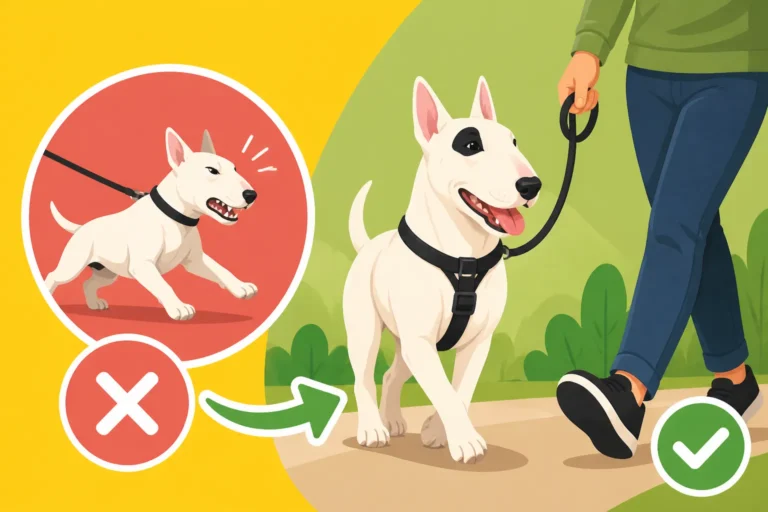
- Leashes and Long Lines: A non-negotiable for any time your Bull Terrier is outside with even a remote chance of chicken contact. Choose durable materials; a Bull Terrier can snap lesser leashes.
- Muzzles: A well-fitted basket muzzle can be a lifesaver, especially during initial supervised introductions or when you simply cannot guarantee separation. It allows your dog to pant and drink but prevents biting. It's a tool for safety, not punishment, and can drastically reduce stress for both you and your chickens.
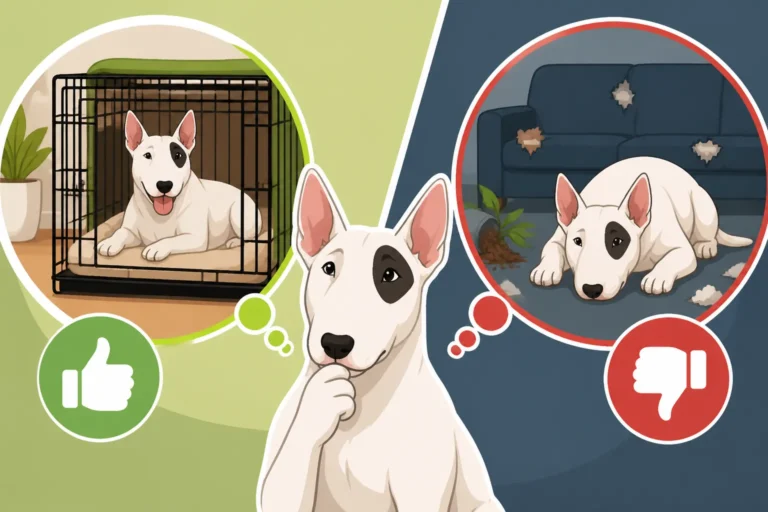
- Crates and Pens: When you cannot actively supervise, your Bull Terrier should be in a secure crate or pen, far from the chicken run. This also helps with issues like What a Bull Terrier Does When It Is Bored, as a bored Bull Terrier is often a destructive one. For heavy-duty crates that a Bull Terrier won't easily break, you can find options on Amazon.
When Coexistence Isn't an Option: Making Difficult Decisions
Sometimes, despite all best efforts, the inherent risks outweigh the possibility of coexistence. Acknowledging this reality is a responsible, albeit often painful, part of dog ownership.
Prioritizing Safety Above All Else
The truth is, for many Bull Terriers, the prey drive towards chickens is simply too strong to overcome safely. It only takes one lapse in judgment, one unlatched gate, one moment of distraction, for a Bull Terrier to act on instinct. The outcome is almost always fatal for the chicken. As owners, we have a responsibility to protect all animals in our care. If you find yourself constantly stressed, feeling like you're walking on eggshells (pun intended!), or have already had a tragic incident, it's time to reassess. It's not a failure on your part, nor is it a judgment on your dog's character; it's recognizing and respecting the power of instinct. This kind of persistent vigilance can be mentally exhausting and takes a toll on the human-animal bond, as you're constantly in a state of high alert.
Separate Living Arrangements: Complete Segregation
If safety cannot be guaranteed through training or supervised interactions, then complete segregation is the only truly responsible path. This means separate, impenetrable living areas for your chickens and your Bull Terrier, with no possibility of accidental contact. Your Bull Terrier should never be unattended in the yard if the chickens are out, and vice-versa. This might require additional fencing, creating separate exercise areas, or ensuring one is always secured indoors while the other is outside. It’s about building layers of security so that even if one barrier fails, there’s another in place. Consider Whether a Bull Terrier Needs a Reinforced Fence as part of this strategy.
Rehoming Decisions: For the Good of All
This is often the hardest decision, but it needs to be considered seriously. If you cannot provide a safe environment for both your Bull Terrier and your chickens without constant, debilitating stress, then one of them may need a new home. This is not a sign of failure but of immense responsibility and love. Sometimes, a dog with a high prey drive thrives in a home without small animals, and a flock of chickens thrives without the constant threat of a predator. Resources like breed-specific rescues can often help facilitate a safe and appropriate rehoming for either your Bull Terrier or your chickens, ensuring they both find environments where they can flourish without unnecessary risk.
| Aspect of Coexistence | Bull Terrier (Typical) | Chicken (Typical) | Safety Measure Implication |
|---|---|---|---|
| Prey Drive | High, instinctual, can be triggered by movement/sound | Small, moves erratically, flaps wings, vocalizes | Requires absolute physical separation or extreme management. |
| Trainability vs. Instinct | Intelligent but stubborn; instinct can override commands | Easily startled, flight response is primary defense | Training focuses on managing dog's response, not eliminating drive; must be 100% reliable. |
| Physical Strength | Powerful jaws, strong body, digging ability, agile | Fragile bones, easily injured/killed | Requires fortress-like enclosures for chickens; robust leashes/crates for dog. |
| Attention Span | Can fixate intently on prey objects | Always alert for predators, easily stressed | Constant, active human supervision during any proximity. |
| Behavior when Bored | Can become destructive, seek "fun" opportunities | Calm when safe, stressed when threatened | Bull Terrier needs ample exercise and mental enrichment to reduce unwanted behavior. |
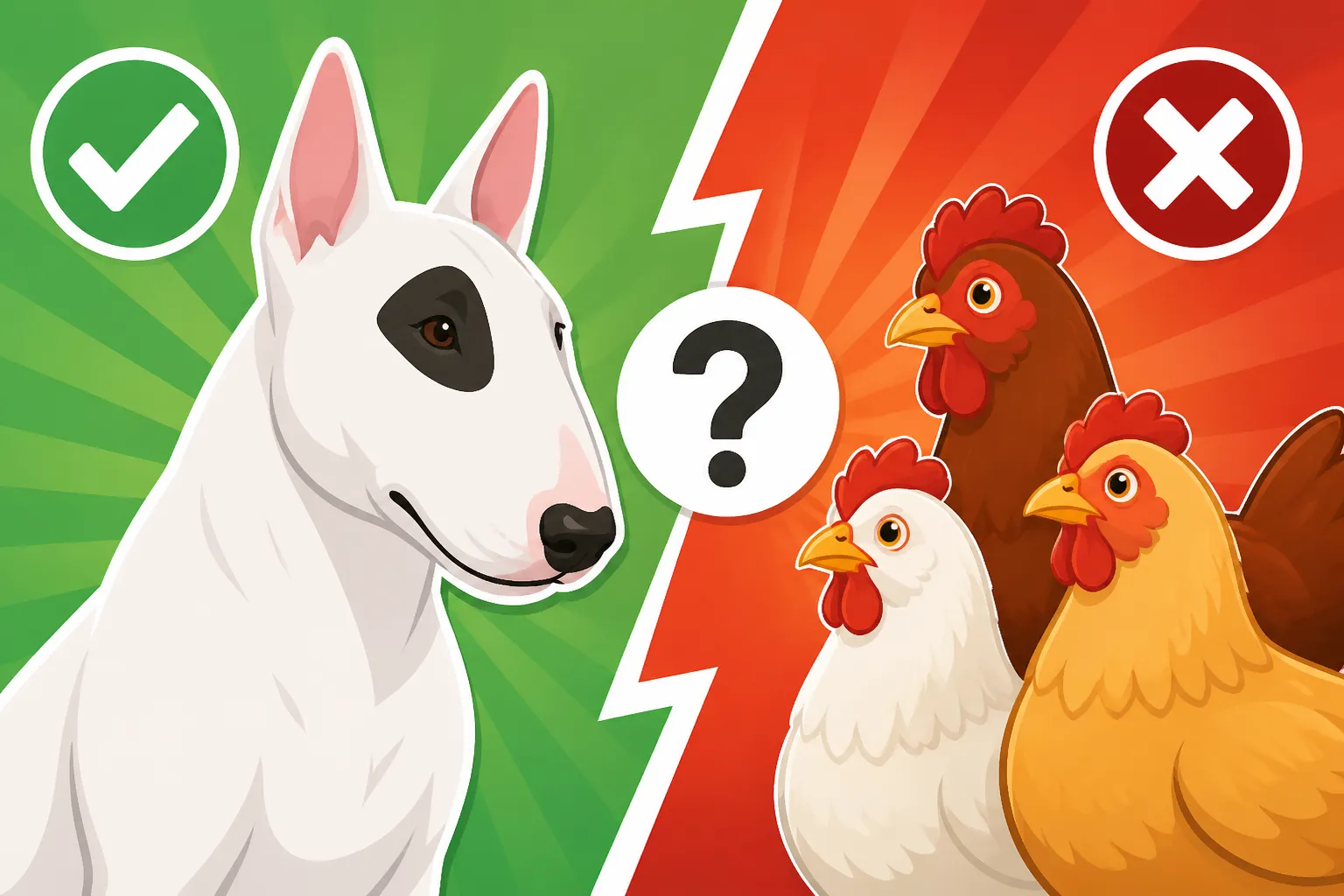
Ultimately, whether a Bull Terrier is "safe" with chickens is a nuanced question with no easy yes or no answer. For most Bull Terriers, absolute safety requires absolute separation. Any attempt at coexistence demands an extraordinary commitment to management, training, and an unblinking recognition of the powerful instincts that lie within this remarkable breed. Prioritizing the safety and well-being of all your animals is the most humane and responsible course of action.
Disclaimer
This article is for general informational purposes only and does not constitute professional advice. Laws, prices and regulations vary by location and change over time. Consult a qualified professional for guidance on your specific situation.