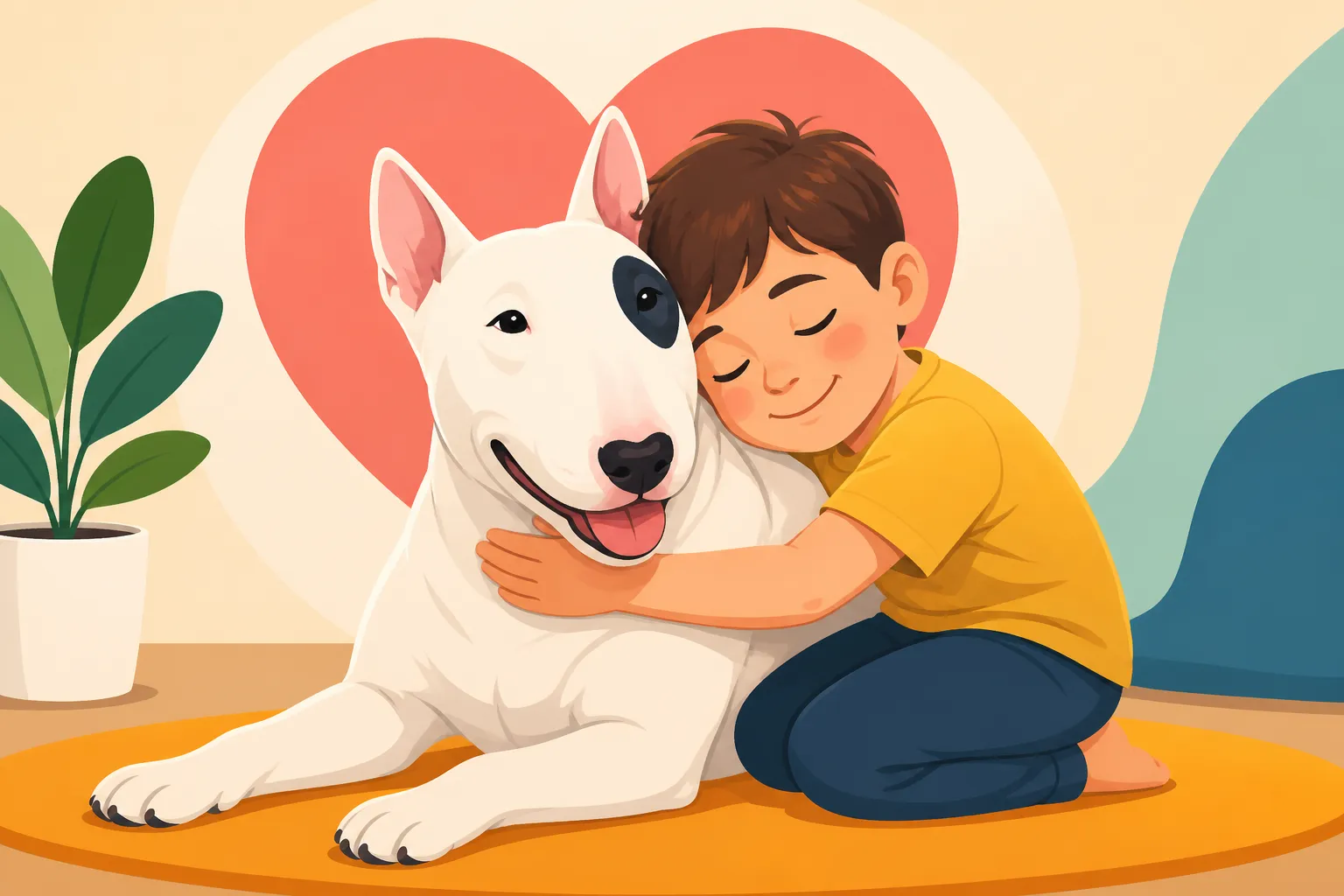
How a Bull Terrier Bonds to a Child
Bringing a Bull Terrier into a home with children can feel like a grand adventure, but it often comes with a heap of questions and a touch of anxiety. You might have heard all sorts of stories, from tales of the Bull Terrier's legendary patience to warnings about their boundless energy and powerful frame. The truth is, understanding how a Bull Terrier genuinely bonds with a child is crucial, and it’s far more nuanced than many people realize. This guide is here to walk you through those realities, helping you cultivate a harmonious and safe relationship between your beloved Bull Terrier and the little humans in your life.
The Unique Nature of a Bull Terrier's Affection
Bull Terriers are truly one-of-a-kind, and their approach to affection and family dynamics reflects that quirky individuality. They aren't always what people expect, especially when children are involved. It's a blend of clownish charm, surprising sensitivity, and sometimes, an almost innocent lack of awareness of their own strength.
Why Bull Terriers are Often Called "Nanny Dogs" and Why That's a Misnomer
Ah, the "nanny dog" myth. It's a persistent one, isn't it? For decades, some bully breeds, including Bull Terriers, have been affectionately (and sometimes misleadingly) labeled "nanny dogs" due to anecdotal stories of their devotion to children. While it's true that a well-socialized, well-trained Bull Terrier can be incredibly loving and protective of its family's children, this label can create a dangerous misconception. It implies that these dogs instinctively know how to handle children, can be left unsupervised, and will tolerate anything a child might do. This simply isn't fair to the dog or safe for the child.
The reality is that no dog, regardless of breed, comes pre-programmed as a "nanny." They are animals with instincts, individual personalities, and a need for guidance and supervision. Relying on a myth instead of proper training and management can lead to unfortunate incidents. Instead, think of your Bull Terrier as a beloved family member who, like a human toddler, needs consistent teaching, clear boundaries, and constant supervision when interacting with children. This approach respects the dog's nature and ensures the child's safety.
How a Bull Terrier's Physicality Impacts Interactions with Children
Let's be honest, Bull Terriers are built like little tanks. They have a compact, muscular body, a solid head, and a zest for life that often translates into enthusiastic, sometimes clumsy, physical expression. They tend to lean into you, body slam for fun, and zoom around with an intensity that can surprise even seasoned dog owners. This robust physicality means that their interactions with children need careful management.
A playful nip from a small terrier might barely register, but a full-force greeting from a Bull Terrier, especially one that hasn't learned to moderate its excitement, can easily knock a child over. They don't mean any harm, of course; they just don't always grasp their own strength. Imagine a delighted 50-pound (or more!) dog launching itself for a cuddle – it's a lot of dog to handle for a small child. Understanding this aspect of their nature isn't about fear; it's about preparation. It means teaching your Bull Terrier to greet gently, to respect personal space, and for children to understand how to move safely around their enthusiastic canine companion. For more on their playful nature, you might enjoy Why a Bull Terrier Is Called a Clown.
The Importance of a Bull Terrier's "Soft Side" with Youngsters
Despite their powerful build and sometimes boisterous demeanor, Bull Terriers possess an incredibly soft and sensitive side, especially towards the younger members of their family. They often form deep, affectionate bonds, showcasing a loyalty that can be truly heartwarming. This "soft side" is what makes them such cherished companions for many families with children. They love to snuggle, often becoming big, warm lapdogs, and many will position themselves protectively near their child, watching over them with a quiet vigilance.
It's this nuanced personality—the tough exterior hiding a gentle soul—that makes the Bull Terrier so captivating. They can be incredibly tolerant of the sometimes awkward and unpredictable movements of children, as long as they feel safe and respected. This inherent good nature, when nurtured correctly, is the foundation for a beautiful relationship between a Bull Terrier and a child. Recognizing and encouraging this gentleness, while managing their physicality, is key to a successful bond. How Physically Affectionate a Bull Terrier Is explores this bond more deeply.
Fostering a Safe and Strong Bond
Building a strong, positive relationship between your Bull Terrier and children requires proactive effort, consistent training, and unwavering supervision. It's not something that happens by accident, nor is it solely up to the dog.
Early Socialization and Exposure to Children
Just like with any dog, early and positive socialization is paramount for a Bull Terrier, especially one living with or regularly encountering children. This doesn't mean throwing a puppy into a room full of screaming toddlers and hoping for the best. It means carefully controlled, positive exposures from a young age. Introduce your puppy to a variety of children of different ages, temperaments, and energy levels, always under strict supervision. Ensure these interactions are positive experiences for the dog, associating children with good things like treats and gentle praise.
If you're bringing an adult Bull Terrier into a home with children, or if your Bull Terrier is already an adult and you're introducing a new child, the same principles apply, but with even greater caution. Start slow, on-leash, and with plenty of space. Use high-value treats to create positive associations. Never force interactions. The goal is for your Bull Terrier to view children as a positive, non-threatening, and predictable part of their world, rather than something to be feared or seen as a nuisance. Online resources like BAXTER & Bella offer fantastic virtual puppy and dog training programs that can guide you through effective socialization techniques, even if you can't access in-person classes easily.
Teaching Mutual Respect: Rules for Both Dog and Child
A successful relationship is a two-way street, and both your Bull Terrier and your children need to learn boundaries and respectful behavior. For your Bull Terrier, this means teaching cues like "leave it," "settle," and "off," to manage their excitement and prevent jumping or overly rough play. It also means teaching them to respect personal space and to understand that sometimes, children need their own quiet time.
For children, it means teaching them how to interact with a dog safely and kindly. This includes lessons on gentle touching (no ear pulling or tail grabbing!), understanding when the dog wants to be left alone, and recognizing the dog's body language. Teach them to always ask permission before approaching the dog, even their own. A simple rule like "let sleeping dogs lie" or "don't bother the dog when it's eating" can prevent many problems. Make sure children understand that the dog is not a toy, and that dogs have feelings and personal boundaries too.
Supervised Interaction: The Golden Rule
I cannot stress this enough: always supervise interactions between your Bull Terrier and children. This isn't just a suggestion; it's the golden rule for safety and a healthy bond. Even the most tolerant and well-behaved Bull Terrier, or the most well-meaning child, can have an accidental misunderstanding. A child might inadvertently step on a paw, startling the dog, or a dog might get overstimulated during play.
Supervision means actively watching, not just being in the same room. It means being ready to intervene, redirect, or separate if necessary. As children grow, their understanding of dog behavior improves, but their curiosity and exuberance can still lead to unexpected situations. Think of supervision as an ongoing safety net. This table outlines some key differences and considerations:
| Feature | Supervised Interaction | Unsupervised Interaction |
|---|---|---|
| Safety | High; adult can intervene, prevent issues, and educate. | Low; risks of accidental injury, fear, or biting are significant. |
| Learning | Opportunity for positive reinforcement for both dog and child. | Missed opportunities; potential for negative associations. |
| Bonding | Fosters trust and positive associations in a controlled way. | Can create anxiety or fear, hindering a healthy bond. |
| Behavior Mgmt. | Allows for immediate correction and redirection of unwanted behaviors. | Unwanted behaviors can escalate or become ingrained. |
| Responsibility | Adult takes full responsibility for ensuring safety and positive outcomes. | Places undue responsibility on the dog or risks child's safety. |
Remember, even brief moments of unsupervised interaction can be enough for an accident to occur. Never leave a Bull Terrier alone with a child, regardless of how much you trust either of them. This diligence creates a foundation of safety that allows their bond to flourish naturally. For tips on managing interactions with very young children, consider reading Whether a Bull Terrier Is Safe With a Baby.
Understanding Potential Challenges and Solutions
Even with the best intentions and diligent training, bringing a strong, energetic breed like a Bull Terrier into a family with children can present unique challenges. Anticipating these and having strategies in place can make all the difference.
Managing Over-Exuberance and Play Styles
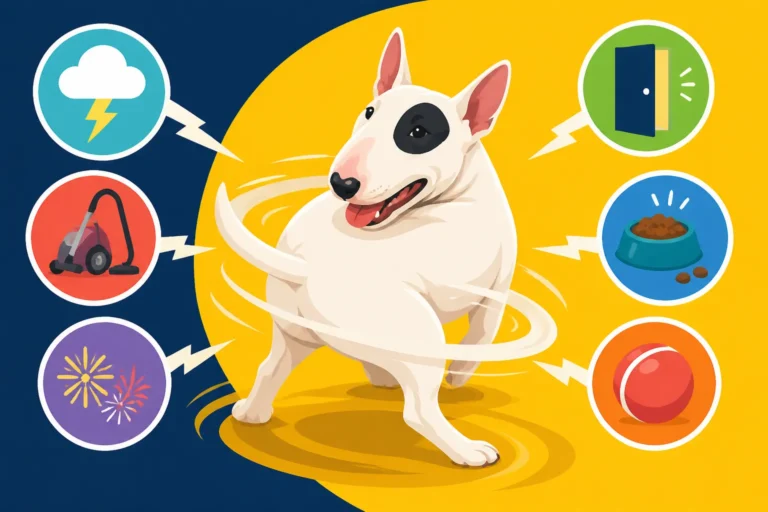
Bull Terriers are notorious for their boundless energy and robust play style. They are boisterous, often clumsy, and can quickly become overstimulated. This is where many of the challenges arise in a household with children. A child's squeals and quick movements can amp up a Bull Terrier's excitement level, leading to jumping, nipping, or body-slamming that, while playful, can be dangerous.
The solution lies in teaching impulse control and redirecting that energy appropriately. Teach your Bull Terrier calm greetings, rewarding them heavily for keeping four paws on the floor when a child enters the room. Utilize a long-line leash during initial play sessions to prevent jumping and to give you control. Redirect mouthing onto appropriate chew toys, which you can easily find on sites like Amazon. Provide plenty of structured exercise and mental enrichment to burn off excess energy before children are around. Instead of wrestling, encourage games like fetch, tug-of-war with clear rules (dog must "drop" on command), or hide-and-seek with toys. These activities allow the dog to expend energy without direct, potentially rough physical contact with the child. If you see signs that your dog is getting too excited, calmly separate them and give your Bull Terrier a short "time out" to de-escalate. How to Teach a Child to Play With a Bull Terrier offers more strategies.
Recognizing Stress Signals in Your Bull Terrier
A crucial part of preventing incidents is learning to "read" your Bull Terrier. Dogs communicate their discomfort or stress through subtle body language long before they resort to growling or snapping. Recognizing these early warning signs is vital, especially when children are present. Look for:
- Lip licking: Not in anticipation of food, but as a subtle stress signal.
- Yawning: Also not due to tiredness, but as a calming signal when stressed.
- Turning head or body away: An attempt to disengage from an interaction.
- Stiff body posture: Tense muscles, rigid stance, tail held stiffly (even if wagging).
- Whale eye: When you can see the whites of their eyes, often indicating fear or anxiety.
- Low tail carriage or tucked tail: A clear sign of apprehension.
- Freezing: Becoming suddenly still, often before reacting.
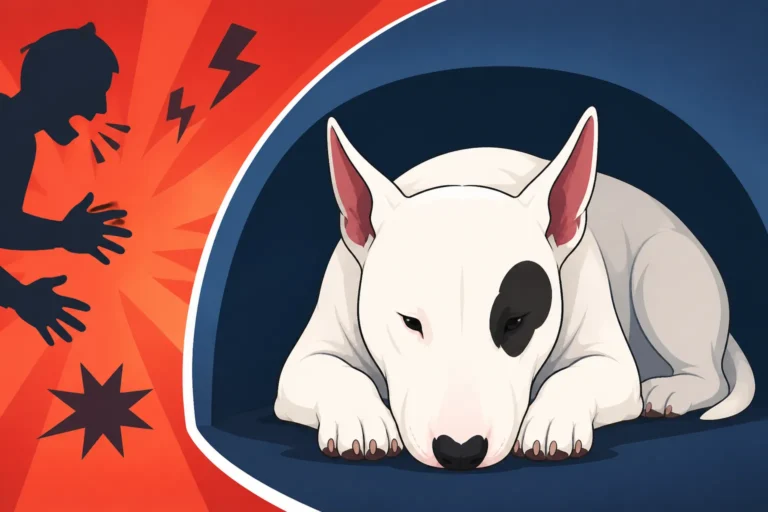
If you observe any of these signals, it's your cue to intervene immediately. Gently separate your Bull Terrier from the child, give the dog a quiet space, and reassess the situation. Understanding these signals empowers you to advocate for your dog and prevent them from feeling cornered or overwhelmed, which is key to maintaining trust and safety. Knowing How a Bull Terrier Hides Pain can also help you recognize subtle discomfort.
Addressing Resource Guarding and Possessiveness
While not unique to Bull Terriers, resource guarding (protecting food, toys, sleeping spots, or even people) is a behavior that needs careful attention in homes with children. A Bull Terrier might guard a favorite toy, its food bowl, or even a particular spot on the couch that it considers "theirs." If a child unknowingly approaches a guarded resource, it can lead to a growl, a snap, or even a bite.
Prevention is the best strategy. From puppyhood, practice "trade-up" games: offer a higher-value treat in exchange for a toy, then give the toy back. This teaches the dog that humans approaching their resources mean good things, not theft. Teach children never to approach the dog's food bowl while it's eating. Provide the dog with its own designated safe space, like a crate or dog bed, where children are not allowed to bother them. If your Bull Terrier shows signs of guarding, seek professional help from a certified positive reinforcement trainer or behaviorist immediately. This is not a behavior to ignore or try to "fix" without expert guidance, especially with children in the home. Many virtual trainers available through platforms like BAXTER & Bella specialize in these types of behavioral issues and can offer remote support.
Activities and Routines That Strengthen the Bond
A strong bond isn't just about avoiding problems; it's about actively building positive, shared experiences. When a Bull Terrier and a child have fun together in a structured and safe way, their connection deepens significantly.
Engaging in Safe Playtime Activities
Choosing the right kind of play is essential. Bull Terriers love to play, but their physical nature means certain games are better avoided, especially with younger children. Instead of rough-housing, focus on games that are fun but keep a safe distance, or that involve turn-taking.
- Fetch: A classic for a reason! Teach your child to throw a durable, Bull Terrier-proof ball (again, great options on Amazon) and have the dog retrieve it. Supervise to ensure the child doesn't try to pull the ball from the dog's mouth.
- Tug-of-War (with rules): This can be a great energy burner, but only if the Bull Terrier knows "drop it" reliably. The adult should always be present to referee and ensure fair play. If the dog's teeth accidentally touch the child's hand, the game stops immediately.
- Hide-and-Seek: The child can hide with an adult's help, and the Bull Terrier can be encouraged to "find" them. This is a fantastic mental exercise and builds positive associations.
- Puzzle Toys: These aren't interactive with the child, but they provide mental stimulation for your Bull Terrier, which can lead to calmer behavior when children are around. There are many options to explore, from simple treat dispensers to more complex interactive toys.
Always remember that the goal is fun and safety. Keep play sessions short and end them before your Bull Terrier gets over-aroused. How a Bull Terrier Plays With Children offers more fun ideas.
Involving Children in Daily Care Routines (Safely)
Allowing children to participate in the care of their Bull Terrier can be incredibly empowering for them and can strengthen their bond. However, this must always be done under direct adult supervision and only for tasks appropriate for their age and skill level.
- Feeding: Children can help measure food into the bowl (never put their hand in the bowl while the dog is eating or nearby). This teaches responsibility and helps the dog associate the child with positive events (food!).
- Brushing: A Bull Terrier's short coat means brushing is usually straightforward. A child can use a soft brush under supervision, focusing on gentle strokes. This is a calming activity that builds a positive, tactile connection. Which Brush Suits a Bull Terrier provides recommendations.
- Training: Simple training cues like "sit" or "stay" can be practiced by children with an adult's guidance, using treats. This teaches the child leadership skills and reinforces the dog's obedience. Programs like BAXTER & Bella often include modules on involving the whole family in training, making it a valuable resource.
- Walks: Older, more responsible children might be able to hold the leash for short periods in a very safe, enclosed area, always with an adult holding a backup leash. This teaches responsibility and how to handle a strong dog.
Each of these activities helps the child feel like an important part of the dog's life, and it helps the Bull Terrier see the child as a benevolent caregiver.
Consistent Positive Reinforcement
Positive reinforcement is the cornerstone of building a healthy relationship between any dog and human, and it's especially important for Bull Terriers and children. Reward desired behaviors from both your dog and your children.
For your Bull Terrier, this means praising and treating them for calm behavior around children, for gentle greetings, and for listening to commands when children are present. Make sure they associate children with good things—tasty treats, a favorite toy, or a calm belly rub.
For your children, praise and encourage their gentle interactions, their respect for the dog's space, and their responsible participation in care routines. Acknowledge when they correctly read the dog's body language or give the dog space when it needs it.
Consistency is key. Everyone in the household needs to be on the same page regarding rules and expectations for both the dog and the children. When the rules are clear, consistent, and reinforced with positivity, your Bull Terrier will thrive, and the bond with your children will blossom into a joyful and trusting relationship. How a Bull Terrier Bonds to a Child is a related read that goes deeper into this connection.
Disclaimer
This article is for general informational purposes only and does not constitute professional advice. Laws, prices and regulations vary by location and change over time. Consult a qualified professional for guidance on your specific situation.