How Often a Bull Terrier Spins in a Day
It’s a sight familiar to many Bull Terrier owners: your energetic companion suddenly drops everything and begins chasing their tail, sometimes in tight, frantic circles, seemingly oblivious to the world around them. This distinctive spinning behavior can be endearing, perplexing, and often, quite concerning. You might wonder if it’s just a playful quirk, a sign of boredom, or something more serious. This guide will delve deep into how often a Bull Terrier spins in a day, what drives this unique behavior, and crucially, when it’s time to reach out for professional advice.
Understanding the Bull Terrier Spin: More Than Just a Quirk
When we talk about a Bull Terrier spinning, we're not just referring to a quick playful twirl. We're often describing a repetitive, almost trance-like behavior where the dog vigorously chases its tail or spins in circles, sometimes for minutes at a time. It’s a behavior deeply ingrained in some lines and individuals of the breed, and understanding its nuances is the first step in addressing it.
The Range of Spinning Frequency
There's no single answer to "how often a Bull Terrier spins in a day" because it varies wildly from dog to dog. For some Bull Terriers, spinning might be an occasional, short-lived burst of energy that happens once or twice a week, maybe when they’re overly excited or a bit bored. This infrequent, mild spinning might be considered within the realm of normal Bull Terrier eccentricity. These dogs might spend a few seconds spinning, break out of it easily with a distraction, and move on. It’s more akin to a quick zoomie that focuses on their tail.
However, for other Bull Terriers, this behavior can be much more frequent and intense. You might observe several episodes a day, perhaps five to ten times, or even more. These episodes could last from thirty seconds to several minutes. Imagine trying to relax on the couch, only for your dog to start frantically chasing its tail for five minutes straight, completely unresponsive to your calls. This isn't just a quirky habit anymore; it's a significant part of their daily routine, potentially impacting their quality of life and certainly yours. Owners often report seeing it most often during times of excitement, anticipation (like before a walk or meal), frustration, or when they are under-stimulated. It's important to keep a mental log, or even better, a written one, of how often these episodes occur, how long they last, and what seems to trigger them.
When Does "Often" Become "Too Often"?
The line between a benign quirk and a problematic behavior can feel blurry, but there are some clear indicators that your Bull Terrier's spinning is veering into "too often" territory. If the spinning starts to interfere with their normal activities – like eating, playing with you, or going for walks – then it's a concern. If your dog is so engrossed in spinning that they can't be easily interrupted, or if they seem agitated and distressed during or after an episode, that's a red flag. Owners commonly describe this as a dog that "can't turn it off" or seems "stuck" in the behavior.
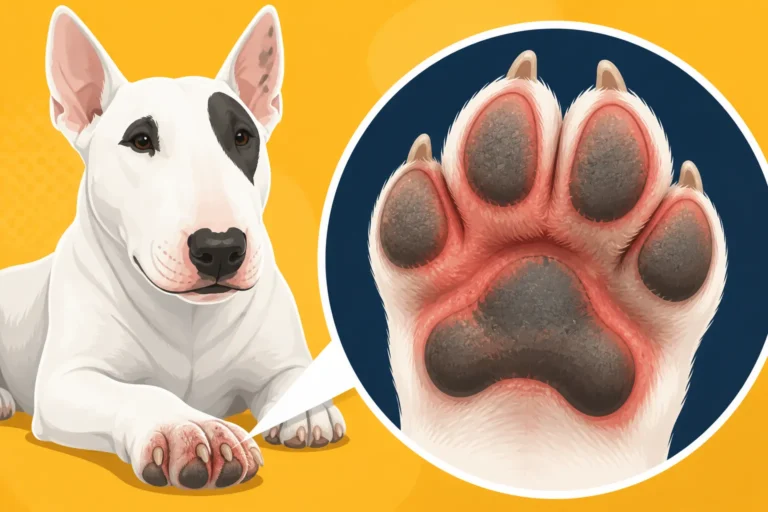
Another critical indicator is if the spinning leads to physical harm, such as chewed or raw tail tips, or even self-mutilation. In severe cases, dogs can inflict significant damage, leading to infections and further medical complications. A Bull Terrier's skin is its weakest point, and repetitive trauma to the tail area can lead to chronic skin issues that are notoriously difficult to resolve. If you notice any skin irritation, hair loss, or wounds around your Bull Terrier’s tail, it's definitely time to intervene. The frequency then becomes secondary to the physical consequences.
Consider also the emotional toll on you, the owner. If you find yourself constantly managing the spinning, feeling frustrated, or worrying about your dog's mental state, the frequency is already too high. This isn't just about the dog; it's about the entire household's well-being.
What Triggers Your Bull Terrier's Spinning Behavior?
Bull Terrier spinning is complex, often stemming from a combination of genetic predispositions and environmental factors. It's rarely just one thing, which is why a holistic approach to understanding and managing it is so vital. Many owners initially assume it’s pure boredom or a cry for attention, and while those can play a role, there’s often much more under the surface. You might be surprised to learn that for some dogs, it's actually a form of obsessive-compulsive disorder.
Genetic Predisposition and Early Onset
One of the strongest influences on Bull Terrier spinning is genetics. It's widely recognized within the breed community that certain lines are more prone to this behavior than others. This suggests a hereditary component, similar to how other breed-specific compulsive behaviors manifest. Studies have even explored potential genetic markers, aiming to understand why a Bull Terrier spins in the first place. This isn't to say every Bull Terrier will spin, but the predisposition is definitely there for many.
Often, owners report that the tail chasing starts relatively early in a Bull Terrier's life, sometimes as young as a few months old, but typically becoming more prominent around 6-18 months of age as they mature. This early onset further supports the idea of a genetic component rather than purely learned behavior. If a Bull Terrier breeder tells you that spinning is "normal" and nothing to worry about, be cautious. While some degree of chasing might be normal puppy play, persistent, intense spinning is not. A responsible breeder will be aware of these tendencies in their lines and aim to breed away from severe cases, and will be transparent about the history of their dogs. When considering a puppy, it's always wise to ask about the prevalence of tail chasing in the parents and their lineage.
Environmental Factors and Stress Responses
While genetics might load the gun, environmental factors often pull the trigger. Boredom and lack of adequate mental and physical stimulation are huge contributors. Bull Terriers are intelligent, high-energy dogs that need a "job" or engaging activities. If they don't get enough exercise or mental enrichment, that pent-up energy and intelligence can manifest in repetitive, self-soothing behaviors like spinning. Imagine a brilliant human stuck in a dull, unchanging routine; they might develop nervous habits, and dogs are no different. Providing adequate mental enrichment a spinning Bull Terrier needs is paramount.
Stress and anxiety can also be major triggers. A Bull Terrier who feels overwhelmed by a new environment, separation anxiety (which they are prone to), or even inconsistent training methods might resort to spinning as a coping mechanism. Think of it as an outlet for their nervous energy. Loud noises, changes in routine, new people, or other dogs can all contribute to an increase in spinning episodes. Sometimes, owners inadvertently reinforce the behavior by giving attention (even negative attention, like scolding) when the dog starts to spin. The dog learns that spinning gets a reaction, further cementing the habit.
Another environmental factor can simply be the presence of a tail! It sounds obvious, but for some dogs, their own tail becomes an irresistible, moving target. The sensory input of feeling their tail move, especially during heightened states of arousal, can initiate or exacerbate the spinning.
Distinguishing Spinning from Other Compulsive Behaviors
It's crucial to differentiate typical Bull Terrier spinning from other, potentially more serious, behaviors. While spinning is often a form of canine compulsive disorder (CCD), it can sometimes be confused with or co-occur with other issues.
| Behavior | Description | Key Differentiating Factors |
|---|---|---|
| Tail Chasing/Spinning | Repetitive, rapid pursuit of the tail, often in tight circles, sometimes with mouthing or biting. | Often triggered by excitement, frustration, boredom, or anxiety. Can be hard to interrupt. May escalate to self-mutilation. |
| Seizures | Involuntary muscle contractions, loss of consciousness, uncontrolled movements. Can manifest as "fly-biting" or staring spells. | Often involves altered consciousness, drooling, vocalization. Dog is typically unresponsive and may have post-seizure confusion. |
| Trancing/Ghost Busting | Slow, deliberate movement, often under curtains or low-hanging objects, with a glazed look in the eyes. | Slow, not frantic. Dog appears calm, not agitated or obsessive. Easily interrupted. Not associated with self-harm. |
| Stereotypical Pacing | Repetitive, seemingly aimless walking back and forth or in large circles. | Not focused on the tail. Often seen in confined or stressed animals. Less intense or frantic than severe spinning. |
One significant concern is whether Bull Terrier tail chasing is a seizure. While true seizures are distinct, some forms of focal or partial seizures can present with repetitive behaviors that might be mistaken for intense spinning. However, a Bull Terrier seizure differs from a spin in several key ways: seizures usually involve an altered state of consciousness, meaning the dog isn't aware of its surroundings or responsive to commands. They might drool, vocalize, or lose bladder control. After a seizure, dogs often experience a "post-ictal" phase, where they might be disoriented, restless, or exceptionally tired. Spinning, while obsessive, usually retains some level of awareness, and the dog might eventually be distracted, though it can be very difficult. If you suspect seizures, immediate veterinary attention is paramount.
Another unique Bull Terrier behavior is trancing, sometimes called "ghost busting." This is where the dog moves very slowly, almost hypnotically, typically under a low-hanging object like a curtain or a bush. Their eyes might glaze over, but it’s a calm, quiet, and easily interrupted behavior, completely different from the frantic energy of spinning. While both are repetitive, their presentation and underlying causes are vastly different.
Taking Action: When to Seek Professional Help for Excessive Spinning
It's tempting to try and fix the spinning problem on your own, especially if you've seen other Bull Terriers do it. But when the frequency is high, the intensity is strong, or your dog is causing themselves harm, professional help is not just recommended, it's essential. This is not a behavior that typically resolves on its own; it often requires a multi-faceted approach.
Documenting Your Dog's Spinning Episodes
Before you even step into the vet's office, you can be incredibly helpful by thoroughly documenting your dog's spinning behavior. This isn't just about noting how often a Bull Terrier spins in a day, but also gathering comprehensive details. Keep a log or a journal for a week or two, noting:
- Date and Time: When did the episode start and end?
- Duration: How long did it last?
- Context/Triggers: What was happening just before the spinning started? Was it mealtime? Did someone come to the door? Were they alone?
- Intensity: Was it mild, moderate, or frantic? Was there vocalization?
- Intervention: How did you try to stop it? Was it successful?
- Aftermath: How did your dog behave immediately after spinning? Were they calm, agitated, tired, or confused?
- Physical Signs: Are there any sores, raw spots, or hair loss on the tail or hindquarters?
Even better, try to video a few episodes. Seeing the behavior firsthand can provide invaluable insights for your veterinarian and any specialists. A short, clear video can speak volumes and ensure everyone is on the same page. This detailed information will help your vet assess the severity and rule out or pinpoint potential medical causes more effectively.
Medical Causes and Diagnostic Steps
It’s crucial to understand that compulsive behaviors like spinning can sometimes have an underlying medical cause. Pain, skin irritation, neurological issues, or even metabolic imbalances can manifest as repetitive behaviors. Your first stop should always be your veterinarian. They will perform a thorough physical examination, looking for any signs of discomfort, allergies, or neurological problems. They'll likely pay close attention to the tail and hindquarters for any signs of injury or irritation.
Your vet might recommend diagnostic tests to rule out medical conditions. These could include:
- Blood work: To check for underlying metabolic issues, organ function, or inflammatory markers.
- Urinalysis: While not directly related to spinning, a yearly urine test every Bull Terrier owner should book is a good practice and can help assess overall health, especially kidney function.
- Skin scrapings or biopsies: If there's any dermatological issue or irritation on the tail or surrounding area.
- Neurological examination: To assess reflexes, coordination, and mental status.
- Referral to a specialist: In some cases, your vet might suggest consulting a veterinary dermatologist, internal medicine specialist, or a veterinary neurologist if they suspect a more complex medical issue. For example, if a neurological component is suspected, an MRI might be considered to look for structural abnormalities in the brain.
Managing these diagnostic and treatment costs can be a significant concern for pet owners. This is where pet insurance providers like Healthy Paws can be a real lifeline. They can help cover a substantial portion of eligible vet bills, including specialist consultations, diagnostic tests, and medications for unexpected illnesses or injuries. Knowing you have that safety net can make a huge difference in being able to pursue the best possible care for your spinning Bull Terrier.
Behavioral Management and Enrichment Strategies
Once medical causes have been ruled out or addressed, the focus shifts to behavioral management. This is where a veterinary behaviorist or a certified professional dog trainer with experience in compulsive behaviors can be incredibly helpful. They can help you implement strategies to reduce the frequency and intensity of spinning.
- Increase Mental and Physical Stimulation: Bull Terriers need a lot of both. This isn't just about walks; it's about engaging their minds. Puzzle toys, interactive feeders (like a Kong or snuffle mat), scent work, and training new tricks can burn mental energy effectively. Think about games that make them problem-solve. Regular, structured exercise, such as long walks, safe off-leash play in a fenced yard, or even dog sports like agility, can also help. Remember that whether exercise reduces Bull Terrier spinning depends on the individual dog and the underlying cause, but it's always a good starting point.
- Consistent Training and Predictable Routine: Bull Terriers thrive on routine and clear expectations. Use positive reinforcement methods to teach alternative behaviors. If your dog spins when excited before a walk, teach them to sit calmly to get their leash on. Reward calm behavior frequently. For some dogs, interrupting the spinning with a strong, positive recall command can be effective, but for others, it can escalate the behavior. Knowing how to interrupt a Bull Terrier's tail chasing effectively is key, and a behaviorist can guide you.
- Environmental Management: Sometimes, simply changing the environment can help. If your Bull Terrier spins primarily in a certain room, can you manage their access to that space? Ensure they have a quiet, safe den (like a robust crate) where they can relax undisturbed.
- Medication: For severe cases of compulsive spinning, especially when anxiety or a strong genetic component is at play, a veterinary behaviorist might prescribe medication. Just like with humans, certain selective serotonin reuptake inhibitors (SSRIs) or tricyclic antidepressants (TCAs) can help modulate brain chemistry and reduce obsessive behaviors. This is often used in conjunction with behavioral modification and is not a standalone solution. Which medication stops a Bull Terrier spinning will depend on the individual dog and the vet's assessment.
- Avoid Punishment: Punishing your Bull Terrier for spinning is almost always counterproductive. It doesn't teach them what to do, and it can increase their anxiety, potentially making the spinning worse. Instead, focus on redirecting, rewarding calm behavior, and addressing the root cause.
When a Bull Terrier's spinning needs a vet, particularly a specialist, the costs can mount up quickly. Having comprehensive pet insurance through a provider like Healthy Paws can provide immense peace of mind. Many policies cover consultations with specialists, prescribed medications for behavioral issues, and the follow-up care often needed for chronic conditions. Don't let financial worries prevent you from seeking the best possible care for your beloved Bull Terrier. Remember, managing this behavior is a marathon, not a sprint, and patience, consistency, and professional guidance are your best tools.
Disclaimer
The information provided in this article is for educational purposes only and is not a substitute for professional veterinary advice. Always consult with a qualified veterinarian or veterinary behaviorist for any health concerns or before making any decisions about your pet's health or treatment plan.