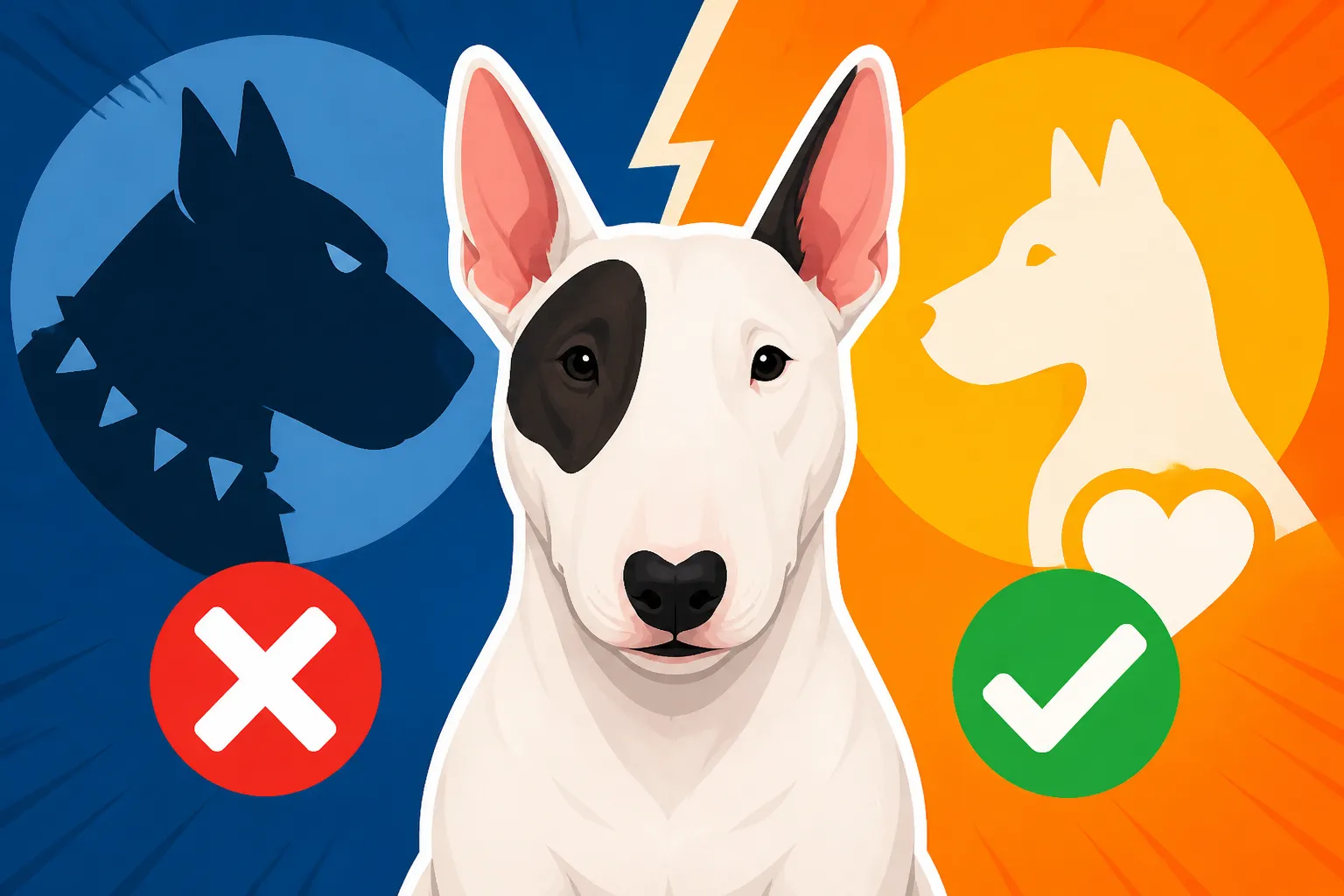
Whether a Bull Terrier Is a Bully Breed
People often call a Bull Terrier a “bully breed,” then use that label as if it were an official breed name or a reliable guide to a dog’s behavior. That confusion can cause problems when you’re researching a puppy, checking housing rules, or comparing breeds. Here’s what the label usually means, how it relates to Bull Terriers, and what to check before making decisions.
What “bully breed” means
It is a broad informal label, not one universally defined breed group
“Bully breed” is a catchall phrase used in different ways by dog owners, rescues, trainers, media outlets, insurers, landlords, and local authorities. It may refer to dogs with a shared history involving bulldog and terrier ancestry, dogs with a muscular, broad-headed appearance, or a collection of breeds that someone groups together for convenience. There is no single definition that everyone uses.
That makes the phrase frustratingly imprecise. One person may use “bully breed” to mean only a few breeds commonly associated with the term, while another may include Bull Terriers, Staffordshire Bull Terriers, American Staffordshire Terriers, American Pit Bull Terriers, bulldogs, or mixes. A list on one website or policy document may not match a list elsewhere.
The important distinction is that “bully breed” is not another formal name for the Bull Terrier. The Bull Terrier is a distinct breed, with its own breed standard and history. It may be included under the broader bully-type umbrella in everyday conversation, but the umbrella itself has no universally accepted membership list.
Bull Terriers are commonly described as bully-type dogs
The Bull Terrier’s name and history help explain why people place it in this category. The breed developed from crosses involving bulldog and terrier types, as did several other breeds now loosely called bully breeds. The Bull Terrier’s distinctive egg-shaped head, muscular build, and strong body also contribute to the association.
But being described as “bully-type” does not make a Bull Terrier interchangeable with another breed. Bull Terriers have their own physical traits, temperament, care needs, and breed history. For a closer look at how the breed developed, see Which Breeds Went Into the Bull Terrier and The White Cavalier: Why the Bull Terrier Never Started Fights.
It’s also worth separating appearance from ancestry and temperament. A dog can look muscular without sharing the same background as another muscular breed, and dogs within a single breed can differ in confidence, sociability, energy, and training needs. A broad label can be a starting point for a conversation, but it isn’t a detailed description of an individual dog.
The term is not the same as “pit bull”
People sometimes use “bully breed” and “pit bull” as if they mean the same thing. They don’t always. “Pit bull” is also used inconsistently: it may refer to a particular breed, several related breeds, or dogs with a certain appearance. In casual conversation, the terms can overlap, but that doesn’t make them precise synonyms.
A Bull Terrier is not an American Pit Bull Terrier. They are separate breeds, even though people may group both under a broad bully-type label. If you’re comparing them, How a Bull Terrier Differs From a Pit Bull explains why shared labels or visual impressions shouldn’t replace breed-specific information. The same goes for comparisons with the Staffordshire Bull Terrier, which is another distinct breed: How a Bull Terrier Differs From a Staffordshire Bull Terrier.
| Term | What it generally refers to | Is the meaning consistent everywhere? |
|---|---|---|
| Bull Terrier | A specific, distinct dog breed | More specific than “bully breed,” though standards can vary by kennel organization |
| Bully breed | An informal umbrella label that may cover several breeds or types | No |
| Pit bull | A term used for a particular breed, several breeds, or dogs with certain features | No |
| Bully-type dog | A descriptive phrase often based on ancestry, build, or appearance | No |
Why the label can matter in everyday life
Housing, insurance, and local rules may use their own definitions
If you rent, live in a managed community, or are arranging homeowners or renters insurance, don’t assume that a casual definition of “bully breed” is the one a policy or lease uses. A landlord may have a written list, an insurer may have its own underwriting rules, and local regulations may use wording that differs from both. Some policies or rules may refer to named breeds; others may use physical characteristics or broad categories.
Read the actual wording and ask how it applies to your specific dog. If a form asks for a breed, provide accurate information rather than guessing which broad category the organization has in mind. If the dog is a mix or its background is unknown, explain that and ask what documentation they accept. Save written replies and copies of relevant records so you don’t have to rely on a vague phone conversation later.
Rules can differ between cities, counties, states, and countries. If you’re moving, traveling, or adopting across a jurisdiction, check requirements for the destination rather than relying on a previous landlord’s or insurer’s decision. The reference guide Whether a Bull Terrier Is Banned Anywhere can help you think through the questions to ask, while Which Countries Restrict the Bull Terrier focuses on the fact that location matters.
Breed labels are not a behavior assessment
A breed label can’t tell you whether one particular Bull Terrier is safe, relaxed, fearful, sociable, or comfortable around children or other dogs. Those qualities depend on the individual dog and a range of factors, including temperament, early experiences, health, training, management, and the situation at hand.
For example, imagine a family meeting an adult Bull Terrier at a rescue. The phrase “bully breed” does not tell them how that dog responds to handling, whether it has lived with children, or how it behaves when another dog approaches. They need reliable information about that dog, a careful introduction, and thoughtful supervision—not a conclusion drawn from a category.
The reverse is true, too: a friendly first meeting doesn’t guarantee that a dog will be comfortable in every situation. Ask about the dog’s history and observed behavior, and look for a good match between the dog’s needs and your household. What a Bull Terrier's Temperament Is Really Like is a useful next read for understanding the breed without treating a stereotype as a personality test.
Responsible management is more useful than arguing over categories
Whether someone calls a Bull Terrier a bully breed or not, the day-to-day responsibilities are the same: provide training, supervision, exercise, veterinary care, and safe handling suited to the individual dog. A strong, energetic dog benefits from clear routines and equipment that fits properly. That does not mean treating every Bull Terrier as dangerous; it means planning responsibly for the dog in front of you.
If you’re preparing for a new dog, practice basic skills such as walking politely on leash, settling on a mat, waiting at doors, and coming when called in safe settings. Use gradual introductions rather than assuming a dog will automatically enjoy every person, animal, or environment. For training rewards and enrichment supplies, some owners browse options through Chewy, but the right choice depends on the dog’s size, chewing style, and preferences.
How to assess a Bull Terrier without relying on stereotypes
Start with the individual dog and its history
When meeting a Bull Terrier, ask specific questions instead of relying on the phrase “bully breed.” If you’re speaking with a breeder or rescue, ask what the dog is like at home, how it responds to unfamiliar people, what experience it has with other animals, and whether any behavior concerns have been observed. For an adult dog, ask about routines, handling, and situations that appear to make the dog uncomfortable.
Watch the dog’s body language in context. A dog that is relaxed in a quiet room may react differently in a busy park or around a crowd. Look for whether it can disengage, respond to familiar cues, and recover after something surprises it. One brief interaction cannot reveal everything, so take time and ask a knowledgeable person to help you assess the fit.
If you’re buying a puppy, ask about the parents’ temperaments and how the puppies are being raised and socialized. A reputable breeder should be willing to discuss health, behavior, and the kind of home each puppy may suit. Breed history can add context—Whether a Bull Terrier Was Bred to Start Fights explores a common misconception—but a dog’s present-day behavior still needs to be considered individually.
Make plans for training, exercise, and safe handling
Bull Terriers are strong, active dogs, so realistic preparation matters more than a label. Think about how you’ll provide daily activity, practice training, and prevent situations from becoming overwhelming. A secure leash, well-fitted walking equipment, and consistent routines can make ordinary outings easier. If you’re comparing harnesses or leads, a retailer such as Chewy may help you browse products, but check fit carefully and choose equipment your dog can wear comfortably and safely.
Training should be practical and rewarding. Keep sessions short enough that your dog stays engaged, reinforce behaviors you want to see again, and teach useful skills in gradually more distracting environments. If a dog struggles with reactivity, fear, or handling, seek help from a qualified, humane trainer or veterinary behavior professional rather than trying to solve the issue through force or punishment.
At home, provide appropriate chew options and enrichment. A food puzzle or scent game can give a dog a constructive outlet, especially during quiet periods. Chewy is one place owners may look for enrichment products, but supervise new toys and remove anything that becomes damaged or small enough to swallow. The aim is to meet your dog’s needs safely, not to buy a particular product because a breed label suggests it is required.
Use accurate language when asking for help
When speaking with a veterinarian, trainer, landlord, insurer, or rescue, name the breed if it is known and describe the specific question you need answered. For instance, “My Bull Terrier pulls when another dog passes on the sidewalk” gives a trainer a useful starting point. “My bully breed is difficult” is much less informative and may invite assumptions rather than practical advice.
If you don’t know a dog’s background, say so. Breed guesses based on looks are often uncertain, particularly for mixed-breed dogs. For a rule or policy question, ask the organization to point you to its written definition and explain what evidence it needs. That approach is more reliable than debating whether the dog fits someone else’s informal category.
The practical answer
A Bull Terrier is sometimes called a bully breed because people use that informal umbrella for several breeds with related histories or appearances. But the phrase has no universally agreed definition, and it does not replace the Bull Terrier’s identity as a distinct breed. It also cannot predict how an individual dog will behave.
When the label affects a real decision—such as housing, insurance, travel, adoption, or training—check the exact wording used by the organization involved. For decisions about daily life, focus on the individual dog’s temperament, history, health, training, and needs. That gives you a far clearer picture than the label alone.
Disclaimer
This article is for general informational purposes only and does not constitute professional advice. Laws, prices and regulations vary by location and change over time. Consult a qualified professional for guidance on your specific situation.