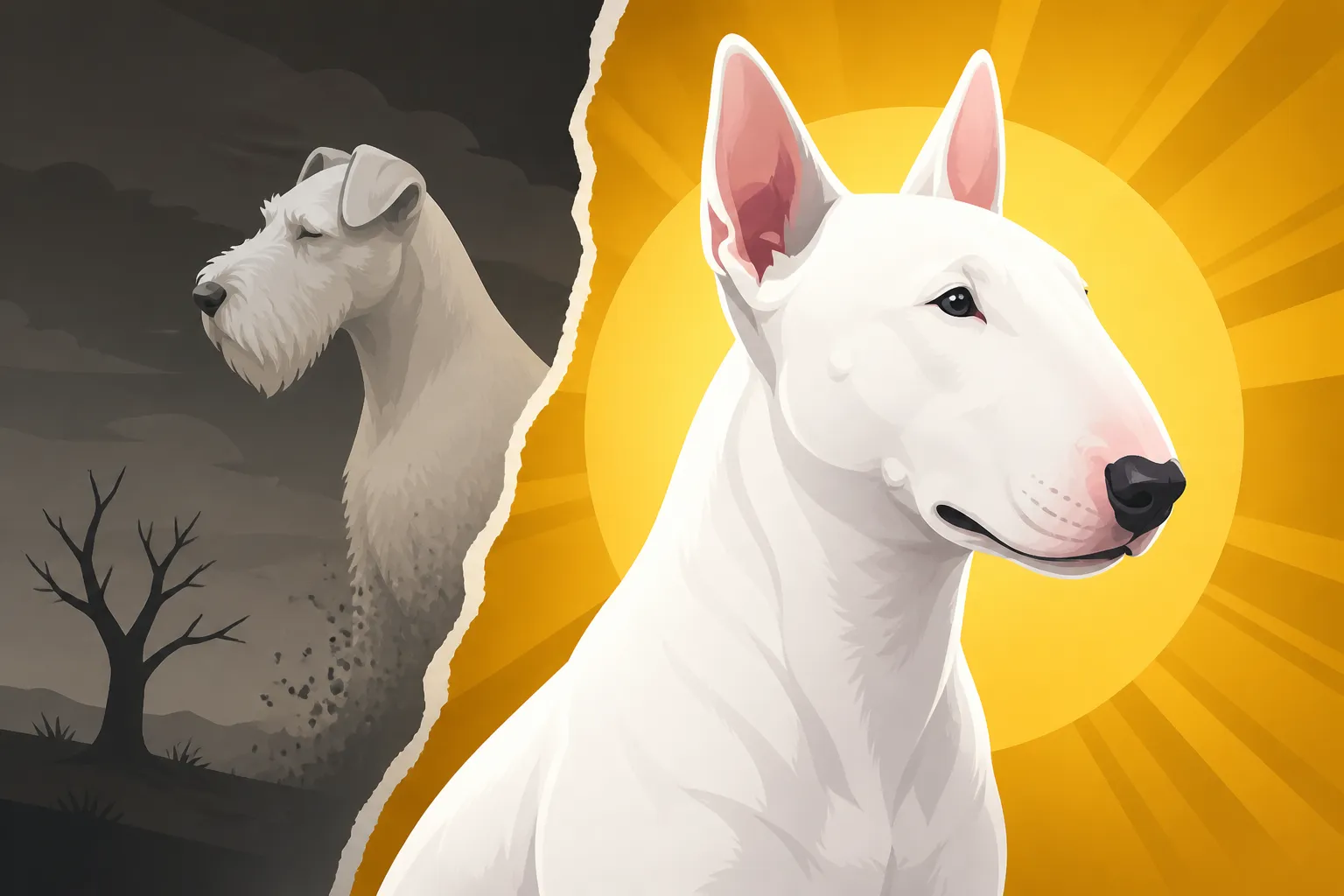
When the English White Terrier Died Out
It's a common misconception that all white terriers of the past were just early Bull Terriers, but there was once a distinct breed, a true white vision of elegance and purity, known as the English White Terrier. Sadly, this breed, beloved by some for its striking appearance, ultimately couldn't withstand the challenges of its own genetic makeup and the changing tides of canine fashion, leading to its eventual and quiet disappearance from the canine world. This guide delves into the history of the English White Terrier, exploring its rise, the factors that led to its decline, and how its legacy subtly lives on in the Bull Terrier we know and love today.
The English White Terrier: A Breed Born of Fashion, Doomed by Health
The mid-19th century was a time of burgeoning dog shows and an increasing desire for standardized breeds. Among the working terriers of England, there was a growing fascination with creating an entirely white dog, a symbol of purity and gentility that stood apart from the rough-and-tumble, often colored, terriers used for vermin control. This aesthetic ideal gave birth to the English White Terrier, a breed that, for a time, captured the hearts of a specific segment of the dog-loving public.
The Allure of Purity and Early Popularity
Imagine the dog shows of Victorian England: a flurry of tweed coats, bustling crowds, and dogs vying for attention. The English White Terrier, with its sleek, entirely white coat, keen expression, and refined build, must have been quite a spectacle. Breeders aimed for a uniform white coat, small, erect ears, and a strong, terrier-like conformation. It was an ambitious undertaking, as genetic knowledge was still in its infancy, and the implications of breeding exclusively for one color were not fully understood. Despite this, the breed gained a loyal following, particularly among those who appreciated its elegant appearance and perhaps saw it as a more sophisticated companion than the brawnier, earthier terriers. They were seen as dogs of distinction, a clean slate in a world of grays and browns, fitting perfectly into the prevailing aesthetic of the time.
Yet, this pursuit of an unblemished white coat came with significant, unforeseen consequences. Owners treasured their pristine dogs, showing them off, and celebrating their unique beauty. If only they had access to the modern resources we have today, like the wide array of specialized shampoos and grooming tools found on Chewy, perhaps they could have managed the inevitable skin sensitivities better. But even the best modern care might not have overcome the deeper genetic issues at play.
The Hidden Costs of Extreme Breeding
The single-minded pursuit of an all-white coat in the English White Terrier, while achieving a desired aesthetic, inadvertently locked the breed into a pattern of significant health problems. The gene responsible for its striking white color was, unfortunately, often linked to congenital deafness. This wasn't just an inconvenience; it meant a significant portion of puppies were born unable to hear, which, in a time without advanced veterinary care or specialized training techniques for deaf dogs, often led to euthanasia or a severely compromised life. Owners faced the heartbreaking reality of litters where promising pups were found to be profoundly deaf.
Beyond deafness, the lack of pigment often made these dogs incredibly susceptible to sunburn and various skin irritations. Their delicate pink skin, exposed beneath their short white fur, offered little protection against the elements, leading to chronic dermatological issues that would be challenging even for modern veterinarians to manage, let alone those of the 19th century. Imagine trying to protect a dog prone to severe sunburn with the limited knowledge and products available then. These persistent health challenges not only caused immense suffering for the dogs but also presented considerable difficulties for their owners, dimming the initial appeal of their pristine appearance. This combination of genetic vulnerabilities created an unsustainable model for the breed's long-term viability.
James Hinks and the New Vision: The Bull Terrier's Ascent
While the English White Terrier struggled with its inherent weaknesses, another breeder in Birmingham, James Hinks, was quietly envisioning a different kind of white terrier. Hinks, often credited with creating the modern Bull Terrier, observed the shortcomings of the English White Terrier and set out to breed a dog that possessed its handsome white coat but with a more robust constitution and a more balanced temperament. This new direction would eventually lead to the demise of the English White Terrier, overshadowed by its stronger, healthier descendant. James Hinks Built the Bull Terrier in Birmingham in the 1860s marks a pivotal moment in canine history.
Forging a Robust Rival
James Hinks was a forward-thinking man, recognizing that beauty alone couldn't sustain a breed. He understood that a dog needed to be sound in both body and mind to truly thrive as a companion and a working animal. He took the existing "Bull and Terrier" types, rugged dogs known for their gameness and strength, and crossed them with the English White Terrier, and reportedly, even the Dalmatian. Which Breeds Went Into the Bull Terrier reveals the complex genetic tapestry Hinks wove. His goal was to retain the striking white color that was so popular, but crucially, to infuse the new breed with greater vitality, improved bone structure, and a less delicate overall build.
This involved a careful selection process, favoring dogs that were not only white but also robust, intelligent, and less prone to the severe health issues plaguing the English White Terrier. He wasn't just breeding for looks; he was breeding for function and resilience. The result was a dog that could hold its own in the dog pits of the time (though Hinks himself championed a "White Cavalier" image, stressing gentlemanly conduct rather than fighting prowess), and also make a formidable yet loyal companion. The early Bull Terriers were dogs of substance, capable of much more than just looking pretty in a show ring.
The Rise of a Healthier, Stronger Breed
The efforts of James Hinks bore fruit, creating a dog that quickly gained popularity precisely because it addressed the Achilles' heel of the English White Terrier. The new Bull Terrier, while still predominantly white in its early days, was less prone to the crippling deafness and skin issues that plagued its predecessor. Hinks deliberately sought to breed out these weaknesses, selecting for vigor and soundness. This wasn't an overnight transformation, of course, but the contrast between the two breeds became starkly evident over time. Why Hinks Wanted an All White Dog sheds more light on his initial vision for the breed.
Owners of the nascent Bull Terrier found themselves with dogs that, while still requiring care, were generally much healthier and more resilient. They could be active companions, participate in various roles, and face the world with fewer inherent disadvantages. This newfound robustness, combined with their distinctive, powerful appearance, allowed the Bull Terrier to rapidly eclipse the English White Terrier in popularity. People gravitated towards a dog that could be a cherished member of the family without the constant worry of severe genetic health problems. This natural selection, driven by practicality and health, ensured the Bull Terrier's ascendancy.
The Divergence: Why One Flourished, the Other Faded
The story of the English White Terrier and the Bull Terrier is a fascinating case study in selective breeding and the unintended consequences of aesthetic choices. While both breeds shared a common lineage and a desire for an all-white coat, their divergent paths highlight critical differences in breeding philosophies and priorities that ultimately determined their fate. One embraced a broader genetic pool for resilience, while the other clung rigidly to a narrow, ultimately detrimental, ideal.
Temperament and Utility: Beyond Aesthetics
Beyond the superficial appeal of a pure white coat, dogs need to possess suitable temperaments and utility to truly thrive within human society. The English White Terrier, while elegant, often carried the nervous disposition and sharper aggression that could be present in some early terriers, without the balancing influence of other breeds. Their delicate nature, perhaps exacerbated by their health issues, made them less adaptable to diverse roles or boisterous family life. They were, in essence, a breed optimized for appearance in an era that was still heavily reliant on dogs for practical purposes or robust companionship.
The Bull Terrier, on the other hand, was intentionally bred to be a more stable and versatile companion. Hinks aimed for a dog with courage and gameness, but also one capable of being the "White Cavalier" – a gentleman's companion. The White Cavalier: Why the Bull Terrier Never Started Fights details this noble intention. This meant a dog that, while strong, was also amenable to training and possessed a more outgoing, confident, and less fragile demeanor. The infusion of other breeds, like the Dalmatian, is thought to have contributed to its more level head and distinctive, almost clownish personality, which proved immensely popular. This combination of strength, good looks, and a more balanced temperament gave the Bull Terrier a significant advantage in the competitive world of Victorian dog ownership.
| Feature | English White Terrier | Early Bull Terrier (Hinks Type) |
|---|---|---|
| Primary Goal | Pure white, refined appearance | White, but robust, active companion |
| Origin (Key Influences) | Early white working terriers, aesthetic selection | Bull and Terrier types, English White Terrier, Dalmatian |
| Head Shape | More conventional terrier head, distinct stop | Developing "downface," minimal stop |
| Eye Shape | Round, dark | Beginning to show the distinctive triangular shape |
| Known Health Issues | High incidence of congenital deafness, skin issues | Generally healthier, though deafness still a concern |
| Temperament Notes | Can be nervous, potentially sharper terrier drive | Confident, spirited, playful, "White Cavalier" ideal |
| Survival Status | Extinct | Thriving breed, evolved into modern Bull Terrier |
Health: A Matter of Survival
Ultimately, the most significant factor in the English White Terrier's decline was its health. A breed cannot sustain itself if a large percentage of its offspring are born with severe, life-altering conditions, or if the adults suffer from chronic ailments that are difficult to manage. The high incidence of deafness meant many puppies couldn't contribute to the breeding pool, severely limiting genetic diversity. The constant struggle with skin problems further burdened owners and diminished the dogs' quality of life. In an age before specialized veterinary medicine and widespread access to resources like modern hypoallergenic diets or sensitive skin care available on Chewy, these issues were often insurmountable.
The Bull Terrier, while not entirely free of genetic predispositions (deafness, for example, remained a concern, particularly in all-white lines), had a much broader genetic foundation. How Hinks Made the Bull Terrier Coat White suggests the careful selection process Hinks employed. The introduction of more diverse bloodlines helped to mitigate some of the extreme weaknesses found in the English White Terrier. Breeders could select for healthier stock with a greater chance of producing sound offspring. This strategic diversification, even if not fully understood in genetic terms at the time, proved to be a matter of survival. The simple truth was that the Bull Terrier was, on the whole, a healthier and more resilient dog, making it a much more appealing and viable breed for the long term.
The Official Farewell: Erasure from the Kennel Records
The decline of the English White Terrier wasn't a sudden, dramatic event, but rather a gradual fading into obscurity. As the Bull Terrier rose in prominence, capturing the attention of both breeders and the public, the English White Terrier's numbers dwindled. Eventually, there simply weren't enough distinct individuals or dedicated breeders to maintain the breed, leading to its quiet removal from official records.
Declining Numbers and Shifting Registrations
As the Bull Terrier gained traction, particularly with its stronger constitution and more appealing temperament, demand for the English White Terrier naturally declined. Breeders of English White Terriers found it increasingly difficult to place puppies, especially those with inherent health problems. Potential owners, having seen the robust qualities of the Bull Terrier, opted for the newer, healthier alternative. This led to a significant drop in breeding efforts and, consequently, in the number of English White Terriers being registered with kennel clubs.
The pool of genetically sound English White Terriers became smaller and smaller, making careful breeding even more challenging. Without fresh bloodlines and consistent interest, the breed essentially began to self-extinguish. Kennel clubs, which exist to recognize and maintain distinct breeds, would eventually cease to register English White Terriers as a separate entity once their numbers became negligible. It was a clear sign that the breed, as a distinct population, was no longer viable. This period saw a natural shift in breeding focus, and the once-prized English White Terrier slowly slipped from public consciousness.
The Final Years and Legacy in the Bull Terrier
By the late 19th and early 20th centuries, the English White Terrier was on its last legs. The final registrations would have been sparse, reflecting a breed that was no longer actively being bred or shown. It never really "died out" in a dramatic sense, like a species going extinct in the wild; rather, it was absorbed and diluted into other breeds, primarily the Bull Terrier. The bloodlines of the English White Terrier were instrumental in establishing the white coat and certain aesthetic qualities of the early Bull Terrier. Where the Bull Terrier Comes From underlines this foundational influence.
While the pure English White Terrier phenotype disappeared, its genetic contribution certainly lives on within the Bull Terrier. The initial all-white ideal of the Bull Terrier was a direct continuation of the English White Terrier's defining characteristic. So, while the breed itself may be gone, its spirit, and indeed some of its genetic material, became a part of a new, more enduring legacy. It's a bittersweet ending, perhaps, but one that highlights the dynamic and ever-evolving nature of dog breeding and the lasting impact of human choices on canine populations. When we look at a classic white Bull Terrier today, we are, in a way, seeing a distant echo of the elegant English White Terrier that preceded it.
The Enduring Influence on Modern Bull Terriers
Even though the English White Terrier is no longer a recognized breed, its historical significance and genetic contributions cannot be overstated. The story of its rise and fall is intrinsically woven into the narrative of the Bull Terrier, shaping not only its appearance but also highlighting the importance of responsible breeding practices that prioritize health and longevity alongside aesthetics. The English White Terrier may be gone, but its impact is still visible in the robust, distinctive Bull Terrier we cherish today.
The Genetic Echo: White Coats and Health Considerations
The most obvious legacy of the English White Terrier in the Bull Terrier is the white coat itself. The striking, pure white coloration that defined the English White Terrier was a highly desired trait that James Hinks sought to maintain in his new creation. Without the English White Terrier's genes, achieving the iconic "White Cavalier" look of the early Bull Terriers would have been much more challenging. This genetic link, however, also carried forward some of the predispositions associated with an all-white coat, most notably a higher incidence of congenital deafness compared to colored Bull Terriers. Even today, all-white Bull Terriers are routinely BAER tested for hearing. Why a White Bull Terrier Should Be BAER Tested explains this crucial screening.
Modern Bull Terrier breeders remain vigilant about these inherited health concerns, understanding the historical lessons learned from the English White Terrier's struggles. The efforts to breed for diverse coat colors within the Bull Terrier, and the rigorous health testing now commonplace, are partly a direct response to the problems that led to the English White Terrier's extinction. It serves as a stark reminder that while beauty is important, health must always be paramount.
Lessons Learned and Breeding Responsibility
The unfortunate fate of the English White Terrier stands as a cautionary tale in the history of dog breeding. It underscored the critical need for a holistic approach to breeding, one that balances desired physical traits with robust health and sound temperament. The drive for extreme purity in color, without understanding its genetic consequences, proved to be the breed's undoing. This historical perspective has profoundly influenced modern breeding ethics within the Bull Terrier community and beyond.
Today, reputable Bull Terrier breeders emphasize comprehensive health testing, genetic diversity, and temperamental soundness. They understand that every breeding decision has long-term implications for the health and vitality of the entire breed. For instance, testing for heart conditions, kidney disease, and patellar luxation, alongside deafness, is now standard practice. What a Bull Terrier Breeder Should Have Tested provides a thorough overview. This responsible approach ensures that while the Bull Terrier carries the proud lineage of both the "Bull and Terrier" types and the English White Terrier, it thrives as a healthier, more adaptable, and enduring companion, a living testament to the lessons learned from its short-lived, white-coated ancestor. And for owners today, it means having a pet that benefits from centuries of careful breeding and accessible, quality supplies from places like Chewy, ensuring they can enjoy a long and happy life with their distinctive companions.
Disclaimer
This article is for general informational purposes only and does not constitute professional advice. Laws, prices and regulations vary by location and change over time. Consult a qualified professional for guidance on your specific situation.