How to Clean a Bull Terrier’s Erect Ear
One common concern that often sneaks up on Bull Terrier owners, especially those new to the breed, is how to properly care for those magnificent, upright ears. Unlike many breeds with floppy ears that hide problems until they're screaming for attention, your Bull Terrier's alert, pointed ears seem so open to the world, you might think they're self-cleaning. But trust me, neglecting them can lead to some surprisingly stubborn and uncomfortable issues for your beloved companion. This guide is here to walk you through everything you need to know about keeping those iconic ears clean, healthy, and happy, without turning it into a wrestling match.
Understanding Your Bull Terrier's Erect Ears: Why They Need Special Attention
Those perfectly triangular, erect ears are a hallmark of the Bull Terrier, giving them that distinctive, alert expression we all adore. You might assume that because they stand up so proudly, they'd be less prone to the gunk and grime that plague floppy-eared breeds. And while it's true they generally enjoy better airflow, which can reduce the risk of certain types of infections, it doesn't mean they're immune. In fact, their very structure can sometimes lead to different kinds of issues if not cared for properly.
The Anatomy of a Bull Terrier Ear
Let's take a quick peek inside your Bull Terrier's ear. What you see on the outside is just the tip of the iceberg, or rather, the visible part of a rather complex structure. The ear canal itself isn't a straight shot to the eardrum; it's shaped more like an 'L'. There's a vertical canal that dips down into the head, and then a horizontal canal that makes a bend towards the eardrum. This L-shape is present in all dogs, and it’s a key reason why dirt, debris, and moisture can easily get trapped deep inside, even with those upright ears.
The erect nature of your Bull Terrier's ears does mean that air circulates more freely around the outer part of the canal, which helps to keep things drier and cooler than in, say, a Basset Hound's long, pendulous ears. This can certainly be an advantage when it comes to preventing yeast and bacterial overgrowth that thrive in warm, moist environments. However, the external ear leather is still exposed, collecting dust, pollen, and even tiny bugs as your Bull Terrier explores the world. And because they're not floppy, these particles aren't "brushed out" by movement as much. So, while you might think they're low maintenance, those upright ears still need your careful attention to prevent issues from festering in that clever little L-bend.
Common Ear Concerns in Bull Terriers
Even with excellent ventilation, Bull Terriers can still experience ear issues. The first step to proper cleaning is knowing what's normal and what's not. A healthy Bull Terrier ear should look clean, have minimal pale yellow or light brown wax, and be free of odor. You should be able to gently inspect the visible parts of the canal without your dog showing signs of discomfort or pain. However, any deviation from this "norm" could be a red flag. How Often a Bull Terrier's Ears Need Checking is more important than you might think.
One of the most frequent culprits is the dreaded ear infection, which can be caused by bacteria, yeast, or even a combination of both. You might notice your Bull Terrier shaking its head more than usual, scratching at its ears with a frantic urgency, or rubbing its head along the carpet or furniture. When you get close, you might pick up an unpleasant odor—often described as sweet, yeasty, or even rotten, depending on the type of infection. There might also be discharge: dark, crumbly gunk that looks like coffee grounds (a common sign of ear mites, which Bull Terriers can certainly get, especially puppies from certain environments), or a yellowish-greenish pus. The skin inside the ear might appear red, inflamed, or even swollen. Remember, a Bull Terrier’s skin can be quite sensitive, and this sensitivity extends to the delicate skin lining their ears. A Bull Terrier's Skin Is Its Weakest Point is something many owners quickly learn, and ear issues are no exception. Knowing these signs will tell you when cleaning isn't enough and a vet visit is in order.
Gathering Your Arsenal: What You Need for a Successful Ear Cleaning Session
Before you even think about tackling those ears, it’s crucial to gather all your supplies. Nothing derails a good ear cleaning session faster than having to stop halfway through because you forgot something important. Being prepared not only makes the process smoother for you but also reduces stress for your Bull Terrier, who might already be a little wary of what you're up to. Think of it like preparing for battle, but instead of armor, you're donning gloves, and your weapon is a gentle ear cleaner and a whole lot of praise.
Essential Cleaning Supplies
First things first, let's talk about the must-haves for your ear-cleaning toolkit:
- Veterinarian-Approved Ear Cleaning Solution: This is perhaps the most critical item. Do NOT use water, hydrogen peroxide, or rubbing alcohol. These can be irritating or even damaging to your dog's delicate ear canal. Your vet can recommend a good quality, pH-balanced cleaner designed specifically for dogs. Look for solutions that are gentle, non-irritating, and sometimes contain drying agents to help prevent moisture buildup after cleaning. You can often find these at your vet's office, or through reputable online retailers like Chewy or Amazon.
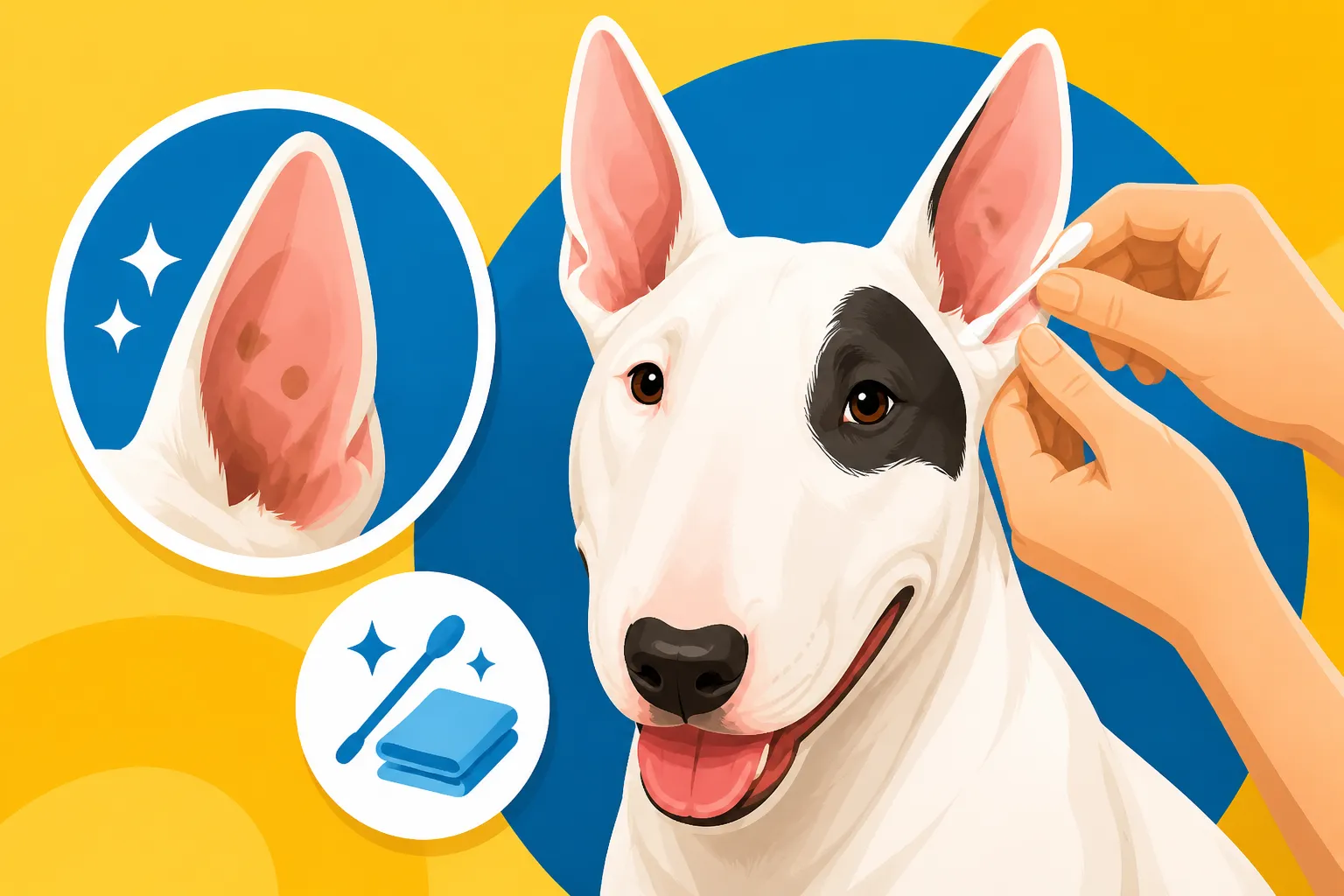
- Sterile Cotton Balls or Soft Gauze Pads: These are for wiping away debris and excess solution from the outer ear and the visible parts of the ear canal. I cannot stress this enough: avoid cotton swabs (Q-tips) for anything other than cleaning the very outer folds and crevices of the ear. Inserting a cotton swab into the ear canal can push debris further down, potentially damaging the eardrum or compacting wax, making problems worse.
- Plenty of Treats: Your Bull Terrier lives for motivation, and treats are a fantastic way to make ear cleaning a positive experience. Think high-value, super-tasty treats that they don't get every day. Which Reward Outranks a Bull Terrier's Own Idea for a Bull Terrier is usually something truly irresistible.
- Towels: Keep a few old towels handy. Ear cleaning can be a messy business, especially when your Bull Terrier inevitably decides to give a hearty head shake mid-cleanse!
- Optional but Helpful:
- A Headlamp: This can be surprisingly useful for clearly seeing inside the ear canal.
- An Assistant: If your Bull Terrier is particularly wiggly or resistant, having a second person to gently hold and reassure them can be a game-changer.
Having these items ready before you start will save you a lot of hassle and make the whole process much more efficient and less stressful for both of you.
Choosing the Right Ear Cleaner
Navigating the seemingly endless aisle of ear cleaning solutions can be daunting, but choosing the right one is crucial for your Bull Terrier's ear health. Not all ear cleaners are created equal, and what works for one dog might irritate another, especially given the Bull Terrier's often sensitive skin.
When selecting an ear cleaner, look for formulas that are specifically designed for dogs and are pH-balanced. Avoid anything with a strong alcohol content or witch hazel, as these can be extremely drying and irritating to the delicate tissues in the ear canal, especially if there's any pre-existing inflammation. Some excellent ingredients to look for include:
- Salicylic acid or lactic acid: These are often found in ear cleaners designed to help break down wax and debris.
- Aloe vera or other soothing agents: These can help calm irritated skin within the ear.
- Antiseptic or antifungal ingredients: If your vet suspects a mild yeast or bacterial overgrowth, they might recommend a cleaner with specific antiseptic or antifungal properties. However, these are often prescription-strength and should only be used under veterinary guidance.
The absolute best approach is to ask your veterinarian for a recommendation. They know your Bull Terrier's medical history and can advise on the most suitable product, especially if your dog has a history of ear problems or allergies. While many excellent over-the-counter options exist, such as those you might find on Amazon, your vet's input is invaluable to ensure you're using a safe and effective product that won't cause further irritation or mask a more serious underlying issue.
The Step-by-Step Guide to Cleaning Your Bull Terrier's Ears (Stress-Free, Hopefully!)
Alright, you've got your supplies, you've consulted your vet (hopefully!), and you're ready to tackle those ears. The key here is patience, positivity, and a gentle touch. Remember, your Bull Terrier is a smart cookie and will pick up on your anxiety, so try to remain calm and reassuring. Turning ear cleaning into a routine, even a slightly fun one, can make all the difference.
Preparing for the Cleanse
Setting the right stage for ear cleaning is half the battle won. You want this to be as low-stress as possible for your Bull Terrier, and that starts with the environment and timing.
First, choose a calm and quiet time of day when you're not rushed and your Bull Terrier isn't overly excited or distracted. Maybe after a good, long walk where they've burned off some of that boundless energy. How Much Exercise a Bull Terrier Actually Needs can make all the difference in their cooperativeness. A tired Bull Terrier is usually a more compliant Bull Terrier! Find a space where you both feel comfortable, perhaps on the floor with a towel beneath them, or on a sturdy table if they're used to grooming there.
Next, get your Bull Terrier comfortable. Start by simply touching and handling their ears gently, rewarding them with praise and treats for their tolerance. You want to create a positive association, not a dreaded one. Let them sniff the cleaning solution bottle and the cotton balls. Give them a treat. Repeat. This isn't about rushing; it's about building trust. If your Bull Terrier is already wary, take a few days just to practice positive associations with ear handling before you even introduce the cleaner. Remember, positive reinforcement goes a long way with these sensitive, intelligent dogs.
The Cleaning Process
Now for the main event! With everything prepared and your Bull Terrier as calm as can be, it's time to clean.
- Positioning: Gently hold your Bull Terrier's head, cradling it securely but not tightly. Lift one ear flap so you have a clear view of the opening of the ear canal. If you have a second person, this is where they can offer gentle restraint and lots of petting.
- Apply the Solution: Hold the ear cleaner bottle near the ear opening. Carefully insert the tip just into the entrance of the ear canal – do not force it deep down. Squeeze to fill the ear canal with the cleaning solution. The amount will depend on the size of your dog and the bottle's instructions, but often it's about half a dropper full or a good squirt until you see it pool a bit at the opening.
- Massage the Ear Base: Once the solution is in, gently but firmly massage the base of your Bull Terrier's ear for about 20-30 seconds. You should hear a squishy sound as the solution works its way through the L-shaped canal, loosening wax and debris. This massage feels good to many dogs, and it's essential for getting the cleaner where it needs to go.
- Allow the Head Shake: After massaging, stand back (or prepare to duck!) and allow your Bull Terrier to shake their head vigorously. This is a natural reaction and helps to dislodge and expel the loosened gunk from deeper in the canal. This is where those towels come in handy!
- Wipe and Clean: Now, take a fresh cotton ball or gauze pad and gently wipe out the visible parts of the outer ear and the entrance to the ear canal. Don't go any deeper than your finger can comfortably reach. You'll likely see a fair amount of brown or yellowish-brown debris on the cotton. Continue wiping with fresh cotton until the cotton ball comes out relatively clean.
- Praise and Reward: Throughout this entire process, keep the praise coming! Use a soft, encouraging tone. Immediately after cleaning, offer those high-value treats and a good cuddle. How Physically Affectionate a Bull Terrier Is often means a full-body lean or burrowing into you, and this positive connection after a potentially uncomfortable procedure is key.
- Repeat (if necessary): If the first wipe-out was extremely dirty, you might need to repeat steps 2-6 for the same ear. Then, move on to the other ear and follow the same procedure.
The goal is a clean ear, not a surgically sterile one. Over-cleaning can be just as problematic as under-cleaning, as it can strip the ear of its natural protective oils and disrupt its delicate balance.
Post-Cleaning Care and Observation
Once both ears are clean, it's not quite time to forget about them. Your Bull Terrier deserves extra praise and perhaps a few more treats for being such a good sport. This consistent positive reinforcement is vital for making future cleaning sessions easier.
Over the next 24-48 hours, keep an eye on your Bull Terrier's ears. Look for any signs of irritation or discomfort. Are they still scratching? Is there any redness or swelling? A slight increase in head shaking immediately after cleaning is normal as they adjust, but persistent shaking or pawing at the ears is not. Also, check for any lingering odor. If you notice any of these signs, it could indicate that the cleaning solution irritated their ears, or, more likely, that there's an underlying issue that needs veterinary attention. Which Shampoo Suits a Bull Terrier's Skin often involves careful product selection, and the same applies to ear cleaners. Regular, gentle cleaning, combined with vigilant observation, will help keep your Bull Terrier's ears in top condition.
When to Seek Professional Help: Recognizing Red Flags
As devoted Bull Terrier owners, we often try our best to handle minor health and grooming issues at home. And for routine ear cleaning, you're absolutely equipped. However, there are definite moments when DIY care isn't enough, and delaying a professional veterinary check-up can turn a simple problem into a much more complex and painful one for your dog. Knowing when to put down the ear cleaner and pick up the phone to call your vet is incredibly important.
Signs of Ear Infection or Other Issues
Your proactive cleaning efforts are fantastic for maintenance, but they aren't a substitute for medical intervention if an infection or other serious issue takes hold. Here's a quick rundown of the red flags that should send you straight to your veterinarian:
- Persistent Redness or Swelling: If the skin inside the ear canal looks persistently inflamed, angry red, or swollen, this indicates irritation or infection.
- Foul Odor: A strong, unpleasant smell emanating from the ear is a hallmark sign of a bacterial or yeast infection. It's usually quite distinct from the mild, natural scent of a clean ear.
- Abnormal Discharge: While a little light-colored wax is normal, any discharge that is excessive, yellowish-green (pus), thick brown, or resembles coffee grounds (often indicating ear mites) needs veterinary attention.
- Excessive Scratching, Pawing, or Head Shaking: If your Bull Terrier is constantly scratching at its ears, rubbing its head on furniture, or shaking its head violently, it's a clear sign of discomfort or pain.
- Pain Upon Touch: If your dog whines, recoils, or snaps when you try to touch or examine its ear, it's likely very painful and requires immediate veterinary assessment.
- Head Tilting or Loss of Balance: A persistent head tilt can indicate a more severe inner ear infection. In extreme cases, issues with balance might even occur.
- Sudden Hearing Changes: While less common, any noticeable change in your Bull Terrier's hearing could be related to severe ear blockage or damage. This is particularly important to monitor for, especially as your Bull Terrier ages, where Deafness in an Aging Bull Terrier can be a concern.
If you observe any of these symptoms, please resist the urge to self-treat with stronger home remedies. You could inadvertently make the problem worse or delay effective treatment.
The Vet Visit: What to Expect
When you bring your Bull Terrier to the vet for an ear issue, they will perform a thorough examination, which usually involves several steps.
First, a physical examination of your dog's ears and head will be done, observing their posture and any visible signs of pain or discharge. Then, your vet will use an otoscope, a special instrument with a light and magnifying lens, to look deep inside the ear canal and visualize the eardrum. This helps them identify foreign bodies, tumors, severe inflammation, or ruptured eardrums.
Often, they will also take a sample of the ear discharge (don't worry, it's quick and usually painless for your dog) and examine it under a microscope. This is called an ear cytology and is crucial for determining if the infection is bacterial, yeast, or caused by mites. Knowing the specific culprit guides the most effective treatment.
Treatment typically involves a combination of prescribed medicated ear drops or ointments, which may contain antibiotics, antifungals, or anti-inflammatory agents. In some severe cases, oral medications might also be prescribed. Your vet might also recommend a specific medicated ear cleaner different from your regular maintenance solution, designed to target the infection. While we can't discuss specific prices, be prepared for diagnostic fees and the cost of medication. What a Bull Terrier's Dermatologist Charges can give you an idea of specialized care if the issue is recurrent or complex. It’s always wise to budget for routine check-ups like The Yearly Urine Test Every Bull Terrier Owner Should Book so you're better prepared for unexpected veterinary costs.
Remember, early intervention is key. Ear infections can be incredibly painful and, if left untreated, can lead to chronic conditions or even permanent hearing damage. Don't hesitate to seek professional help—it's the kindest thing you can do for your Bull Terrier's comfort and long-term health.
| Symptom | Healthy Ear Appearance | Potential Problematic Signs |
|---|---|---|
| Odor | Faint, clean, neutral | Foul, sweet, yeasty, rotten |
| Color of Skin | Pale pink, natural skin tone | Red, inflamed, dark red, purplish |
| Discharge | Minimal light wax | Excessive brown, yellow, green, black "coffee grounds" |
| Behavior | No scratching, head shaking | Persistent scratching, head shaking, rubbing, whimpering |
| Pain/Sensitivity | Tolerant to touch | Recoils, snaps, yelps when touched |
| Swelling | Absent | Visible swelling of ear flap or canal |
| Crusts/Scabs | Absent | Present around ear opening or inside |
Disclaimer
This article is for general informational purposes only and does not constitute professional advice. Laws, prices and regulations vary by location and change over time. Consult a qualified professional for guidance on your specific situation.