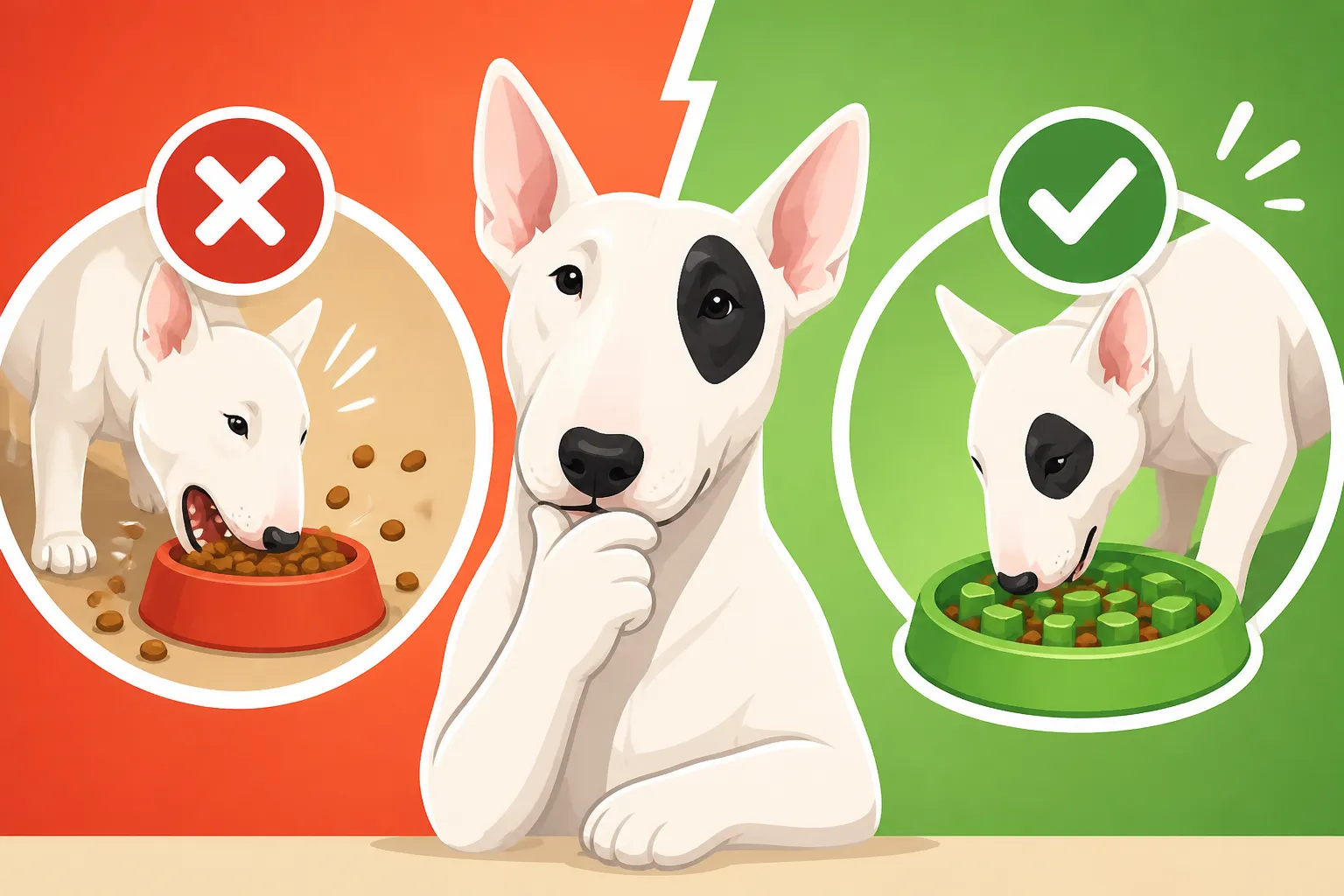
Whether a Slow Feeder Suits a Bull Terrier
If you've ever watched your Bull Terrier eat, you know it's less like a leisurely meal and more like a competitive sport. They often inhale their food in mere seconds, leaving you wondering if they even tasted it. This rapid eating isn't just a quirky habit; it can lead to some serious health concerns for our beloved, egg-headed companions. This guide will dive deep into why Bull Terriers eat so fast and explore whether a slow feeder can be the game-changing solution to protect their health and make mealtime a safer, more enjoyable experience for everyone.
Why Bull Terriers Eat So Fast (And Why It Matters)
It's not just your imagination; many Bull Terriers seem to have a built-in turbo mode when it comes to their dinner. This isn't necessarily a sign of a bad owner or an overly hungry dog, but rather a combination of their breed characteristics and underlying instincts. Understanding why they eat this way is the first step toward addressing the issue.
The Bull Terrier's Natural Instincts and Drive
Bull Terriers, despite their charming and clownish demeanor today, have a history rooted in working and athleticism. They were bred for strength, tenacity, and a powerful drive, which, while fantastic for certain tasks, can translate into an intense approach to resources like food. For some, this comes from a primal instinct to secure food quickly before a perceived competitor (even if that competitor is just the air) can get to it. They often act like every meal is their last, gobbling it down as if someone might snatch it away. This high drive means that when something as rewarding as food is presented, their natural inclination is to consume it as efficiently as possible. It's not uncommon to hear Bull Terrier owners describe their dogs as having a "bottomless pit" for a stomach, always ready for more, and always ready to eat what's there right now. How Much an Adult Bull Terrier Eats can often seem like a rhetorical question when you see how fast they can make it disappear!
The Risks of Rapid Eating for Bull Terriers
While watching your Bull Terrier scarf down their dinner might seem harmless, it carries several significant health risks that every owner should be aware of. The most concerning of these, especially for deep-chested breeds like the Bull Terrier, is Gastric Dilatation-Volvulus (GDV), commonly known as bloat. Bloat is a life-threatening condition where the stomach fills with gas and then twists, cutting off blood supply and trapping the gas. Rapid eating, especially when combined with drinking a lot of water and then exercising, is a known risk factor. Whether a Bull Terrier Bloats is a real and terrifying concern for many owners.
Beyond bloat, rapid eating can lead to a host of other digestive issues. When dogs eat too quickly, they often swallow a lot of air, which can cause discomfort, gas, and even vomiting shortly after a meal. The food isn't properly chewed, which makes digestion harder and can reduce the absorption of vital nutrients. Imagine trying to digest whole pieces of kibble instead of properly broken-down food; your dog's system has to work much harder. Choking is another very real danger, as large chunks of food are swallowed without proper mastication. These are not minor inconveniences; they are serious concerns that impact your Bull Terrier's immediate well-being and long-term health.
Understanding Slow Feeders and How They Work
Given the risks, it's clear that finding a way to slow down your Bull Terrier's eating is crucial. This is where slow feeders come into play, offering a practical and often fun solution to a serious problem.
What Exactly is a Slow Feeder?
A slow feeder isn't just a fancy bowl; it's a specially designed feeding tool that makes it more challenging for your dog to access their food. Instead of a wide-open surface, these bowls feature various obstacles like ridges, labyrinths, mazes, or individual compartments that force your Bull Terrier to eat around, over, or through them. The idea is simple: by making the food less accessible, they have to work a little harder and take smaller bites, extending mealtime significantly.
You'll find many different types: some are simple plastic or ceramic bowls with molded shapes in the bottom, others are more intricate puzzle feeders where food must be manipulated out of pockets or under sliders. Then there are snuffle mats, fabric mats with various nooks and crannies where you can hide kibble, turning mealtime into a scent work game. The common thread is that they all interrupt the straight shot from bowl to stomach, forcing your dog to engage their brain and mouth in a more deliberate way.
Benefits of Using a Slow Feeder for Your Bull Terrier
The primary benefit of a slow feeder for a Bull Terrier is, of course, slowing down their eating pace. This directly addresses the critical concern of bloat by reducing the amount of air swallowed during a meal and preventing the stomach from distending too rapidly. But the advantages extend far beyond just bloat prevention.
Slower eating significantly improves digestion. When food is eaten at a more natural pace, it gives the digestive enzymes more time to work, leading to better nutrient absorption. This can mean less stomach upset, reduced gas, and more efficient use of the calories your dog consumes. Think about it: when you eat slowly, you feel fuller, and the same applies to your Bull Terrier. It can even help with weight management, as they feel more satisfied with their meal, which is important for Keeping a Bull Terrier Lean When It Carries This Much Muscle. Beyond the physical benefits, slow feeders provide valuable mental stimulation. They turn a routine activity into a mini-puzzle, engaging your Bull Terrier's brain and helping to prevent boredom. This enrichment can contribute to overall behavioral well-being, especially for intelligent and energetic breeds like ours.
Choosing the Right Slow Feeder for Your Bull Terrier
Selecting the perfect slow feeder isn't just about grabbing the first one you see. For a Bull Terrier, with their powerful jaws and determined personalities, there are specific factors you need to consider to ensure both effectiveness and durability.
Material and Durability: Bull Terrier Proofing Your Bowl
Let's be realistic: a Bull Terrier's jaw strength is legendary. What might be a sturdy plastic bowl for another breed could become a chew toy for a determined Bull Terrier in minutes. Therefore, material and durability are paramount. Look for slow feeders made from heavy-duty, chew-resistant materials. Stainless steel options are often excellent, as they are virtually indestructible and easy to clean. Thick, high-quality ceramic bowls can also work, but be wary of chips or breaks if dropped. Many modern slow feeders are made from durable, food-grade plastics, but it's crucial to check reviews specifically for their resilience against strong chewers.
When browsing online retailers like Chewy or Amazon, pay close attention to product descriptions that mention "heavy-duty," "chew-resistant," or materials like stainless steel. Consider the weight of the bowl too; a heavier bowl is harder to pick up, flip, or drag around the kitchen. Remember, if your Bull Terrier can destroy it, it won't be an effective long-term solution, and you'll just be replacing it constantly.
Design and Challenge Level
The effectiveness of a slow feeder largely depends on its design and how well it challenges your particular Bull Terrier. You'll find everything from simple bowls with a few raised bumps to elaborate maze-like structures. For a Bull Terrier who truly inhales their food, a more intricate design is often better.
When starting out, you might choose a bowl with moderately high ridges or a straightforward labyrinth pattern. Observe how your Bull Terrier interacts with it. Do they get frustrated? Are they still eating too quickly? If they master it too easily, you can graduate to a more complex design. Some advanced options include interactive puzzle feeders, where your Bull Terrier might need to slide lids or lift pieces to uncover food, providing even greater mental engagement. The goal is to find a balance: challenging enough to slow them down without causing excessive frustration or leading them to give up. A good design will make them think and lick, rather than just gulp.
Size and Stability
Finally, don't overlook the practical aspects of size and stability. A slow feeder should be appropriately sized for your Bull Terrier's muzzle and the amount of food they eat. A bowl that's too small might be easily tipped over, or your dog might just learn to scoop food out in large quantities. One that's too large might not provide enough of a challenge, as they can still access bigger sections of food at once.
Stability is also key. Look for bowls with a wide base and, ideally, non-slip rubber feet or a silicone ring on the bottom. A sliding bowl is an annoying bowl, and a tipped-over bowl means a messy floor and a wasted meal. Ensure the bowl fits comfortably in their usual feeding spot and doesn't get pushed around the room during their enthusiastic mealtime efforts. Whether you feed a traditional kibble or a fresh food service like Ollie, the physical container makes a huge difference in the eating experience.
| Slow Feeder Type | Description | Durability for Bull Terrier (Typical) | Mental Stimulation | Cleaning Effort |
|---|---|---|---|---|
| Ridge/Maze Bowl | Molded shapes/channels in a bowl's base | Medium to High | Medium | Low to Medium |
| Puzzle Feeder | Multiple compartments, sliders, or flaps | Medium (plastic parts vulnerable) | High | Medium to High |
| Snuffle Mat | Fabric mat with hidden pockets for kibble | Low (fabric can be chewed/torn) | High | High (washing) |
| Lick Mat | Textured silicone mat to spread wet food/treats | High | Low | Low |
Introducing a Slow Feeder to Your Bull Terrier
Even with the perfect slow feeder picked out, introducing it properly can make all the difference in whether your Bull Terrier embraces this new way of eating or gets frustrated and ignores it.
Gradual Introduction and Positive Reinforcement
Don't just swap out their old bowl for the new slow feeder and expect smooth sailing, especially if your Bull Terrier is particularly food-driven or prone to frustration. A sudden change can be jarring. Start by making the introduction a positive experience. For the first few times, you might even put a small amount of their regular food, or better yet, a high-value treat, directly onto the easier sections of the slow feeder. Let them discover it and succeed quickly. This builds a positive association with the new bowl.
As they get used to it, gradually increase the amount of food you place in the more challenging sections. Praise them when they interact with it correctly, even if they're still learning. Avoid leaving them to struggle for too long initially; you want them to associate the feeder with success and delicious food, not annoyance. If they seem overly frustrated, consider a simpler slow feeder design first, or offer a portion of their meal in their old bowl and the rest in the new one until they're more comfortable. Consistency is key, and every Bull Terrier learns at their own pace.
Monitoring and Adjusting
Once your Bull Terrier is regularly using the slow feeder, your job isn't quite done. Ongoing monitoring is essential. Watch how they're eating – are they still swallowing too much air, just taking slightly smaller gulps? Or are they genuinely slowing down and chewing more? The goal is a noticeable reduction in eating speed and an absence of the previous digestive issues.
Also, pay attention to their behavior around the feeder. Are they showing signs of excessive frustration, perhaps pushing the bowl around aggressively or trying to flip it? If so, the feeder might be too challenging, or they might need more positive reinforcement. Cleaning is another vital aspect; intricate designs can trap food debris, so ensure you're cleaning the slow feeder thoroughly after each use to prevent bacteria buildup. Many are dishwasher safe, making this easier. Remember, Why a Bull Terrier Inhales Its Food is a deep-seated habit, and a slow feeder is a tool to help them overcome it, but it requires your thoughtful oversight to be truly effective.
Disclaimer
This article is for general informational purposes only and does not constitute professional advice. Laws, prices and regulations vary by location and change over time. Consult a qualified professional for guidance on your specific situation.