Whether a Bull Terrier Bloats
One of the most terrifying emergencies any dog owner can face is bloat, a condition that strikes suddenly and can be fatal within hours. The sheer speed with which a healthy dog can become critically ill is a nightmare, leaving many of us anxious about whether our beloved companions are truly safe. This guide aims to thoroughly explore what bloat means for Bull Terriers, discussing their specific risk factors, how to recognize the urgent symptoms, and crucial steps you can take to prevent this devastating condition.
Understanding Bloat in Dogs: What It Is and Why It's Dangerous
Bloat, medically known as Gastric Dilatation-Volvulus (GDV), is a condition that sends shivers down the spine of every responsible dog owner, and for good reason. It's not just a simple stomach ache; it's a rapidly progressing, life-threatening emergency where a dog's stomach fills with gas, food, or fluid (dilatation) and then often twists on its axis (volvulus). Imagine your dog's stomach like a balloon that suddenly inflates and then, horrifyingly, flips over, cutting off its own blood supply and trapping everything inside. It’s a terrifying scenario that demands immediate intervention.
When the stomach twists, several catastrophic events unfold inside your dog. First, the blood supply to the stomach is severely compromised, leading to tissue death. The trapped gas and fluid cause immense pressure, which then puts pressure on other vital organs like the diaphragm, making it difficult for your dog to breathe. It also constricts major veins returning blood to the heart, leading to a dangerous drop in blood pressure and eventually shock. Without swift emergency veterinary care, the prognosis is grim, often leading to death within a matter of hours. The speed of onset is what makes GDV so incredibly dangerous – a dog can go from seemingly normal to critical in an alarmingly short amount of time.
The Two Phases of GDV: Dilatation and Volvulus
It's helpful to understand that bloat often occurs in two distinct, though rapidly sequential, phases. The first is gastric dilatation, where the stomach simply fills with air, fluid, or food. This alone can cause discomfort, pain, and distention of the abdomen. If you've ever felt incredibly full or gassy after a big meal, you can get a tiny glimpse of this discomfort, but for a dog experiencing bloat, it’s far more severe. The stomach can expand to an enormous size, pressing against the ribs and lungs, making breathing shallow and labored.
The true peril arrives with the second phase: volvulus. This is when the distended stomach twists, usually clockwise, around its longitudinal axis. This twisting motion effectively seals off both the entrance (esophagus) and exit (duodenum) of the stomach, preventing gas and fluids from escaping either by burping or passing into the intestines. It also pinches the blood vessels that supply and drain the stomach, cutting off circulation. This not only causes severe pain but quickly leads to shock and organ damage. The stomach tissue itself starts to die, and toxins can be released into the bloodstream, further compounding the crisis. This is why knowing whether a Bull Terrier bloats is so important for owners, as early recognition is absolutely critical for survival.
Why GDV is a True Medical Emergency
GDV is not something you can "wait and see" about. Every minute counts. Once the stomach twists, the clock starts ticking rapidly. The lack of blood flow means portions of the stomach wall can become necrotic, or die. The massive distension can tear the stomach wall, leading to peritonitis and sepsis. The pressure on the diaphragm makes breathing a struggle, and the impaired blood return to the heart can trigger dangerous arrhythmias and send the dog into shock. This is why immediate veterinary attention is not just recommended, it's absolutely essential.
If you suspect bloat, the first thing to do is call your vet or emergency animal hospital immediately. They can advise you on what to do and prepare for your arrival, potentially saving precious minutes. There's no home remedy for bloat; it requires surgical intervention to untwist the stomach and, in some cases, a procedure called gastropexy to tack the stomach to the abdominal wall to prevent future occurrences. The cost of such emergency treatment can be significant, reinforcing the value of pet insurance like Healthy Paws, which can help cover these unexpected and substantial veterinary expenses.
Bull Terriers and Bloat: Are They at Higher Risk?
When it comes to bloat, certain breeds are genetically predisposed due to their conformation. Deep-chested dogs, like Great Danes, Weimaraners, German Shepherds, and Setters, are often cited as prime candidates. This is because their chests are longer and narrower than their bodies, allowing more room for the stomach to distend and twist. So, where do Bull Terriers fit into this picture? While they might not be the first breed that comes to mind when you think of "deep-chested," Bull Terriers do possess some characteristics that warrant careful consideration.
Their unique, compact, and muscular build, combined with a reasonably deep chest for their size, means they aren't entirely immune to the risks. While they might not be as high-risk as a Great Dane, they certainly aren't a breed that owners can afford to be complacent about. Many Bull Terrier owners focus on other common health issues like kidney disease or heart murmurs, sometimes overlooking the potential for bloat. It's crucial for owners to understand all potential health risks associated with their breed. Knowing that a Bull Terrier's conformation could, in certain circumstances, contribute to bloat means being prepared and vigilant is key.
Breed Conformation and Risk Factors
Bull Terriers, with their distinctive, powerful build, typically have a body that is round, well-muscled, and surprisingly deep for its length. While not as exaggeratedly deep-chested as some giant breeds, their chest cavity provides ample space. This "deep chest" conformation is a primary anatomical risk factor for GDV. The theory is that in a deep-chested dog, the stomach hangs lower and has more room to swing freely, increasing the likelihood of it twisting when distended.
Beyond just the depth of the chest, other factors can also influence a Bull Terrier's individual risk. Age plays a role, with older dogs generally being more susceptible, though bloat can occur at any age. Eating habits are another major contributor. Dogs that eat very quickly, gulping down air with their food, can contribute to gastric dilatation. Stress, vigorous exercise immediately before or after eating, and even genetic predisposition within certain lines can all heighten the risk. While the overall incidence might be lower than in a Great Dane, a Bull Terrier's compact yet deep-chested build, combined with behavioral factors, means bloat is a definite concern that shouldn't be ignored.
Other Contributing Factors Beyond Breed
It's not just about the breed; several other elements can contribute to a dog's likelihood of experiencing bloat. How your Bull Terrier eats and exercises can significantly impact their risk. Fast eaters, for instance, tend to swallow a lot of air along with their food, which can contribute to the initial gas buildup in the stomach. Stress, whether from a change in routine, travel, or an unfamiliar environment, has also been linked to bloat in some studies.
Exercise around meal times is another big one. Taking your Bull Terrier for a strenuous run or a high-energy game of fetch right before or after they've eaten a large meal can increase the risk. The jostling and increased activity can contribute to stomach twisting. Diet itself might also play a role, although the research is still evolving. Some studies suggest that diets high in fat or certain types of ingredients could be problematic, while others point to kibble with ingredients like citric acid listed among the first four, or oils and fats that are fed separately. Even whether your dog eats from a raised bowl or on the floor has been debated as a potential factor. Ultimately, it’s a confluence of genetics, environment, and daily habits that can create a perfect storm for GDV.
Recognizing the Signs of Bloat and What to Do Immediately
Recognizing the signs of bloat in your Bull Terrier can be challenging because the initial symptoms can be subtle and easily mistaken for general discomfort. However, understanding the progression of the condition is vital because early detection dramatically improves the chances of survival. It's not about being paranoid, but about being informed and prepared. As a Bull Terrier owner, you're already familiar with their unique quirks and stoic nature, but when it comes to bloat, vigilance is paramount. You need to know what subtle changes to look for, especially in a breed known for its robust appearance.
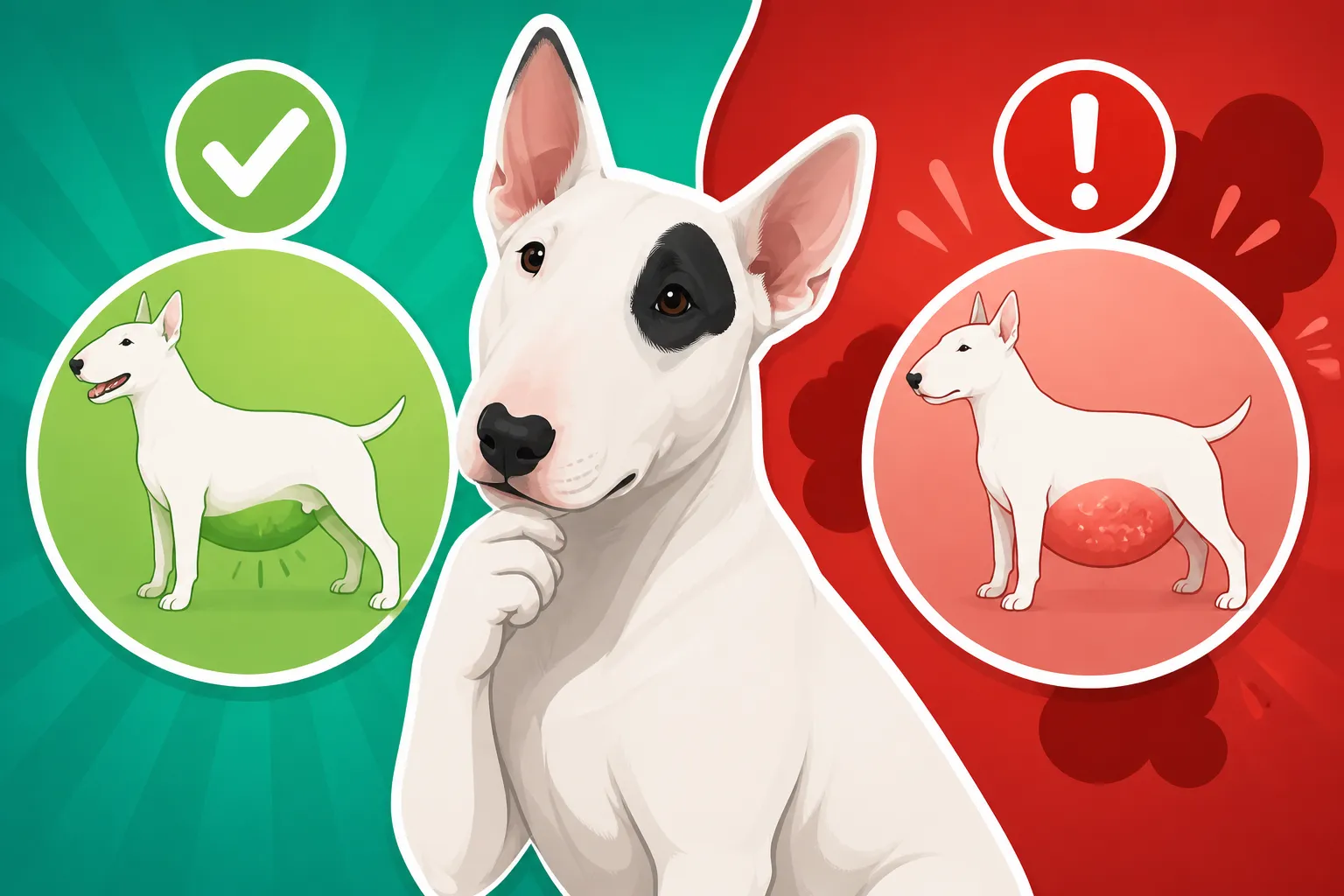
The most characteristic signs are a suddenly distended abdomen, often appearing taut like a drum, and non-productive retching. This means your dog is trying to vomit but nothing, or very little, is coming up. They might seem restless, pace, whine, or repeatedly look at their side. As the condition progresses, signs of shock will appear: pale gums, rapid heart rate, weak pulse, and difficulty breathing. Your Bull Terrier might become increasingly lethargic and eventually collapse. This isn't a situation for a Google search; it's a medical emergency that demands immediate action.
Key Symptoms to Watch For
The symptoms of bloat can escalate quickly, so an astute owner needs to be on the lookout for a combination of these signs:
- Distended or Swollen Abdomen: This is often the most visible sign. Your Bull Terrier's belly might look noticeably larger, tight, and hard to the touch, like a drum. This distension can appear rapidly.
- Non-Productive Retching: This is a classic symptom. Your dog will repeatedly try to vomit, heaving and straining, but little to no vomit (sometimes just foamy saliva) will come out. This indicates that the stomach is sealed off.
- Restlessness and Pacing: Your Bull Terrier might be unable to get comfortable, pacing, trying to lie down and immediately getting back up, or shifting positions constantly.
- Whining or Groaning: They may vocalize due to pain or discomfort.
- Drooling Excessively: Increased salivation can be a sign of nausea or distress.
- Looking at Their Side/Flank: Repeatedly turning their head to look at their abdomen, indicating pain in that area.
- Rapid, Shallow Breathing: Pressure on the diaphragm makes it difficult for them to take deep breaths.
- Weakness and Collapse: As shock sets in, your dog may become weak, stumble, and eventually collapse.
- Pale Gums: A sign of poor circulation and shock.
- Rapid Heartbeat and Weak Pulse: Also indicators of shock.
If you observe any combination of these symptoms, especially the distended abdomen and non-productive retching, assume the worst and act immediately.
What to Do in a Suspected Bloat Emergency
Time is absolutely critical if you suspect your Bull Terrier is bloating. Do not attempt any home remedies or "wait and see" if they improve. Bloat is a medical emergency that requires immediate professional intervention.
Here's a step-by-step guide on what to do:
- Call Your Vet or Emergency Animal Hospital IMMEDIATELY: This is the absolute first step. Explain your symptoms clearly and tell them you suspect GDV. They will advise you on the fastest route and prepare their staff for your arrival. Knowing where your nearest 24-hour emergency vet is located is something every pet owner should have memorized or clearly posted.
- Transport Your Dog Safely and Quickly: Get your Bull Terrier into the car and drive them to the veterinary clinic as fast as safely possible. Have someone else call ahead if you are driving alone. Keep your dog as calm and comfortable as possible, but do not delay.
- Provide Information Upon Arrival: Once at the clinic, calmly but clearly explain the onset of symptoms and anything you've observed. The veterinary team will typically perform a quick physical exam and an X-ray to confirm GDV.
- Prepare for Emergency Surgery: If GDV is confirmed, the vet will likely recommend emergency surgery. This involves decompressing the stomach, untwisting it, and often performing a gastropexy, which is a procedure where the stomach is surgically attached to the abdominal wall to prevent it from twisting again in the future.
The recovery from bloat surgery can be intensive and costly, involving IV fluids, pain management, and monitoring for complications like heart arrhythmias or stomach tissue damage. This is precisely where having robust pet insurance, such as Healthy Paws, can make a monumental difference. It alleviates the financial burden, allowing you to focus entirely on your Bull Terrier's recovery without added stress about the bill. Understanding the signs and acting swiftly can literally be the difference between life and death for your beloved companion.
Preventing Bloat: Practical Steps for Bull Terrier Owners
While bloat can be unpredictable, there are proactive measures Bull Terrier owners can take to minimize the risk. It's about creating a safe feeding and activity routine that considers their unique physiology and behavioral tendencies. Prevention is always better than cure, especially when the "cure" involves emergency surgery and a potentially long recovery. Incorporating these strategies into your daily life can give you immense peace of mind.
One major area of focus should be how your Bull Terrier eats. Fast eating and gulping air are known contributors to bloat. Consider using slow-feeder bowls or puzzle feeders to encourage them to eat at a more leisurely pace. Instead of one large meal, try feeding two or three smaller meals throughout the day. This reduces the amount of food and gas in the stomach at any one time, making it less likely to distend excessively. Also, ensuring that vigorous exercise is avoided around meal times is paramount. A good rule of thumb is to wait at least an hour before and after meals before engaging in any high-impact activities.
Modifying Eating Habits and Routine
Adjusting your Bull Terrier's eating routine is one of the most impactful ways to reduce bloat risk. Here are some strategies:
- Feed Multiple Small Meals: Instead of one or two large meals a day, consider breaking their daily food allowance into three or four smaller portions. This prevents the stomach from becoming overly full and distended at any single time.
- Use Slow Feeder Bowls: If your Bull Terrier tends to "inhale" their food, a slow feeder bowl can be a game-changer. These bowls have various ridges and obstacles that make it harder for your dog to gulp down food quickly, forcing them to eat more slowly and ingest less air. Brands like Outward Hound offer excellent slow feeder options that can really help to manage this issue.
- Avoid Elevated Bowls (Unless Medically Necessary): While traditionally recommended, some studies now suggest that elevated food bowls might actually increase the risk of bloat in large and giant breeds. Unless your Bull Terrier has a specific medical condition (like megaesophagus) that requires an elevated bowl, feeding them at ground level is generally safer.
- Limit Water Intake Around Meals: Don't restrict water entirely, but encourage your Bull Terrier to drink small amounts before and after meals rather than gulping down a large quantity immediately following food.
- No Exercise Before or After Meals: This is crucial. Wait at least one hour before and two hours after meals before engaging in any strenuous exercise, running, or rough play. This gives their stomach time to digest without excessive jostling.
- Manage Stress During Mealtimes: Ensure your Bull Terrier has a calm, quiet place to eat where they won't feel rushed or anxious. Stress can contribute to abnormal digestion and increase risk.
These simple adjustments to their daily routine, particularly around feeding, can make a significant difference in reducing the likelihood of a bloat episode.
Considering Prophylactic Gastropexy
For breeds at high risk of GDV, or for individual dogs with a family history of bloat, a prophylactic (preventative) gastropexy is often recommended. This surgical procedure involves surgically attaching the stomach to the abdominal wall, preventing it from twisting in the future. While it doesn't prevent the stomach from dilating (filling with gas), it eliminates the more dangerous "volvulus" component of GDV.
A gastropexy can often be performed at the same time as another elective surgery, such as spaying or neutering, reducing the need for separate anesthesia. Many vets now offer minimally invasive laparoscopic gastropexy, which involves smaller incisions and a quicker recovery time. While it is still surgery, the risks associated with a planned, prophylactic gastropexy are significantly lower than those of emergency GDV surgery. It's a decision that should be made in consultation with your veterinarian, weighing your Bull Terrier's individual risk factors, age, and overall health. For owners who are particularly anxious about bloat, or whose Bull Terrier might fall into a higher-risk category due to family history or specific behaviors, this preventative measure offers a powerful layer of protection and immense peace of mind. Remember, unforeseen medical expenses like this, whether for a planned procedure or an emergency, are precisely why having comprehensive pet insurance coverage can be a lifesaver.
| Risk Factor | Description | Prevention Strategy |
|---|---|---|
| Deep Chest Conformation | Common in many breeds, including Bull Terriers, provides space for stomach to twist. | Consider prophylactic gastropexy if advised by vet. |
| Fast Eating / Gulping Air | Dogs that eat too quickly often swallow excessive air, contributing to stomach distension. | Use slow feeder bowls or puzzle toys. |
| Large Meals | Feeding one or two very large meals can overfill the stomach. | Feed 2-3 smaller meals throughout the day. |
| Vigorous Exercise Around Meals | Running or playing intensely immediately before or after eating can cause the stomach to jostle and twist. | Restrict exercise 1 hour before and 2 hours after meals. |
| Stress/Anxiety | Heightened stress levels can sometimes contribute to digestive upset and bloat. | Provide a calm, consistent feeding environment. |
| Age | Older dogs tend to be at higher risk. | Maintain vigilance with age, yearly check-ups. |
| Genetic Predisposition | Family history of bloat can increase risk. | Discuss family history with breeder and vet; consider prophylactic gastropexy. |
The fear of bloat is very real for dog owners, but by understanding the risks specific to a Bull Terrier, recognizing the immediate signs, and implementing preventative strategies, you can greatly reduce the chances of facing this emergency. Staying informed and prepared is the best way to protect your unique companion.
Disclaimer
This article is intended for informational purposes only and does not constitute professional veterinary advice. Always consult with a qualified veterinarian for any health concerns or before making any decisions about your pet's health or treatment.