How Strong a Bull Terrier’s Prey Drive Is
Bull Terriers possess a strong prey drive rooted in 19th-century England, featuring searching, stalking, and chasing behaviors.
Work with the temperament you have.
House-training and crate work, recall, leash manners, separation anxiety, and the behaviors this breed is wired for.
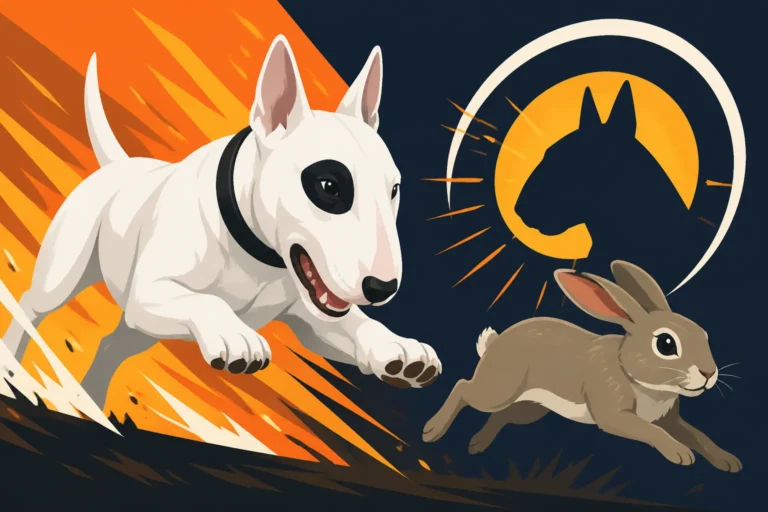
Bull Terriers possess a strong prey drive rooted in 19th-century England, featuring searching, stalking, and chasing behaviors.

Bull Terrier and cat coexistence requires understanding natural prey drive instincts, recognizing body language signs, and managing introductions safely.
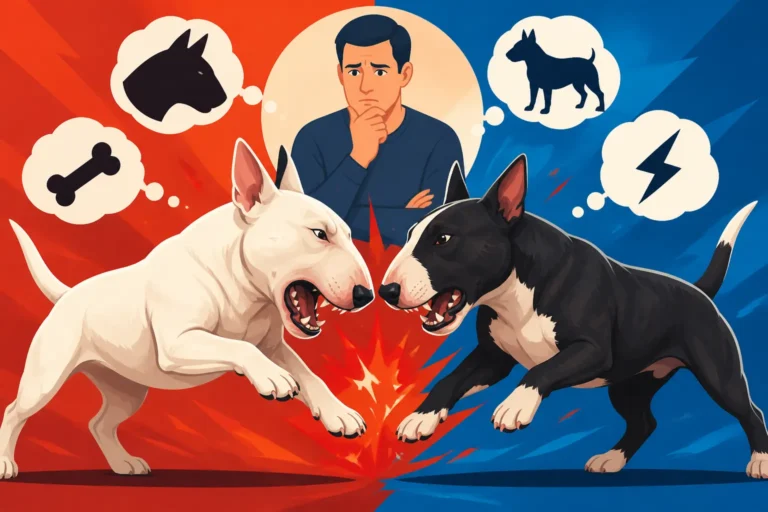
Same-sex Bull Terrier aggression stems from strong wills, dominant instincts, and low tolerance for other dogs competing for the same turf.

Bull Terrier social behavior and historical instincts explain why the breed prefers selective canine companionship over dog parks.
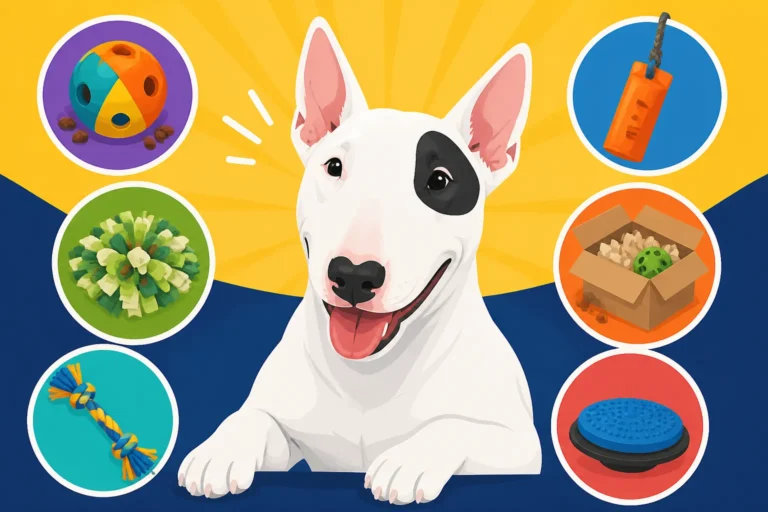
Bull Terrier spinning behavior and tail chasing stem from neurological factors, anxiety, or boredom requiring veterinary care and environmental enrichment.

Bull Terrier tail chasing is explained along with methods to interrupt the behavior and manage canine compulsive disorder.
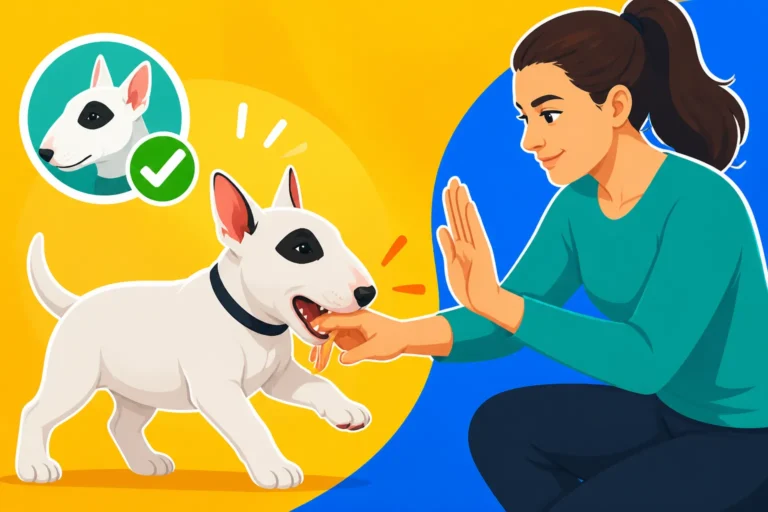
Bull Terrier puppy nipping behaviors explained with training methods to teach owners how to stop painful biting on hands and ankles.
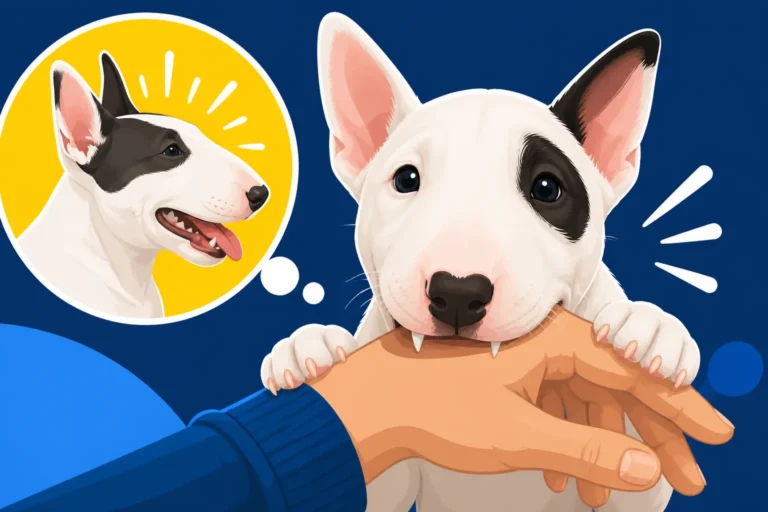
Bull Terrier puppy mouthiness and biting behavior stem from strong jaws and natural curiosity, requiring bite inhibition training.
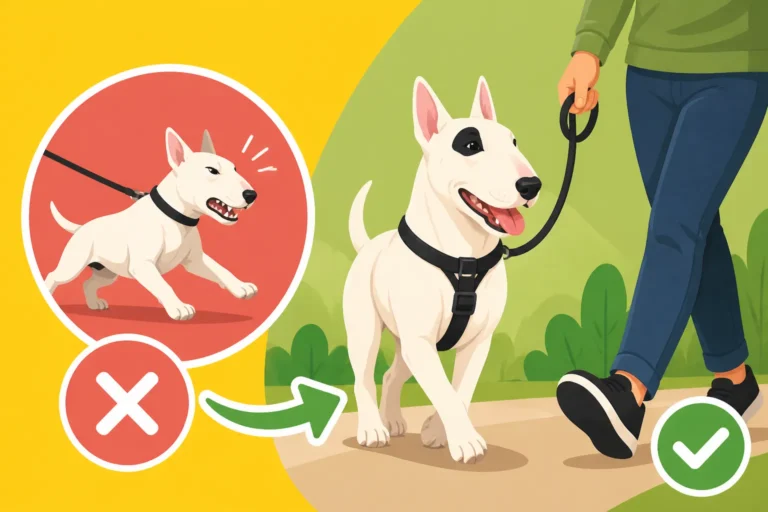
Bull Terrier leash training explains how strong, energetic dogs pull against pressure and how owners stop this behavior.
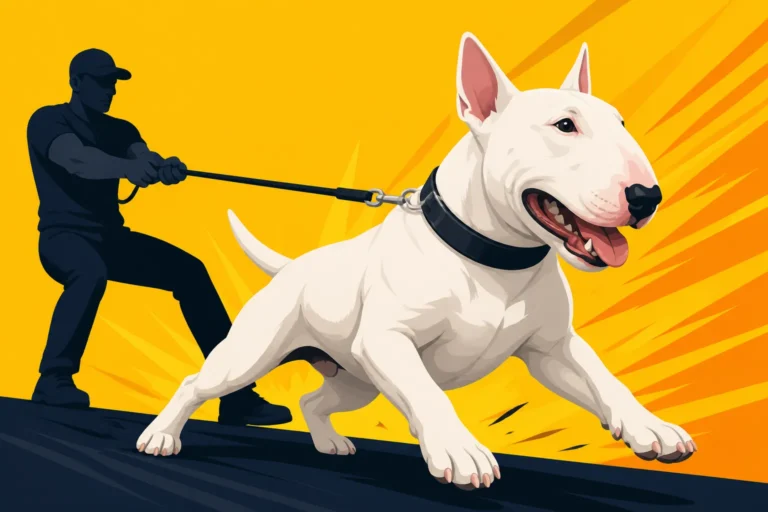
Bull Terrier leash strength stems from dense muscle, robust bone structure, and powerful hindquarters, creating major pulling challenges.