How to Teach a Child to Play With a Bull Terrier
Many Bull Terrier owners, especially those with young children, often grapple with the challenge of balancing their dog's exuberant, full-body play style with a child's delicate stature and developing understanding. It's a common worry that your beloved, powerful Bull Terrier might unintentionally be too rough, or that a child might inadvertently provoke a less-than-ideal interaction. This guide is here to walk you through establishing a safe, respectful, and joyful play dynamic between your Bull Terrier and the children in your life, ensuring harmony for everyone involved.
Understanding Your Bull Terrier's Unique Play Style
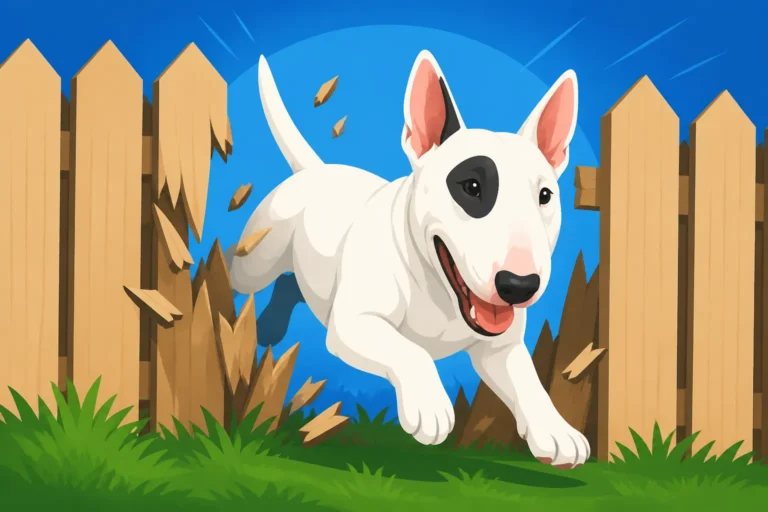
Bull Terriers are notorious for their larger-than-life personalities, their clownish antics, and their sheer physical enthusiasm. What might look like aggressive play in another breed is often just a Bull Terrier expressing joy, but that doesn't mean it's always appropriate for every family member, especially little ones. Their play is often full contact, full speed, and can easily involve body slams or forceful nudges.
The Power and Enthusiasm of the Bull Terrier
It's no secret that Bull Terriers are incredibly strong dogs, built with muscle and an unyielding will. When they play, they often use their entire body to express themselves. This can manifest as playful headbutts, leaning, or even those famous "body slams" that can send an adult stumbling. For a Bull Terrier, this is often a sign of affection and an invitation to engage, but for a small child, it can be intimidating, painful, or even dangerous. They don't always understand their own strength, particularly when they're caught up in the excitement of a game or a sudden burst of zoomies. This raw power is something all owners must acknowledge and manage, especially when children are present. How Easily a Bull Terrier Knocks You Over delves deeper into understanding their physical impact.
Why Bull Terriers Can Be "Too Much" for Little Ones
Children, especially toddlers and preschoolers, lack the size, coordination, and understanding to properly interact with a powerful, energetic dog like a Bull Terrier. Their movements can be unpredictable, they might shriek or run suddenly, and they often don't understand canine body language. A child might pull an ear, grab a tail, or try to ride the dog, all actions that could trigger an undesirable reaction from even the most tolerant Bull Terrier. The dog, in turn, might respond with a playful but overly forceful nudge, a wide-mouthed grab that nips, or simply by bowling the child over in an attempt to engage or escape. It's crucial to remember that what seems like rough play to us might just be a dog's natural instinct, not malice. We, as responsible adults, must bridge this communication gap and set the rules for both parties. How Much a Bull Terrier Tolerates From a Child explores the nuances of their patience levels.
Setting Up for Safe and Respectful Interactions
Creating a safe environment for children and Bull Terriers to interact isn't just about training the dog; it's equally about educating the children and establishing clear boundaries that everyone understands and respects. This proactive approach minimizes risks and fosters positive experiences.
Establishing Clear House Rules for Everyone
Before any interaction even begins, everyone in the household needs to be on the same page regarding rules. This means adults, older children, and even visitors must understand what is and isn't acceptable. Rules might include: no teasing the dog, no pulling ears or tails, no bothering the dog when it's eating or sleeping, and never taking the dog's toys or food. For the dog, rules might involve no jumping on people, no mouthing hands, and always waiting for permission before engaging in play. Consistency is absolutely key here; if a rule is enforced sometimes but not others, your Bull Terrier will get confused, and the children might too. Think of these rules as a framework for respect, a way for both species to understand each other's boundaries.
Creating Safe Spaces for Both Dog and Child
Just as children need their own space, your Bull Terrier needs a sanctuary where they can retreat and be undisturbed. This might be their crate, a specific bed in a quiet room, or a designated 'safe zone' that children are taught never to enter when the dog is there. This gives your Bull Terrier an invaluable "off switch" and a place to decompress, reducing stress and preventing potential conflicts. Similarly, children need their own dog-free zones, especially when they are playing with delicate toys or eating snacks. Baby gates can be incredibly useful for managing these boundaries and providing physical separation when direct supervision isn't possible, offering peace of mind. Consider setting up a sturdy, dog-proof playpen for toddlers if the dog is free-roaming in the house.
The Importance of Constant Adult Supervision
I cannot stress this enough: children and Bull Terriers should never, ever be left unsupervised together, even for a moment. This isn't a reflection on your dog's temperament or your child's behavior; it's a fundamental safety protocol. An adult needs to be actively present, observing, and ready to intervene instantly if needed. Active supervision means being fully engaged, not distracted by a phone or other tasks. It's about being able to read both your dog's subtle body language (a stiffening posture, a quick lick of the lips, a yawn indicating stress) and your child's actions (a sudden lunge, a high-pitched squeal) to prevent a situation from escalating. Think of yourself as the vigilant referee, ensuring fair play and immediate problem-solving. A Bull Terrier With Children covers more on managing these interactions.
Teaching Children How to Engage Appropriately
Empowering children with the knowledge and skills to interact safely and respectfully with your Bull Terrier is just as vital as training your dog. These lessons build a foundation of understanding and empathy that will benefit everyone in the household.
Gentle Hands and Quiet Voices
From a very young age, children can learn the concept of "gentle hands." This means no hitting, grabbing, pulling, or roughhousing with the dog. Practice with a stuffed animal first, demonstrating soft strokes and calm movements. Teach them to approach the dog slowly and offer a hand for sniffing before petting, perhaps under the chin or on the chest, rather than reaching over the head which can be perceived as threatening. Equally important is teaching them to use a "quiet voice" around the dog. Bull Terriers can be sensitive to loud noises and sudden shrieks, which might startle them or trigger an excited, over-the-top reaction. A calm, steady tone helps keep the environment relaxed and predictable for your canine companion.
Understanding Doggy Body Language
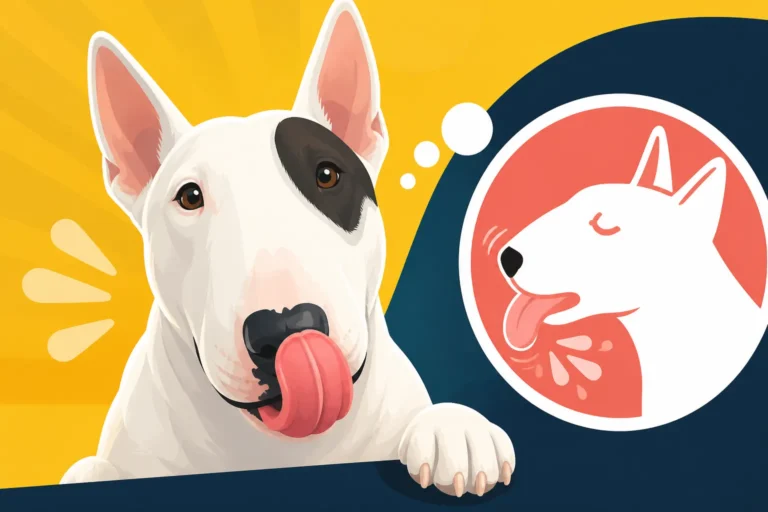
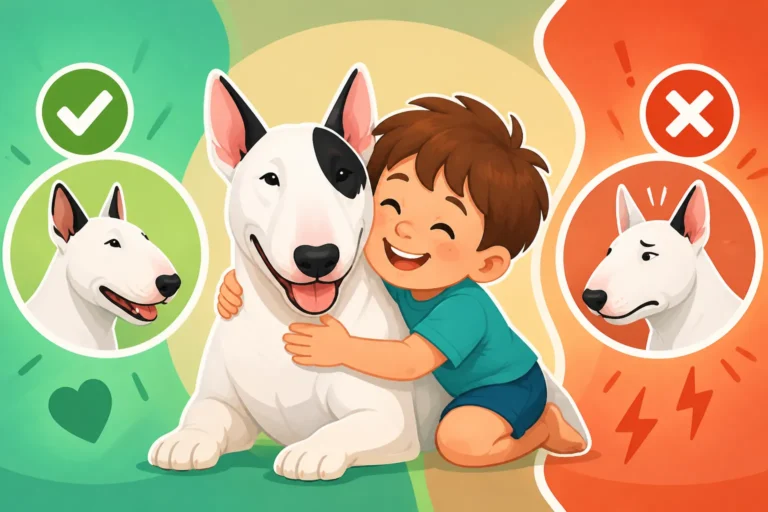
This is a big one, and honestly, many adults struggle with it too! Teach your children basic signs of when your Bull Terrier is happy, relaxed, or feeling uncomfortable. A wagging tail doesn't always mean happy; sometimes it can indicate agitation. Look for a relaxed body posture, soft eyes, and a loose tail wag for happiness. Teach them to recognize signs that the dog wants to be left alone: turning its head away, yawning, lip-licking, or even walking away. If the dog leaves, the interaction is over – that's a rule. Explain that if the dog ever seems uncomfortable, they should give it space and tell an adult immediately. Resources like online courses, such as those offered by BAXTER & Bella, often include modules on understanding canine body language that can be helpful for the whole family.
Interactive Play with Rules
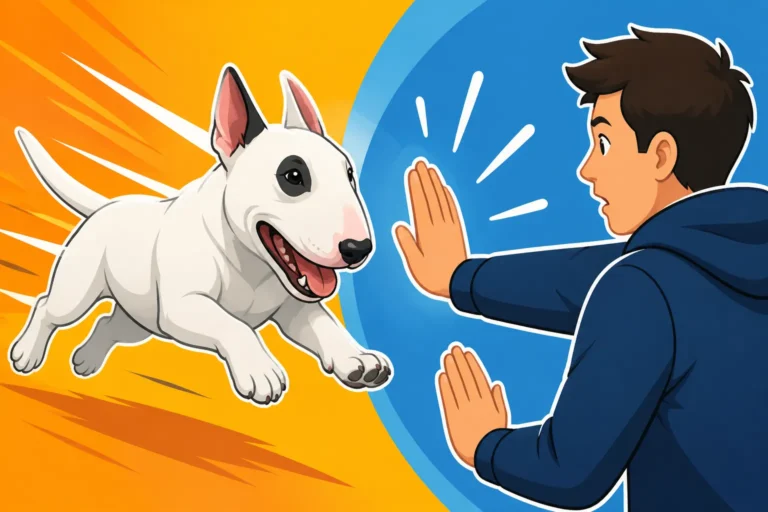
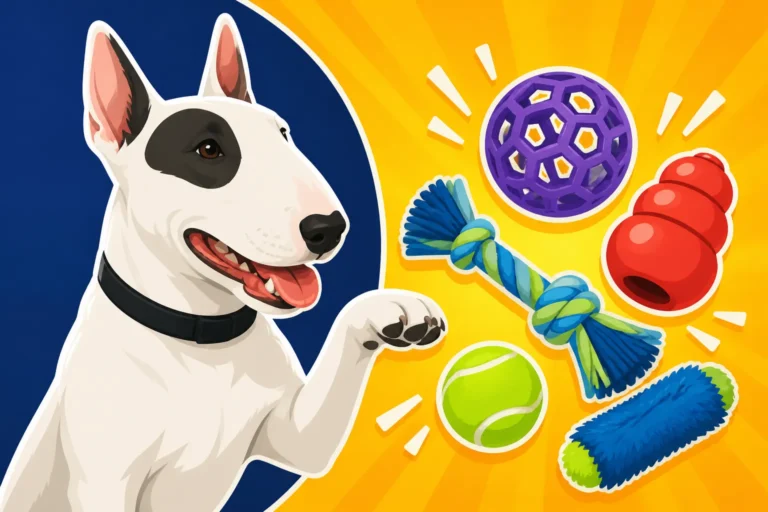
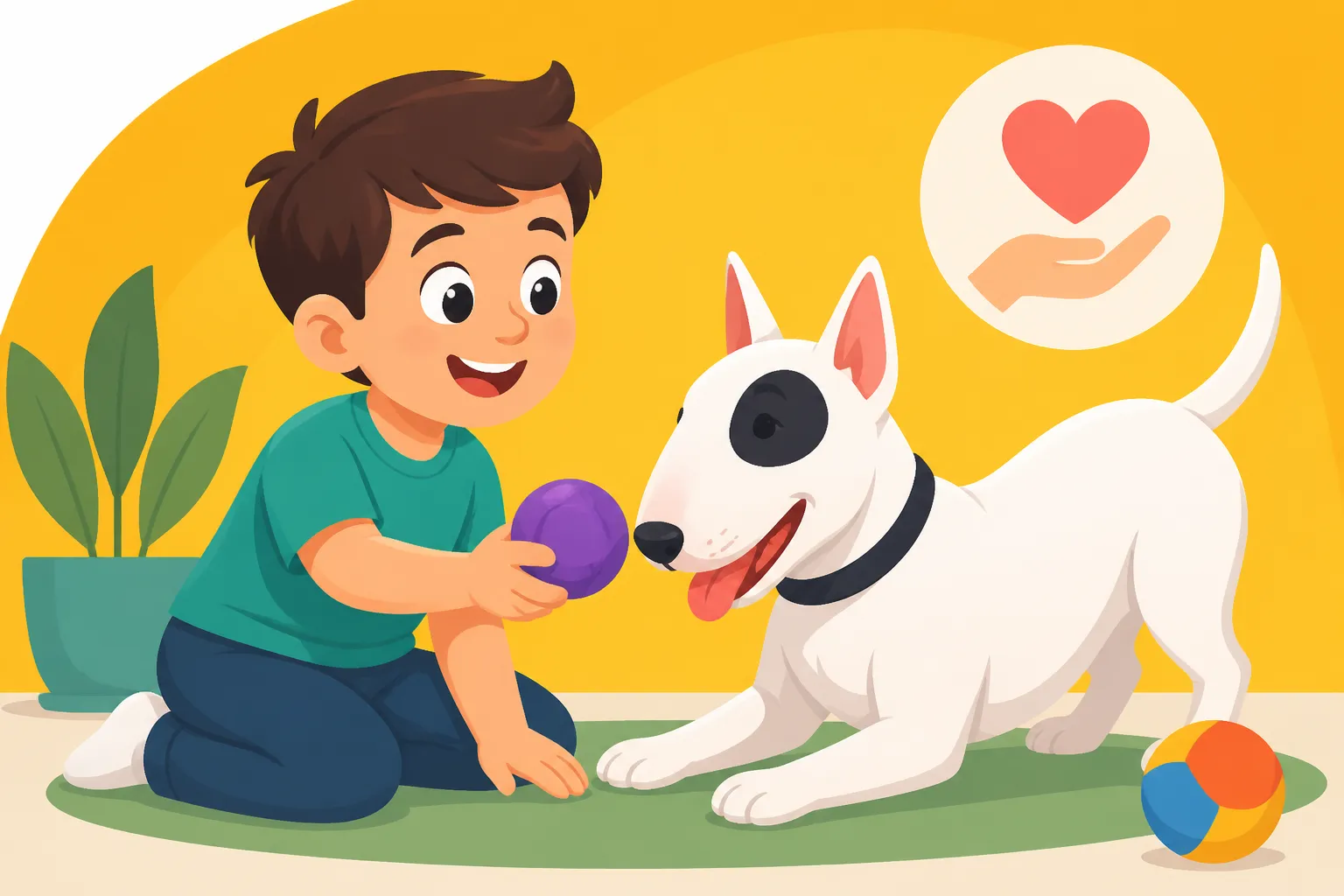
Once children understand gentle interaction and body language, introduce structured, supervised play. This means using toys, not hands, and playing games with clear rules. Fetch is fantastic because it keeps the child and dog at a safe distance. Tug-of-war can be okay, but only if the dog knows a reliable "drop it" command, and the child is taught never to let go of the toy near the dog's mouth. Emphasize that the game stops if the dog gets too excited or mouths the child. The child should be taught to "be a tree" (stand still, hands in pockets) if the dog jumps up. Always ensure toys are appropriate and durable; anything small or easily swallowed should be avoided. We often find a good selection of durable dog toys suitable for Bull Terriers on Amazon. Teaching a Bull Terrier to Play Gently offers more techniques for managing their boisterousness.
| Play Activity | Recommended for Child & Bull Terrier | To Be Avoided or Heavily Supervised |
|---|---|---|
| Fetch/Retrieve | Yes, using soft balls or durable retrieve toys. Teaches impulse control. | Throwing small objects that could be swallowed. |
| Tug-of-War | Yes, with a strong "drop it" command and adult present. Teaches boundaries and sharing. | Letting the dog win too often without a "drop it" release; allowing mouth contact with hands. |
| Hide and Seek (toy) | Yes, hide a favorite toy for the dog to find with the child's help. Encourages teamwork. | Hiding treats the dog might guard from the child. |
| Treat Puzzles | Yes, child can help load the puzzle. Engages mental stimulation, less physical. | Leaving child unsupervised with high-value treats and dog. |
| Chasing Games | No. Can escalate excitement and lead to accidental knocking over, especially with Bull Terriers. | Running from the dog, which triggers a chase instinct and can lead to jumping/nipping. |
| Wrestling/Rough Play | Absolutely not. Encourages physical contact that can easily become too intense or misinterpreted by the dog. | Any direct physical contact or play that involves hands. |
Guiding Your Bull Terrier Towards Gentle Play
While teaching children is paramount, guiding your Bull Terrier to understand appropriate play boundaries with young humans is equally critical. This involves consistent training and management strategies that reinforce calm and gentle behavior.
Training Essential Commands for Impulse Control
A well-trained Bull Terrier is a safer Bull Terrier, especially around children. Focus on commands that build impulse control: "sit," "stay," "down," "leave it," and "come." These are not just tricks; they are tools for managing your dog's excitement and ensuring their responsiveness in crucial moments. "Leave it" is invaluable if your dog becomes fixated on something inappropriate. "Come" is a safety net, allowing you to recall your dog from a situation. Practice these commands frequently, in short, positive sessions, especially in distracting environments. The goal is a dog that can quickly switch from excited play to a calm, compliant state when asked. Positive reinforcement is key here – reward calm behavior lavishly!
Interrupting and Redirecting Overly Enthusiastic Play
Bull Terriers, with their strong build and high energy, can easily get overstimulated during play. If you notice your Bull Terrier getting too rough, jumping, or becoming mouthy, it's essential to interrupt the behavior immediately. A firm "Oops!" or "Too bad!" followed by immediately stopping the play is effective. Then, redirect their energy to an appropriate outlet. This might mean giving them a robust chew toy, initiating a game of fetch with you, or sending them to their "place" command for a few minutes to calm down. The key is to teach them that rough play equals the end of fun, while gentle play earns rewards and continued interaction. Never use punishment, as this can create fear or anxiety, making them unpredictable around children. How to Redirect a Spinning Bull Terrier offers a similar approach to redirecting intense behaviors.
Rewarding Calm and Gentle Behavior
Catch your Bull Terrier being good! When your dog is calmly lying near a child, or gently takes a toy from a child's hand during a supervised game, offer immediate praise and a high-value treat. This positive reinforcement tells your dog, "Yes! That's exactly what I want you to do." Even if they are just resting quietly in the same room as the children, acknowledge and reward that calm presence. This builds a strong association between children and positive experiences, fostering a sense of comfort and security rather than overstimulation. Consistently rewarding calm behavior helps shape their overall demeanor around children, making them more thoughtful in their interactions.
Essential Safety Protocols and Ongoing Management
Even with the best training, vigilance remains the cornerstone of safe interactions between Bull Terriers and children. Ongoing management and continuous education are crucial for a harmonious household.
Maintaining Vigilance: Never Assume
The most critical safety protocol is simple: never become complacent. Even the most well-behaved Bull Terrier, trained from puppyhood, can have an off day, be startled, or misinterpret a child's action. A child, equally, can forget a rule in a moment of excitement. Always maintain your role as the primary supervisor. This means being physically present and actively engaged whenever children and your Bull Terrier are in the same space. Think of it as always having your hands on the steering wheel, even if the car is on cruise control. Regular refreshers on rules for both children and the dog are also a good idea, as habits can sometimes slip over time.
Teaching Children Respect for the Dog's Needs
Beyond just play, teach children to respect the dog's fundamental needs. This includes not disturbing the Bull Terrier when it's eating, sleeping, or enjoying a chew toy. These are times when a dog is most vulnerable or possessive, and interruptions can lead to growls or snaps, even from a normally tolerant dog. Teach children to ask an adult before approaching the dog, especially if it's resting. Explaining that the dog needs its quiet time, just like people do, can help children understand and empathize. This fosters a deeper, more reciprocal respect between them, turning the Bull Terrier from just a playmate into a valued family member with its own boundaries.
Long-Term Commitment to Training and Socialization
The work of integrating a Bull Terrier and children is not a one-time event; it's a long-term commitment. Continue to reinforce good behavior through consistent training. Enroll in obedience classes or consider online training programs. Continued socialization, exposing your Bull Terrier to a variety of sights, sounds, and experiences (always positive and controlled), helps them remain well-adjusted and confident. Remember, a Bull Terrier is an intelligent, powerful breed that thrives on mental stimulation and consistent guidance. By dedicating yourself to their ongoing training and by constantly educating your children on safe interaction, you'll ensure that the unique bond between your Bull Terrier and the children in your home can flourish safely and happily for years to come.
Disclaimer
This article is for general informational purposes only and does not constitute professional advice. Laws, prices and regulations vary by location and change over time. Consult a qualified professional for guidance on your specific situation.