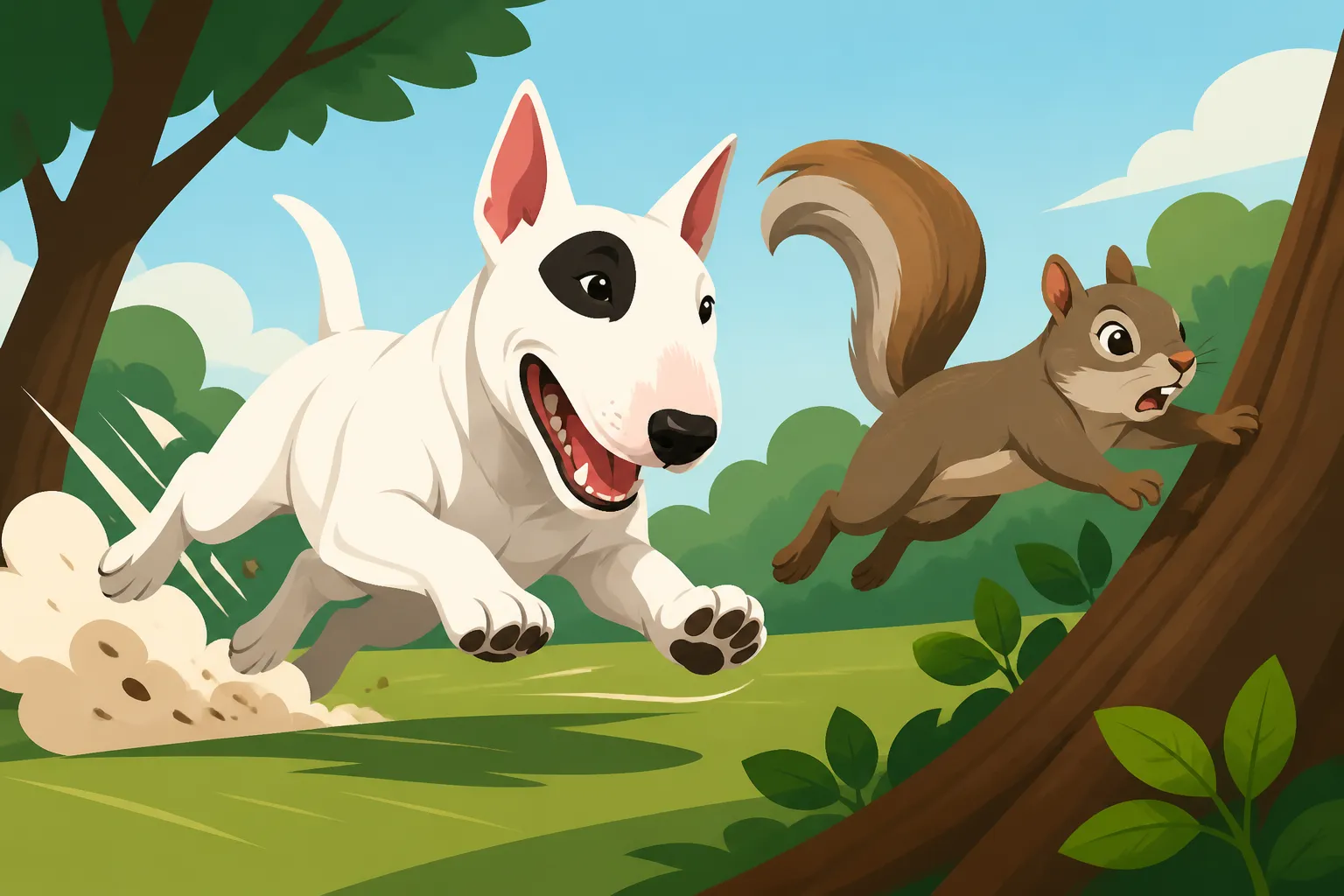
How Hard a Bull Terrier Chases Squirrels
Few things can shatter a peaceful walk like the sudden, explosive sight of a squirrel, sending your Bull Terrier into an immediate, laser-focused chase. That intense, often jarring lunge can leave you feeling like a human anchor, exasperated and wondering if your Bull Terrier will ever learn to just ignore the furry taunters of the backyard. This guide is here to shed light on why your Bull Terrier seems to possess an almost superhuman drive for these small, scampering creatures and, more importantly, how you can manage that instinct for a calmer, safer life for both of you.
The Deep-Seated Drive: Why Bull Terriers Chase Squirrels So Hard
It’s not just "naughty dog" behavior; your Bull Terrier's intense fixation on squirrels, rabbits, and other small, fast-moving critters is deeply wired into their very being. To truly understand why they chase with such ferocity, we need to look back at their origins and the inherent traits that make them unique. It’s a part of what makes them a Bull Terrier, even if it drives you absolutely wild on walks!
A Legacy of Grit: Understanding Their Origins
The Bull Terrier, as we know them today, emerged from a lineage of "bull and terrier" type dogs in 19th-century England. These ancestors were bred for strength, tenacity, and a fearless attitude in the pit, which eventually transitioned into vermin control and, for some, sporting challenges. While the modern Bull Terrier is a beloved companion, far removed from those harsh beginnings, the genetic blueprint remains. They were literally designed to pursue and capture small, fast-moving prey with incredible determination. This isn't just a casual interest; it's an ingrained behavioral pattern that has been selectively bred into their lineage for generations.
When your Bull Terrier locks onto a squirrel, that powerful surge of adrenaline and focus is an echo of their past. It’s an ancient hunting instinct that kicks in, overriding almost everything else in that moment. It's why they seem to lose all sense of hearing and sometimes even pain when they're in full pursuit. It’s not disobedience in the human sense; it’s instinct taking over. Understanding How Strong a Bull Terrier's Prey Drive Is gives you crucial insight into managing it. They aren't trying to be difficult; they are simply being Bull Terriers.
More Than Just a Game: The Intensity of the Bull Terrier Chase
For a Bull Terrier, a squirrel isn't just a fluffy nuisance; it's a target, a puzzle to be solved, and a primal urge to fulfill. The visual stimulus of something darting, coupled with the scent, can trigger an immediate and powerful response. This isn't just play for them, though it might appear that way. It's a hard-wired sequence of behaviors: searching, stalking, chasing, and, if given the opportunity, even catching. While most domesticated Bull Terriers aren't actually looking to eat the squirrel, the thrill of the chase itself is immensely rewarding to them.
This intensity also manifests in their physical capabilities. Bull Terriers are incredibly strong, agile, and surprisingly fast over short distances. When they launch themselves after a squirrel, they do so with their entire body, pulling with all their might. If you've ever been pulled off your feet or had your arm nearly dislocated, you know exactly what I mean. This isn't a dog that gives a half-hearted effort; a Bull Terrier commits fully to the chase. Their unique build, with that powerful, muscular frame, contributes to their formidable chasing ability. Understanding What a Bull Terrier's Temperament Is Really Like often helps owners anticipate these strong reactions.
Navigating the Urban Jungle: Managing the Chase Instinct
Given their profound prey drive, simply hoping your Bull Terrier will choose to ignore a squirrel is a recipe for frustration and potential danger. Effective management is paramount. This involves not only equipping yourself with the right tools but also being mindful of the environments you choose for your walks and playtime. Safety for your Bull Terrier and peace of mind for you are the goals.
Equipment That Makes a Difference
When you have a dog with a powerful prey drive, the right equipment isn't just about comfort; it's about control and safety. A standard flat collar, no matter how snug, is often insufficient against the sheer force of a Bull Terrier lunging after a squirrel. They can easily slip out, or the pressure can damage their throat. This is why many Bull Terrier owners turn to more secure options.
Front-clip harnesses are a popular choice because they redirect the dog's forward momentum back towards you when they pull, making it harder for them to drag you along. Brands like Ruffwear or Easy Walk often have models that many owners find effective. Another option is a head halter, which gives you more control over your dog's head, and thus, their direction. It takes some getting used to for the dog, but it can be incredibly effective for strong pullers. No matter what you choose, ensure it's durable and properly fitted. Checking reviews on platforms like Amazon can give you an idea of what other owners find robust enough for their strong dogs. When considering Which Harness Holds a Bull Terrier, prioritize escape-proof and sturdy designs. Why a Bull Terrier Pulls Toward Everything becomes very clear when you encounter a squirrel, and the right equipment is your first line of defense.
| Equipment Type | Pros | Cons | Best For |
|---|---|---|---|
| Flat Collar | Simple, common, good for ID tags. | Little control against strong pulling, risk of throat injury, easy to slip out. | Dogs with excellent leash manners, minimal prey drive, or for ID only. |
| Front-Clip Harness | Redirects pulling, less pressure on the throat, better control for lunging. | Can tangle legs if poorly fitted, some dogs still find ways to pull, might chafe. | Strong pullers, dogs with moderate to high prey drive, improved comfort. |
| Head Halter | Excellent control over the head and direction, prevents pulling and jumping. | Many dogs dislike it initially, requires careful introduction and positive association, can be seen as a muzzle. | Strongest pullers, dogs needing maximum control, managing reactivity. |
| Back-Clip Harness | Comfortable, good for light pullers, no throat pressure. | Can encourage pulling, less control than a front-clip, not ideal for strong lungers. | Dogs with mild leash manners, comfortable for everyday wear. |
Always pair any equipment with a strong, secure leash. A 6-foot standard leash is great for everyday walks, but a longer line (15-30 feet) can be invaluable for practicing recall in a safe, enclosed area, allowing your Bull Terrier to experience some freedom without the risk of an uncontrolled chase.
Environmental Control and Supervision
Management isn't just about what you put on your Bull Terrier; it's also about where you take them and the precautions you implement. If you know a particular park is teeming with squirrels at certain times of day, adjust your walking schedule. Early morning or late evening walks might offer fewer temptations. Fenced-in yards are crucial for Bull Terriers, but even then, supervision is key. These dogs can be surprisingly agile and determined diggers or jumpers if something on the other side of the fence sparks their interest. Always remember How a Bull Terrier Gets Out of a Fence if their prey drive is sufficiently engaged.
When out and about, be hyper-aware of your surroundings. Scan ahead for potential "prey." If you spot a squirrel before your Bull Terrier does, you have a split second to redirect their attention with a treat or a toy. This proactive approach can prevent the lunge before it even starts. Consider practicing "look at me" exercises in less stimulating environments first, gradually introducing more distractions. Never assume your Bull Terrier will be safe off-leash in an unfenced area, even if they have a decent recall. The instinct to chase is incredibly powerful, and it can override training in an instant when a high-value target like a squirrel appears. Whether a Bull Terrier Ever Earns Off Leash Freedom is a question many owners grapple with, and for those with a strong prey drive, the answer is often "rarely, and only in highly controlled environments."
Building a Reliable Response: Training to Counter Prey Drive
While managing the environment and using appropriate equipment are essential, training plays an equally vital role in helping your Bull Terrier develop better impulse control and a more reliable response when faced with tempting distractions like squirrels. This isn't about eliminating their natural drive entirely—that’s impossible—but about teaching them to choose you over the chase.
The Power of Positive Reinforcement and High-Value Rewards
Trying to scold or punish a Bull Terrier mid-chase is largely ineffective and can even be detrimental. They are already in a highly aroused state, and negative reinforcement can cause fear or anxiety, damaging your bond without actually addressing the underlying instinct. Instead, lean heavily on positive reinforcement. When your Bull Terrier chooses to ignore a squirrel, or even just looks at it and then back at you, that's a monumental victory worth celebrating with the highest-value rewards you can offer.
What constitutes a high-value reward for a Bull Terrier? It's not usually a dry biscuit. Think cooked chicken, cheese, hot dogs, or their absolute favorite squeaky toy. These rewards need to be so incredibly compelling that they can compete with the thrill of the chase. Practice these rewards in controlled environments first, gradually increasing distractions. Teaching a Bull Terrier to Sit and Stay can be a building block here, rewarding them for maintaining focus amidst minor distractions before moving to real-world squirrel encounters. Consistently rewarding desired behavior helps them associate not chasing with something wonderful coming from you.
Foundation Skills: Recall, Focus, and Impulse Control
A solid foundation of obedience is your best defense against the prey drive. A rock-solid recall, for instance, means that even if your Bull Terrier starts to fixate, you have a chance to call them back to safety. This takes immense dedication and practice. Start in a quiet, distraction-free environment, using that high-value reward every single time they come to you. Gradually introduce distractions. You can even use a long line in a secure area to practice recall, allowing them more space to test their boundaries while still having a safety net. Online training programs, like those offered by BAXTER & Bella, can provide structured lessons and support for building these crucial skills from puppyhood or for older dogs.
Focus exercises, where you teach your Bull Terrier to maintain eye contact with you despite distractions, are also invaluable. Start with "look at me" cues. When a squirrel appears, instead of yelling "no!", try your "look at me" cue and reward heavily if they even briefly shift their attention to you. Impulse control games, like "leave it" or waiting for food, can strengthen their ability to resist temptation. Consistency is the golden rule here. Every time you practice, you're reinforcing the idea that listening to you brings good things, even when a squirrel is doing its best to tempt them. How Reliable a Bull Terrier's Recall Is directly impacts your ability to manage their chase instinct.
Channeling Instincts Safely: Appropriate Outlets
Since you can't eliminate prey drive, the smartest approach is to give it a safe, acceptable outlet. This prevents boredom, which can often exacerbate unwanted behaviors, including excessive chasing. Engage your Bull Terrier in activities that tap into their natural inclinations in a controlled way. Flirt poles are fantastic for this; they allow your dog to chase and "catch" a lure on the end of a stick, mimicking the hunt sequence without involving actual wildlife. Just make sure the lure is durable, as Bull Terriers can be quite destructive!
Scent work or nose work games are another excellent way to engage their minds and natural instincts. Hiding treats around the house or yard and letting them sniff them out satisfies their hunting drive in a constructive manner. Puzzle toys, especially those from brands like Kong available on Amazon, can keep them mentally stimulated and occupied, reducing the likelihood they'll seek out their own, less desirable "fun." Even regular, structured exercise that involves varied environments can help. How Far a Bull Terrier Should Walk Before It Gets Silly can give you an idea of their energy levels and how much physical activity they need to feel satisfied. These activities not only burn off energy but also reinforce your bond and provide mental enrichment. Remember, What a Bull Terrier Does When It Is Bored can often involve destructive behaviors or an increased focus on chasing. Providing these outlets helps them be happier, healthier companions.
Disclaimer
This article is for general informational purposes only and does not constitute professional advice. Laws, prices and regulations vary by location and change over time. Consult a qualified professional for guidance on your specific situation.