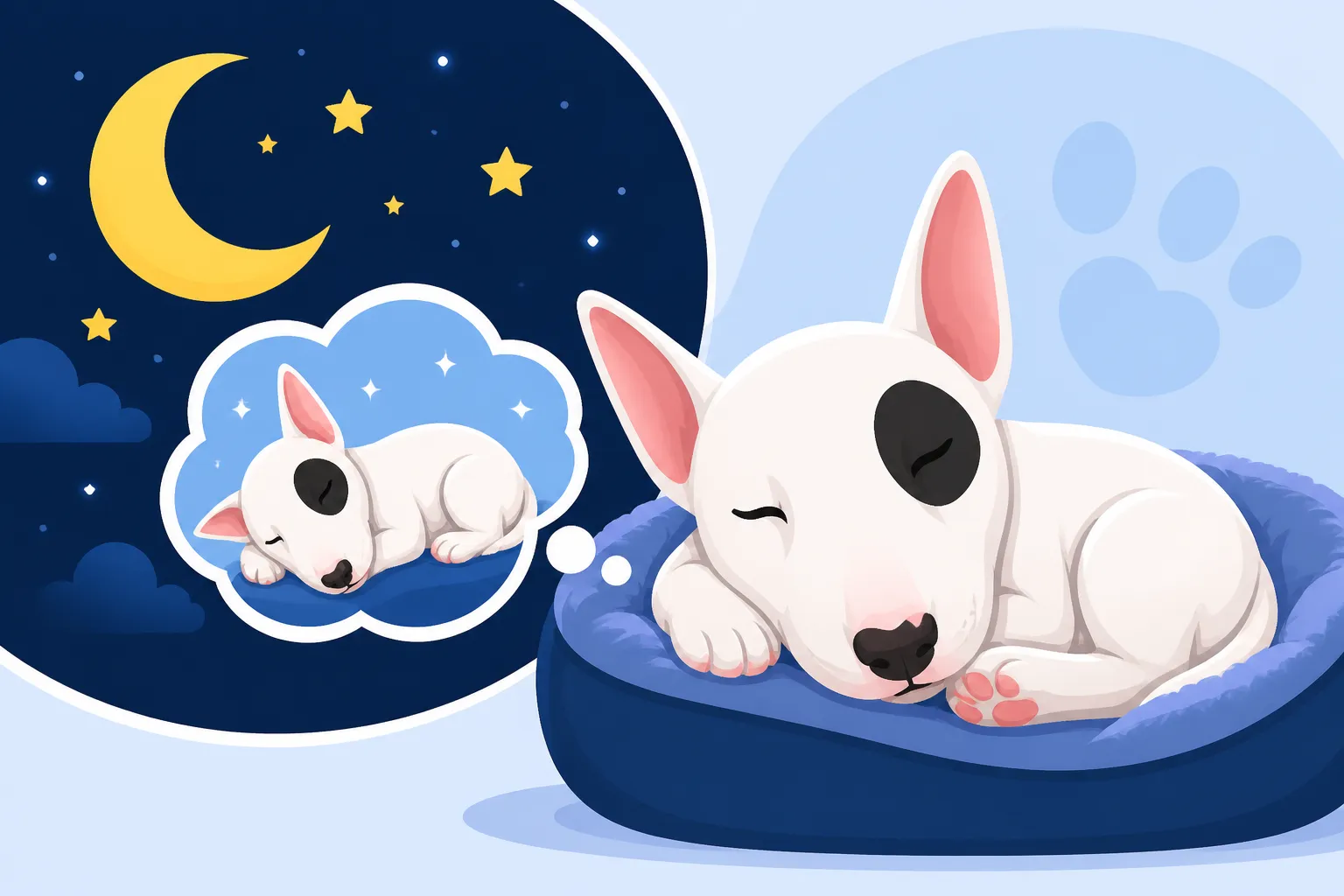
How Much Sleep a Bull Terrier Puppy Needs
Bringing home a Bull Terrier puppy is an absolute whirlwind of joy, mischief, and, let's be honest, a good dose of utter exhaustion for you. One of the biggest worries I hear from new owners is about their puppy’s seemingly erratic energy levels – one minute they're zooming, the next they've crashed, only to wake up still nipping like a tiny shark. It can leave you wondering if they're getting enough rest, or perhaps too much, or if their sleep patterns are just utterly broken. This guide is here to shed light on just how much sleep your Bull Terrier puppy truly needs and how to help them get it, so you can both enjoy those precious puppy months a little more peacefully.
Understanding Puppy Sleep Cycles: It's Not Just About Naps!
When you watch a Bull Terrier puppy, it often feels like they have two settings: "full throttle chaos" and "comatose." This isn't just a quirky breed trait; it's a fundamental aspect of puppy development. Just like human babies, puppies need an incredible amount of sleep, and for very similar reasons. It's during these extended periods of rest that their tiny bodies and rapidly developing brains do their most important work.
The Sheer Volume of Sleep a Bull Terrier Puppy Requires
Let's cut right to it: your Bull Terrier puppy needs a lot of sleep. We're talking somewhere in the neighborhood of 18 to 20 hours a day, sometimes even more during their youngest weeks. I know, that sounds astronomical when you're dealing with a little land shark who seems to have endless energy, but it's absolutely crucial. This isn't just about them being sleepy; it's about robust physical growth, cognitive development, and processing all the new, overwhelming information they encounter every single day. Think of it like a computer needing to "process" and "save" all the new data it's just taken in. Every sniff, every sound, every new face, every interaction – it all needs to be sorted and filed away, and sleep is the primary mechanism for that.
When a puppy doesn't get enough sleep, you don't typically see a subdued, yawning creature. What you often see is the exact opposite: an overtired, overstimulated, and often grumpy little beast. They might get the "zoomies" that last far too long, nip excessively, ignore commands they usually know, and generally act like they've had too much sugar. This isn't energy; it's a desperate plea for a nap. Recognizing this can be a game-changer for your sanity and your puppy's well-being.
The Active Versus Quiet Phases of Puppy Sleep
Just like us, dogs don't just "sleep" in one static state. They cycle through different stages of sleep, primarily REM (Rapid Eye Movement) and non-REM sleep. If you've ever watched your Bull Terrier puppy twitching their paws, whimpering softly, or even making little "woof" sounds while their eyes flutter under their eyelids, you're witnessing REM sleep – they're dreaming! This is often the most active and noticeable phase of their sleep.
Deep, non-REM sleep, on the other hand, is when their bodies truly relax and recover. It's during this phase that much of the physical and mental repair work happens. It's absolutely vital that these sleep periods are undisturbed. Resist the urge to wake a sleeping puppy, no matter how cute they are, or if you think it's time for a potty break. Interrupting deep sleep can prevent them from getting the full benefits of rest, leading to that overtired behavior later. Furthermore, uninterrupted sleep is crucial for a puppy to consolidate all the learning they’ve done throughout the day. Every short training session, every new command from a program like BAXTER & Bella, every positive interaction with the world – it all gets cemented into their memory during these quiet periods. Allowing them to snooze peacefully will actually help them learn faster and be better behaved when they are awake.
Creating the Perfect Sleep Environment for Your Bull Terrier Puppy
Getting a Bull Terrier puppy to sleep isn't always as simple as just putting them down. They thrive on routine, security, and knowing what to expect. A well-designed sleep environment and a consistent bedtime ritual can make all the difference in ensuring they get the deep, restorative sleep they need.
The Importance of a Designated, Safe Sleep Space
A secure and comfortable den is paramount for a Bull Terrier puppy's sleep. For most owners, this means a crate. And not just any crate – remember, Bull Terriers are strong and can be quite destructive if they put their mind to it, especially when bored or frustrated. A sturdy, appropriately sized crate provides a safe, personal space that your puppy can associate with calm and rest. It prevents them from wandering off and getting into trouble (or having an accident) when you're not actively supervising them.
Initially, your puppy might not love the crate. That's totally normal! The key is to introduce it positively, never using it for punishment. Make it comfortable with a soft, chew-resistant bed or blanket. You might even find some excellent, durable options on Amazon that stand up to their powerful jaws. The crate shouldn't be too big, as that can encourage them to use one end as a potty area. Just enough room to stand up, turn around, and lie down comfortably is perfect.
Location matters too. While you might want the crate in your bedroom for the first few nights to help with separation anxiety and make nighttime potty breaks easier, eventually, a quieter spot, perhaps a corner of the living room or a designated puppy room, can work well. It needs to be a place where they won't be constantly disturbed by foot traffic or loud noises, but also not so isolated that they feel completely cut off from the family. They're social creatures, and while they need alone time, they shouldn't feel abandoned. Whether a Crate Helps a Bull Terrier Left Alone explores this topic in more detail.
Establishing a Consistent Bedtime Routine
Dogs are creatures of habit, and Bull Terriers especially appreciate predictability, even if they occasionally try to test the boundaries. A consistent bedtime routine is your secret weapon for promoting good sleep habits. It signals to your puppy that the day is winding down and it's time to prepare for rest.
Here’s a typical routine that works wonders:
- Last Potty Break: About 15-20 minutes before "lights out," take your puppy out for a final opportunity to relieve themselves. Make it a calm, no-play potty break.
- Quiet Play/Wind Down: Avoid vigorous play right before bed. Instead, engage in some gentle petting, a short cuddle, or a quiet chew toy session. This helps lower their energy levels.
- Last Drink of Water: Offer water, then pick it up about 30 minutes before bed to reduce the chances of a nighttime accident.
- Into the Crate: Guide them into their crate with a soft command and a small, high-value treat. Cover the crate with a blanket if it helps create a darker, den-like atmosphere.
- Lights Out/Quiet Time: Dim the lights and minimize noise. Some owners find a white noise machine or a quiet fan can help drown out household sounds.
Sticking to this routine religiously, even on weekends, will create a powerful association between these actions and going to sleep. Your puppy will learn to anticipate bedtime and naturally start to wind down.
Managing Nighttime Potty Breaks
Ah, the dreaded nighttime potty break. It’s a necessary evil with a young Bull Terrier puppy, and finding the right balance between letting them sleep and preventing accidents is key. For very young puppies (8-12 weeks), you might need to take them out every 2-3 hours. Yes, it's disruptive, but it's temporary and crucial for successful house training.
The trick is to make these breaks as boring as possible. Don't engage in play, don't turn on all the lights, and don't make a big fuss. Simply take them out on a leash, let them do their business, offer quiet praise, and immediately return them to their crate. No lingering, no exciting conversation. The goal is to reinforce that nighttime is for sleeping and potty, nothing else. As your puppy gets older, their bladder control will improve, and you can gradually extend the time between breaks. By 4-5 months, many puppies can make it 6-7 hours, and by 6 months, often through the night. Consistency with How Quickly a Bull Terrier Puppy Learns the Door regarding potty training will translate directly to better nighttime sleep for everyone.
Common Sleep Challenges and How to Address Them
Even with the best intentions and a solid routine, Bull Terrier puppies can present sleep challenges. Their energetic and sometimes stubborn nature can make it feel like an uphill battle. But understanding why these challenges arise is the first step to overcoming them.
When Your Bull Terrier Puppy Fights Sleep (and What It Looks Like)
This is a scenario many new Bull Terrier owners know all too well. You expect a tired puppy to curl up and snooze, but instead, you get a bundle of seemingly boundless, chaotic energy. They might be zooming around the house at warp speed, play-biting harder than usual, barking at nothing, or seemingly unable to settle down for even a second. It's easy to mistake this for them simply having "too much energy" or being a "naughty puppy." But more often than not, this is a classic sign of overtiredness.
Just like a human toddler who becomes hyper and throws tantrums when they're exhausted, an overtired Bull Terrier puppy gets a second wind. Their bodies release cortisol, a stress hormone, which makes them wired rather than tired. They need to sleep, but their system is fighting it. It’s incredibly frustrating for owners because you’re trying to calm them down, but they seem to be actively resisting every attempt.
The solution here often involves enforcing naps. If your puppy is showing these signs, don't wait for them to crash. Gently guide them to their crate or designated quiet space. Some puppies might protest for a few minutes, but often, once they realize there's no more fun to be had, they'll settle and fall into a much-needed deep sleep. Think of these "forced naps" as essential health breaks, not punishments. It's during these moments that you might witness Whether Overtiredness Triggers Bull Terrier Spinning, as the stress and inability to self-regulate can sometimes trigger compulsive behaviors in susceptible individuals.
The Role of Daytime Activity in Nighttime Rest
It might seem counterintuitive, but the way your Bull Terrier puppy spends their waking hours directly impacts the quality and quantity of their sleep. Too much overstimulation without adequate rest, or too little appropriate activity, can both lead to sleep problems.
-
Appropriate Exercise: While Bull Terriers are active dogs, especially as puppies, you need to be mindful of over-exercising a young pup. Too much high-impact activity can be detrimental to their developing joints and can actually lead to overstimulation rather than a calm tiredness. Short, frequent play sessions, walks appropriate for their age, and opportunities for sniffing and exploring are far better than one long, intense burst of activity. As a general rule, limit structured exercise to about 5 minutes per month of age, twice a day (e.g., a 3-month-old gets 15 minutes, twice a day). How Much a Bull Terrier Puppy Should Exercise covers this in more detail.
-
Mental Stimulation: This is often overlooked but profoundly important for a Bull Terrier. These are smart, thinking dogs, and their brains need a workout just as much as their bodies. Mental exhaustion can be far more effective than physical exhaustion in promoting good sleep. Puzzle toys, short training sessions, scent games, and even just observing the world from a safe vantage point can be incredibly tiring. Look for resources like BAXTER & Bella that offer online puppy training, as structured mental tasks can really help channel their energy productively during the day, leading to calmer nights. A tired mind often leads to a sleepy pup.
-
Balance of Activity and Rest: The ideal day for a Bull Terrier puppy involves a healthy mix: wake up, potty, eat, short play/training, potty, nap. Repeat this cycle throughout the day. Don't let them go too long without a nap, even if they seem to be having fun. Prevent the "zoomies before bedtime" by ensuring they've had sufficient naps throughout the day. A bored puppy who doesn't nap enough is often the one who becomes a destructive, sleep-fighting monster come evening.
Ensuring Quality Sleep with Proper Diet and Health Checks
What goes into your Bull Terrier puppy's body, and their general health, can significantly impact their ability to sleep soundly. A proper diet provides the consistent energy their growing bodies need, without the sugar crashes or digestive upsets that can disrupt sleep.
Ensuring your puppy is on a high-quality puppy food, appropriate for their breed size, is fundamental. Avoid cheap fillers and excessive treats, especially sugary ones, which can cause hyperactivity. Just like a human kid after too much candy, a puppy on a bad diet can experience energy spikes and crashes that make settling down difficult. What a Bull Terrier Puppy Eats at Four Months and How Many Pounds of Food a Bull Terrier Eats a Month give good guidelines for feeding. If you're ever worried about stomach upset or unusual eating habits, it’s always best to consult your vet.
Beyond diet, underlying health issues can definitely interfere with a puppy's sleep. Pain, discomfort, parasites, or even developing health conditions can make it difficult for them to get comfortable and achieve deep sleep. For instance, a puppy with an upset tummy or a skin irritation might wake frequently or struggle to settle. Regular vet check-ups are important for catching any potential issues early. How a Bull Terrier Hides Pain is a great article to read, as Bull Terriers can be stoic and might not show obvious signs of discomfort. If your puppy suddenly changes their sleep patterns, becomes restless, or seems unable to get comfortable, a vet visit is always warranted. Your vet can rule out anything from worms to minor injuries, ensuring your puppy is healthy enough to rest peacefully. How Often a Bull Terrier Needs a Wellness Exam is an important guide for all Bull Terrier owners.
Age-Related Sleep Changes in Your Bull Terrier Puppy
Just like humans, a Bull Terrier puppy's sleep needs evolve as they grow. What's normal for an 8-week-old will be vastly different for a 6-month-old or a nearly adult dog. Understanding these changes helps you set realistic expectations and adjust your routines accordingly.
Sleep Needs from 8 Weeks to 6 Months
This is the period of most intense growth and development, and consequently, the period of the highest sleep requirement. When your Bull Terrier puppy first comes home, usually around 8 weeks old, they will be sleeping approximately 18-20 hours a day. These sleep sessions will often be broken up into many short naps throughout the day, interspersed with bursts of frantic activity. Nighttime sleep might be 6-8 hours initially, with a couple of potty breaks woven in.
As they move towards 3-4 months, their naps might become slightly less frequent but often longer. They'll gain a bit more bladder control, so nighttime potty breaks will reduce. You might find them sleeping a solid 4-5 hours at night before needing a break. This is a critical time for solidifying their crate training and bedtime routines, as it lays the groundwork for future good habits. Remember, during these rapid growth phases, their bodies are working overtime, and rest is their best ally. It's around When a Bull Terrier Puppy Moves to Adult Food that their growth rate starts to slow a little, but the need for quality rest remains paramount.
Sleep Patterns from 6 Months to a Year (Adolescence)
Welcome to the "teenage" phase of your Bull Terrier's life! While they're still very much puppies, their sleep needs will gradually decrease from the peak puppy hours. By 6 months, a Bull Terrier might be sleeping closer to 16-18 hours a day. The naps might be fewer, but still necessary. They'll likely be able to sleep through the night without a potty break, provided they've had a proper routine and a last chance to go outside.
However, this adolescent period can also bring new challenges. Just like human teenagers, they might test boundaries, including around sleep. They might be more resistant to naps, want to stay up later, or seem to have an endless supply of energy that makes settling down difficult. This is when consistency with their routine becomes even more important. Don't let them "decide" when they're too tired for a nap; gently enforce quiet time. Their bodies are still developing rapidly, and their brains are going through significant changes in cognition and impulse control. Adequate sleep helps them cope with these developmental leaps and helps manage the often-unpredictable adolescent behaviors. Continue to provide a balance of mental and physical stimulation during their waking hours, ensuring they're healthily tired by bedtime, not overstimulated and wired.
Sleep Needs by Age: A Quick Guide
To give you a clearer picture, here's a general guideline for how much sleep your Bull Terrier puppy might need at different stages:
| Age Range | Total Daily Sleep (Approx.) | Nighttime Sleep (Approx.) | Daytime Naps (Approx.) | Common Behavior if Overtired |
|---|---|---|---|---|
| 8-12 Weeks | 18-20+ hours | 6-8 hours (2-3 potty breaks) | Many short, frequent naps | Excessive nipping, zoomies, whining |
| 3-6 Months | 16-18 hours | 6-10 hours (1-2 potty breaks) | Fewer, longer naps | Hyperactivity, stubbornness, "wired" |
| 6 Months – 1 Year | 14-16 hours | 8-10 hours (through night) | 1-2 longer naps, rest breaks | Resistance to settling, destructive |
| Adult (1 Year +) | 12-14 hours | 8-10 hours (through night) | Occasional naps | Lethargy, grumpiness, easily stressed |
Remember, these are averages, and every Bull Terrier is an individual. Pay attention to your puppy's cues, and you'll soon learn what their personal sleep rhythm looks like. A well-rested Bull Terrier puppy is a happier, healthier, and much more manageable companion!
Disclaimer
This article is for general informational purposes only and does not constitute professional advice. Laws, prices and regulations vary by location and change over time. Consult a qualified professional for guidance on your specific situation.