What Sets Off a Bull Terrier’s Spinning
The sight of your Bull Terrier suddenly dropping into a low crouch, fixing intently on their tail, and then launching into a frantic, dizzying spin can be incredibly alarming and frankly, quite heartbreaking. It’s a behavior that leaves many owners feeling confused, frustrated, and deeply worried about their beloved companion. This comprehensive guide is here to shed light on the often complex triggers behind a Bull Terrier's spinning, helping you understand why your dog engages in this peculiar and sometimes obsessive behavior so you can better support them.
The Genetic Underpinnings and First Signs of Spinning
It’s easy to dismiss a dog’s quirky behaviors as just part of their personality, but with Bull Terriers and spinning, there's often something deeper at play. This isn't just a playful chase; it's a profound, sometimes compulsive, pattern of behavior that can be very hard for owners to manage. Understanding that a significant part of this stems from their genetic makeup is the first step in addressing it without self-blame.
The Inherited Component of Spinning
Many Bull Terrier owners are surprised, and often relieved, to learn that spinning, or obsessive tail-chasing, isn't always a sign of poor training or a troubled home environment. For our beloved "egg-heads," there's a strong genetic predisposition at play. This isn't to say environmental factors don't influence its expression, but the groundwork is often laid long before they even arrive in your home. It’s like certain breeds are prone to hip dysplasia or heart conditions; Bull Terriers, sadly, can be predisposed to this specific compulsive behavior. The frustration is real when you see your puppy, seemingly out of nowhere, start this intense, focused pursuit of their own tail, knowing it could be an uphill battle. It’s a common question among owners Whether Bull Terrier Spinning Is Inherited, and the answer is a resounding yes, it very much can be. This inherited component suggests a neurological basis, making it distinct from a simple game of chase.
When and How Spinning Typically Starts
Spinning often doesn't appear overnight. It usually begins subtly and then escalates in intensity and frequency. You might first notice your Bull Terrier puppy, typically between 6 months and 2 years of age, giving a quick, intense snap at their tail, or chasing it for a few rotations before stopping. These early episodes might seem playful, almost comical. You might even laugh, which, as we’ll discuss later, can inadvertently reinforce the behavior. However, as they mature, these episodes can become longer, more focused, and much harder to interrupt. The dog seems utterly consumed by the act, oblivious to their surroundings or your attempts to get their attention. This progression can be quite distressing to witness, as your once happy-go-lucky pup transforms into a spinning dervish. You might find yourself constantly wondering The Age Bull Terrier Tail Chasing Starts, and for many, it begins right as they are entering adolescence, a time when many other behavioral challenges also tend to surface.
Environmental and Emotional Triggers
While genetics provide the predisposition, the environment and your Bull Terrier's emotional state are critical in determining when and how often the spinning manifests. Think of it as a pressure cooker: the genetics are the pot, but the environment builds the steam.
Boredom and Lack of Mental Stimulation
Bull Terriers are intelligent, energetic dogs with a surprisingly low tolerance for boredom. They aren't content to simply exist; they crave interaction, mental challenges, and physical outlets. When these needs aren't met, their sharp minds can turn inwards, seeking an outlet for their pent-up energy and creativity. This is where spinning can tragically become a self-stimulating coping mechanism. Imagine a Bull Terrier left alone in a yard for hours with nothing to do but watch the grass grow, or confined to a crate without engaging toys or regular breaks. The mind, starved for input, can start to create its own "entertainment."
For example, I once knew an owner whose Bull Terrier, Bruno, would start spinning relentlessly every afternoon precisely an hour after she left for work. It wasn't separation anxiety, as he didn't chew or bark; it was pure, unadulterated boredom that triggered his genetic predisposition. He had literally nothing else to do. This is a classic scenario illustrating What a Bull Terrier Does When It Is Bored. Providing enriching activities is paramount. Consider puzzle toys from places like Amazon, where you can find a vast array of options that challenge their minds and keep them engaged. From treat-dispensing balls to complicated feeders, these can significantly reduce the internal pressure that leads to compulsive behaviors.
Stress, Anxiety, and Over-Excitement
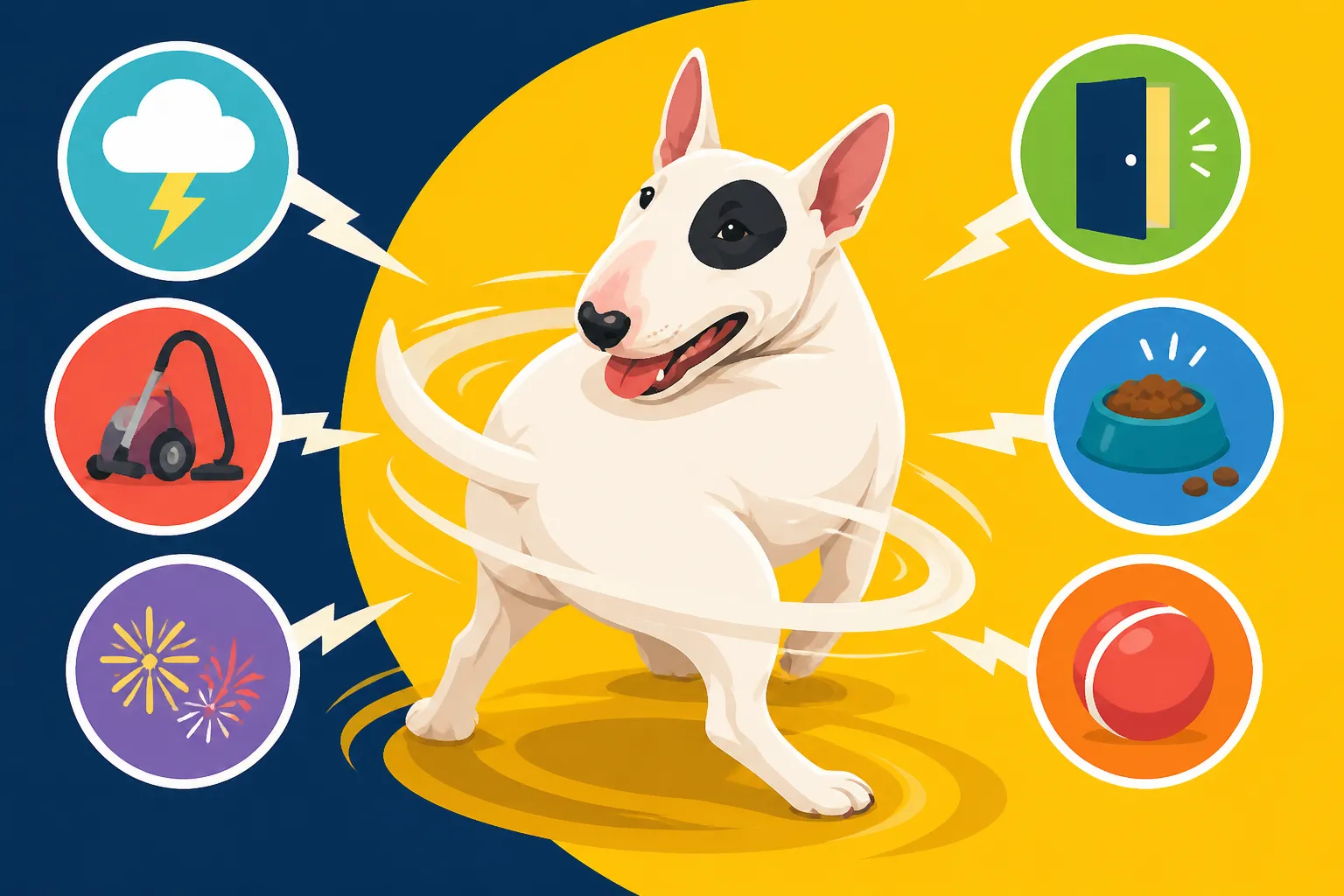
Just as boredom can trigger spinning, so too can heightened emotional states like stress, anxiety, or even extreme over-excitement. Bull Terriers, for all their tough exterior, can be surprisingly sensitive souls. A sudden change in routine, a new person in the house, a loud argument, or even the sheer anticipation of a walk can push some Bull Terriers past their emotional threshold, leading to a spinning episode.
Consider the scenario of a Bull Terrier that gets incredibly wound up before a walk. The owner is fumbling with the leash, the dog is bouncing off the walls, and then, spin. It's almost as if their system is so overloaded with anticipation that it short-circuits into this compulsive behavior. The same can happen in stressful situations, like a vet visit or a crowded public place. The Bull Terrier might be trying to cope with the overwhelming sensory input or internal discomfort by resorting to spinning. It's their way of discharging that emotional energy when they lack other coping mechanisms. Recognizing Overtiredness Triggers Bull Terrier Spinning is also critical here; a puppy that hasn't had enough restful sleep can become cranky and overstimulated, making them more prone to a spinning outburst.
Frustration and Conflict
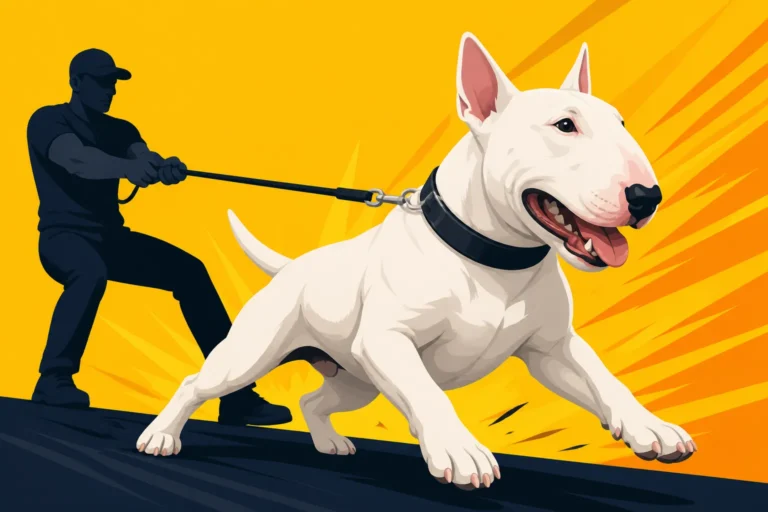
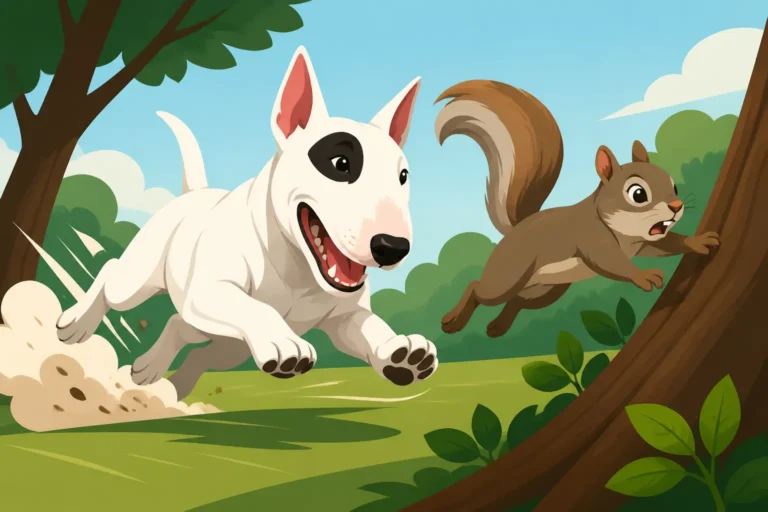
Bull Terriers are known for their stubborn streak and their strong desires. When they want something, they really want it. When they are prevented from achieving a goal, whether it's chasing a squirrel, greeting another dog, or getting to a favored toy, that frustration can boil over. This internal conflict, the desire versus the inability to act, can manifest as spinning. It’s a displacement behavior, a way for the dog to vent that intense emotional energy.
Imagine your Bull Terrier on a leash, seeing a cat across the street. Their prey drive kicks in, they lunge, they pull, but the leash holds them back. The inability to fulfill that instinctual urge can become so overwhelming that they might suddenly turn and start spinning in place, seemingly attacking their own tail in a fit of displaced energy. Similarly, during training, if a Bull Terrier feels confused or pressured, they might revert to spinning as a way to "check out" of the situation. This is where clear, consistent training and positive reinforcement are so vital. If you find your Bull Terrier spinning out of frustration, knowing How to Redirect a Spinning Bull Terrier can be a lifesaver, providing them with an alternative, acceptable outlet for that energy.
Sensory and Physical Stimuli
Beyond their internal state, external factors that engage a Bull Terrier's senses can also serve as powerful triggers for spinning. Their keen perceptions and intense focus mean that certain sights, and sometimes sounds or even smells, can spark a spinning frenzy.
Visual Triggers and Movement
Bull Terriers have an incredibly intense gaze and are often highly attuned to movement. This makes them particularly susceptible to visual triggers. The flicker of a shadow, the reflection of light off a shiny surface, or the quick dart of a small object can instantly capture their attention and set off a spinning episode. It’s almost as if their eyes latch onto something, and their brain tells them, "Chase!" even if there's nothing tangible to pursue.
Think about sunlight reflecting off a watch face, or the shadow of a bird flying overhead, or even the movement of a dust motes in a beam of light. These seemingly innocuous visual stimuli can become an irresistible target for a Bull Terrier prone to spinning. This is why sometimes, dogs will spin when they're simply indoors on a sunny day, or near a window. Their eyes pick up on something imperceptible to us, and the compulsion takes over. This hyper-focus on visual cues can make it incredibly challenging to manage their environment, as potential triggers are everywhere.
Auditory and Olfactory Sensitivities
While less common as primary triggers for spinning compared to visual cues, loud noises or strong, unusual smells can occasionally contribute to a Bull Terrier's overall stress or over-stimulation, which then can lead to spinning. A sudden loud bang, like fireworks or thunder, or the overwhelming scent of a new animal in the house, might push an already anxious or sensitive Bull Terrier over the edge.
However, it's crucial to distinguish these as contributing factors rather than direct triggers for the spinning itself. Typically, if a noise or smell causes a Bull Terrier to spin, it's because it's generating a high level of anxiety or arousal, which then, in a predisposed individual, expresses itself through the compulsive behavior. It's rarely the smell or sound itself that the dog is "chasing" or reacting to in the same way they would a visual stimulus.
Physical Discomfort or Pain
While Bull Terrier spinning is predominantly a behavioral or neurological issue, it is absolutely vital to rule out any underlying physical discomfort or pain. Sometimes, a dog will repeatedly lick or chase a part of its body due to an itch, irritation, or even pain from an injury. If this turns into an obsessive, frantic chase, it might look like typical spinning, but the root cause is different.
For example, a dog with an anal gland issue, a skin irritation around the tail base, or even an orthopedic issue causing discomfort in their hindquarters might turn and snap or chase at the source of their discomfort. This can quickly escalate into a full-blown spinning episode as the dog struggles to alleviate the sensation. This is why a thorough veterinary check-up is always the very first step when a Bull Terrier starts spinning or when the behavior suddenly intensifies. It’s imperative to consult with your vet, especially to explore When a Bull Terrier's Spinning Needs a Vet to rule out anything from skin conditions to neurological problems or even certain types of seizures that can mimic compulsive behaviors. It's a key part of responsible ownership to ensure there isn't a medical problem at the heart of their distress.
The Role of Owner Interaction and Reinforcement
As much as we love our Bull Terriers and want to help them, our reactions, however well-intentioned, can sometimes inadvertently reinforce the very behavior we're trying to stop. Understanding this dynamic is crucial for effective intervention.
Unintended Reinforcement and Attention-Seeking
This is one of the trickiest aspects of managing spinning. When your Bull Terrier starts to spin, your natural instinct is to intervene. You might call their name, rush over, try to physically stop them, or even scold them. From your dog's perspective, however, any attention, positive or negative, can be a form of reward. If they learn that spinning reliably gets your full attention – even if it's you shouting "No!" – they might subconsciously be encouraged to do it more often. They might associate the spinning with "Mom or Dad is paying attention to me now!"
Consider a scenario where a Bull Terrier, feeling a bit ignored, starts a small spin. The owner, startled, drops what they're doing and rushes over. Even if the owner is frustrated, that sudden focus can be a powerful reinforcement for a dog that thrives on interaction. This is why many experts warn about Whether Attention Makes Bull Terrier Spinning Worse. The key is often to ignore the behavior if it's not immediately harmful, and instead, redirect or reward calm, alternative behaviors. This doesn't mean ignoring the dog; it means ignoring the spin itself, while still providing ample positive attention when they are not spinning.
Inconsistent Training and Boundary Setting
Bull Terriers, with their strong personalities and independent streaks, thrive on clear, consistent boundaries and a predictable routine. When training is inconsistent, or when boundaries are fuzzy, it can create a sense of confusion and anxiety for the dog. They might not understand what is expected of them, or they might push boundaries to see what they can get away with. This uncertainty can contribute to stress, which, as we’ve discussed, can trigger spinning.
For example, if one day you scold your Bull Terrier for jumping, and the next day you allow it when you’re in a hurry, you’re creating ambiguity. A dog that lives in a state of "maybe this is okay, maybe it's not" can become more prone to stress-related coping mechanisms. Establishing clear rules, consistently enforcing them, and providing a stable environment can significantly reduce a Bull Terrier's overall anxiety levels. This is where professional guidance can be incredibly valuable. Resources like BAXTER & Bella, an online puppy school, can provide consistent, structured training plans that help owners establish clear communication and reduce confusion for their dogs. They emphasize positive reinforcement methods that build confidence and clear expectations, which are crucial for a breed like the Bull Terrier that responds poorly to harsh corrections. Remember, Why a Bull Terrier Needs a Job is more than just a saying; it's about giving their intelligent minds purpose and structure.
Here's a table summarizing common triggers for Bull Terrier spinning:
| Category of Trigger | Specific Trigger | Example Scenario | Owner's Feeling |
|---|---|---|---|
| Genetic Predisposition | Inherited Trait | Puppy starts intense tail-chasing at 6-18 months. | Helpless, worried, confused why their dog is "broken." |
| Environmental/Emotional | Boredom/Lack of Stimulation | Dog left alone without toys or interaction, starts spinning. | Guilty, frustrated by destruction or compulsive habits. |
| Stress/Anxiety | Bull Terrier spins frantically during thunderstorms or vet visits. | Distressed for their dog, feeling unable to comfort them. | |
| Over-Excitement | Spins uncontrollably before a walk or when new visitors arrive. | Overwhelmed, embarrassed by lack of control. | |
| Frustration/Conflict | Unable to chase a squirrel on leash, dog redirects to spinning. | Annoyed, feeling challenged by their dog's intensity. | |
| Sensory/Physical | Visual Stimuli | Dog fixates on shadows or light reflections, then spins. | Perplexed, wondering what the dog is even seeing. |
| Physical Discomfort | Dog with anal gland irritation or skin itch compulsively chases tail. | Concerned, fearing a medical problem. | |
| Owner Interaction | Unintended Reinforcement | Owner rushes to stop spinning, inadvertently rewarding it with attention. | Exhausted, feeling like nothing works to stop it. |
| Inconsistent Training | Unclear rules or reactions lead to a Bull Terrier feeling anxious or testing limits. | Frustrated, questioning their own training abilities. |
Ultimately, understanding what sets off your Bull Terrier's spinning is the first crucial step toward managing this challenging behavior. It’s a journey that often requires patience, consistency, and a deep understanding of your Bull Terrier’s unique blend of genetics, personality, and sensitivity. While it can be disheartening to witness, with the right approach and professional guidance, many Bull Terriers can learn to cope, and many owners can find peace of mind. Remember that providing mental enrichment, managing stress, and implementing clear, positive training strategies are cornerstones of helping your spunky companion lead a happier, less obsessive life. It's not just about stopping the spin; it's about nurturing their overall well-being.
Disclaimer
This article is for general informational purposes only and does not constitute professional advice. Laws, prices and regulations vary by location and change over time. Consult a qualified professional for guidance on your specific situation.