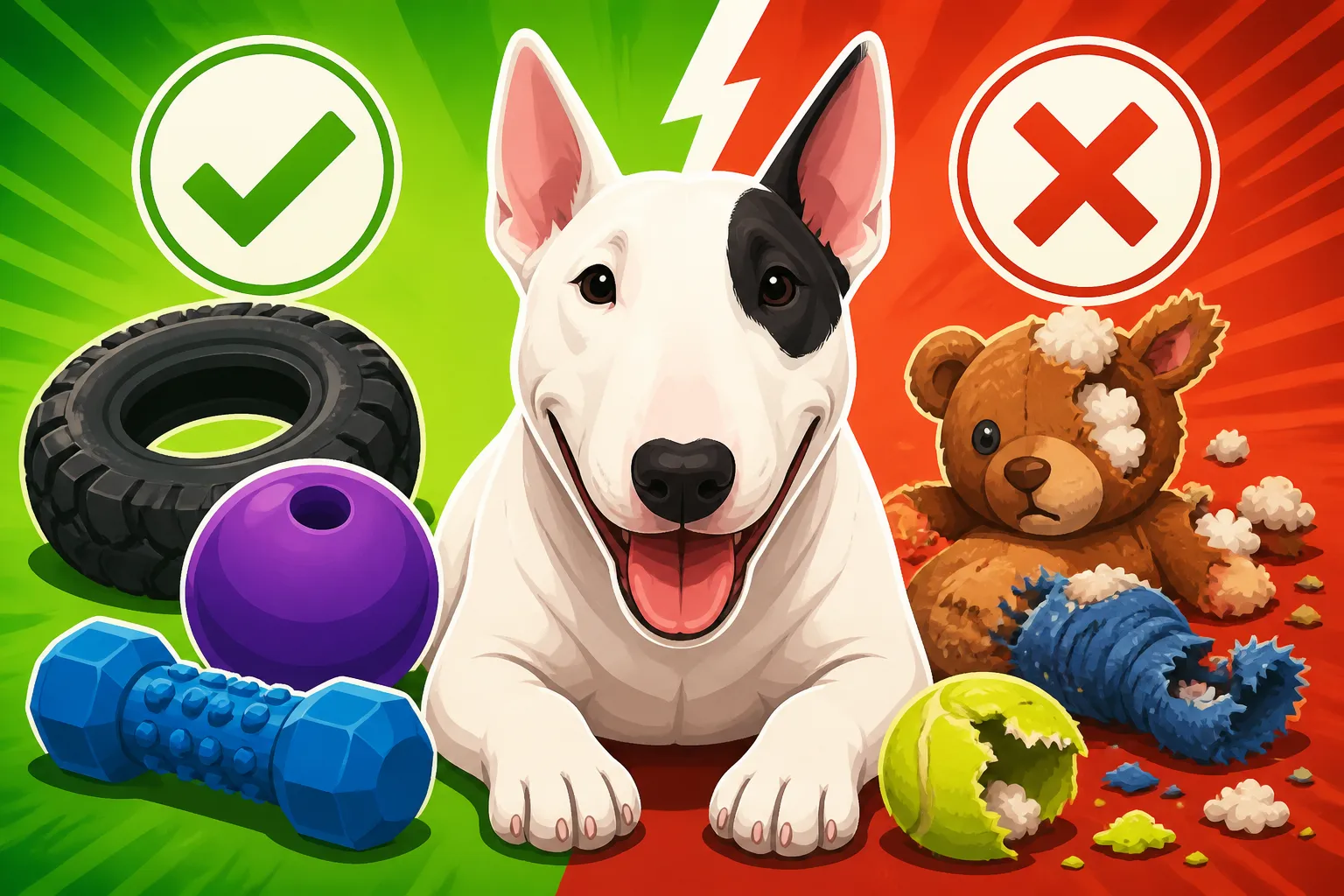
Which Toys Survive a Bull Terrier
The thrill of bringing home a new toy for your Bull Terrier often lasts about as long as it takes them to sniff it out, apply their formidable jaws, and systematically dismantle it into a pile of sad, shredded remnants. It’s a frustration many Bull Terrier owners know all too well – the constant quest for a toy that can actually stand up to their unique blend of power, enthusiasm, and sheer chewing determination. This guide is here to help you navigate that often-disappointing landscape, identifying the materials, types, and strategies that will give your Bull Terrier a fighting chance at prolonged playtime, saving your sanity and your wallet in the process.
Understanding the Bull Terrier's Destruction Drive
Before we dive into specific toy recommendations, it’s crucial to understand why your Bull Terrier seems to be on a mission to destroy every toy in their path. It’s not just naughtiness or stubbornness; it’s deeply rooted in their physical makeup and breed characteristics. Ignoring this fundamental truth means you'll always be buying toys that simply aren't up to the task.
The Anatomy of a Bull Terrier's Jaw
Let’s be honest: a Bull Terrier's head isn't just a pretty, egg-shaped marvel; it's a powerful chewing machine. They possess an incredibly strong bite force, thanks to their muscular jaws and broad skulls. This isn't an exaggeration; their jaw structure is designed for gripping and holding, a trait inherited from their ancestors. When they apply this power to a flimsy squeaky toy, the outcome is inevitable. Imagine a nutcracker going after a peanut – there's really only one way that's going to end.
Beyond just the raw power, Bull Terriers often have a unique chewing style. They tend to use their molars for grinding and crushing, rather than just incisors for tearing. This means soft materials are quickly pulped, while harder materials are subjected to intense, sustained pressure. This combination of strength and grinding action makes them truly exceptional toy destroyers. Knowing that you’re up against this kind of chewing power helps you understand why standard dog toys just won't cut it. You're not looking for a "tough" toy; you're looking for one engineered for canine demolition experts.
Why They Chew with Such Vigor
The chewing isn't purely physical; it's also deeply psychological and behavioral. Bull Terriers are incredibly intelligent and energetic dogs, and if that energy isn't channeled productively, it can manifest in destructive chewing. Think of it as their way of "doing" something, especially if they're bored or feeling anxious. A Bull Terrier left alone for hours without adequate physical and mental stimulation might turn to a favorite toy, or worse, your sofa, as an outlet.
Chewing is also a natural, instinctual behavior for dogs. It helps relieve stress, clean teeth, and simply provides a sense of satisfaction. For a Bull Terrier, this instinct can be particularly strong. They thrive on having a "job" to do, and sometimes that job is to figure out how a toy is constructed, one piece at a time. If your Bull Terrier is consistently turning toys into confetti, consider whether they're getting enough physical activity – How Much Exercise a Bull Terrier Actually Needs – and mental enrichment throughout their day. A tired Bull Terrier is less likely to engage in destructive chewing out of boredom. Sometimes, their vigor comes from sheer zest for life, but often, it's a cry for more engagement.
Materials That Stand a Chance Against a Bull Terrier
Once you accept that your Bull Terrier is a force of nature when it comes to toys, the next step is to choose materials that are equally formidable. Forget anything labeled "soft" or "plush" unless you enjoy constant vacuuming and potential vet visits for ingested stuffing. We're talking about heavy-duty, industrial-grade stuff.
Industrial-Grade Rubber and Nylon
When it comes to materials, solid rubber and hard nylon are your best friends. These aren't your average bouncy balls or chew sticks; these are engineered for the toughest chewers on the planet. Look for items made from natural, dense rubber that has a significant weight to it. Brands like KONG, particularly their "Extreme" line, have built a reputation for surviving the jaws of breeds like the Bull Terrier. These toys are often thick-walled, making them difficult to puncture or tear, and they often have a slight give that makes chewing satisfying without immediately leading to breakage.
Hard nylon chews are another excellent option. These are typically solid, non-edible bones or shapes that are designed to be gnawed on over a long period. They come in various textures and flavors, which can keep your Bull Terrier interested. The key is that they are meant to wear down slowly through abrasion, rather than breaking off in chunks. When selecting nylon, ensure there are no small pieces that could easily break off and become a choking hazard. You might find a wide selection of these specialized, durable toys on sites like Chewy, which often categorizes products by "power chewer" or "indestructible" ratings, helping you sift through the options.
Natural, Hard-Wearing Options
Beyond synthetic materials, there are some natural alternatives that can offer a satisfying and long-lasting chewing experience for your Bull Terrier. Antlers, particularly elk or deer antlers, are popular choices. They are incredibly dense and hard, providing a chew that can last for months. They wear down very slowly, releasing minerals as they go. However, it's crucial to select the right size and type of antler – too small, and it's a choking hazard; too hard, and it could damage teeth. Always choose naturally shed antlers, and inspect them regularly for sharp edges or splintering.
Another natural option that has gained traction is dense wood chews, such as those made from coffee wood. These are natural, non-toxic, and splinter less severely than traditional sticks, instead breaking down into small, digestible fibers. They provide a satisfying texture for dogs who enjoy gnawing on wood but need a safer alternative. As with any chew, supervision is paramount. Even the toughest natural chew can present a risk if it splinters or breaks in an unexpected way. The goal is to provide a challenge, not a danger. For a Bull Terrier that shows a strong tendency to destroy, exploring Which Chews Are Safe for a Bull Terrier is essential.
Types of Toys That Endure the Bull Terrier Test
It's not just about the material; it's also about the design and purpose of the toy. Some toys are simply better equipped to handle the Bull Terrier’s unique play style and drive to demolish. Think strategically about how your Bull Terrier interacts with toys, and choose accordingly.
Heavy-Duty Chews and Puzzle Toys
For a Bull Terrier, a toy that simply sits there waiting to be destroyed is often quickly obliterated. The best toys are those that provide a challenge or a reward, extending their lifespan and offering mental stimulation. Heavy-duty chew toys, designed specifically for power chewers, are a must-have. These are often solid rubber or nylon, shaped in ways that make them difficult to get a full grip on for leverage, or too thick to bite through easily.
Puzzle toys are another fantastic option because they engage your Bull Terrier's brain as well as their jaws. A treat-dispensing puzzle toy, for example, requires your dog to figure out how to get the goodies out, turning chewing into a means to an end rather than an end in itself. This prolongs engagement and can significantly reduce the wear and tear on the toy itself. Look for puzzle toys made from the same durable rubber or hard plastic as other power chews. These can be particularly effective at curbing What a Bull Terrier Does When It Is Bored. Many pet retailers, including Chewy, offer a comprehensive selection of puzzle toys that can be filtered by durability and difficulty, ensuring you find something challenging enough for your smart Bull Terrier.
Interactive and Fetch Toys
While solo chewing toys are vital, Bull Terriers also thrive on interactive play with their humans. This means fetch, tug-of-war, and other games that get them moving and engaging. For these activities, you still need robust toys. A standard tennis ball will last approximately thirty seconds before being decapitated. Instead, opt for solid rubber balls (again, think KONG-type materials) or thick rope toys specifically marketed for aggressive chewers.
For tug-of-war, look for braided rope toys made from very thick, tightly woven strands. While even these will eventually succumb to a Bull Terrier’s mighty grip, they tend to last longer than thinner ropes. Crucially, always supervise tug-of-war to prevent accidental ingestion of strands, which can be a serious health hazard. Remember, no plush toy, no matter how "reinforced," is truly indestructible for a Bull Terrier. The goal with interactive toys is not eternal life, but rather survival through a reasonable play session. If your Bull Terrier has a habit of destroying toys during play, it’s worth thinking about The Destruction Budget Nobody Warns a Bull Terrier Owner About and planning for frequent replacements.
Safety Considerations and Toy Management
Even with the toughest toys, ownership comes with responsibility. A toy that survives for months is useless if it causes an injury or gets ingested. Diligent supervision and smart toy management are just as important as the toy itself when you own a Bull Terrier.
The Importance of Supervision and Regular Inspection
This cannot be stressed enough: always supervise your Bull Terrier with new toys, especially chew toys. Even a toy advertised as "indestructible" can eventually show signs of wear, and a determined Bull Terrier will exploit any weakness. Regular inspection is key. Before each play session, give the toy a thorough once-over. Are there any cracks, sharp edges, or loose pieces? Has a chunk been gnawed off that could be swallowed? If a rubber toy has been chewed down significantly, making it smaller and easier to ingest, it's time to replace it.
For hard nylon chews, check for sharp burrs that develop as the toy wears down. These can irritate gums or even cause mouth injuries. Smooth them down with a file if possible, or discard the toy if it's too worn. The risk of a Bull Terrier ingesting parts of a broken toy, or even the entire thing, is significant and can lead to expensive vet visits for foreign body removal. Preventing this means being proactive and vigilant about toy integrity. It's an ongoing task, but one that ensures your dog's safety.
Rotating Toys for Longevity and Interest
To maximize the life of your Bull Terrier’s durable toys and keep them interested, establish a toy rotation system. Instead of leaving all their toys out all the time, select a few for them to play with for a week or two, then put those away and bring out a different set. This strategy has a couple of benefits. Firstly, it prevents any single toy from being subjected to constant chewing, thereby extending its lifespan. Secondly, it keeps the toys "new" and exciting, preventing your Bull Terrier from getting bored with them.
Imagine finding your favorite book every day versus discovering a new one in your personal library. The latter is far more stimulating. The same goes for your Bull Terrier. When a toy reappears after a hiatus, it's often greeted with renewed enthusiasm. This approach also helps you manage your toy budget more effectively; you won't need to buy new "indestructible" toys as frequently if you're rotating them smartly. You might also want to look into durable Which Crate Holds a Bull Terrier options and ensure they have suitable, safe toys within if they are crated for any length of time.
When to Consult a Vet About Toy Ingestion or Excessive Chewing
Despite your best efforts, accidents can happen. If you suspect your Bull Terrier has ingested a piece of a toy, or even an entire smaller toy, it’s crucial to contact your veterinarian immediately. Symptoms can include vomiting, lethargy, loss of appetite, straining to defecate, or abdominal pain. These signs point to a potential gastrointestinal obstruction, which is a serious, life-threatening emergency. Don't wait to see if it "passes"; early intervention is key.
Excessive, obsessive chewing that goes beyond normal play or boredom relief can also be a red flag. If your Bull Terrier is chewing incessantly, to the point of injuring their mouth or teeth, or seems agitated and unable to settle without a chew, it might indicate underlying anxiety, pain, or a behavioral issue. A vet can rule out medical causes for the behavior. In such cases, having a robust pet insurance plan like Healthy Paws can provide immense peace of mind. While it’s always best to sign up for insurance before any issues arise to ensure coverage, knowing you have support for unexpected vet bills due to accidents or medical conditions can be a huge relief, allowing you to focus on your Bull Terrier's health without financial stress. Understanding What a Bull Terrier Costs a Month Before Any Illness will make the proactive step of pet insurance more obvious.
Durable Toy Comparison for Bull Terriers
To help you make informed choices, here's a quick comparison of popular durable toy types and their effectiveness against a Bull Terrier's jaws:
| Material Type | Durability Rating (1-5, 5 being highest) | Pros | Cons | Best Use Case |
|---|---|---|---|---|
| Solid Rubber (e.g., KONG Extreme) | 5 | Extremely tough, bouncy, can be stuffed with treats. | Can be heavy, some dogs may still chew pieces off over time. | Long-lasting chew, treat dispensing, fetch. |
| Hard Nylon (e.g., Nylabone) | 4-5 | Designed for extreme chewers, various shapes/textures. | Can wear down, creating sharp edges; supervision needed. | Sustained solo chewing, dental health. |
| Natural Antlers | 4 | Very hard, long-lasting, natural source of minerals. | Can splinter, may be too hard for some teeth, expensive. | Moderate, supervised chewing for strong jaws. |
| Dense Wood Chews (e.g., coffee wood) | 3-4 | Natural, fibrous, wears down slowly. | Can splinter into small pieces, messier. | Dogs who prefer natural textures, supervised chewing. |
| Braided Rope Toys | 2-3 | Good for tugging, helps clean teeth. | Easily shredded and ingested, choking hazard. | Supervised tug-of-war, short play sessions. |
| Plush Toys (reinforced) | 1-2 (even reinforced) | Comfort, soft fetch, can be comforting. | Almost always destroyed quickly, stuffing can be ingested. | Limited, supervised play, comfort item (if not chewed). |
This table serves as a general guideline. Your individual Bull Terrier's chewing style and determination will ultimately be the deciding factor! Keep in mind that a good strategy often involves a combination of these toy types, offering variety and different outlets for their chewing needs.
Disclaimer
This article is for general informational purposes only and does not constitute professional advice. Laws, prices and regulations vary by location and change over time. Consult a qualified professional for guidance on your specific situation.