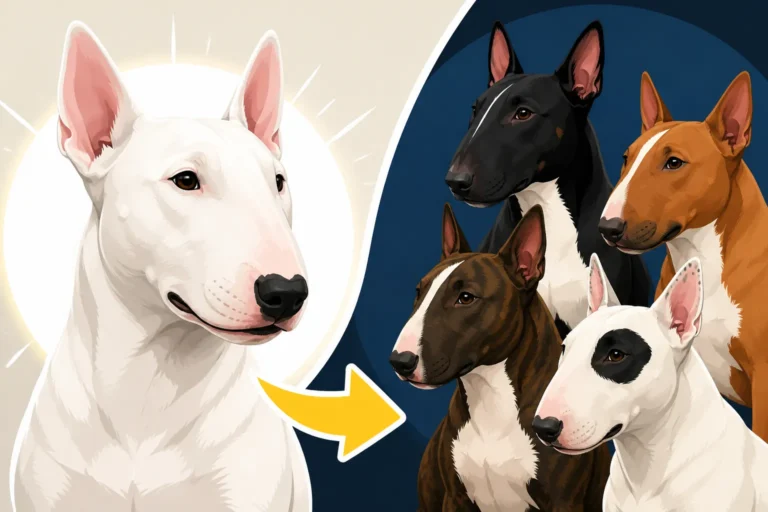
Whether Bull Terrier Owners Keep More Than One
Bull Terrier owners sometimes fall so hard for the breed’s comic energy and close companionship that one dog quickly becomes two. But a second Bull Terrier can bring new challenges, especially around dog compatibility, space, training, and supervision. This guide explains why some owners choose a multi-dog home, what to consider before adding another, and how to decide whether your own household is ready.
Why some Bull Terrier owners choose more than one
The appeal of sharing life with two Bull Terriers
Bull Terriers are often intensely people-focused, physical, and entertaining. Owners who enjoy their dog’s personality may want another, and a second Bull Terrier can make a household feel even livelier. Having two can also mean keeping a familiar breed in the home through different life stages, rather than waiting until one dog has passed away before bringing another in.
Some owners appreciate the shared routine: two dogs can join the same walks, training sessions, and family activities. They may also enjoy watching the dogs play or simply settle near each other. But “they’ll keep each other company” should not be the only reason to get a second dog. Dogs can coexist without becoming close friends, and each still needs individual attention from the people in the household.
A Bull Terrier’s exuberant play can be a big part of the appeal, but it can also be demanding. A pair may encourage each other to run, wrestle, bark, or investigate something the first dog might have ignored. If you are already finding it hard to meet one dog’s needs, another dog is more likely to increase the workload than solve it. For a fuller picture of what owners are signing up for, see What a Bull Terrier's Temperament Is Really Like.
One dog and a second dog may suit different households
There is no rule that Bull Terriers must live with another dog. Some are content as the only pet, especially when they receive enough exercise, training, company, and enrichment. An only dog may also be the more comfortable arrangement for a Bull Terrier who is selective around other dogs, easily overstimulated, or happiest with access to the people and resources in the home.
Other Bull Terriers do enjoy living with a canine companion, particularly when the match is thoughtful and introductions are gradual. Compatibility is about more than breed or size. Temperament, play style, age, past experience, and ability to share space all matter. A calm dog who communicates clearly may be a better match than a dog with a similar look or energy level.
Be realistic about your own preferences, too. Some people enjoy managing two dogs and can make time for individual walks or training. Others prefer focusing on one dog at a time. Neither choice is a failure. If you are unsure, talk with your breeder, rescue, or a qualified trainer who knows the dogs involved; the best answer depends on the individual dogs and the household.
What affects whether two Bull Terriers get along
Temperament, history, and the quality of the match
Bull Terriers are individuals, and their comfort with other dogs can change as they mature. A puppy who plays freely with familiar dogs may become more selective as an adult. That does not mean every adult Bull Terrier will have problems with another dog, but it does mean early friendliness should not be treated as a permanent guarantee. Learn how dog interactions can vary in How a Bull Terrier Gets On With Other Dogs.
Look for a match based on observable behavior rather than wishful thinking. Does each dog recover quickly after excitement? Can they disengage from play? Do they respond to cues when another dog is nearby? Is either dog tense around food, toys, resting places, or human attention? A dog who plays roughly may need a companion with a compatible style, along with people willing to interrupt and give both dogs breaks.
A rescue dog’s history may be incomplete, and a dog’s behavior in a shelter or brief meeting may not predict how it will behave at home. Ask what is known about the dog’s interactions, resource guarding, and previous living arrangements. If the rescue or breeder can arrange a careful introduction in a neutral location, use that opportunity, but avoid treating one successful meeting as proof that the dogs will be comfortable sharing a home.
Sex, age, and play style are considerations, not guarantees
People often ask whether two dogs of the same sex will get along. Sex can be one factor in a household’s decision, but it does not guarantee compatibility or conflict. Individual temperament, social history, management, and the way the relationship develops are all important. For background on this particular concern, read Why Two Same Sex Bull Terriers Fight.
Age differences can matter in practical ways. A lively puppy may pester an older dog who wants to rest, while an older dog may have pain or reduced patience that makes constant play uncomfortable. A second adult dog may offer a clearer picture of its established behavior, though it still needs time to settle in. Consider whether your current dog can cope with the likely pace and demands of the newcomer.
Do not assume two dogs will automatically entertain each other in a healthy way. If play becomes one-sided, frantic, or difficult to interrupt, step in calmly and give the dogs space. A good household match should allow both dogs to rest, move away, and receive attention separately. If you are considering a puppy, it is also useful to think through Whether a Bull Terrier Should Do Puppy Class and how you will manage training without letting the older dog become the puppy’s full-time playmate.
The practical realities of a multi-Bull Terrier home
Time, training, and daily management
Two dogs are not simply one dog’s routine doubled in a convenient way. Some activities can be shared, but each dog needs individual practice with skills such as coming when called, settling, walking on a loose leash, and handling everyday distractions. Training together may be useful later, but separate sessions help you see what each dog understands and prevent one from relying on the other.
A second dog can also make ordinary tasks more complicated. Imagine trying to answer the door while both dogs rush forward, or giving medication to one while the other crowds in. You will need a plan for feeding, resting, visitors, car travel, and times when the dogs need to be separated. Baby gates or separate rooms can make management easier, but they need to be used thoughtfully and safely.
Consider the time you can give each dog on its own. Individual walks or short training sessions can help maintain your bond with both dogs and give them a break from each other. If your Bull Terrier already pulls hard or becomes overexcited on walks, adding a second leash can make outings harder until both dogs have reliable skills. Resources such as Teaching a Bull Terrier to Walk Without Pulling and How Short a Bull Terrier's Training Session Has to Be can help you plan realistic practice.
Space, supplies, and the less visible costs
A multi-dog home needs more than enough floor space for two beds. Each dog should have a comfortable place to rest and the option to get away from the other. Food bowls, chews, toys, and other valued items may need to be managed separately, especially while the dogs are still learning to share a household. Never assume that dogs who play together will also be comfortable eating or resting side by side.
Budget for the possibility that each dog will need separate veterinary care, equipment, training support, and enrichment. Routine needs may overlap, but illness or injury can create simultaneous demands. It is worth checking your household budget before committing, including whether your housing arrangement and insurance cover multiple dogs. What a Bull Terrier Costs Over Its Lifetime offers a useful framework for thinking beyond the initial adoption or purchase.
Supplies need to be suitable for each dog rather than selected simply because they are sold as “multi-dog” essentials. A toy that one dog enjoys may trigger competition; a chew that works for one may be unsafe or unsuitable for the other. If you use a retailer such as Chewy to keep regular food and household supplies organized, check that each dog’s products match their individual needs and that food is stored securely. Buying supplies in one place may help with routine, but it does not replace separate feeding or supervision when those are needed.
| Household factor | One Bull Terrier | Two Bull Terriers |
|---|---|---|
| Training | One dog’s skills and attention to manage | Individual practice is still important, with extra work around distractions |
| Feeding | One routine and one set of needs | Separate spaces or supervision may be needed |
| Play and enrichment | Activities can be chosen for one dog | Each dog needs suitable activities and breaks from the other |
| Walking | One leash and one dog’s behavior to handle | Two leashes and potentially different training needs |
| Rest | One dog’s preferred resting areas | Each dog should have a quiet place to retreat |
| Planning for care | One dog’s routine veterinary needs | Separate health needs and potentially overlapping expenses |
How to decide whether to add a second Bull Terrier
Assess your current dog before choosing another
Start with the dog you already have. Does your Bull Terrier willingly relax around other dogs, or does it stay watchful and overexcited? Can it share space without repeatedly pushing into another dog’s face? Does it recover after play, respond to you, and tolerate being separated? These observations can tell you more than a general belief that your dog “needs a friend.”
Look at the situations that are hardest now. If your dog guards food or toys, becomes distressed when another dog approaches, or has a history of serious conflict, adding a dog may be risky without professional guidance. That does not mean every such household is impossible, but it does mean you should not try to solve the issue by bringing home a puppy and hoping the dogs sort it out. A veterinarian or qualified behavior professional can help assess the behavior and plan next steps.
Also ask whether the second dog would fit your life even if the dogs never became playmates. If the answer is no, pause. Dogs in the same home do not have to be inseparable, but they do need to be managed safely and treated as individuals. A useful general resource is Whether a Bull Terrier Suits a First Time Owner, especially if you are still learning how much planning the breed’s strength and enthusiasm can require.
Plan introductions and the first weeks carefully
If you decide to proceed, begin with controlled introductions rather than placing the dogs together in a crowded home and expecting an instant friendship. A neutral outdoor space can be less intense than a doorway or a room your current dog considers its own. Keep early interactions brief and manageable, and pay attention to body language: loose movement and the ability to disengage are more reassuring than persistent staring, stiff posture, or repeated attempts to avoid the other dog.
At home, provide separate feeding areas and enough space for the dogs to rest apart. Put away high-value toys and chews during the early adjustment period unless you can supervise closely and have a safe plan. Give each dog individual time with you, and avoid forcing them to share beds, bowls, or attention. Calm coexistence is a better early goal than constant play.
Keep using management even when the first days go smoothly. New dogs need time to learn household routines, and tension may show up around resources or when excitement rises. If you need help with enrichment that can occupy a dog without turning every activity into a contest, What Enrichment a Spinning Bull Terrier Needs includes ideas that can be adapted to the dog’s needs. Chewy may be one convenient place to find puzzle toys or everyday supplies, but supervise any new item and use separate enrichment stations if either dog becomes possessive.
A second dog should be a choice, not a fix
Some Bull Terrier owners happily keep more than one, while others discover that one is the right number for their family. The decision is less about whether the breed “does better” in pairs and more about whether these particular dogs can live comfortably together—and whether the people in the home can meet both dogs’ needs.
Before committing, consider compatibility, training time, separate resting and feeding arrangements, housing rules, and the cost of caring for two dogs. If those pieces are in place, a second Bull Terrier may be a rewarding addition. If they are not, waiting, choosing a different companion, or staying a one-dog household can be the kinder and more manageable decision. For help thinking through the long-term commitment, see What Bull Terrier Owners Wish They Had Known.
Disclaimer
This article is for general informational purposes only and does not constitute professional advice. Laws, prices and regulations vary by location and change over time. Consult a qualified professional for guidance on your specific situation.