Which Countries Restrict the Bull Terrier
A Bull Terrier can be welcome in one place and subject to extra rules—or refused entry—in another. The confusion often comes from laws that group different breeds under “pit bull” or “dangerous dog” labels. This guide explains where restrictions may apply, what they usually mean, and how to check the rules before you move or travel with your dog.
Where Bull Terriers may face breed-specific restrictions
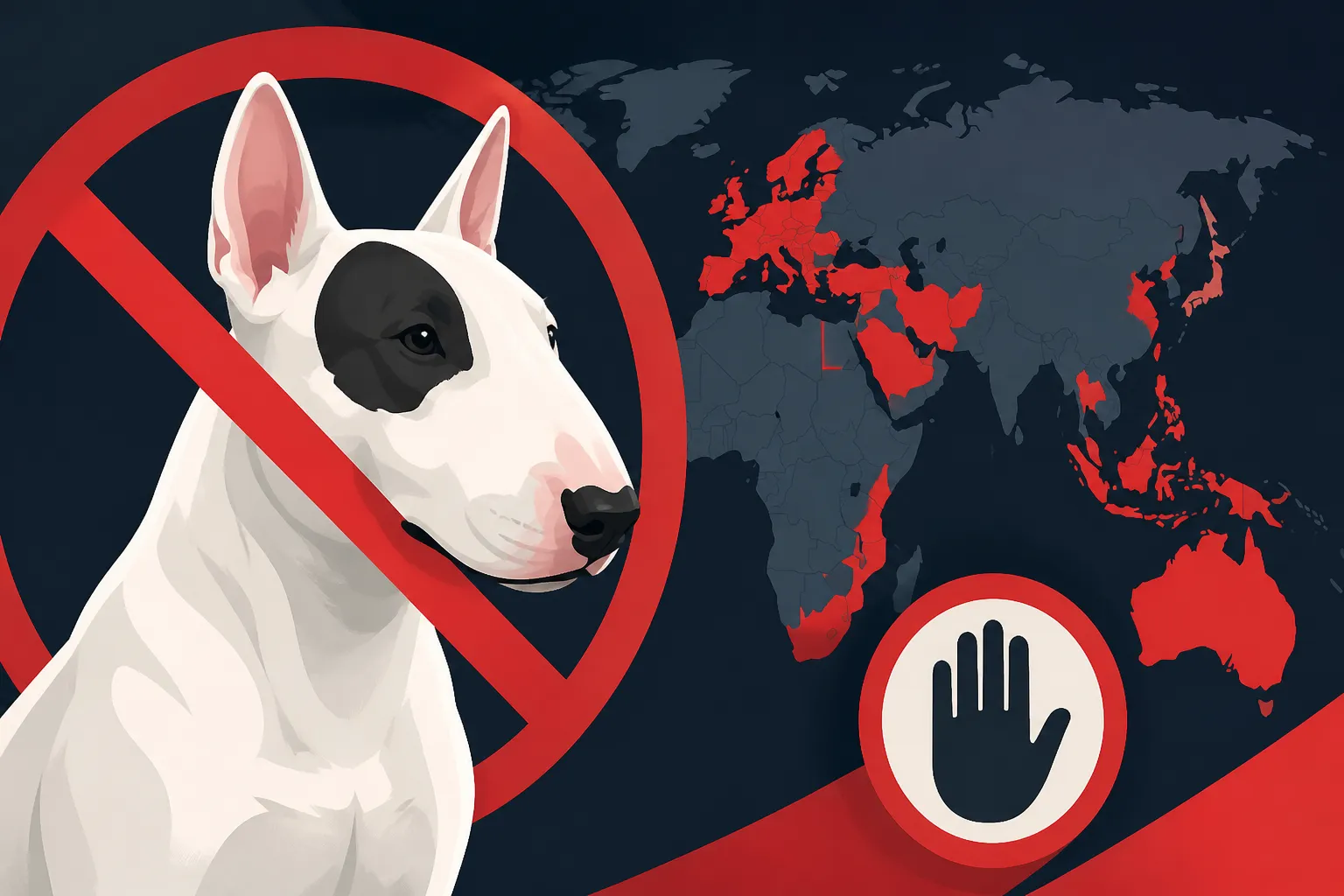
There is no single worldwide rule for Bull Terriers. Some laws name the breed directly, while others apply only to dogs that meet a physical description or are considered similar to a listed breed. Local rules can also be stricter than national ones, so a country-level answer is only a starting point.
Germany has a direct import restriction
Germany’s federal law on bringing certain dangerous dogs into the country names the Bull Terrier, along with the Pit Bull Terrier, American Staffordshire Terrier, and Staffordshire Bull Terrier. This can prevent a Bull Terrier from being imported or transferred into Germany. It is not the same thing as saying that every Bull Terrier already living in Germany is automatically banned from ownership.
The practical distinction matters if you are relocating, adopting across a border, or planning a long stay. A dog that is legally kept in one country may still be refused entry under another country’s import rules. Transit and temporary-stay situations can involve different conditions, and state-level rules may add further requirements.
Before arranging travel, contact the relevant German authorities and ask about your exact circumstances. Provide the dog’s breed documentation, microchip and vaccination records, route, and length of stay. Don’t rely on a carrier’s general pet policy or assume that a passport or pedigree certificate overrides a breed-specific import restriction.
It is also worth checking that everyone is talking about the same breed. English Bull Terriers, Staffordshire Bull Terriers, and dogs described as pit bulls are not interchangeable breeds, even though their names are sometimes casually mixed up. This distinction is explored in How a Bull Terrier Differs From a Staffordshire Bull Terrier and How a Bull Terrier Differs From a Pit Bull.
Ireland applies additional public-control rules
Ireland is known for special public-handling requirements for certain restricted dog types, including the Bull Terrier. These rules are restrictions on how a dog must be managed in public, not necessarily a ban on owning the breed. Requirements can include a muzzle, a short leash, and a handler who meets specified conditions.
That difference can be easy to miss when you are searching online. A headline saying a breed is “restricted” may sound like ownership is prohibited, when the actual rule is about control in public. Even so, those requirements affect ordinary routines: walking through a town centre, visiting a park, or arranging for someone else to exercise the dog.
Check the official Irish rules before travel or a move, and make sure you understand where and when the requirements apply. Ask whether they cover every public place, whether the leash or muzzle must meet particular standards, and whether there are age or handler restrictions. Carrying the equipment is not enough if the dog is not properly managed under the applicable rules.
Switzerland is a canton-by-canton case
Switzerland does not have one simple breed-rule answer that covers every canton. Breed restrictions, permits, training requirements, and bans can vary by canton, and the relevant authority may assess a dog differently depending on its breed, ancestry, or classification.
That means a rule you hear about in Geneva may not be the same as one in Zürich or Bern. Even within a canton, municipal requirements or housing conditions can complicate the picture. A dog owner moving between cantons should not assume that permission granted in one place automatically settles the question in another.
Contact the veterinary or animal-control authority in the canton where you intend to live, and ask about both ownership and import rules. If the dog is a cross or its paperwork uses a broad label, ask how the authority determines breed classification. For background on the difference between a breed label and a legal category, see Whether a Bull Terrier Is a Bully Breed.
Countries that are often confused with Bull Terrier bans
A lot of people search for a list of countries where Bull Terriers are banned, then run into lists that actually name other breeds. Similar names and broad “type” descriptions can make those lists misleading. The key is to read the exact wording of the law, not just the summary in a forum post or travel article.
The United Kingdom does not name the Bull Terrier as a prohibited breed
The UK’s prohibited-breed rules name specific types, including the Pit Bull Terrier, Japanese Tosa, Dogo Argentino, and Fila Brasileiro. The standard English Bull Terrier is not one of the breeds named on that list. However, the legal question can become more complicated if a dog is believed to match a prohibited type or is a crossbreed.
This is one reason clear paperwork and accurate identification matter. A dog’s registration or pedigree can help explain its background, but it may not settle every legal determination if authorities assess the dog’s appearance and type under the law. Owners should avoid assuming that a breed certificate alone resolves a dispute.
If you are moving to the UK, check both national law and local housing or insurance requirements. A landlord, insurer, or travel provider may have conditions that are separate from criminal breed legislation. A legal right to own a dog does not guarantee that every rental property or service will accept it.
Australia and New Zealand focus on other named breeds for import bans
Australia and New Zealand have restrictions on importing certain dog breeds, but the commonly named prohibited breeds are not the standard English Bull Terrier. Lists often include breeds such as the Pit Bull Terrier, Dogo Argentino, Fila Brasileiro, or Japanese Tosa, depending on the country and the specific rule.
That does not mean every Bull Terrier-related situation is automatically straightforward. A crossbreed may be treated differently, and import approval involves more than breed: documentation, microchipping, vaccinations, permits, and quarantine or border procedures may also apply. A dog that is permitted under one part of the process can still fail another requirement.
Before booking travel, ask the national biosecurity or import authority how it treats your dog’s exact breed and ancestry. Share the dog’s records and, if relevant, photographs or pedigree details. Avoid relying on an airline’s acceptance as proof that border authorities will allow the dog into the country.
Similar breed names can lead to the wrong answer
“Bull Terrier” is often confused with “Staffordshire Bull Terrier,” “American Staffordshire Terrier,” or a dog described as a “pit bull.” These names refer to different breeds or legal categories. A restriction on one does not automatically apply to all the others, although some laws use broad descriptions or include crosses.
The confusion is understandable: breed names overlap, and online lists are often copied without their original context. If a source says “bull breed,” “terrier type,” or “pit bull type,” look for the actual law or official guidance to see how that phrase is defined. For a closer look at the breed’s classification, read What People Get Wrong About the Bull Terrier.
| Location | How restrictions may affect a Bull Terrier | What to verify |
|---|---|---|
| Germany | Federal law names the Bull Terrier among breeds subject to import or transfer restrictions | Whether the dog may enter, whether an exception applies, and any additional state rules |
| Ireland | Restricted-dog rules can require specific control measures in public | Muzzle, leash, handler, and location requirements |
| Switzerland | Rules may differ by canton and can include permits or breed restrictions | The canton’s rules for ownership, import, and registration |
| United Kingdom | The English Bull Terrier is not among the breeds named in the main prohibited list, but type-based questions may arise | Whether the dog’s breed or ancestry could trigger a legal assessment |
| Australia and New Zealand | Import bans commonly name other breeds; crossbreed classification and import conditions still matter | Breed eligibility and all border-entry requirements |
How to check the rules before moving or travelling
A breed restriction is not always an outright ban. It may regulate import, ownership, public handling, registration, insurance, or access to particular places. Work out which kind of rule applies before making travel plans or signing a lease.
Start with the right authority
For an international move, begin with the destination country’s official import or animal-control authority. Then check the state, province, canton, or municipality where you will live. For a short visit, ask about the rules at your destination and along the route, including stopovers where you may need to leave the airport or enter the country.
When you contact an authority, use a precise description: “English Bull Terrier,” not just “bull terrier” or “bully breed.” Include the dog’s age, microchip details, pedigree or adoption records, and whether the dog is a cross. If the dog’s breed history is uncertain, say so rather than guessing. A vague description can lead to an answer that does not fit your situation.
Try to get the response in writing and keep a copy with the dog’s travel documents. If the answer is unclear, ask the authority to point you to the rule and explain what it means for your planned stay. A confident answer from a breeder, social-media group, or airline employee is not a substitute for the decision of the authority responsible for applying the law.
Check more than the headline ban
Ask separately about entry, ownership, public handling, and housing. A country might allow the dog to enter but require a permit. Another place might allow ownership while requiring a muzzle in public. A landlord or insurer may also impose conditions that have nothing to do with whether the breed is prohibited by law.
Use a checklist so you do not overlook a practical requirement:
- Confirm whether the exact breed is named in national law.
- Check whether crosses or dogs of a similar type are included.
- Look up regional and municipal rules at the destination.
- Confirm import permits, identification, vaccination, and health-document requirements.
- Ask whether public handling rules require a muzzle, leash, registration, or training.
- Check rental agreements, homeowners’ rules, and insurance conditions.
- Keep written confirmation and copies of all relevant dog records.
If your dog’s paperwork uses an unclear or shortened breed label, request a corrected record from the issuing organization where possible. This may not determine how an authority classifies the dog, but accurate paperwork makes it easier to explain the dog’s identity and history.
Make a plan if the rules are unclear
Do not wait until the week of departure to resolve a breed question. Border checks, permit applications, and local registrations can take time, and an uncertain answer can leave you with an expensive or upsetting last-minute problem. If the rule could affect entry or ownership, pause before paying for transport or signing a relocation contract.
For a permanent move, consider speaking with a qualified local lawyer or animal-law professional if the authority’s interpretation is disputed. For a brief visit, ask whether the restriction applies to temporary stays and whether there is an approved route or exception. Keep your questions specific: “Can this named dog enter for a two-week visit?” is more useful than “Are Bull Terriers allowed?”
Also plan for the dog’s everyday needs. If public rules require a muzzle, introduce it gradually and positively well before travel rather than putting it on for the first time at a border or train station. If the destination has housing restrictions, secure written approval before arriving. Travel stress is hard enough without discovering that the dog’s legal status or accommodation is uncertain.
What Bull Terrier owners should remember
A search result that says “Bull Terriers are banned in several countries” is too broad to guide a real decision. Germany has a direct federal import restriction that names the Bull Terrier. Ireland has public-control requirements for restricted dogs that can include the breed. Switzerland requires careful checking at the canton level. In other destinations, rules often name different breeds, while crossbreed or type-based provisions may still matter.
The most reliable approach is to check the exact dog, destination, and activity. A rule for importing a dog is not necessarily a rule about owning one already in the country; a public-muzzle requirement is not an ownership ban; and a national rule may not capture local restrictions. For a wider overview of how rules differ by location, see Whether a Bull Terrier Is Banned Anywhere.
If you are choosing a puppy or adopting an adult dog with a possible move ahead, ask for clear breed and health records and keep them organized. Learn what to ask before committing with Which Questions to Ask a Bull Terrier Breeder. If the dog is a cross, the question of identification may become more involved; Whether a Bull Terrier Mix Keeps the Head Shape offers useful context about how appearance and breed descriptions can overlap.
The answer is not simply that Bull Terriers are either “allowed” or “banned.” The decisive details are the legal wording, the dog’s classification, and the place you intend to take it. Check those details with the relevant authorities before you make plans.
Disclaimer
This article is for general informational purposes only and does not constitute professional advice. Laws, prices and regulations vary by location and change over time. Consult a qualified professional for guidance on your specific situation.