How the Bullseye Bull Terrier’s Ring Is Painted On
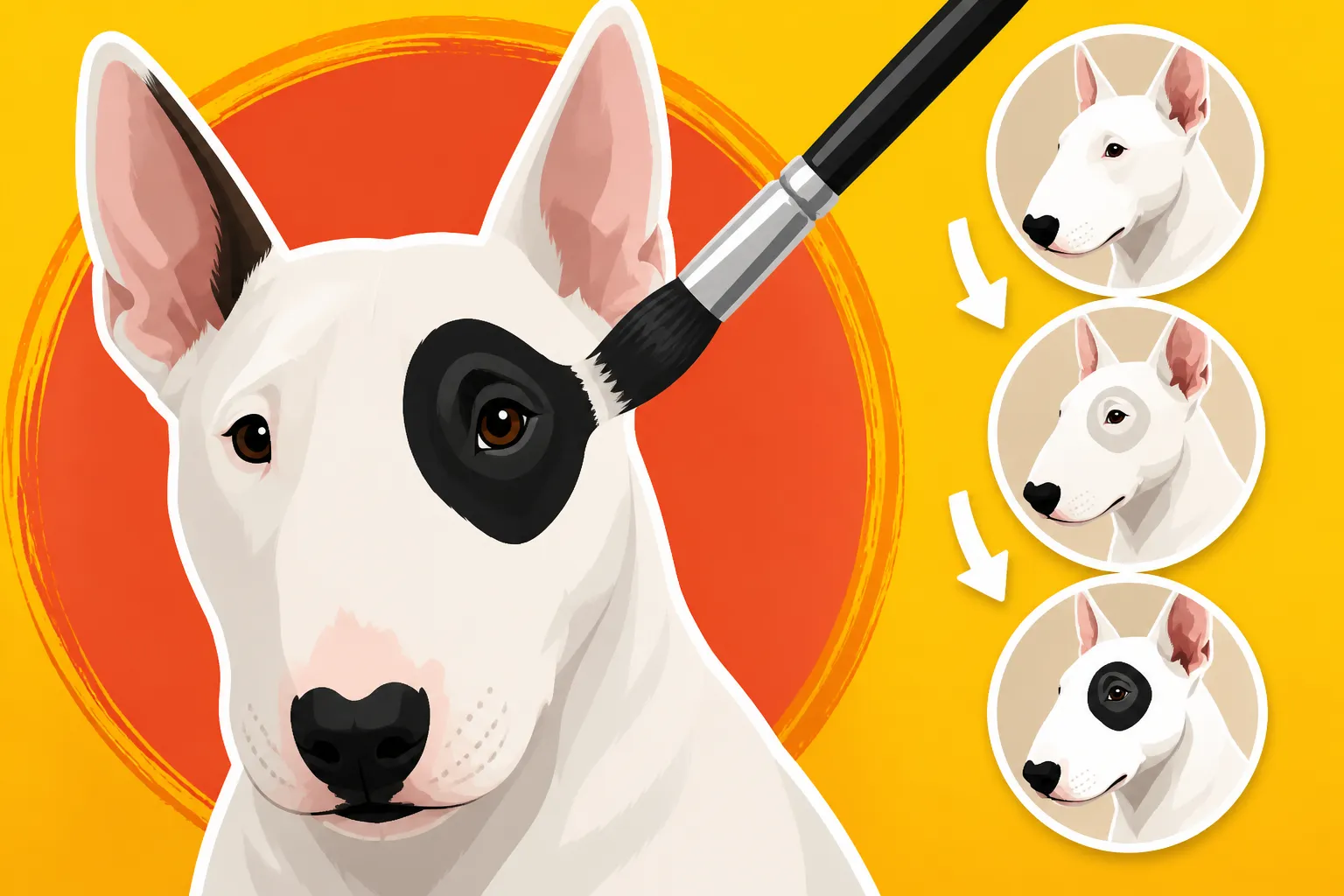
A Bull Terrier’s famous red eye ring is not a natural marking or a permanent tattoo. It’s a temporary styling effect created on the dog’s short, white coat for the Bullseye look. Here’s how that kind of ring is typically applied, what keeps the process safe, and why it’s best not to copy a commercial grooming effect with ordinary paint or makeup at home.
How the Bullseye ring is created
It is temporary coat color, not a natural marking
The red circle around Bullseye’s eye is a deliberate cosmetic effect. It is applied to the fur, rather than being part of the dog’s skin or eye. That distinction matters: a Bull Terrier may have natural coat markings, but a bright, sharply defined red ring is not a standard inherited color pattern.
The ring is also not the same as a tattoo. Tattooing involves the skin and is not an appropriate way to recreate a cosmetic look. For a character appearance, the practical approach is temporary color applied to the coat and then removed or allowed to wash out according to the product’s directions.
A photo or television appearance can make the ring look as if it were painted on in one perfect sweep. In reality, a groomer or animal-care professional would need to work carefully around a sensitive area, using a product intended for animal coats and keeping it away from the eye itself. The exact technique can vary, and the public-facing character image does not tell us every detail of the production process.
Why the white coat makes the ring stand out
Bullseye’s familiar white Bull Terrier coat gives the red circle strong contrast. The dog’s short hair also makes a graphic marking easier to see than it might be on a long, curly, or heavily patterned coat. The breed’s distinctive face and compact coat are part of why the simple red circle reads so clearly on screen.
White does not mean the coat is a blank canvas, though. Bull Terriers can have different coat colors and markings, and a white dog’s skin may be pink and more sensitive to sun exposure. The look of the mascot is a styled appearance, not a recommendation to dye every white Bull Terrier. For more on natural coat patterns, see Which Colors a Bull Terrier Comes In and Whether Markings on a White Bull Terrier Are Allowed.
A dog’s coat also changes how a temporary color product behaves. Short hair can show uneven application, while skin irritation or a product reaction may be harder to notice beneath a dense coat. A responsible professional considers the dog’s coat, skin, temperament, and comfort before attempting any cosmetic styling.
What safe application involves
The eye area needs extra care
Even when color is intended only for fur, the eye area is a poor place for casual experimentation. A dog can blink, turn its head, rub its face, or try to lick a product while it is being applied. That creates a risk of the substance getting into the eye or onto delicate skin.
A trained handler would aim to keep the dog relaxed and still, use a product specifically labeled as suitable for dogs, and avoid applying it to the eyelid, waterline, or inside the eye. The dog should never be restrained in a way that causes distress just to achieve a neat circle. If the dog resists, the priority is to stop—not to force the cosmetic result.
Never use craft paint, permanent hair dye, markers, or ordinary household paint on a dog. Human cosmetics are not automatically safe for pets either. Products can contain ingredients that irritate skin or cause harm if licked, and “non-toxic” on a general art product does not mean safe for use on an animal’s face.
A patch test and a low-pressure approach matter
Before any new coat product is used, a professional should follow its label directions and consider a small-area test away from the face. The dog should be watched for redness, swelling, itching, hives, unusual licking, or other signs of discomfort. If a reaction appears, remove the product as directed and contact a veterinarian for advice, especially if the eyes or mouth may have been exposed.
The process should also be short and calm. A dog that is already anxious about grooming is unlikely to enjoy a detailed cosmetic application near its eye. Gentle handling, breaks, and a familiar person nearby can help, but they do not make an unsuitable product safe or turn a stressful experience into a good one.
For routine coat care rather than a character-style marking, owners can look for basic dog grooming supplies through retailers such as Chewy. Check product labels carefully and ask a veterinarian or qualified groomer before using anything near the face. A retailer’s pet category alone is not proof that a particular item is safe for a sensitive area.
Removing color should be gentle
How a temporary color comes off depends on the product. Follow its removal instructions instead of scrubbing the dog’s face with a rough cloth or using solvents, strong shampoos, or household cleaners. Vigorous rubbing can irritate skin and pull at the short hairs around the eye.
If product gets into the eye, do not improvise with makeup remover or other chemicals. Follow the product’s emergency directions and contact a veterinarian promptly for guidance. If the dog is squinting, pawing at the eye, tearing excessively, or showing redness, treat that as a health concern rather than a cosmetic inconvenience.
A simple decision guide can help distinguish a professional styling effect from everyday grooming:
| Situation | Safer approach | Avoid |
|---|---|---|
| You want to recreate the Bullseye look | Ask a qualified groomer about temporary, dog-specific coat color and whether it suits your dog | Applying paint or dye from a craft or hardware store |
| Your dog dislikes face handling | Skip the cosmetic effect and keep grooming low-stress | Holding the dog still by force for a sharper ring |
| Color is near the eye | Use only a product and method approved for that area by an experienced professional | Applying color to the eyelid or close to the eye’s surface |
| Your dog develops irritation | Stop using the product and seek veterinary advice | Covering redness with more product or scrubbing the skin |
What Bull Terrier owners should know
The mascot’s look is not a breed standard
The red ring is a recognizable character detail, not a marking Bull Terriers are expected to have. Breed standards describe the dog’s natural appearance; a temporary cosmetic mark does not change its color genetics or make it a different type of Bull Terrier. The mascot’s styling should not be confused with natural markings on a show or companion dog.
If you’re comparing the look with other famous Bull Terriers, Which Bull Terrier Plays Target's Bullseye covers the mascot connection, while Which Bull Terrier Played Spuds MacKenzie explores another well-known Bull Terrier in advertising. For the breed’s coat itself, What a Bull Terrier's Coat Is Like explains the short-haired coat that makes grooming fairly straightforward but does not eliminate the need for skin care.
A white coat can bring practical concerns that have nothing to do with a red circle. Some Bull Terriers have exposed pink skin, and sun protection may be worth discussing with a veterinarian. If the skin is itchy, flaky, sore, or unusually red, treat that as a possible medical issue rather than assuming it is a reaction to ordinary dirt or grooming.
Think about comfort before appearance
It’s understandable to want a fun photo of a dog that resembles the mascot. But the best version of that idea is one your dog can tolerate comfortably—and it may be a photo prop or digital edit instead of color applied near the eye. A playful costume or a simple red circle added to a picture avoids exposing the dog to an unfamiliar product.
If you are considering temporary coat color, talk with a veterinarian or experienced groomer first, particularly if your dog has allergies, irritated skin, a history of eye problems, or a habit of rubbing its face. Even a dog that seems relaxed at first may react differently once a product is close to its eyes. Chewy can be a place to browse general grooming supplies, but ingredient labels and professional guidance matter more than a product listing when the face is involved.
And if the goal is simply to celebrate your Bull Terrier, there’s no need to alter the coat. Their distinctive egg-shaped head, alert expression, and energetic personality are recognizable without the mascot’s signature ring. Natural color and coat patterns vary across the breed; Whether a Bull Terrier Can Be All Black offers more context on how far those variations can go. For everyday grooming tools or gentle cleaning supplies, Chewy may help you compare options, but avoid using any product on facial fur unless its directions and a qualified professional support that use.
Disclaimer
This article is for general informational purposes only and does not constitute professional advice. Laws, prices and regulations vary by location and change over time. Consult a qualified professional for guidance on your specific situation.