Whether an Oversized Bull Terrier Can Be Shown
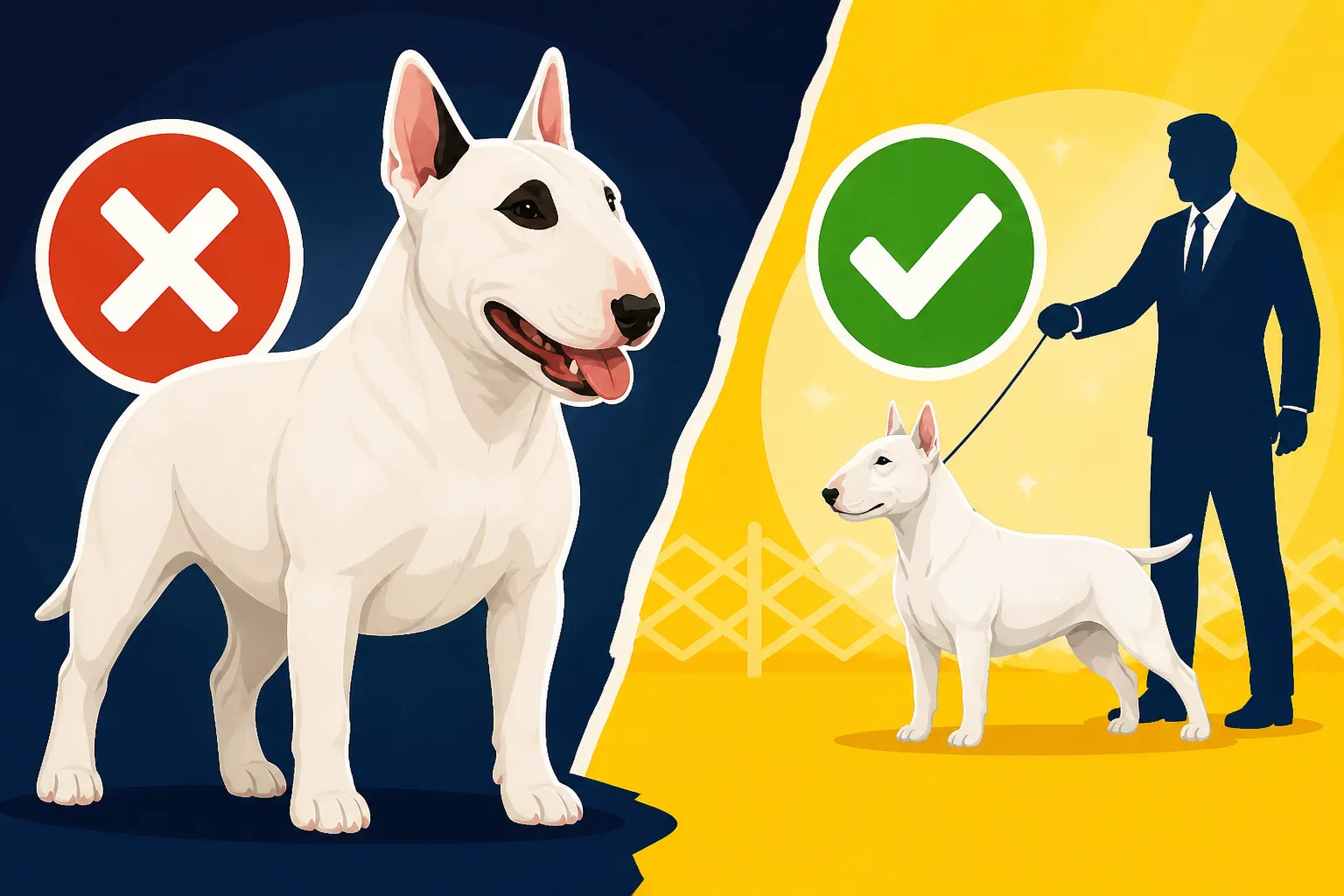
A Bull Terrier that stands taller or weighs more than expected can leave an owner wondering whether the dog is automatically disqualified from the show ring. For standard Bull Terriers, size alone is not usually a simple pass-or-fail test. This guide explains how breed standards treat size, what judges assess, and how to check your dog’s eligibility before entering.
How Bull Terrier standards treat size
Standard Bull Terriers do not have a simple maximum size
For the standard Bull Terrier, the breed standard generally does not set a fixed maximum height or weight. Instead, it emphasizes the dog’s overall quality, balance, substance, and soundness. A tall or heavy dog is not automatically ineligible just because it seems bigger than other Bull Terriers at a show.
That can be surprising if you’re used to breeds with a stated height range. In the ring, “oversized” is often an owner’s description, not a formal category in the standard. A judge considers whether the dog’s size works with its structure and type, rather than judging a number in isolation. For a broader look at the breed’s build, see What a Bull Terrier Weighs and How Tall It Stands.
The key phrase is that the dog should have maximum substance for its size while retaining the breed’s quality and balance. A substantial, muscular Bull Terrier may be entirely appropriate. But extra height or bulk that makes the dog look coarse, unbalanced, or less sound can count against it. The standard is not a promise that every large dog will be rewarded; it means size alone is not necessarily the deciding factor.
A standard and a miniature have different size rules
It’s important to establish whether you have a standard or a Miniature Bull Terrier. These are separate varieties with different size expectations. A height limit applies to Miniature Bull Terriers in some major kennel-club standards, while the standard Bull Terrier is generally assessed without a fixed maximum height or weight. Check the rules of the registry and show where you plan to enter.
This distinction matters because a dog that is unusually large for a Miniature may face a different eligibility question than a large standard Bull Terrier. Don’t rely on a casual comparison with dogs you’ve seen online or at a local event. Confirm your dog’s registered variety and the current requirements with the relevant kennel club or show organizer.
If you’re trying to make sense of your dog’s measurements, How Tall a Bull Terrier Stands and How Much a Bull Terrier Weighs offer useful background. Measurements can help you describe your dog, but they don’t replace an assessment of proportions, movement, and overall breed type.
What judges may assess beyond height and weight
Balance and breed type matter more than a single number
A judge is looking at the whole dog. That includes whether the body, limbs, chest, head, and topline form a balanced picture, and whether the dog moves with soundness and purpose. A dog can be large yet well-proportioned; another dog of similar height may look overdone if its build no longer feels coherent.
Breed type is part of that picture. Bull Terriers have distinctive features, including their characteristic head shape and outline. A dog’s size does not excuse a departure from those traits, nor does a striking head automatically make an unsound or poorly balanced dog a strong show prospect. For more on the breed’s profile, read What a Bull Terrier's Downface Is.
Movement is also important. A judge may consider whether the dog can move freely and efficiently, with no obvious weakness or imbalance. A heavy dog that struggles to move comfortably may raise a different concern than a tall dog that remains athletic and sound. At home, it can be difficult to judge movement objectively—especially when you love your dog and see its best qualities every day. A knowledgeable breed mentor can help you look more neutrally.
Weight and condition are not the same thing
A larger-framed Bull Terrier may naturally weigh more than a smaller one. That does not mean the dog is overweight. Conversely, a dog can be within a typical range on the scale and still carry excess fat. Judges assess condition and structure, not just a number from a bathroom scale.
For a practical home check, look at your dog from above and from the side, and feel along the ribs without pressing hard. You should be able to assess the ribs under a modest layer of tissue, while the waist and abdominal tuck remain visible to an appropriate degree. These checks are not a substitute for veterinary guidance, but they can help you notice gradual changes.
If your dog has gained weight, avoid crash dieting or suddenly increasing exercise to make it look more “show-ready.” A veterinarian can help you distinguish normal adult development and muscle from excess body fat, and set a safe plan if weight loss is appropriate. If the concern is the breed’s general size expectations, Whether a Bull Terrier Has a Weight Limit in the Standard is a useful related read.
Checking whether your dog can enter a show
Confirm the rules with the right organization
Show eligibility depends on more than size. Start by checking the rules for the specific registry, show, and class you want to enter. Registration status, variety, age, and other entry requirements can matter. If the show is run under a different kennel club than the one your dog is registered with, confirm whether that organization accepts your dog’s registration and what documentation is needed.
Ask the show secretary or the relevant kennel club a clear, specific question: “My dog is registered as a standard Bull Terrier and measures about this tall. Is there a size rule that affects entry in this class?” This is more useful than asking whether an “oversized Bull Terrier” can show, because the word oversized may mean different things to different people.
You can also contact a breed club or experienced exhibitor for guidance on how the standard is interpreted in practice. A judge’s placement is a comparison on that day, not a permanent certification that a dog is or is not a good representative of the breed. If you want background on the ring itself, see Whether Bull Terriers Do Well in the Ring.
Get an honest assessment before investing in show preparation
If you’re considering showing your dog, ask an experienced Bull Terrier breeder, handler, or breed mentor to assess the dog in person. Share clear photographs and, if possible, a short video showing the dog standing naturally and moving at a steady pace. A knowledgeable person may be able to point out whether the concern is actual size, body condition, proportions, movement, or simply that your dog is larger than the ones you’ve encountered.
That kind of feedback can save frustration. You might discover that your dog’s size is not a barrier at all, or you may learn that another feature is more likely to affect its prospects. A candid assessment is not a verdict on your dog’s worth. Show judging evaluates how closely a dog fits a particular standard; it does not measure how affectionate, healthy, or wonderful a companion the dog is.
If you’re comparing your dog with others, remember that photographs can distort scale. Camera angle, posture, coat condition, and the size of the handler can all make a dog appear taller or shorter. The breed’s outline and proportions are better assessed in person, ideally by someone who understands the standard.
Preparing a larger Bull Terrier for the ring
Focus on condition, handling, and comfort
Show preparation is not about making a large dog look smaller. It is about presenting the dog honestly and comfortably. Work on calm standing, walking on lead, and being examined. Short, positive practice sessions can help a dog feel more settled around unfamiliar people and busy surroundings.
Keep grooming practical. A clean coat, tidy nails, and comfortable skin help your dog feel at ease, but don’t overdo bathing or introduce unfamiliar products right before an event. If you need to restock routine grooming basics, Chewy may be one place to look for brushes, wipes, or other everyday supplies; choose items that suit your dog’s skin and coat. If your Bull Terrier has irritation or a skin condition, ask your veterinarian before trying a new product.
Build in breaks, water, and a quiet place to rest, particularly if the event involves a long wait. For a dog with a larger, muscular build, comfortable equipment that fits properly matters more than choosing gear based on appearance. You can also bring familiar treats for training and reward-based handling practice; Chewy is another retail option owners may use when looking for ordinary dog treats, but check ingredients and portion sizes against your dog’s needs.
Keep the dog’s well-being ahead of a ribbon
A show can be stimulating, and some dogs enjoy the bustle while others find it tiring. Watch your dog’s body language. If the dog is panting heavily, repeatedly trying to withdraw, or struggling to settle, give it space and a break rather than pushing through more practice. A good show experience should be manageable for the dog, not just convenient for the person entering it.
Before you go, make a simple checklist: confirm entry rules, bring registration documents if required, check travel arrangements, pack water and a familiar mat, and plan where your dog can rest. If you’re choosing supplies for that list, Chewy may be a convenient place to browse everyday items such as travel bowls or treats, but the most important thing is that the products are familiar and comfortable for your dog.
Finally, keep expectations realistic. A large standard Bull Terrier may be eligible and still not place highly; show results depend on the dog’s overall fit to the standard and the competition in the ring that day. If your dog is not suited to conformation showing, it can still enjoy other activities or simply be a much-loved companion. A ribbon is one narrow measure of breed-standard presentation—not a measure of the dog’s value to your family.
Disclaimer
This article is for general informational purposes only and does not constitute professional advice. Laws, prices and regulations vary by location and change over time. Consult a qualified professional for guidance on your specific situation.