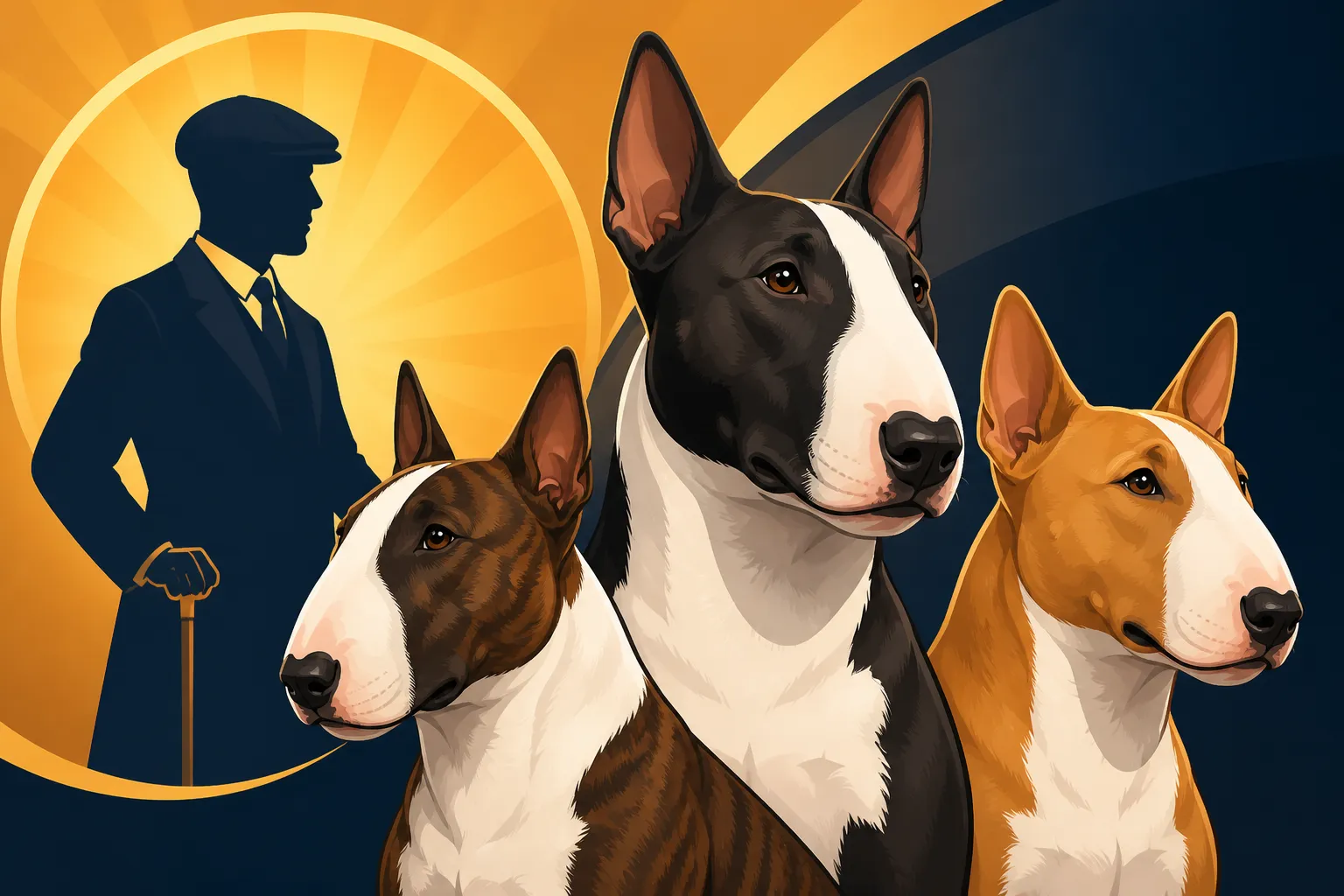
Who Bred the First Colored Bull Terriers
Many people today imagine a Bull Terrier as that iconic, all-white dog with the distinctive egg-shaped head. It's a powerful image, almost a trademark for the breed. But if you're like me, you might find yourself wondering why only white was once considered the "true" Bull Terrier, and who bravely went against the grain to bring the beautiful array of colors we see today back into the fold. The story of the colored Bull Terrier is a fascinating journey of perseverance, a fight for genetic diversity, and one man's vision that ultimately enriched the entire breed. This guide dives deep into the historical figures and the dedicated efforts that led to the re-emergence and eventual acceptance of colored Bull Terriers.
The Early Days: Hinks and the White Cavalier Ideal
When James Hinks developed the Bull Terrier in the mid-19th century, his vision was clear and singular: an all-white dog. This wasn't just a random preference; it was a deliberate choice that defined the breed's initial identity and set it apart from its rougher, fighting "bull and terrier" ancestors. Hinks's objective was to create a refined, elegant companion – a "White Cavalier" that embodied courage without belligerence, and beauty without compromise.
James Hinks' Vision for the Bull Terrier
James Hinks, a dog dealer from Birmingham, England, had a very specific ideal in mind when he set out to create the Bull Terrier. He wanted a dog that was striking, distinctive, and clearly separated from the brawling pit dogs of the past. The pristine white coat, to him, symbolized purity, gentility, and a departure from the rough-and-tumble image of the Old English Bulldog and English White Terrier crosses that formed the breed's foundation. This focus on an unblemished white coat was revolutionary at the time, and it quickly became the hallmark of his new creation.
For Hinks, the white coat wasn't just about aesthetics; it was part of a broader vision for a dog that could be a gentleman's companion, elegant enough to walk alongside its owner without the visual baggage of its fighting forebears. He aimed for a dog that was game and courageous, yes, but also dignified and handsome. The term "White Cavalier" wasn't just marketing; it truly encapsulated the aspiration for a dog that was both formidable and refined, a loyal protector with an aristocratic air. This ideal permeated his breeding program, ensuring that any deviation from the all-white standard was seen as undesirable.
The Dominance of White in Early Show Rings
Once Hinks's white Bull Terriers gained traction, they quickly dominated the burgeoning dog show scene. Imagine the spectacle: a ring full of gleaming white dogs, all possessing that distinct profile and fierce, intelligent expression. Judges and spectators alike were captivated by their uniformity and striking appearance. Any colored offspring that occasionally appeared in litters were often overlooked, sold as pets without official recognition, or, sadly, sometimes even culled, as they didn't fit the strict aesthetic standard of the time.
The breed standard itself was written to champion the all-white coat, solidifying its place as the sole acceptable color for competition and serious breeding. This meant that for decades, breeders focused intensely on producing only white Bull Terriers, inadvertently narrowing the genetic diversity that might have been preserved had color been embraced earlier. The selective pressure was immense, driving the white ideal deep into the breed's lineage, pushing out any visible trace of the ancestral colors that were undoubtedly present in their genetic makeup. This period established a very strong identity for the Bull Terrier, but also introduced challenges that would only become apparent much later.
The Challenges of an All-White Breed
While the "White Cavalier" was undeniably handsome and popular, the intense focus on an all-white coat brought with it a raft of unforeseen challenges. Breeders and owners soon realized that this aesthetic ideal had practical downsides, particularly concerning the health and well-being of the dogs. It wasn't just a matter of preference; it became a genuine concern for the breed's future.
The Health Imperatives: Deafness and Skin Issues
One of the most significant and heartbreaking issues directly linked to the all-white coat was congenital deafness. Many white Bull Terriers, especially those with minimal pigmentation in their skin or eyes, were born deaf in one or both ears. This isn't unique to Bull Terriers; it's a known genetic link in many white-coated breeds, but it was particularly prevalent in the intensely white Bull Terriers of the era. Owners would often discover a puppy was deaf only after bringing it home, leading to immense frustration and difficult decisions. It forced a reckoning among breeders who, up until then, had prioritized only visual aesthetics. You can learn more about this by reading Why a White Bull Terrier Should Be BAER Tested.
Beyond deafness, the pristine white coat often came hand-in-hand with sensitive skin. Bull Terriers, in general, are prone to skin issues, but white dogs tend to be particularly susceptible. Their skin, often pink and sparsely pigmented, is highly vulnerable to sunburn, allergic reactions, and various dermatological conditions. Imagine trying to keep a sun-loving dog comfortable when every ray of sun could cause painful burns, or battling chronic skin allergies that left them itchy and uncomfortable. It was a constant battle for many owners. For more detailed insights into this, check out A Bull Terrier's Skin Is Its Weakest Point and Why a White Bull Terrier Sunburns. These were serious quality-of-life concerns that went far beyond mere cosmetic preferences.
The Pushback Against Monochromatic Breeding
As these health issues became undeniable, a growing number of breeders and dedicated Bull Terrier enthusiasts began to question the wisdom of maintaining such a rigid, all-white standard. They understood that the pursuit of a monochromatic coat, while visually striking, was limiting the breed's genetic diversity and potentially exacerbating health problems. There was a quiet, yet persistent, movement among those who believed that opening up the gene pool to include colored dogs was not just about aesthetics, but about the long-term health and vitality of the breed itself.
This pushback wasn't always loud or confrontational. Often, it manifested as individual breeders quietly experimenting with colored lines, recognizing that healthy, robust dogs with a splash of brindle or red were just as much Bull Terriers as their white counterparts. They understood that the genetic components for color were still present, albeit suppressed by generations of selective breeding for white. The hope was that by reintroducing these colors, they could also reintroduce a broader spectrum of healthy genes, mitigating some of the issues that had become so prevalent. It was a slow but steady realization that perhaps the beauty of the breed lay not just in its iconic white, but in its full genetic potential.
The Resurgence of Color: Ted Lyon's Legacy
The tide began to turn thanks to the efforts of a visionary breeder who understood the importance of genetic diversity and wasn't afraid to challenge the prevailing norms. Ted Lyon stands out as the singular figure most credited with championing and successfully reintroducing colored Bull Terriers, effectively changing the course of the breed's history. His commitment was instrumental in broadening the breed's genetic base and ensuring its healthier future.
Who Was Ted Lyon?
Ted Lyon was a passionate and influential Bull Terrier breeder from England, who, unlike many of his contemporaries, saw immense value in the colored varieties of the breed. While the precise details of his early life might be elusive now, his impact on the Bull Terrier world is undeniable. He was a man who deeply loved the breed but wasn't beholden to its historical aesthetic dogma. Lyon understood that beneath the pure white coat, the Bull Terrier’s ancestors were rich in color, and that this color carried with it a broader genetic library crucial for the breed's health. He wasn't just breeding for color; he was breeding for robustness and vitality.
Lyon's approach was revolutionary because he didn't view colored Bull Terriers as inferior or merely "pets." He saw them as legitimate, valuable representatives of the breed, deserving of recognition and a place in the show ring. His passion wasn't just for a pretty coat; it was for a stronger, healthier Bull Terrier. He likely possessed a deep understanding of genetics for his time, or at least a keen observational eye, realizing that continually narrowing the gene pool to maintain an all-white standard was unsustainable. He dedicated himself to showcasing the quality and soundness of his colored stock, proving that beauty and health could indeed come in a spectrum of hues.
Reintroducing Color to the Mainstream
Ted Lyon didn't just quietly breed colored Bull Terriers; he actively worked to bring them into the mainstream consciousness and gain official recognition. This was no small feat. He meticulously selected and bred dogs that displayed quality conformation and carried traditional Bull Terrier colors like brindle, red, and black-and-tan, which had been pushed out of favor for so long. His breeding program was designed to demonstrate that colored dogs could be every bit as typy and sound as their white counterparts, dispelling the myth that color somehow equated to impurity or a lack of quality.
He campaigned tirelessly for the acceptance of colored Bull Terriers within the official breed standards. This meant showcasing his dogs at shows, educating fellow breeders and judges, and advocating within the kennel clubs. It was a long and often uphill battle against deeply ingrained traditions and preferences. However, Lyon's dedication and the undeniable quality of his colored Bull Terriers gradually won over skeptics. His efforts paved the way for the eventual recognition of colored Bull Terriers by major kennel clubs, marking a pivotal moment in the breed's history. You can explore the timeline of this acceptance in more detail by looking up When Colored Bull Terriers Were Accepted. Without Ted Lyon's persistence and foresight, the vibrant Bull Terriers we admire today might have remained on the fringes.
The Path to Acceptance and Integration
The journey from outcast to accepted champion was a long and arduous one for colored Bull Terriers. It involved more than just breeding beautiful dogs; it required a significant shift in mindset within the Bull Terrier community and a concerted effort to change official breed standards. The integration of color was a testament to the dedication of pioneering breeders and the growing scientific understanding of genetic health.
The Battle for Recognition in Breed Clubs
The decision to officially recognize colored Bull Terriers was not met without controversy. Within breed clubs, there were passionate arguments on both sides. Traditionalists, who had invested decades into perfecting the "White Cavalier," feared that introducing color would dilute the breed's unique identity, compromise its purity, and perhaps even bring back undesirable traits from its more distant ancestry. They had a strong attachment to the white standard, which had defined the Bull Terrier for so long.
On the other hand, a progressive faction, often led by figures like Ted Lyon, argued that genetic diversity was paramount for the breed's long-term health and viability. They presented evidence of the health problems linked to the exclusive breeding of white dogs and highlighted the robustness and excellent temperaments of their colored lines. The discussions were often heated, reflecting the deep emotional investment breeders had in the breed. Eventually, thanks to persistent advocacy and the undeniable quality of the colored dogs being produced, kennel clubs began to grudgingly, then fully, accept colored Bull Terriers into their ranks, allowing them to compete and be registered alongside their white counterparts. This was a huge victory for advocates of genetic diversity.
The Diverse Palette of Today's Bull Terrier
Today, the Bull Terrier boasts a magnificent array of colors, each with its own charm, and all fully recognized by breed standards worldwide. No longer are breeders restricted to white; instead, they can work with a rich tapestry of hues and patterns. This includes striking brindles, deep reds, beautiful tri-colors (black, tan, and white), and solid black-and-tan dogs, among others. These colors are not just visually appealing; they represent a stronger, more varied gene pool. You can see the full spectrum of accepted colors by checking Which Colors a Bull Terrier Comes In.
This diverse palette has had a profound impact on the breed's overall health and vitality. By allowing a wider range of genetic combinations, breeders can make more informed choices, focusing on temperament, conformation, and genetic health, rather than being confined by a single color criterion. It has fostered a more holistic approach to breeding, where the Bull Terrier's welfare is prioritized alongside its iconic appearance. This openness to color is a direct result of the battles fought by early advocates and a testament to the breed's evolution.
The Impact of Color on the Modern Bull Terrier
The decision to reintroduce and accept colored Bull Terriers was more than just a cosmetic change; it had profound and lasting effects on the breed as a whole. It ushered in an era where health, genetic diversity, and responsible breeding practices could take a more prominent role, ensuring the longevity and well-being of these remarkable dogs.
Health and Genetic Diversity Benefits
The most significant benefit of embracing colored Bull Terriers has been the expansion of the breed's gene pool. When breeders were solely focused on producing all-white dogs, they were effectively working with a limited set of genetic material. This often meant inadvertently doubling up on genes for certain health conditions or simply missing out on beneficial genes that were tied to colored lines. By allowing all colors, breeders gained access to a much wider range of genetic combinations, which inherently promotes greater overall health and resilience.
Think of it like this: if you only choose from a very small family tree, you're more likely to encounter the same predispositions. By broadening that tree to include branches with different colors, breeders are better able to avoid propagating specific genetic weaknesses. This doesn't mean colored Bull Terriers are immune to all health issues—far from it—but it does mean that the breed as a whole has a better chance of being robust. This expanded gene pool is crucial in mitigating breed-specific health issues like deafness and certain skin conditions, which had become more prevalent in the purely white lines. It’s an ongoing process, but the foundational step of embracing color was key. Whether a Colored Bull Terrier Is Healthier explores this further.
Dispelling Myths and Embracing Variety
The integration of colored Bull Terriers also played a vital role in dispelling many long-held myths and misconceptions. For a long time, there was an underlying belief among some that colored Bull Terriers were somehow "less pure" or had inferior temperaments compared to their white counterparts. These were often unfounded prejudices born from tradition rather than fact. As more quality colored dogs were bred and excelled in various capacities, it became clear that a dog's coat color had no bearing on its intelligence, temperament, or loyalty.
Today, we celebrate the full spectrum of the Bull Terrier's appearance. Whether a dog is a vibrant red, a striking brindle, a classic white, or a handsome tri-color, its true Bull Terrier spirit shines through. Responsible breeders now prioritize a comprehensive approach, focusing on genetic health clearances, temperament, and adherence to the breed standard, regardless of color. This includes ensuring parents are tested for hereditary conditions such as kidney disease and heart murmurs, a critical aspect of responsible breeding you can read about in What a Bull Terrier Breeder Should Have Tested. Tools from suppliers like Chewy can even help owners provide specialized care for their Bull Terriers, from specific diets to skin care products, regardless of their coat color. Embracing this variety has not only made the breed more visually appealing but also contributed significantly to its overall genetic health and stability, allowing us to appreciate these magnificent dogs for all their unique qualities.
Bull Terrier Color Acceptance Timeline and Key Attributes
The journey from an all-white ideal to the acceptance of diverse colors in the Bull Terrier breed was a gradual process, marked by significant milestones and the dedication of breeders. This table provides a simplified overview of how perception and official recognition evolved over time.
| Aspect | Early Bull Terriers (Hinks' Era) | Post-Ted Lyon & Modern Era |
|---|---|---|
| Dominant Color | Pure White | White, Brindle, Red, Tricolor, Black-and-Tan |
| Breeding Goal | "White Cavalier" purity | Health, Temperament, Type (all colors) |
| Health Challenges | Higher incidence of deafness & skin issues due to limited gene pool | Reduced incidence of certain color-linked issues; broader genetic health focus |
| Show Ring Acceptance | Only White Bull Terriers | All recognized colors accepted equally |
| Genetic Diversity | Very Narrow | Significantly Broader |
| Primary Advocates | James Hinks (for white) | Ted Lyon (for color) |
| Breed Standard Evolution | Initially strict white only | Evolved to include diverse colors |
Care for Your Bull Terrier, Whatever Its Color
Regardless of your Bull Terrier's beautiful coat color, responsible ownership means being prepared for their specific needs. Many owners find themselves navigating unique challenges that come with the breed, from their robust exercise requirements to their often-sensitive skin. Just because your Bull Terrier is colored doesn't mean they're immune to all skin problems; they can still experience allergies or need specific care.
For example, a Bull Terrier's short, coarse coat, while generally low-maintenance, still needs regular brushing to keep shedding to a minimum and to distribute natural oils. Companies like Chewy offer a fantastic array of grooming tools, from rubber curry brushes that work wonders on their dense fur to hypoallergenic shampoos designed for sensitive skin. Regular grooming sessions aren't just about keeping them looking good; they're also a great opportunity to conduct weekly skin checks, looking for any redness, bumps, or dry patches that might signal an underlying issue.
Diet plays a crucial role in maintaining a healthy coat and skin, too. High-quality dog food, appropriate for their age and activity level, can make a huge difference. If your Bull Terrier has specific dietary sensitivities, or if your vet recommends a specialized diet for any health concerns (like kidney support, for instance), you'll find a wide selection of prescription and limited-ingredient foods available through various pet supply retailers, including online platforms like Chewy. A balanced diet contributes not only to their external appearance but also to their overall vitality and well-being.
Finally, remember that mental and physical stimulation is paramount for a Bull Terrier. An under-exercised or bored Bull Terrier can quickly become a destructive one, regardless of its color! Ensuring they get ample opportunities for play, walks, and training helps keep them happy and healthy, inside and out. It's a holistic approach that celebrates the Bull Terrier in all its wonderful, colorful glory.
Disclaimer
This article is for general informational purposes only and does not constitute professional advice. Laws, prices and regulations vary by location and change over time. Consult a qualified professional for guidance on your specific situation.