Signs a Bull Terrier Is Overheating
It's every Bull Terrier owner's worst nightmare: seeing your typically boisterous, energetic dog suddenly sluggish, struggling to breathe, and realizing they're dangerously overheating. These wonderful, goofy dogs have a unique combination of enthusiasm and physical traits that can make them surprisingly susceptible to heatstroke, and recognizing the early signs can literally be a lifesaver. This guide is here to walk you through exactly what to look for, from subtle cues to critical symptoms, so you can act quickly and keep your beloved Bull Terrier safe.
Why Bull Terriers Are Prone to Overheating
You might look at your Bull Terrier's short, sleek coat and think they'd be fine in the heat, but that's not always the case. There's a lot more to managing their temperature than just hair length, and their unique breed characteristics can actually put them at a higher risk for heat stress than many other dogs.
The Bull Terrier's Unique Build and Energy Levels
Bull Terriers are solid, muscular dogs, built like little tanks. They carry a lot of body mass, which can generate and retain heat, especially when they're active. Unlike some other breeds with double coats, their single, close-lying coat doesn't offer much insulation against heat, nor does it help cool them down significantly. Their enthusiasm for life is also a double-edged sword; a Bull Terrier can get so caught up in playtime or a walk that they simply push past their body's signals of discomfort. They're often so driven and focused on whatever fun they're having that they'll run themselves ragged without realizing they're in trouble until it's too late. It’s important to remember that for a Bull Terrier, "enough" exercise is often more than they should have in certain conditions. If you want a deeper dive into their physical needs, read How Much Exercise a Bull Terrier Actually Needs.
Moreover, their distinctive "egg-shaped" head, while adorable, can sometimes contribute to less efficient panting for some individuals, though they are not considered a brachycephalic (short-nosed) breed in the same way a Bulldog or Pug is. Still, any impediment to airflow through the mouth and nose makes it harder for a dog to cool themselves, as panting is their primary mechanism for heat exchange. Their deep chests and compact build also mean they have a large core body temperature to manage.
Environmental Factors and Humidity
It's not just about the thermometer reading; humidity plays a massive role in how well your Bull Terrier can cool down. Dogs cool themselves primarily through evaporative cooling when they pant. When the air is saturated with moisture, that evaporation becomes much less efficient. So, a seemingly mild 75°F (24°C) day with high humidity can be far more dangerous than a dry 85°F (29°C) day.
Think about walking your Bull Terrier on a sunny afternoon. The asphalt or concrete pavements can absorb and radiate heat, becoming scorching hot, easily reaching temperatures that can burn paw pads and significantly increase your dog's overall body temperature from the ground up. This radiant heat can exacerbate the problem, making it even harder for your Bull Terrier to dissipate excess heat. Even a short walk in these conditions can turn dangerous quickly. For more on navigating warmer weather, check out How Well a Bull Terrier Handles Heat and Whether a Bull Terrier Should Walk at Midday.
Early Warning Signs of Heat Stress
Recognizing the first signs of heat stress is absolutely critical. This is the stage where you still have time to intervene effectively and prevent a full-blown emergency. Don't wait until your dog collapses – learn to read these subtle (and not-so-subtle) cues.
Excessive Panting and Drooling
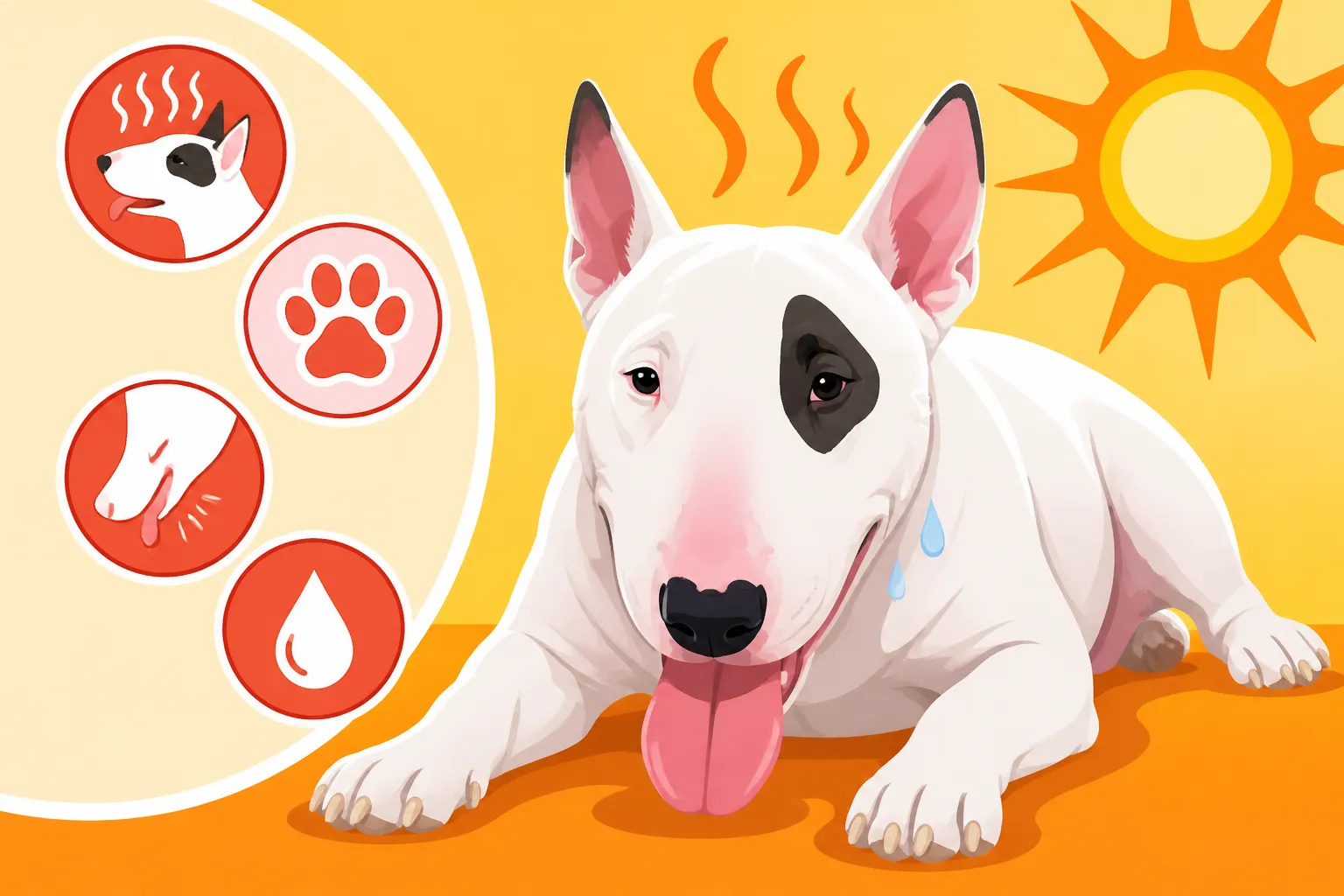
One of the first and most obvious signs your Bull Terrier is getting too hot is a change in their panting. While panting is normal for dogs, especially after exercise or in warm weather, "excessive" panting goes beyond that. You'll notice it's much heavier, faster, and often louder than usual. Their breathing might seem labored, and their chest could be heaving more vigorously.
Accompanying this intensified panting will often be increased drooling. As your Bull Terrier tries desperately to cool down through evaporation, their salivary glands kick into overdrive. You might see ropes of thick, stringy saliva hanging from their mouth, or a constantly wet chin and chest. This isn't just a bit of slobber; it's a clear signal their body is working overtime to shed heat. If you've been around Bull Terriers, you know they can be prone to some drooling anyway, especially around meal times, but this is different – it's relentless and directly tied to their labored breathing.
Changes in Behavior and Energy
Your Bull Terrier's personality is typically boundless, full of energy, and eager to engage. So, any noticeable shift in their usual behavior should raise a red flag. If your normally enthusiastic dog suddenly seems lethargic, reluctant to play, or uninterested in a walk they'd normally leap at, heat stress could be the culprit. They might start actively seeking out shade, lying down more frequently, or trying to find cooler spots on tile or concrete, even when inside.
You might also notice subtle signs of discomfort, such as restless pacing, an inability to settle, or even a confused or disoriented look in their eyes. They may appear to be "slowing down" or moving with less coordination than usual, perhaps stumbling slightly or showing a general lack of their typical grace. Sometimes, they might even seem a bit irritable or anxious, not quite themselves. Given What a Bull Terrier's Temperament Is Really Like, this deviation from their normal clownish, happy demeanor is a serious indicator that something is wrong.
Advanced and Critical Symptoms of Heatstroke
If early signs are missed or ignored, heat stress can quickly escalate into full-blown heatstroke, a life-threatening emergency. At this stage, swift action is absolutely paramount. These symptoms indicate that your Bull Terrier's internal organs are starting to be affected and time is of the essence.
Gastrointestinal Distress and Disorientation
As heatstroke progresses, it affects nearly every system in your dog's body, including their digestive tract and neurological functions. You might observe vomiting, which can sometimes be accompanied by diarrhea. In severe cases, the diarrhea could even contain blood, a very alarming sign of serious internal damage. This gastrointestinal upset is a clear indicator that their body is in crisis.
Neurologically, disorientation becomes more pronounced. Your Bull Terrier might start to stumble, stagger, or even appear to be walking "drunk." They might stare blankly into space, seem completely oblivious to their surroundings, or even lose consciousness and collapse. Seizures are another terrifying symptom of advanced heatstroke, indicating severe brain swelling and damage. At this point, your dog is in grave danger, and delaying veterinary intervention could have fatal consequences. This is when How a Bull Terrier Hides Pain becomes especially critical, as even in distress, some dogs might try to push through until they physically can't anymore.
Physical Indicators: Gums, Skin, and Temperature
Beyond what you can see them doing, there are critical physical signs that indicate severe heatstroke. Take a look at your Bull Terrier's gums. In the early stages of overheating, their gums might appear bright red, indicating increased blood flow as their body tries to dissipate heat. However, as their condition worsens and circulation falters, their gums can become pale, grey, or even bluish (cyanotic) if oxygen supply is compromised. Press your finger lightly on their gums; normally, the color returns almost immediately. If it takes longer than two seconds, that's another red flag.
When you touch their body, their skin will feel intensely hot to the touch, far beyond what you'd expect from a warm day. You might also notice their pulse is very rapid. If you have a rectal thermometer and know how to safely use it, a temperature above 104°F (40°C) is a serious concern, and anything over 106°F (41°C) is an immediate life-threatening emergency requiring urgent veterinary care. However, don't waste precious time fumbling with a thermometer if you suspect heatstroke; focus on immediate cooling and getting to the vet.
Here’s a quick summary of the severity levels:
| Symptom Category | Early Heat Stress | Moderate Heat Exhaustion | Severe Heatstroke |
|---|---|---|---|
| Panting/Breathing | Faster, deeper panting, slightly louder than usual | Very heavy, rapid panting, more labored, noisy breathing | Gasping, struggling to breathe, extremely shallow or very rapid |
| Drooling | Increased drooling, wet chin | Heavy, thick, stringy drool | Profuse drooling, foaming at the mouth |
| Energy/Behavior | Seeking shade, reluctant to play, slightly sluggish | Lethargy, weakness, disinterest in surroundings, stumbling | Collapse, loss of consciousness, seizures, coma |
| Gums | Bright red | Bright red, possibly dry | Pale, grayish, or bluish; very dry, sticky |
| Body Temperature | Feels very warm | Hot to the touch, potentially >104°F (40°C) | Extremely hot to the touch, often >106°F (41°C) |
| Other | Restlessness, increased thirst | Vomiting, diarrhea | Bloody diarrhea, pinpoint hemorrhages, rapid heart rate |
What to Do If You Suspect Your Bull Terrier Is Overheating
If you notice any of the warning signs, especially the advanced symptoms, you need to act quickly and decisively. Every minute counts when it comes to heatstroke.
Immediate First Aid at Home
The very first thing you need to do is get your Bull Terrier out of the heat immediately. Move them to the coolest spot you can find – an air-conditioned room, a shaded area, or even a cool, tiled floor. Offer them fresh, cool (not ice-cold) water to drink. Don't force them, but make it readily available.
Next, start cooling their body down. Dampen towels with cool water (again, not ice water, as too rapid cooling can cause other problems) and apply them to pulse points like their groin, armpits, and neck. You can also wet their ears and paw pads. A fan directed at them can help with evaporative cooling. Many owners find Whether a Bull Terrier Needs a Cooling Mat invaluable in these situations; you can find good options on Amazon or Chewy. Never submerge an overheating dog in ice water, as this can cause vasoconstriction, trapping heat in their core, or even induce shock. The goal is a gradual, steady reduction of body temperature. Keep a close eye on them, and if they respond to initial cooling efforts, keep them quiet and comfortable. Remember, a Why a White Bull Terrier Sunburns can be related to prolonged sun exposure, which can also contribute to overheating.
When to Seek Veterinary Care
While basic first aid is important, it's absolutely crucial to understand that if your Bull Terrier is showing any of the advanced or critical symptoms (vomiting, diarrhea, disorientation, collapse, seizures, pale/blue gums), immediate veterinary care is non-negotiable. Even if they seem to be recovering, internal damage may have occurred, and only a vet can properly assess and treat them. Don't waste time trying to cool them down completely at home if they're severely symptomatic; get them in the car and head to the nearest emergency vet clinic while continuing to apply cool, damp towels.
At the vet, they will measure your Bull Terrier's core temperature, administer intravenous fluids to combat dehydration and support organ function, and provide oxygen therapy if needed. They'll monitor for complications like kidney failure, clotting disorders, and brain swelling. Recovery from severe heatstroke can be a long and challenging process, sometimes requiring specialized diets and medications post-care, which can be sourced from pet supply retailers like Chewy or customized meal plans from services like Ollie if approved by your vet. Timely veterinary intervention dramatically increases their chances of survival and recovery. Always consider your Bull Terrier's age, as Caring for an Old Bull Terrier involves increased vigilance for heat sensitivity.
It's a terrifying experience to see your Bull Terrier struggle with the heat, but knowing these signs and how to react can make all the difference. Stay vigilant, stay prepared, and always prioritize your Bull Terrier's comfort and safety in warmer weather. Their goofy, loving nature relies on you to be their advocate. Don't forget that consistent general wellness checks, as discussed in How Often a Bull Terrier Needs a Wellness Exam, can also help you understand your individual dog's baseline and heat tolerance. While The Ten to Fourteen Years a Bull Terrier Gets is a good average lifespan, managing risks like heatstroke is key to reaching those senior years with good health.
Disclaimer
This article is for general informational purposes only and does not constitute professional advice. Laws, prices and regulations vary by location and change over time. Consult a qualified professional for guidance on your specific situation.