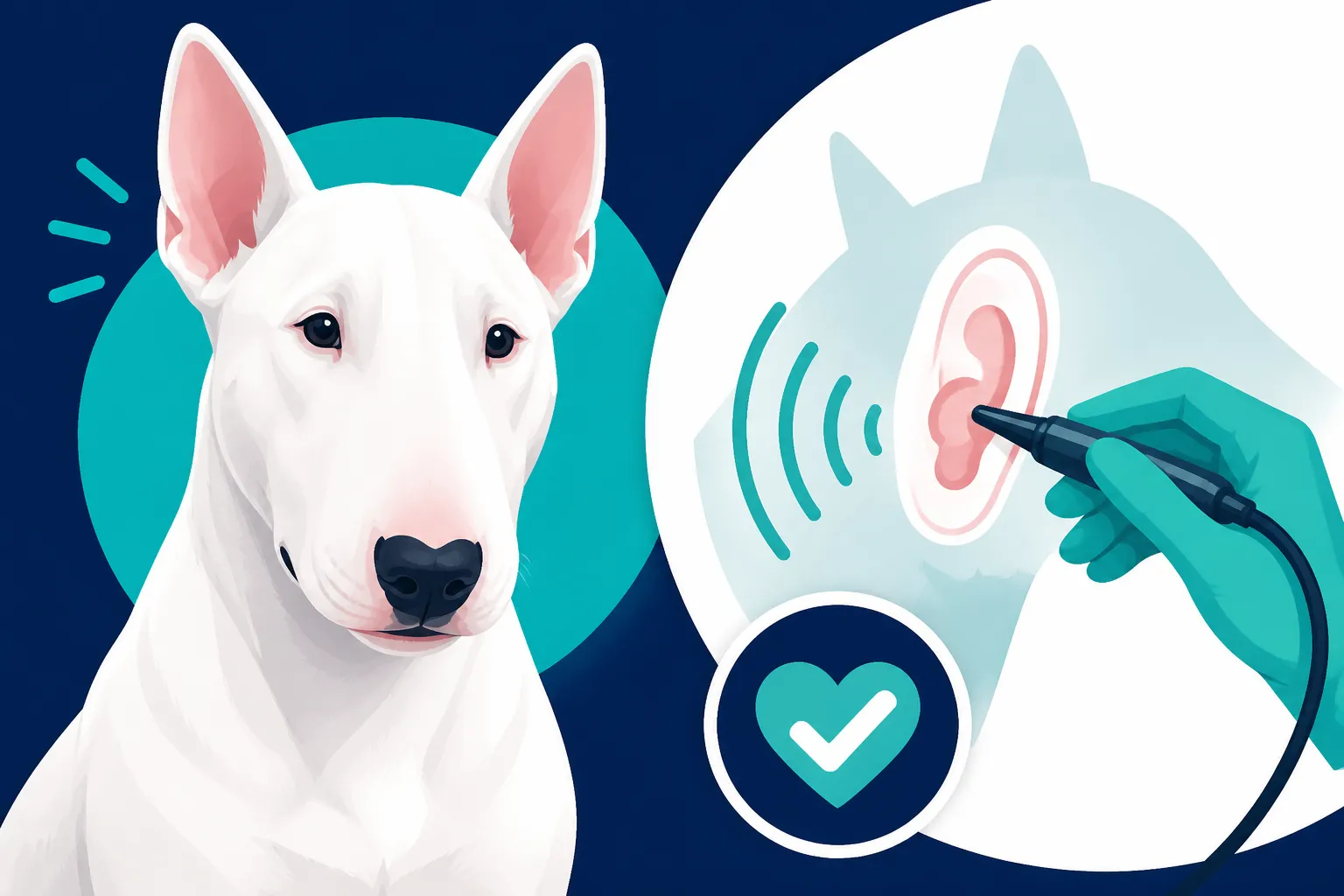
Why a White Bull Terrier Should Be BAER Tested
Bringing a new Bull Terrier puppy home is a whirlwind of joy, excitement, and, let's be honest, a good dose of anxiety. You've heard the whispers, seen the online forums, and maybe even had your breeder mention it: white Bull Terriers can be deaf. This isn't just a trivial concern; it's a serious potential health issue that can deeply impact your dog's safety, training, and overall well-being. This comprehensive guide is here to walk you through exactly why a simple test, known as a BAER test, is absolutely non-negotiable for every white Bull Terrier, providing peace of mind and the tools to ensure your beloved companion thrives.
The Unique Vulnerability of White Bull Terriers to Deafness
It’s a common misconception that deafness in dogs is simply bad luck or an injury. While those things can happen, a significant portion of canine deafness, especially in certain breeds, is genetic, and white Bull Terriers are unfortunately right at the top of that list. The connection isn't just anecdotal; it's deeply rooted in the genetic makeup that gives them their stunning, pristine white coats. Understanding this link is the first step in appreciating why proactive testing is so vital.
The Genetic Connection: Melanin and Hearing
At its core, the predisposition to deafness in white Bull Terriers comes down to melanin, the pigment responsible for color in skin, hair, and eyes. It might seem strange, but melanin plays a crucial role in the development of certain cells in the inner ear. Specifically, the cells in the stria vascularis, which are essential for producing the endolymph that bathes the sensory hair cells and for maintaining the proper chemical balance for hearing, are derived from melanocytes.
When a dog's genes dictate an all-white coat, it's often due to a dominant white gene or a piebald gene that suppresses pigment production extensively. This gene doesn't just affect the fur; it can also impact the migration and survival of those crucial melanocytes in the inner ear during embryonic development. If these cells don't develop properly, or if they degenerate early, the dog can suffer from sensory neural deafness. It's not that the ear structures are malformed, but rather that the cells responsible for transmitting sound signals to the brain simply aren't functioning. This condition is known as cochleosaccular degeneration. It's a silent threat, present from birth, and often undetectable without specialized testing.
How Deafness Manifests in Bull Terriers
Deafness in Bull Terriers isn't always obvious, which is part of the challenge for owners. It can present in two primary ways: unilateral deafness or bilateral deafness.
Unilateral deafness means the dog is deaf in only one ear. This is surprisingly common in white Bull Terriers, and it’s also the trickiest to spot without a BAER test. Imagine living your life with one perfectly functioning ear and one that hears nothing. You'd likely adapt quickly, learning to orient yourself using your good ear. Dogs do the same. A unilaterally deaf Bull Terrier can often lead a seemingly normal life, responding to sounds and appearing to hear perfectly well. They might compensate by turning their head more often or seeming a little startled if approached from their deaf side. However, their ability to pinpoint the source of a sound is compromised, which can affect their awareness of their surroundings. You might find yourself asking, "How Many White Bull Terriers Are Born Deaf?" – and the answer often surprises people, especially when considering the subtle nature of unilateral hearing loss.
Bilateral deafness, where the dog is deaf in both ears, is usually more apparent, though not always immediately in a young puppy. Puppies are often very observant and pick up on visual cues from their littermates and mother. They might startle less often, sleep through loud noises, or simply not respond to claps or calls. Owners might notice their puppy isn't responding to their voice or doesn't wake when the vacuum cleaner starts. However, even bilateral deafness can be misinterpreted as stubbornness or lack of training, especially in a breed as notoriously independent as a Bull Terrier. This is why relying solely on behavioral observation is unreliable and can delay crucial understanding and intervention.
Why White Bull Terriers Are Different
While deafness can occur in any dog breed, and even in colored Bull Terriers, the incidence rate is significantly higher in white Bull Terriers due to the genetic factors we just discussed. In some studies, the prevalence of deafness in white Bull Terriers can be as high as 10-20% for bilateral deafness and even higher for unilateral deafness. This isn't just about a "pretty" coat; it's a direct consequence of selective breeding for a specific aesthetic trait that inadvertently brought along a significant health risk.
It's important to differentiate between merely having white markings and being an all-white dog. A colored Bull Terrier with extensive white on its chest or paws is generally not at the same heightened risk as a pure white Bull Terrier, where the dominant white or extreme piebald genes are at play. These genes effectively 'wash out' pigment across most or all of the body, including the inner ear. Because of this inherent genetic link, responsible breeding programs for Bull Terriers absolutely prioritize health testing, especially BAER testing for white pups, to ensure that puppies entering homes have the best possible start and that owners are fully aware of their dog's health status. Ignoring this reality is not just naive; it can be irresponsible.
What Exactly is a BAER Test?
When you hear "BAER test," it might sound intimidating, like some complex brain surgery, but I promise you, it's not. The Brainstem Auditory Evoked Response (BAER) test is a non-invasive, objective neurological test that measures the electrical activity in the cochlea and auditory pathways in the brain in response to sound stimuli. Think of it as an ECG for the ears and brainstem – it tells us if the sound signals are actually making it from the ear to the brain.
The Science Behind the Sound Waves
To truly grasp the magic of the BAER test, let's quickly touch on how hearing works. Sound waves travel into the ear canal, vibrate the eardrum, which in turn moves tiny bones (ossicles) in the middle ear. These vibrations are then transferred to the fluid-filled cochlea in the inner ear. Inside the cochlea, specialized hair cells convert these mechanical vibrations into electrical signals. These electrical signals then travel along the auditory nerve to the brainstem and eventually to the auditory cortex in the brain, where they are interpreted as sound.
What the BAER test does is measure these electrical signals. Tiny electrodes are placed on the dog's scalp, near each ear, and a ground electrode is placed elsewhere. Miniature headphones or foam inserts are placed in each ear, delivering a series of clicks. If the ear and its pathways are working, the clicks generate specific electrical waves that can be recorded by the electrodes. These waves are then amplified and displayed on a computer screen. The characteristic peaks and valleys of these waves indicate whether the sound signal is successfully reaching the brainstem. If there are no waves, or if they are significantly diminished, it indicates a problem with hearing in that ear. This gives us a definitive, scientific answer to the question, "Can my dog hear?"
What Happens During the Test
The BAER test is typically a quick and painless procedure. Your Bull Terrier puppy, or even an adult dog, will need to be calm and still during the test. For most puppies, especially active Bull Terrier pups, this often means they will be sedated to ensure they remain perfectly still and relaxed. This isn't for pain, but to prevent muscle twitches or movements from interfering with the delicate electrical readings. The sedation is generally light and short-acting.
Once sedated, small needle electrodes (they look like tiny acupuncture needles) are gently placed under the skin: one directly on the top of the head (the vertex), one just in front of each ear, and a ground electrode usually on the neck or shoulder. These electrodes are connected to a special computer. Earphones or small foam inserts are then placed into each ear, one at a time, to deliver the clicking sounds. The clicks are delivered at varying intensities, usually starting at a lower level and increasing, to determine the threshold of hearing.
The veterinary professional administering the test will monitor the computer screen, looking for the characteristic wave patterns. They test each ear independently, ensuring that any hearing loss is pinpointed to the correct side. The entire procedure usually takes about 15-30 minutes, depending on the dog's cooperation and the tester's experience. Once the test is complete, the electrodes are removed, and your Bull Terrier will wake up from the sedation, often a little groggy but otherwise unaffected. The best part? You usually get the results immediately.
Interpreting BAER Test Results
Understanding the results of a BAER test is quite straightforward. For each ear, the outcome will be one of three possibilities:
- Normal Hearing: This means clear, distinct wave patterns are observed, indicating that sound signals are successfully reaching the brainstem. This is the ideal result, confirming your Bull Terrier hears perfectly in that ear.
- Unilateral Deafness: The test shows normal wave patterns in one ear but no discernable activity in the other. This means your Bull Terrier is deaf in one ear. As mentioned earlier, this is often hard to detect without the BAER test, and the dog can still function very well.
- Bilateral Deafness: No wave activity is detected in either ear, indicating complete deafness. This means your Bull Terrier hears nothing at all.
The veterinary neurologist or technician performing the test will explain the waveforms and what they mean for your individual dog. They can show you the graph for each ear, highlighting the presence or absence of the characteristic waves. This objective measurement provides definitive proof, removing any guesswork or uncertainty that relying on behavioral cues alone might leave. Knowing "What a BAER Test Tells a Bull Terrier Owner" is empowering, allowing you to make informed decisions for your dog's future.
Why BAER Testing Isn't Optional for White Bull Terrier Owners
When you bring a white Bull Terrier into your life, the BAER test isn't just a recommendation; it's a fundamental part of responsible ownership and breeding. Skipping this crucial step can have significant implications for the dog's safety, your ability to train them effectively, and the overall well-being of the breed. It truly is a non-negotiable step, no matter how much you might want to believe your puppy can hear just fine.
Early Detection for Better Management
Imagine living with an unseen challenge. That's what it's like for a deaf or unilaterally deaf Bull Terrier whose condition hasn't been diagnosed. Early detection through BAER testing allows you to understand your dog's capabilities from the very beginning. If you know your Bull Terrier is unilaterally deaf, you can be mindful of approaching them from their hearing side, helping them feel more secure and less startled. For a bilaterally deaf Bull Terrier, early diagnosis means you can immediately implement appropriate training methods using hand signals and visual cues, rather than spending weeks or months frustrated by a dog that "just won't listen."
This proactive approach saves both you and your dog a lot of stress and misunderstanding. It prevents you from inadvertently scolding a dog for not responding to a verbal command they literally cannot hear. Instead, you can build a strong bond based on clear, visual communication. Furthermore, knowing their hearing status informs all aspects of their care, from how you interact with them at home to how you manage them in public spaces. It really sets the foundation for a harmonious life together, built on understanding rather than assumptions.
Preventing Unforeseen Dangers
This is perhaps the most critical reason for BAER testing. Deafness, especially bilateral deafness, poses significant safety risks that many owners don't fully consider until it's too late. A deaf dog cannot hear a car approaching, a bicycle bell, or another dog's warning growl. This dramatically increases their vulnerability in outdoor environments, even in seemingly safe, fenced yards.
For unilaterally deaf dogs, while they can hear some sounds, their inability to localize sound can still put them at risk. They might not perceive a threat approaching from their deaf side until it's too close. Imagine your Bull Terrier playing in the park, and a dog off-leash bounds towards them. A hearing dog would react to the sound, turning to assess the situation. A unilaterally deaf dog might only become aware when the other dog is right on top of them, leading to potential conflict or fear.
This isn't to say deaf dogs can't live full, happy lives—they absolutely can. But it means that you, as the owner, must be hyper-vigilant and implement robust safety protocols. This might include always using a leash, even in fenced areas, or having a securely fenced yard that prevents any escapes or intrusions. Some owners even invest in GPS trackers for extra peace of mind. Knowing your dog's hearing status from the start allows you to put these safeguards in place before an accident happens, rather than after. Insurance providers like Healthy Paws often highlight the importance of preventative care and early diagnosis in managing a pet's health, and while they might not cover pre-existing deafness, understanding your dog's condition early can help prevent secondary issues.
Ethical Breeding Practices and BAER Testing
For breeders, BAER testing isn't just a good idea; it's a cornerstone of ethical and responsible breeding. Bull Terrier breeders should test every white puppy in a litter before they go to their new homes. This isn't just about transparency with potential buyers; it's about minimizing the incidence of deafness in future generations and ensuring the health of the breed.
A reputable breeder will not only BAER test their puppies but will also be transparent about the results and will provide copies of the certificates to the new owners. They understand that placing a bilaterally deaf puppy requires a special home and that unilaterally deaf puppies, while less impacted, still need an owner who is aware of their condition. Breeding two deaf Bull Terriers or even two carriers for deafness is irresponsible and perpetuates the problem. While the genetics of deafness in Bull Terriers are complex, BAER testing the offspring helps breeders make more informed decisions about which lines to continue. You should always ask a breeder, "Whether a Bull Terrier Breeder Will Show BAER Results" as this is a mark of their commitment to the health of their dogs. It’s also important for potential owners to understand what Which Health Tests a Bull Terrier Breeder Should Run includes, and BAER is certainly one of them for white dogs.
| Type of Deafness | Detection Difficulty (without BAER) | Impact on Daily Life | Safety Concerns | Training Adaptation |
|---|---|---|---|---|
| Unilateral | High (often missed) | Minor to moderate | Moderate | Minor adjustments |
| Bilateral | Moderate (can be mistaken for stubbornness) | Significant | High | Visual commands only |
This table clearly illustrates why relying on observation alone is a dangerous game.
Living with a Deaf or Unilaterally Deaf Bull Terrier
Once you know your Bull Terrier's hearing status, the real work—and the real joy—begins. Living with a deaf or unilaterally deaf Bull Terrier is absolutely rewarding, but it does require some adjustments and a commitment to understanding their world. It’s important to remember that a deaf dog isn’t “broken”; they just experience the world through different senses.
Adapting Training Methods and Communication
The biggest shift for owners of deaf Bull Terriers is moving away from verbal commands. This isn't as hard as it sounds! Dogs are incredibly adept at reading body language and visual cues. Start with positive reinforcement and hand signals for everything: sit, stay, come, down, good dog. Consistency is key, just like with a hearing dog. There are many resources available for training deaf dogs, including books, online communities, and specialized trainers.
For unilaterally deaf dogs, you might still use verbal commands, but be mindful of which side you're on. Always get their attention visually before giving a command. For both, incorporating vibrations can be helpful. A vibrating collar (not a shock collar!) can be used as a "tap on the shoulder" to get their attention, especially when they're not looking at you. This can be invaluable for recall or for alerting them to your presence. Remember, a Bull Terrier is inherently stubborn, so patience and creativity are paramount. You might discover that visual-based training can be even more precise and effective than verbal cues. Many owners find that A Bull Terrier Trains When It Sees the Point, and this is especially true for deaf dogs who rely entirely on your clear signals.
Ensuring Safety in and Out of the Home
Safety is paramount for a deaf Bull Terrier. Inside the home, ensure they have a safe, predictable environment. Avoid startling them by always approaching from their field of vision or gently touching them to alert them to your presence before petting. Consider gates to block off stairs or dangerous areas, especially if they can't hear you call out.
Outside the home, the stakes are higher. A deaf Bull Terrier should always be on a leash when outside a securely fenced area. Even in a fenced yard, supervise them closely. If your yard isn't escape-proof, consider a long line or a dog-safe enclosure. They cannot hear cars, bikes, or other dogs. Teaching a reliable "watch me" hand signal is crucial for getting their attention when distractions are present. Some owners also invest in bright, reflective vests or collars that clearly state "DEAF DOG" to alert others. This small step can make a huge difference, particularly in busy public spaces or if they somehow get loose. Knowing "Whether a Unilaterally Deaf Bull Terrier Lives Normally" often comes down to the diligence of their owner in managing their environment.
The Joys and Challenges of a Deaf Companion
Living with a deaf Bull Terrier is a unique journey. The challenges are real: the need for constant vigilance, the initial learning curve of visual communication, and sometimes, the heartbreak of explaining to well-meaning strangers why your dog isn't responding to their calls. However, the joys often outweigh these difficulties. Many owners find that deaf dogs develop an incredibly deep bond with their human companions, relying on them for guidance and communication. They become incredibly attuned to body language and subtle cues, making the connection even more profound.
They often excel in sports that rely on visual cues, like agility or scent work, and their other senses, particularly smell and touch, become heightened. Deaf dogs teach us patience, creativity, and a different way of communicating love. They are resilient, adaptable, and full of the same Bull Terrier personality and mischief you’d expect. The idea of "Whether a Deaf Bull Terrier Should Be Placed in a Home" isn't a question of capability, but of finding the right, dedicated family who understands and embraces their needs. With the right approach, a deaf Bull Terrier can lead an incredibly fulfilling and happy life, showering their humans with boundless affection.
Finding a Qualified BAER Testing Facility
You're convinced that BAER testing is essential – fantastic! Now, the practical step: where do you go, and what should you expect? Finding a qualified facility and understanding the logistics is key to getting this important test done correctly.
What to Look for in a Vet or Specialist
BAER testing is a specialized procedure, and not every general veterinary practice will have the equipment or the trained staff to perform it. You'll typically need to seek out a veterinary neurologist or a specialized veterinary clinic that offers the service. Often, university veterinary teaching hospitals or large referral centers are excellent places to start.
When searching for a facility, ask these questions:
- Do they perform BAER tests regularly? You want someone experienced in interpreting the waveforms, especially the subtle ones.
- What is their sedation protocol? Discuss the type of sedation used, its safety, and recovery time. A light, short-acting sedation is ideal.
- Will they provide a written report and a certificate of results? This is crucial for your records, for potential breeders, and for documenting your dog's health.
- What is the cost? Get a clear understanding of all fees involved, including the test itself, sedation, and any consultation fees.
- Can they accommodate your Bull Terrier's temperament? Bull Terriers can be strong-willed, and a facility that understands and handles the breed well is a plus.
Don't hesitate to call a few places to compare services and costs. Your general veterinarian might be able to refer you to a reputable facility in your area.
The Cost and Preparation Involved
The cost of a BAER test can vary significantly depending on your geographic location, the facility, and whether your Bull Terrier requires heavy sedation or additional monitoring. Generally, you can expect to pay anywhere from $150 to $400 or more. This fee usually covers the test itself, the sedation, and the interpretation of results. It’s always best to get an itemized estimate upfront. For many Bull Terrier owners, understanding What a Bull Terrier Costs to Buy in 2026 and the subsequent health expenses is critical, and a BAER test is one of those early, foundational investments.
In terms of preparation, the main thing is usually fasting. Because sedation is almost always required, your veterinarian will likely advise you to withhold food for 8-12 hours before the appointment, and water for a shorter period, usually 2-4 hours, to minimize the risk of aspiration during sedation. Ensure your Bull Terrier is healthy and free of any other acute illnesses. It's also a good idea to bring a favorite blanket or toy for comfort during recovery. Plan to stay with your dog until they are fully recovered from sedation, and ensure you have a safe way to transport them home.
The Age a Bull Terrier Puppy Can Be BAER Tested
One of the most frequently asked questions is, "When can my Bull Terrier puppy be tested?" The good news is that BAER testing can be performed quite early in a puppy's life. Puppies typically develop their full hearing by around 4-6 weeks of age. Therefore, most reputable breeders and veterinary neurologists recommend performing the BAER test between 6 to 8 weeks of age.
Testing at this age is ideal for several reasons:
- Accuracy: Their auditory system is fully developed, allowing for accurate results.
- Timeliness: It allows breeders to identify any hearing issues before puppies are placed in their permanent homes, ensuring transparency and appropriate placement.
- Minimal Stress: Puppies are still relatively small and generally handle the light sedation well.
It's possible to test older puppies or adult Bull Terriers as well, but the earlier the better, especially if you're a breeder making placement decisions or an owner wanting to begin targeted training as soon as possible. Understanding The Age a Bull Terrier Puppy Can Be BAER Tested ensures you schedule this vital screening at the most opportune time.
Beyond the Test: Ongoing Care and Support
A BAER test provides invaluable information, but it's just one piece of your Bull Terrier's lifelong health puzzle. Whether your dog has perfect hearing or needs adaptations for deafness, their overall health and well-being remain a top priority. Holistic care involves regular veterinary attention, a supportive environment, and being proactive about breed-specific concerns.
Regular Vet Checks and Health Monitoring
Regardless of hearing status, every Bull Terrier needs regular veterinary check-ups. These annual visits are crucial for monitoring overall health, discussing nutrition, maintaining vaccinations, and addressing any emerging concerns. For Bull Terriers, who are prone to a range of genetic health issues, these visits are particularly important. For instance, the breed is known for kidney problems, so The Yearly Urine Test Every Bull Terrier Owner Should Book is a standard recommendation. Your vet will also likely perform an auscultation (listening to the heart) and may recommend an echocardiogram for their heart health, especially since The Heart Murmur a Bull Terrier Puppy Should Be Checked For is another common issue.
If your Bull Terrier is deaf, these check-ups are also a chance to discuss any behavioral changes or training challenges you might be experiencing. Your vet can offer advice on managing specific situations or refer you to specialists who can help. Even if your Bull Terrier is hearing, knowing they've passed their BAER test is a great baseline for their health record.
Building a Supportive Community
Living with a deaf dog can sometimes feel isolating if you don't know others going through similar experiences. Thankfully, there are many vibrant communities dedicated to deaf dogs. Online forums, social media groups, and local deaf dog meet-up groups can be invaluable resources. Here, you can share experiences, ask for advice on training techniques, discuss enrichment ideas, and simply find understanding from people who "get it."
These communities often share tips on specific products that work well for deaf dogs, like vibrating collars, or discuss the nuances of visual communication. Connecting with others can also provide emotional support, reminding you that you're not alone in your journey and that countless deaf Bull Terriers are thriving in loving homes. This support system can make all the difference in navigating the unique aspects of living with a deaf companion.
The Broader Health Picture for Bull Terriers
While deafness is a significant concern for white Bull Terriers, it's essential to remember that it's just one of several health considerations for the breed. Bull Terriers are prone to a few other inherited conditions that responsible owners and breeders should be aware of. These include Hereditary Nephritis, a serious kidney disease; heart conditions such as mitral valve dysplasia and aortic stenosis; patellar luxation; and skin issues like allergies and zinc-responsive dermatosis. This is why What a Bull Terrier Breeder Should Have Tested goes far beyond just BAER.
A holistic approach to your Bull Terrier's health means being proactive about all these potential issues. This might involve regular urine protein-to-creatinine (UPC) ratio tests for kidney health, regular cardiac screenings, and being vigilant about any skin changes. Organizations like the Bull Terrier Club of America provide guidelines for recommended health screenings that go beyond just deafness. Proactive health management, combined with excellent nutrition, regular exercise, and mental stimulation, will ensure your Bull Terrier, regardless of their hearing, lives the longest, healthiest, and happiest life possible. And while a provider like Healthy Paws pet insurance might not cover pre-existing conditions, having a robust plan in place for all potential future health needs is always a smart move for any Bull Terrier owner. Being prepared is the best way to honor the unique, wonderful spirit of this amazing breed.
Disclaimer
The information provided in this article is for general informational purposes only and does not constitute veterinary medical advice. Always consult with a qualified veterinarian or veterinary specialist for any health concerns or before making any decisions related to your Bull Terrier's medical care.