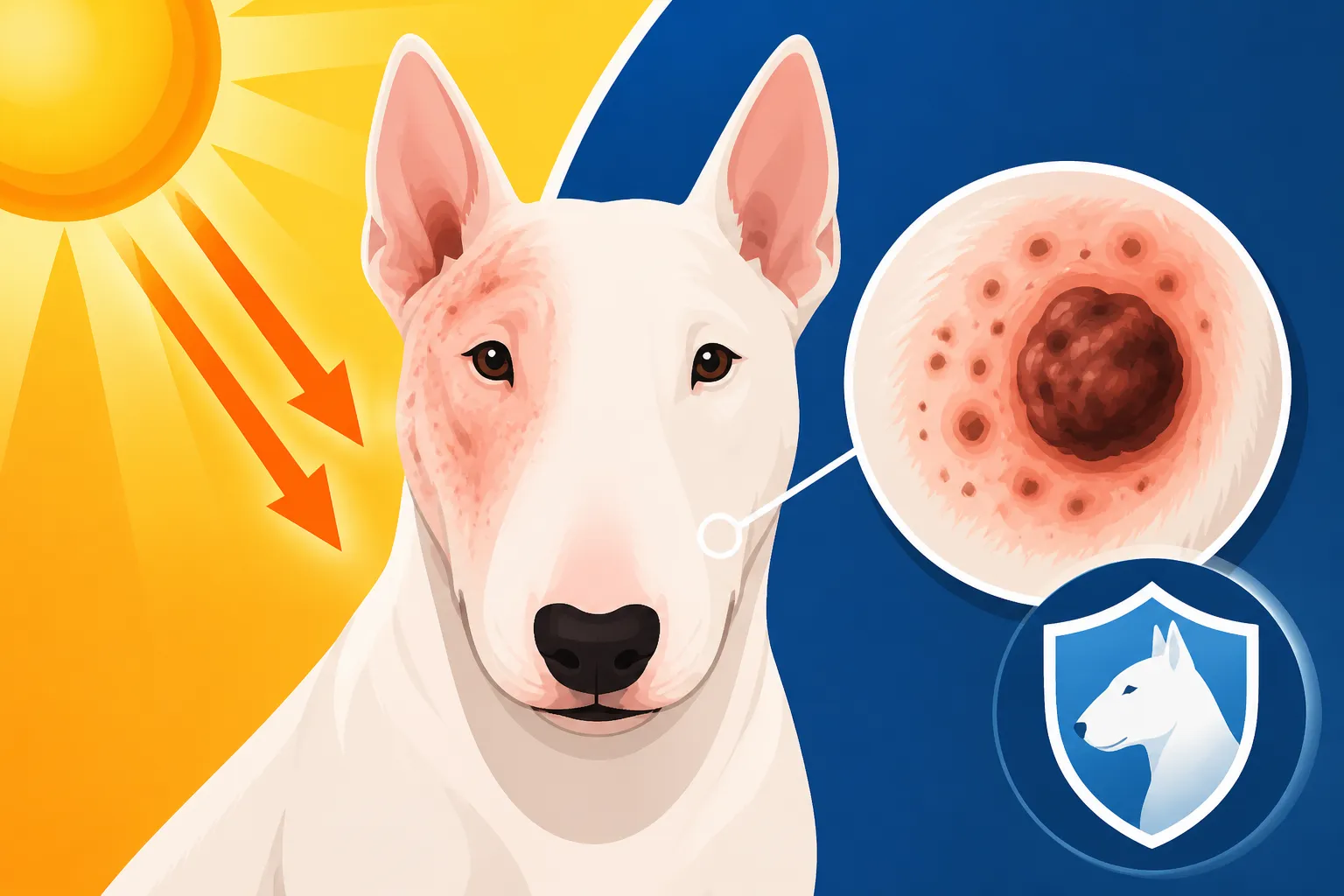
Whether Sun Damage Turns Into Skin Cancer in a Bull Terrier
It's a worry that keeps many Bull Terrier owners up at night, especially those with dazzling white coats: how much sun is too much? You see those beautiful pink patches on their belly or the tip of their nose, and a chill runs down your spine as you wonder if that lovely sunbath your bully is enjoying is actually doing long-term damage. The unfortunate truth is that sun damage in Bull Terriers, particularly the unpigmented ones, isn't just a surface issue; it absolutely can progress into something far more serious, like skin cancer. This guide is here to shed light on that connection, help you understand the risks, recognize the signs, and most importantly, equip you with the knowledge to protect your beloved, sun-loving clown.
The Bull Terrier's Vulnerable Skin and Sun Exposure
Let's be real, a Bull Terrier's skin isn't just skin; it's a statement, often bare and unpigmented, especially in our white-coated friends. This unique characteristic, while striking, comes with a significant predisposition to sun damage. Many owners feel a twinge of guilt or fear every time their bully stretches out for a nap in a sunbeam, and those feelings are completely valid.
Why Bull Terriers Are Prone to Sun Damage
Our beloved Bull Terriers, especially those with white coats, simply lack the protective melanin that darker-coated dogs have in abundance. Melanin acts like a natural sunscreen, absorbing harmful ultraviolet (UV) radiation before it can penetrate and damage skin cells. Without it, or with very little of it, their skin is essentially exposed and defenseless. It's like sending them out in the summer without any sunblock on, and we all know how quickly fair skin can burn. This inherent vulnerability means their skin is A Bull Terrier's Skin Is Its Weakest Point, making proper sun care non-negotiable.
Beyond the lack of pigment, many Bull Terriers have naturally thin coats or sparse hair in certain areas, such as their bellies, inner thighs, and the bridge of their nose. This anatomical reality exacerbates the problem, as there's no furry shield to offer even a modicum of protection against the sun's harsh rays. You might think a cloudy day is safe, but harmful UV rays can penetrate cloud cover, making even seemingly mild conditions a risk for your Bull Terrier's delicate skin. The struggle is real when your dog loves to bask, but their skin is screaming for shade. This is Why a White Bull Terrier Sunburns so easily.
It’s not just about a single, intense burn, either. It’s the cumulative effect. Every time your Bull Terrier gets a little too much sun, even if it doesn't result in a noticeable sunburn right away, those UV rays are doing microscopic damage. This damage accumulates over their lifetime, slowly chipping away at the skin's integrity and increasing the risk for more severe problems down the line. It's a silent threat that can manifest years after the initial exposure, which is why consistent protection is paramount from puppyhood right through to their senior years.
Understanding Different Types of Sun Damage
When we talk about sun damage, it’s not always the dramatic, red, peeling skin we imagine after a day at the beach. While acute sunburn is certainly a concern for Bull Terriers, there are more subtle, insidious forms of damage that accumulate over time. Acute sunburn in Bull Terriers presents just as it would in humans: redness, tenderness, and in severe cases, blistering and pain. Imagine how uncomfortable that must be for a dog who can't tell you directly. They might lick or chew at the affected areas, leading to secondary infections, or become withdrawn and restless.
Chronic sun exposure, however, is often the stealthier culprit behind more serious issues. This isn't about one bad burn, but repeated, long-term exposure to UV radiation. You might notice your Bull Terrier's skin in sun-exposed areas becoming thickened, leathery, or developing areas of hair loss, particularly if they're a white dog. There might be a noticeable change in texture, or even some discoloration, like hyperpigmentation (darker spots) or depigmentation (lighter spots). These changes are the skin's way of coping with constant assault, but they also signal a breakdown in its normal protective functions, setting the stage for more dangerous developments.
It's a misconception to think that only "hot" sun damages skin. Even in cooler weather, if the sun is out, UV radiation is present and posing a risk. This means your Bull Terrier isn't just vulnerable during summer romps; they're at risk whenever they're outdoors, particularly during midday hours when the sun's rays are strongest. The impact of these rays adds up over years, making it crucial to be mindful of sun exposure throughout their entire life. Don't underestimate the power of seemingly benign sunbeams; they can slowly and steadily contribute to significant skin issues.
Common Areas Where Sun Damage Occurs
You might think that your Bull Terrier's back is safe because it's covered in fur, but the truth is, the sun finds its way to the most vulnerable spots. The areas most susceptible to sun damage are typically those with the least hair and the palest skin. Think about the places on your own body that burn first – it's often similar for your bully. The bridge of their nose is a prime target, especially if it’s pink or unpigmented. Their ear tips, too, can be delicate and exposed. These areas are constantly catching the sun's rays, whether they're sniffing around the yard or lounging for a nap.
Beyond the face, your Bull Terrier's belly and groin area are incredibly vulnerable. Many Bull Terriers love to roll on their backs in the grass, exposing that soft, pink underside directly to the sun. This is Where a Bull Terrier Burns First, and it's also an area that's often overlooked when it comes to sun protection. Imagine how quickly human skin burns when it's never seen the sun, and you get an idea of the sensitivity of these areas on your dog. It's a real challenge because while you want them to enjoy their outdoor time, you're constantly weighing the risks of exposure.
Other less obvious, but equally susceptible areas include the skin around their eyelids, any sparse patches on their flanks, and even their paw pads if they spend a lot of time lying on hot surfaces. Even if your Bull Terrier has some color in their coat, these unpigmented patches are still at high risk. It requires a diligent eye to check these spots regularly and ensure they're adequately protected. The frustration comes from wanting them to be happy and free, but knowing that their very physiology demands constant vigilance against the sun's potentially harmful effects.
The Progression from Sun Damage to Skin Cancer in Bull Terriers
The jump from a harmless sun-kissed nose to a serious cancer diagnosis can feel sudden and terrifying, but it's often a long, slow process happening on a cellular level. Understanding this progression is key to recognizing the danger and acting quickly. It’s a stark reminder that prolonged sun exposure isn't just about superficial burns.
The Link Between UV Radiation and Cancer
At its core, the link between UV radiation and cancer in Bull Terriers, much like in humans, is about DNA damage. When those invisible UV rays hit your dog's skin, they don't just warm it up; they penetrate the skin cells and can alter their genetic material. Think of it like a tiny, invisible bomb detonating within each cell, scrambling the instructions that tell the cell how to grow and behave normally. Over time, as these damaged cells replicate, some of them can start to grow uncontrollably, leading to the formation of cancerous tumors.
This process isn't usually immediate. It's the cumulative effect of repeated damage that piles up over weeks, months, and years. Each time your Bull Terrier soaks up the sun without adequate protection, more damage occurs. Their body's immune system tries to repair these cellular errors, but it can only do so much. Eventually, some cells with unrepaired DNA damage may slip through the net and begin their malignant transformation. This is why a history of chronic sun exposure is a major risk factor, even if your Bull Terrier never had a "terrible" sunburn.
The body is incredibly resilient, but there's a limit. For Bull Terriers, whose skin is already at a disadvantage due to lack of pigment, that limit can be reached sooner. This is particularly true for older dogs, whose cellular repair mechanisms might be less efficient. It really underscores why preventative measures are so important throughout their entire lives, not just when they are puppies. Understanding that every ray adds to the risk helps reinforce the need for consistent sun protection.
Types of Skin Cancer Bull Terriers Can Develop from Sun Exposure
Unfortunately, Bull Terriers are susceptible to several types of skin cancer due to sun exposure, and recognizing them can be life-saving. The most prevalent and concerning is Squamous Cell Carcinoma (SCC). This nasty invader often appears as a raised, firm lump or a patch of skin that looks like a sore, which might be crusty, scabby, or even ulcerated and bleeding. It frequently crops up in areas of chronic sun exposure: think the bridge of the nose, the ear tips, the eyelids, and even the toes or the belly. What makes SCC particularly worrying is its tendency to be locally invasive, meaning it can spread aggressively into the surrounding tissues, though it typically doesn't spread quickly to distant organs unless very advanced. Early detection is absolutely critical here.
Another type of cancer, though less directly linked to sun exposure on the skin, but still a concern for the breed, is Hemangiosarcoma. While more commonly found internally, it can manifest on the skin, often appearing as a dark, reddish-blue or black lump. These can sometimes be mistaken for a bruise, but they are malignant tumors arising from blood vessel cells. While not as directly tied to UV as SCC, any unusual lump on a Bull Terrier, especially one that looks bruised or changes rapidly, warrants immediate veterinary attention. Their vulnerability means we must be diligent about any new growths.
Lastly, while Melanoma is most often associated with pigmented skin (like black or brown lumps), amelanotic melanomas – those lacking pigment – can occur. These can appear as pink, red, or even skin-colored masses, making them particularly tricky to identify in a white Bull Terrier. Don't assume a non-pigmented lesion is automatically benign just because it's not dark. Melanomas can be highly aggressive and spread rapidly. This is all part of the complex picture of Whether a Bull Terrier Gets Skin Cancer and why vigilance is so paramount.
Recognizing the Warning Signs of Skin Cancer
This is where your role as a diligent Bull Terrier parent truly shines. Catching these problems early is your absolute best defense. You need to become intimately familiar with every inch of your Bull Terrier’s skin, particularly those sensitive, unpigmented areas. During The Weekly Skin Check Every Bull Terrier Needs, don't just glance; really get in there and feel. Run your hands over their body, pay close attention to the nose, ear tips, belly, inner thighs, and paw pads. Look for anything new or different.
What are you looking for exactly? Start with any new lumps or bumps, no matter how small. Is there a new red spot that doesn't seem to heal? Has an existing freckle or mole changed in size, shape, or color? Any areas of non-healing sores, scabbing, or crusting should raise an immediate red flag. Sometimes, skin cancer can manifest as a persistent ulcer or a lesion that bleeds easily if bumped. These might be subtle at first, just a small, rough patch that you might dismiss as an irritation, but if it persists or grows, it warrants investigation.
The key is "change" and "persistence." If you notice anything that wasn't there before, or something that has altered its appearance or doesn't clear up within a week or two, it's time to call your vet. Don't play the waiting game, especially with Bull Terriers. It's always better to be overly cautious and have a benign lesion checked than to delay and allow something malignant to progress. Many Bull Terrier owners can attest to the stress of finding something suspicious and the relief of an "all clear" – or the regret of waiting too long. Early detection truly makes a world of difference in prognosis.
Prevention and Early Detection: Your Best Defense
Now that we’ve faced the scary stuff, let’s talk about empowerment. You absolutely have the power to mitigate these risks and protect your Bull Terrier. Prevention isn't complicated, but it does require consistency and dedication.
Limiting Sun Exposure and Providing Protection
The most straightforward way to prevent sun damage is to limit your Bull Terrier’s exposure to the most intense UV rays. This means adjusting your routine to avoid peak sun hours, typically between 10 AM and 4 PM. Instead of a midday stroll, opt for early morning adventures or evening walks when the sun is lower and less harsh. If your bully loves to lounge in the yard, ensure they have ample access to shade, whether it's under a tree, a patio umbrella, or a covered kennel. Don't just assume they'll move themselves; sometimes they're too happy basking to realize they're cooking.
When some sun exposure is unavoidable, proactive protection is your best friend. Sunscreen formulated specifically for dogs is a must for all unpigmented or sparsely haired areas. Look for brands that are zinc oxide-free (zinc can be toxic if ingested in large amounts) and PABA-free. Many pet stores carry dog-safe sunscreens, and you can often find options available through reputable retailers like Chewy or check for reviews on Amazon to find a suitable product. Apply it liberally to their nose, ear tips, belly, and any other exposed pink skin about 15-20 minutes before going outside. Which Sunscreen Is Safe on a Bull Terrier is a crucial question to research before buying.
Consider protective clothing for prolonged outdoor adventures. Lightweight, UV-protective rash vests or shirts designed for dogs can provide an excellent barrier, especially for their vulnerable backs and bellies. While your Bull Terrier might give you a look that says "Are you serious with this?", it's a small price to pay for protection. Whether a Bull Terrier Needs a Shirt in Summer is a question many owners grapple with, but it's often a smart choice. These measures are simple but incredibly effective in building a defense against the sun's damaging effects.
Regular Skin Checks and Veterinary Consultations
Consistency in checking your Bull Terrier’s skin is perhaps the most powerful tool you have for early detection. Make it a regular habit, ideally once a week, to perform a thorough head-to-tail inspection. Get them comfortable with being handled, and methodically go over every inch of their body. Pay special attention to their nose, ear tips, eyelids, armpits, groin, and belly – basically, any area with pink skin or sparse hair. You’re looking for anything new: lumps, bumps, crusts, scabs, redness, changes in existing spots, or any areas that don't heal. Remember, How to Spot a Sun Damaged Patch on a Bull Terrier involves looking beyond just obvious sunburn.
Beyond your at-home checks, regular veterinary consultations are non-negotiable. Your vet has a trained eye and can spot subtle changes you might miss. During your Bull Terrier's routine How Often a Bull Terrier Needs a Wellness Exam, specifically ask your vet to do a thorough skin check. They can also offer advice tailored to your dog's specific needs and risk factors. If you do find anything suspicious, schedule an appointment immediately. Don't wait. Early veterinary intervention dramatically improves outcomes.
If your vet identifies a suspicious lesion, they will likely recommend diagnostic steps, which often include a fine needle aspirate (FNA) or a biopsy. An FNA involves collecting a small sample of cells with a needle, while a biopsy takes a small piece of tissue. These samples are then sent to a laboratory for pathological analysis to determine if the growth is benign or malignant. While the idea of these procedures can be daunting, they are essential for getting an accurate diagnosis and formulating a treatment plan. Understanding What a Bull Terrier's Skin Biopsy Costs might be part of the initial discussion, but the peace of mind or early treatment is invaluable.
Management and Treatment Options
Should the unfortunate diagnosis of skin cancer occur, it's important to know that there are various treatment options available, and the prognosis is often much better with early detection. The specific treatment plan will depend heavily on the type of cancer, its size, location, and whether it has spread. For many forms of skin cancer, especially squamous cell carcinoma found early, surgical removal is the primary and often curative treatment. Your veterinarian might recommend a wide surgical excision to ensure all cancerous cells are removed, which can sometimes involve removing a bit of healthy tissue around the tumor to get clear margins.
Other treatment modalities might include cryotherapy, which uses extreme cold to freeze and destroy cancerous cells, often suitable for smaller, superficial lesions. Radiation therapy might be considered for tumors that are difficult to remove surgically or for those where complete surgical margins couldn't be achieved. In more advanced cases, or if the cancer is aggressive, chemotherapy might be part of the treatment protocol. It’s a terrifying journey to face, but your vet will guide you through all the options, focusing on what offers the best quality of life and prognosis for your Bull Terrier.
The most critical takeaway here is that early detection truly is the golden ticket to successful treatment. The smaller the tumor and the less invasive it is, the higher the chance of a complete cure or long-term management. This is why all those preventative measures and diligent at-home checks aren’t just suggestions; they are vital acts of love and responsibility for your Bull Terrier's health. You're not just preventing a sunburn; you're potentially saving their life. This is especially important as you consider Caring for a Bull Terrier Past Eight, as older dogs are generally more susceptible to all forms of cancer.
| Feature | Benign Sun Damage (e.g., Sunburn, Chronic Pigmentation) | Suspicious Lesion (Potential Cancer) |
|---|---|---|
| Appearance | Redness, peeling, dry patches, leathery skin, dark spots (hyperpigmentation), sometimes hair loss | Raised lump/mass, ulcerated sore, crusty/scabby patch, non-healing wound, abnormal growth |
| Color | Red, pink, possibly darker brown/black spots | Varies: red, pink, white, black, sometimes multicolored |
| Texture | Smooth, leathery, dry, sometimes scaly | Firm, irregular, rough, cauliflower-like, friable (crumbly) |
| Healing | Typically heals with time (acute burn), chronic changes persist but don't worsen rapidly | Does not heal, may worsen over time, grow, or bleed |
| Growth/Change | Stable, or slow progression of chronic changes | Rapid growth, change in size/shape/color, irregular borders |
| Pain/Itchiness | Can be painful (acute burn), mild itchiness sometimes | Can be painful, itchy, or cause discomfort |
| Location | Highly sun-exposed areas (nose, ears, belly, groin) | Highly sun-exposed areas, but can occur anywhere |
| Urgency | Monitor, apply soothing agents, protect from further sun | Immediate vet visit for biopsy/diagnosis |
Disclaimer
This article is for general informational purposes only and does not constitute professional advice. Laws, prices and regulations vary by location and change over time. Consult a qualified professional for guidance on your specific situation.