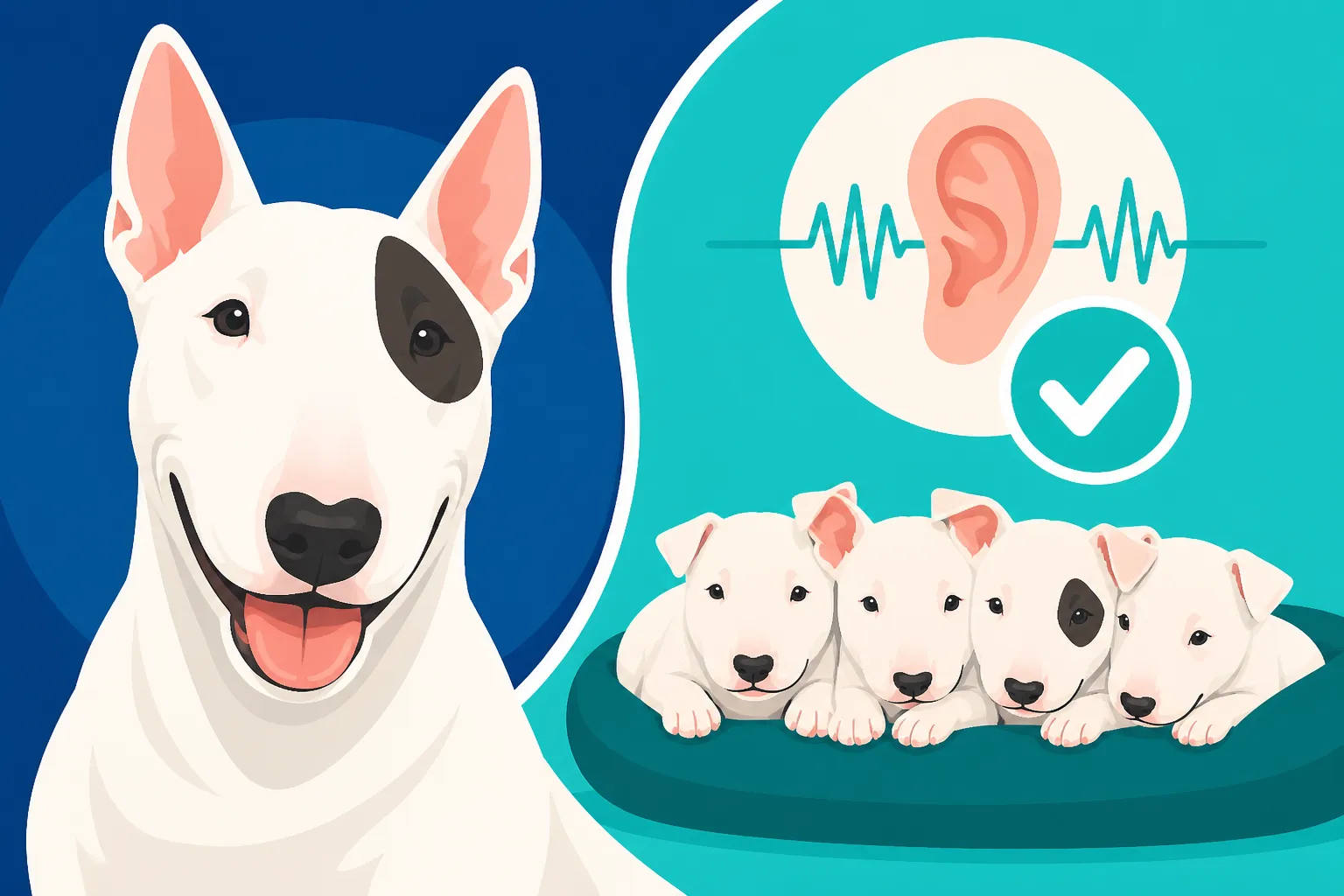
Whether a Bull Terrier Breeder BAER Tests the Litter
Bringing a Bull Terrier puppy home is a dream for many, but the journey to finding the right companion can be fraught with uncertainty, especially when it comes to health. One of the most heartbreaking issues a Bull Terrier can face is deafness, and it's a huge concern for prospective owners who want to ensure their new family member has the best possible start. This guide aims to clear up the confusion around BAER testing and empower you to make informed decisions when seeking a reputable Bull Terrier breeder.
Understanding BAER Testing for Bull Terriers
The world of Bull Terriers is unique, filled with their quirky personalities and distinctive looks. But beneath that charming exterior, there's a serious health concern that sets them apart: a predisposition to deafness. This isn't just a minor inconvenience; it can profoundly impact a dog's life and the lives of their human companions.
What is a BAER Test and Why is it Crucial for Bull Terriers?
BAER stands for Brainstem Auditory Evoked Response. It's a specialized, non-invasive test that measures the electrical activity of the brain in response to auditory stimuli. Essentially, it tells us if a dog can hear, and if so, how well. A small clicker is used to generate sounds, and electrodes placed on the dog's head measure the brain's response. The dog isn't sedated, just resting calmly, often with cotton in their ears to block out ambient noise. The process is quick and painless, delivering objective results that indicate whether a puppy has hearing in one ear (unilaterally deaf), both ears (bilaterally deaf), or full hearing.
For Bull Terriers, especially those with white coats, the BAER test isn't just a recommendation; it's an absolute necessity. Deafness is a known hereditary issue in the breed, stemming from a lack of pigment in the inner ear. Without this pigment, the delicate hair cells responsible for transmitting sound to the brain don't develop correctly, or they degenerate. A breeder who truly cares about the health and well-being of their puppies will insist on BAER testing every single puppy in their litter before they go to their new homes. It's the only definitive way to know their hearing status. If you want to dive deeper into how deafness manifests, you might find How Many White Bull Terriers Are Born Deaf an insightful read.
Ignoring BAER testing is like playing Russian roulette with a puppy's future. Imagine bringing home a puppy, falling head over heels in love, only to discover weeks or months later that they cannot hear. While deaf dogs can absolutely live full, happy lives, it requires significant adjustments and dedicated training from their families. Knowing their hearing status from the start allows you to prepare adequately, choose appropriate training methods, and ensure their safety. It's about responsible breeding and setting both puppy and owner up for success.
The Genetics of Deafness in Bull Terriers
The connection between coat color and deafness in Bull Terriers is well-established, though it’s not exclusive to white dogs. The gene responsible for white coat color (or the lack of pigment) is closely linked to the genes that affect the development of the inner ear. This means that white Bull Terriers have a significantly higher incidence of deafness, either in one ear (unilateral) or both ears (bilateral). However, it's crucial to understand that colored Bull Terriers can also be deaf, albeit less commonly. The absence of pigment isn't just skin deep; it can extend to the cochlea in the inner ear.
Unilateral deafness, where a dog can only hear in one ear, is perhaps the trickiest to diagnose without a BAER test. These puppies often compensate remarkably well, leading new owners to believe they have full hearing. They might respond to sounds coming from their 'good' side, making their partial deafness hard to detect in a normal home environment. This is why a professional, objective test is so vital. A unilaterally deaf Bull Terrier can still lead a very normal life, but it's important for owners to be aware of their dog's limitations for safety and effective communication. If you're curious about this, Whether a Unilaterally Deaf Bull Terrier Lives Normally offers more information.
For breeders, understanding the genetics is paramount. Breeding two parents who are both clear of deafness doesn't guarantee a litter entirely free of it, especially if there's a history of deafness further back in the lines, or if the parents carry genes for white markings. While there isn't a simple DNA test for deafness itself in Bull Terriers (like there is for some other genetic conditions), the BAER test remains the gold standard for assessing a puppy's individual hearing. Responsible breeders use these test results to make informed decisions about their breeding program, aiming to reduce the incidence of deafness over generations.
The Reality of Breeder Practices and BAER Testing
Navigating the world of Bull Terrier breeders can feel like a minefield. Everyone claims to have the best puppies, but true dedication to health goes beyond good looks. When it comes to something as fundamental as hearing, a breeder's stance on BAER testing speaks volumes about their ethics and commitment to the breed.
Reputable Breeders and Their Commitment to BAER Testing
A truly reputable Bull Terrier breeder considers the BAER test an indispensable part of their health protocol. They don't just test some puppies; they test every single puppy in the litter, regardless of coat color. They understand that even a colored Bull Terrier can be deaf, and that unilateral deafness is nearly impossible for an untrained eye to detect. This isn't an optional extra; it's a foundational step in ensuring the health and future well-being of their dogs. They view it as a small investment that provides invaluable information for both themselves and the puppy's future family. You can learn more about general health screenings in Which Health Tests a Bull Terrier Breeder Should Run.
These breeders will openly discuss their testing practices and provide documentation for each puppy. They should be able to show you certified BAER test results, often on official letterhead from the veterinary audiologist or specialist clinic that performed the test. They understand that prospective owners need this assurance and are proud to demonstrate their commitment to producing healthy puppies. It’s not just about selling a puppy; it’s about responsible guardianship of the breed.
Furthermore, a conscientious breeder won't shy away from explaining what the results mean, even if a puppy is found to be unilaterally or bilaterally deaf. They will guide you on the implications and discuss how to best care for a puppy with hearing impairment. They often have experience placing deaf puppies into loving, prepared homes, or they may choose to keep a deaf puppy themselves to ensure its specific needs are met. This level of transparency and support is a hallmark of a breeder who truly puts the dogs first, not just their wallet. They consider it part of their ongoing commitment to the breed's health.
Red Flags: When Breeders Don't BAER Test
If a breeder tells you they don't BAER test their litters, or that it's "not necessary" for colored puppies, consider it a serious red flag. Any breeder who makes excuses like "it's too expensive," "it's too much trouble," or "I can tell if they hear just by clapping" is likely cutting corners on other vital health screenings as well. The simple truth is, you cannot accurately assess a puppy's hearing without a BAER test. Puppies are incredibly adaptable, and one-eared hearing can easily fool even experienced dog owners.
Buying an untested puppy carries significant risks. You might unknowingly bring home a bilaterally deaf puppy, which will require specialized training and safety measures. While deaf dogs can thrive, it’s a big commitment that you should enter into with full awareness. More commonly, you could end up with a unilaterally deaf puppy, which might go undetected for months or even years. This means you won't be able to account for their limited hearing in training or when ensuring their safety, especially off-leash or near traffic. A deaf side means they can be easily startled or miss cues, which can lead to behavioral issues or dangerous situations.
The long-term implications can be stressful and costly. If you adopt an untested puppy and later discover it's deaf, you might face increased veterinary bills for specialist consultations, or the need for expensive training resources tailored for deaf dogs. Furthermore, it undermines the collective effort to breed healthier Bull Terriers. Every untested puppy sold allows a breeder to ignore a critical health issue, perpetuating the problem rather than working towards its eradication. Always remember that asking for verification of health tests is your right as a prospective owner.
Finding a BAER-Tested Bull Terrier Puppy
So, you're ready to find your Bull Terrier, and you know BAER testing is non-negotiable. Where do you start? Begin by researching breed clubs and reputable online directories for Bull Terrier breeders. Look for breeders who openly state their health testing protocols on their websites or in initial conversations. Don't be afraid to ask direct questions about BAER testing right from your first inquiry. A good breeder will welcome your questions and be eager to educate you.
When you speak with breeders, specifically ask if they BAER test every puppy in their litters. Inquire about where they have the tests done, who performs them, and if you can see the official documentation. A responsible breeder will have no problem showing you the results for both parents (for conditions where genetic screening is available) and for the specific puppy you are interested in. They should be transparent about any puppies in the litter that may have partial or full deafness and explain how they plan to place those puppies responsibly.
Here’s a quick checklist of questions to ask your prospective breeder:
| Question | Responsible Breeder Answer | Less Responsible Breeder Answer |
|---|---|---|
| Do you BAER test all your puppies? | Yes, every single puppy before they leave. | Only the white ones, or I can tell by clapping. |
| Can I see the official BAER certificates? | Absolutely, I have them for each puppy. | I don't get certificates, the vet just tells me. |
| When are the puppies tested? | Typically between 6-8 weeks of age. | I don't test, but they seem to hear fine. |
| What if a puppy tests deaf (unilateral/bilateral)? | I place them in homes aware of the condition, or keep them myself. | I don't have deaf puppies, mine all hear. |
| Which vet performs the BAER tests? | (Provides name of certified veterinary audiologist/clinic) | My regular vet just checks them over. |
Remember, purchasing a puppy is a significant commitment. Don't rush into a decision, especially if a breeder seems evasive or unwilling to provide transparent health information. Take your time, ask questions, and be patient for the right puppy from the right breeder. In the long run, this diligence will save you potential heartache and expense. And if you're looking into costs associated with health, What the Bull Terrier Acrodermatitis Test Costs gives an idea of what genetic testing generally entails.
Living with a Deaf or Unilaterally Deaf Bull Terrier
Discovering your beloved Bull Terrier has a hearing impairment can be a shock, but it's certainly not the end of the world. In fact, many deaf Bull Terriers live incredibly rich, fulfilling lives with the right approach and a dedicated family. It truly highlights the resilience of these amazing dogs.
Adjusting to Life with a Deaf Bull Terrier
The biggest adjustment for owners of a deaf Bull Terrier is learning to communicate effectively without relying on verbal cues. This means embracing hand signals for everything from "sit" and "stay" to "come" and "good dog!" Dogs are incredibly perceptive and can quickly pick up visual cues. Consistency is key here; everyone in the household needs to use the same signals. Many owners find it helpful to attend specialized training classes or work with a professional trainer who has experience with deaf dogs. Positive reinforcement, using treats, toys, and plenty of praise, works just as effectively with deaf dogs as with hearing dogs. Teaching a Bull Terrier to Sit and Stay can give you an idea of general training principles that can be adapted.
Safety is another critical consideration. A deaf Bull Terrier cannot hear a car coming, a warning shout, or the approach of another animal. This means they should never be off-leash in an unfenced area. A secure yard is paramount, and walks always require a leash, preferably with a harness like those found on Chewy that offers good control without putting pressure on the neck. Many owners opt for brightly colored vests or tags that clearly state, "I am deaf," to alert others, especially in public spaces. Indoors, teaching a "check-in" signal – a gentle tap on the shoulder or floor stomp to get their attention – is invaluable for recall.
Despite these adjustments, living with a deaf Bull Terrier can be incredibly rewarding. Their reliance on visual cues and touch often deepens the bond with their owners. They are just as playful, affectionate, and full of life as their hearing counterparts. Many deaf Bull Terriers excel in dog sports like agility or scent work, where visual cues and focus are paramount. Just remember, a deaf dog isn't "broken"; they simply experience the world through different senses. For insights into their unique behaviors, consider reading Why a Bull Terrier Stares at a Wall.
The Role of Support Systems and Resources
You don't have to navigate the journey with a deaf Bull Terrier alone. There's a vibrant and supportive community of deaf dog owners, breed-specific rescue organizations, and online forums dedicated to sharing advice, resources, and encouragement. Connecting with others who understand the unique joys and challenges can be a huge comfort. Organizations like the Bull Terrier Club of America often have resources or can point you towards experienced individuals.
Financially, having a plan for your Bull Terrier's health is always smart, regardless of hearing status. Pet insurance, from providers like Healthy Paws, can be invaluable for covering unexpected veterinary costs, though it's important to understand what is covered regarding pre-existing conditions if you discover deafness after acquiring a policy. Investing in high-quality food, perhaps from services like Ollie, or finding a suitable diet through retailers like Chewy, is also crucial for overall health and well-being. While deafness itself isn't typically expensive to manage, other health issues that commonly affect Bull Terriers, such as skin allergies or kidney disease, can be.
Remember, a Bull Terrier, whether hearing or deaf, is still a Bull Terrier. They thrive on companionship, consistency, and a clear understanding of expectations. With a little extra thought and preparation, a deaf Bull Terrier can be the most wonderful, devoted companion you could ever ask for.
Disclaimer
This article is for general informational purposes only and does not constitute professional advice. Laws, prices and regulations vary by location and change over time. Consult a qualified professional for guidance on your specific situation.