Whether a Bull Terrier Suits an Apartment
Bull Terrier apartment living requires managing high energy, preventing separation anxiety, and handling a three year old personality indoors.
Work with the temperament you have.
House-training and crate work, recall, leash manners, separation anxiety, and the behaviors this breed is wired for.
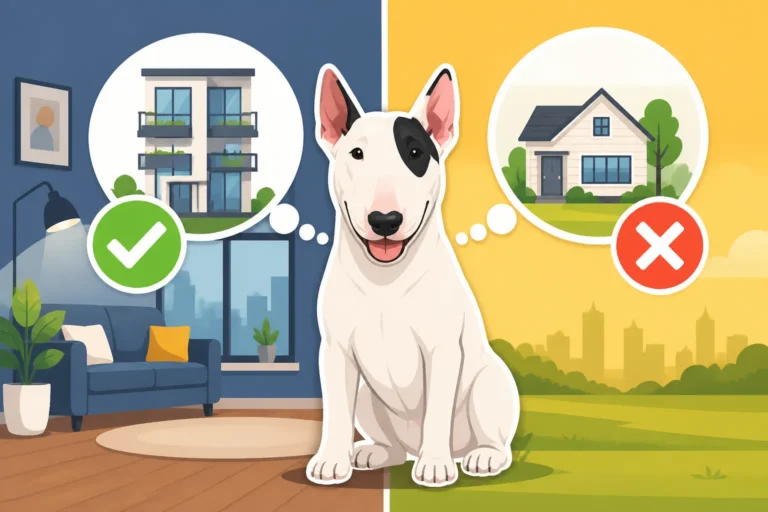
Bull Terrier apartment living requires managing high energy, preventing separation anxiety, and handling a three year old personality indoors.
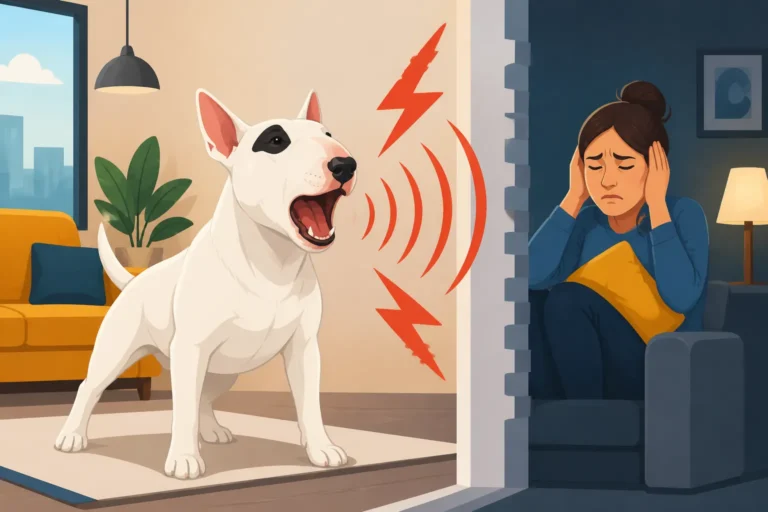
Bull Terrier apartment noise levels, vocalizations, grumbles, and alert barking explained with strategies for neighbors.

Bull Terrier grumbles, groans, and mumbles reveal unique vocal habits, contentment signs, and potential discomfort or distress warnings.

Bull Terrier protective instincts and friendly temperament explain why these loving family dogs rarely make effective guard dogs.

Boisterous full-speed greetings come from joy rather than aggression, and a larger-than-life personality can be redirected into a calmer, controlled hello.
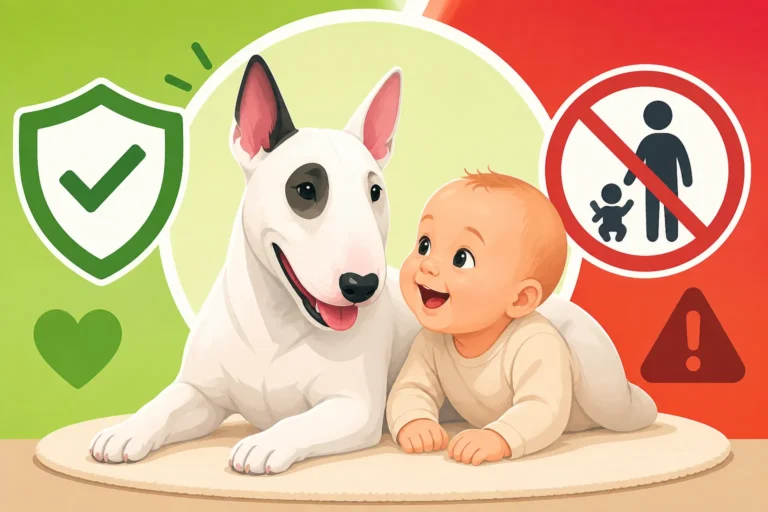
Bull Terrier safety around babies requires understanding their physical energy and managing potential sensory overload during the introduction.
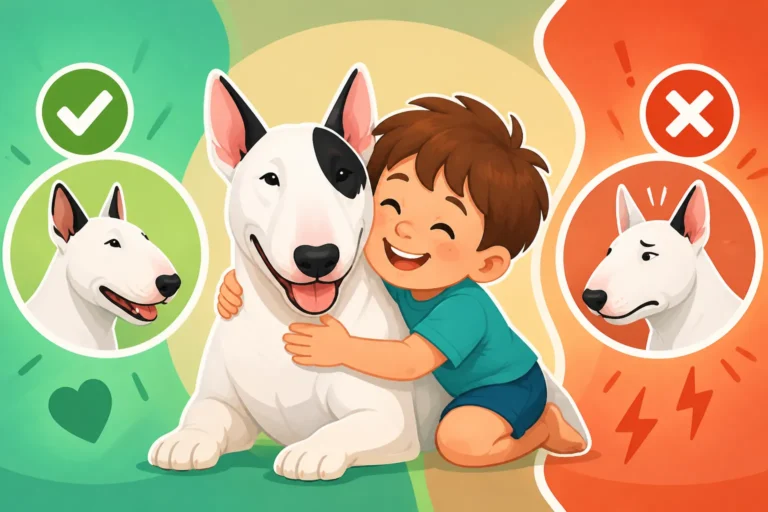
Bull Terrier temperament, physical strength, and prey drive limits determine how much tolerance the dog has toward children.

Teaching a Bull Terrier to play safely with children involves setting clear house rules, managing strength, and establishing boundaries.
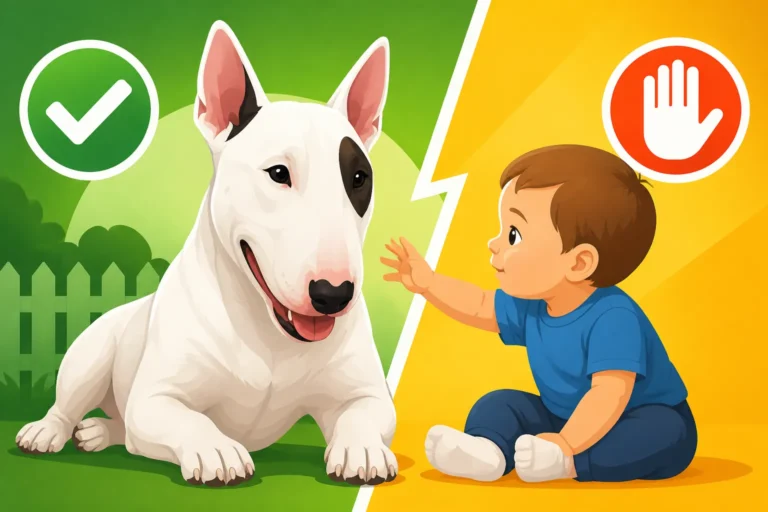
Bull Terrier supervision around toddlers is necessary because their powerful build and robust play style risk accidental injury.

Bull Terrier interactions with children require managing powerful builds and boundless energy to ensure safety and compatibility in the home.