Whether a Bull Terrier With a Murmur Can Be Bred
Heart murmur grading scales and conditions like Aortic Stenosis help breeders evaluate if a Bull Terrier can be safely bred.
Know what to watch for.
Breed-specific conditions, screening and DNA tests, what surgery actually costs, and the daily habits that stretch a healthy lifespan.

Heart murmur grading scales and conditions like Aortic Stenosis help breeders evaluate if a Bull Terrier can be safely bred.

Mitral valve dysplasia treatment for Bull Terriers involves managing heart strain and addressing backward blood regurgitation.
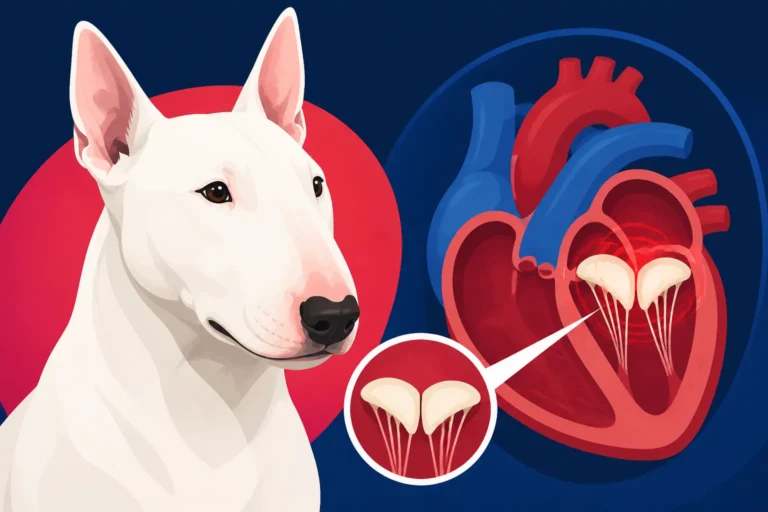
Mitral valve dysplasia in Bull Terriers causes early heart valve failure, regurgitation, and four chambers to work harder.

Bull Terrier puppy innocent heart murmurs often fade as the young dog grows and the cardiovascular system develops.

Bull Terrier heart murmur grading scales range from one to six, describing the intensity and severity of turbulent blood flow.

Bull Terrier puppy heart murmurs require veterinary check-ups to distinguish innocent sounds from serious structural problems.

Bull Terrier bad breath can signal kidney failure or dental disease, helping owners distinguish minor issues from major alarms.

Bull Terrier excessive thirst indicators and water intake limits help owners identify potential kidney disease and veterinary needs.
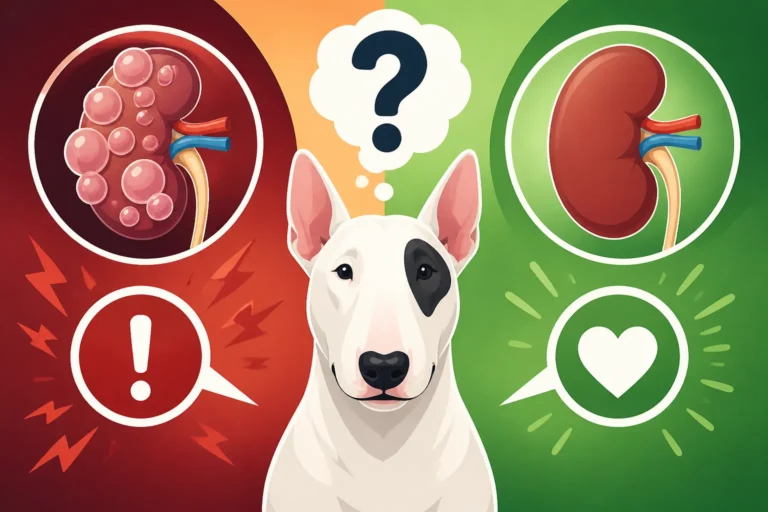
Bull Terrier kidney cysts and their potential health impacts, including genetic polycystic kidney disease risks and diagnostic ultrasounds.

Bull Terrier kidney ultrasound readings explain structural changes, organ size, and internal architecture to help interpret veterinary diagnostic findings.