How a Fighting Ban Changed the Bull Terrier
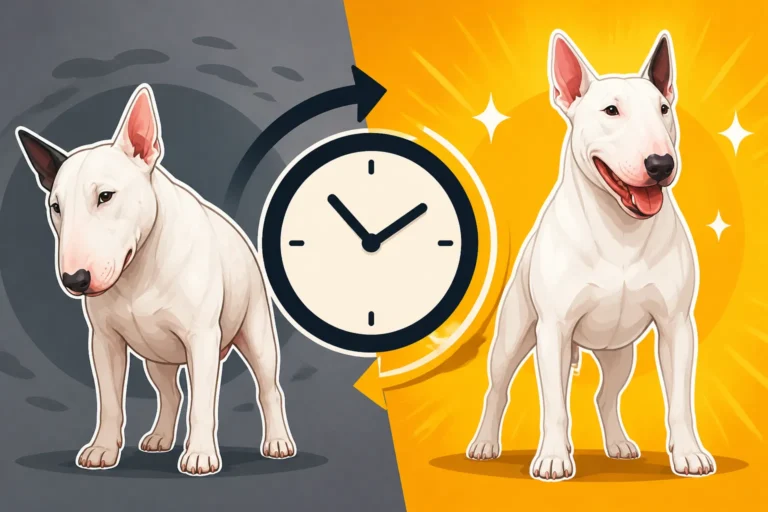
The nineteenth-century fighting ban changed the Bull Terrier by shaping the legal and social landscape for breeders and owners.
Is this the right one for you?
Origins and temperament, size and coat, what living with one is actually like, and how it compares to the breeds people weigh against it.
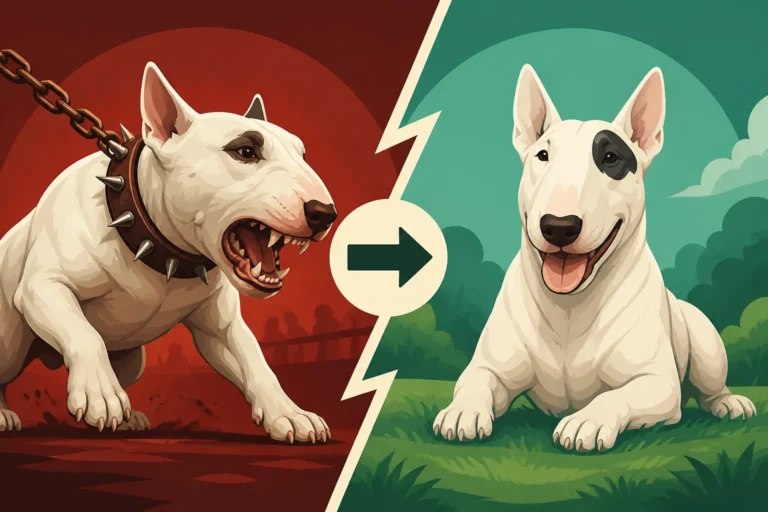
The nineteenth-century fighting ban changed the Bull Terrier by shaping the legal and social landscape for breeders and owners.
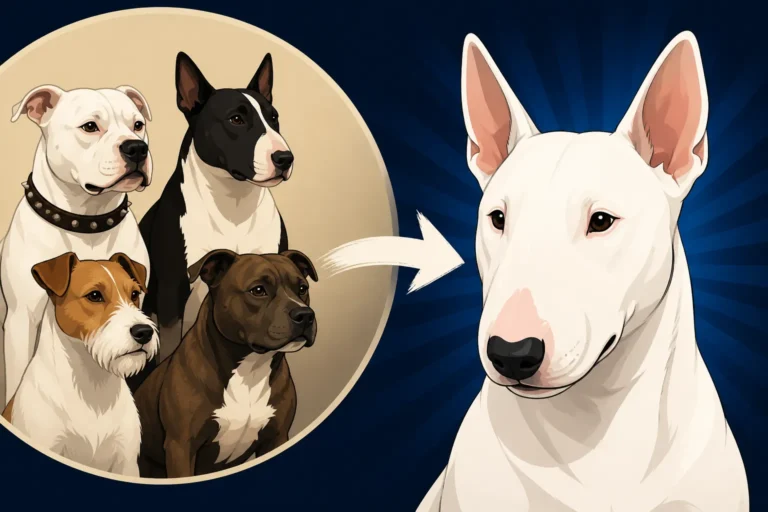
Bull and Terriers performed bull-baiting, ratting, hunting, and companionship before the modern Bull Terrier breed emerged.
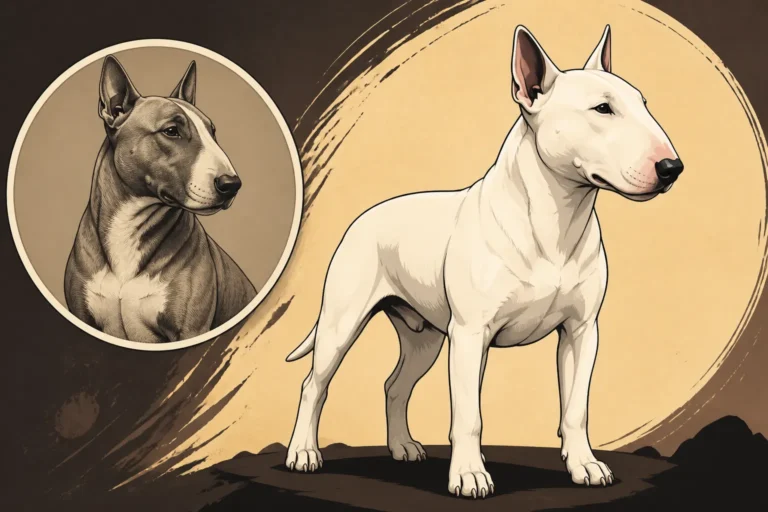
An 1870s Bull Terrier featured a leaner build, longer legs, and a conventional head profile without modern exaggerated features.
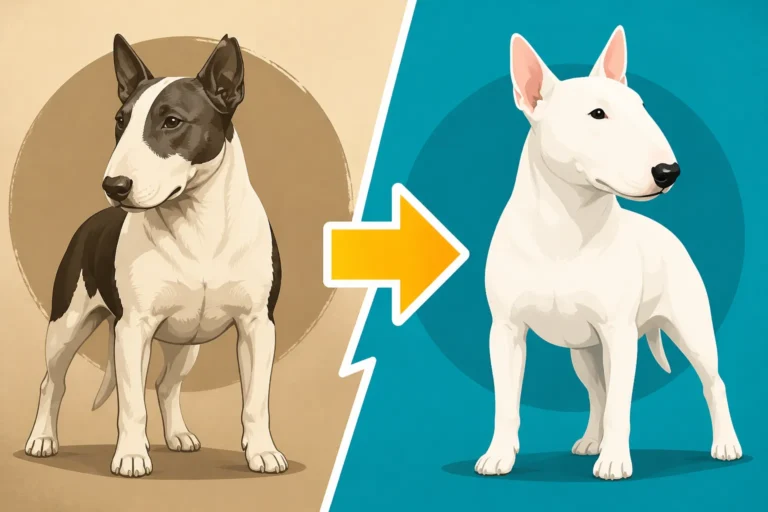
Early Bull Terriers lacked the egg-shaped heads of modern dogs. Breeders shaped the distinctive appearance over generations.
James Hinks developed the Bull Terrier breed in nineteenth century Birmingham using bulldogs, terriers, and Dalmatians.

James Hinks and his sons bred Bull Terriers across generations, shaping the modern breed and its iconic profile.
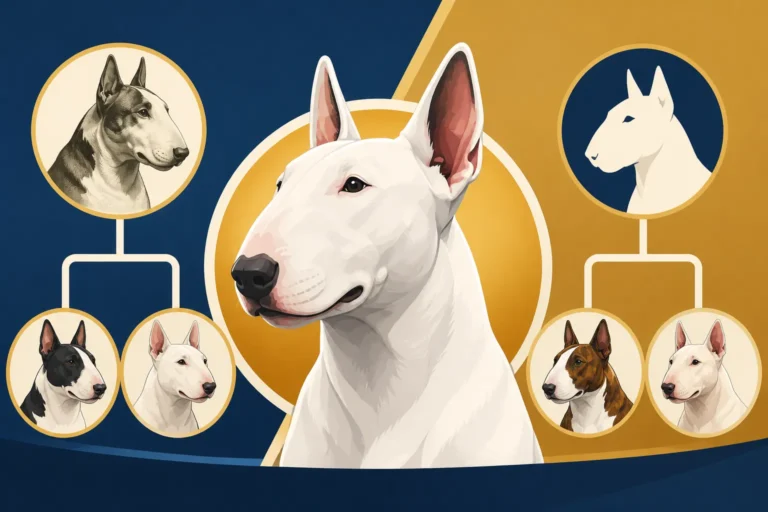
James Hinks Jr. and Frederick Hinks preserved the Birmingham Bull Terrier breeding line after their father died in 1878.

James Hinks left no formal breeding records, relying instead on personal knowledge and family tradition when developing the Bull Terrier.

Bull Terrier lineage combines Old English Bulldog, English White Terrier, and Dalmatian ancestry to create a distinctive, powerful dog.
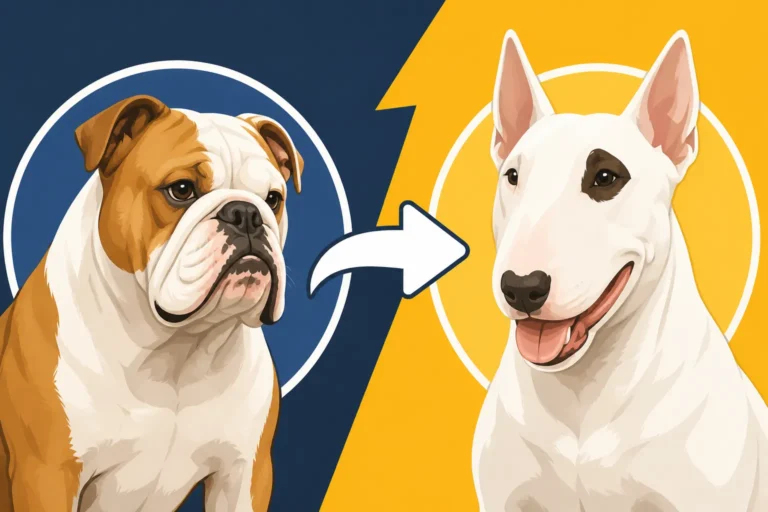
The Old English Bulldog contributed strength, courage, and resilience to the development of the Bull Terrier breed.