Which Harness Holds a Bull Terrier
Oh, the eternal quest for a harness that can truly stand up to a Bull Terrier! If you've ever found yourself being dragged down the street, or worse, watching your determined Bull Terrier wriggle out of what you thought was a secure piece of equipment, then you know the sheer frustration. It's not just about finding any harness; it's about finding one that can handle their unique physique, their incredible strength, and their boundless enthusiasm, keeping both of you safe and comfortable during walks. This guide is here to help you navigate the overwhelming options and find a harness that truly works for your beloved blockhead.
The Bull Terrier's Unique Challenge for Harnesses
Let's be honest, our Bull Terriers are built differently. That distinctive egg-shaped head, their thick, muscular neck, and their powerful, barrel-chested bodies are glorious to behold, but they pose some serious challenges when it comes to standard dog gear. Many harnesses are designed for more "typical" dog shapes, leading to ill-fitting, uncomfortable, or downright escapable situations for a Bull Terrier owner. You're not imagining things – it really is harder to find a good fit for them!
Why Standard Harnesses Fail the Bull Terrier Test
Most harnesses on the market are designed with a more pronounced "stop" (the indentation between the eyes) and a tapering neck, which simply isn't what a Bull Terrier possesses. Their strong, cylindrical necks can make it easy for them to back out of a harness that slips over the head, especially if it's not perfectly snug around the chest. And let's not forget their sheer strength. A Bull Terrier on a mission, whether it's to greet another dog or investigate a particularly interesting scent, can put immense strain on a harness, testing seams, buckles, and material integrity. It's not just about preventing pulling; it's about containing an athletic, powerful dog who might decide a walk is more of a full-body sport.
Imagine you're out for a leisurely stroll in your local park, perhaps near a bustling area like downtown Atlanta. Your Bull Terrier, spotting a rogue squirrel, decides it's time for a chase. In a split second, that seemingly secure harness designed for a Labrador might loosen just enough around their broad shoulders, allowing them to twist and pop out with surprising agility. Suddenly, you're left holding an empty leash, heart pounding, while your Bull Terrier joyfully pursues their furry target. This isn't just a nuisance; it's a terrifying safety hazard, especially in areas with traffic or other dogs. How Strong a Bull Terrier Is on a Leash can truly surprise even experienced dog owners, and a weak harness only amplifies this challenge.
The Importance of Fit and Security for a Bull Terrier
A poorly fitting harness isn't just a potential escape route; it can also cause discomfort and even injury to your Bull Terrier. If it rubs under their armpits, it can lead to chafing and sores, especially with their short, sensitive coat. If it restricts shoulder movement, it can impact their gait and long-term joint health. And if it puts pressure on their throat or windpipe, it can make pulling even more detrimental. The goal is a harness that allows for full range of motion, distributes pressure evenly, and, most importantly, stays put no matter how enthusiastically your Bull Terrier decides to engage with the world.
Think about it this way: your Bull Terrier has a very distinctive physique, almost like a canine bodybuilder. They have a deep chest, powerful shoulders, and a surprisingly agile frame despite their solid appearance. A harness that's too loose in the chest can allow them to back out, while one that's too tight can restrict their breathing or chafe their skin. We want them to be comfortable enough to enjoy their walk, not constantly thinking about an irritating piece of equipment. Finding that perfect balance is key to a happy, safe outing for both of you.
Types of Harnesses: What Works and What Doesn't (And Why)
When you start looking at harnesses, the sheer variety can be overwhelming. There are front-clip, back-clip, dual-clip, no-pull designs, and even specific escape-proof options. For a Bull Terrier, not all types are created equal, and understanding their mechanics is crucial to making an informed choice. It’s not just about what looks sturdy, but what truly counters their unique pulling power and body shape.
Back-Clip Harnesses
Traditional back-clip harnesses attach the leash to a ring on the dog's back, usually between the shoulder blades. These are often comfortable for dogs who don't pull much and are great for allowing natural movement. However, for a Bull Terrier who pulls, these harnesses can actually encourage the behavior, turning them into a powerful sled dog. The pressure on their back gives them more leverage, making it easier for them to pull you along.
While a back-clip harness can be fine for a truly loose-leash trained Bull Terrier, or for very short jaunts in a secure, fenced area, they are generally not the first choice for daily walks, especially if your Bull Terrier is still learning Teaching a Bull Terrier to Walk Without Pulling. They offer minimal control over the dog's direction and body, and for a breed with such immense strength, this lack of control can quickly become a safety issue for the person on the other end of the leash. You’ll often see owners struggling to maintain balance, being pulled forward by their enthusiastic Bull Terrier, which is no fun for anyone.
Front-Clip Harnesses
Front-clip harnesses have the leash attachment ring on the dog's chest. When your Bull Terrier pulls, they are gently redirected sideways, turning them back towards you. This makes it much harder for them to pull forward with their full body weight and can be incredibly effective for managing a strong puller. Many Bull Terrier owners find these to be a game-changer for walking manners.
The physics behind a front-clip harness are quite simple but effective for a strong dog like a Bull Terrier. Instead of being able to lean into the pull, the moment they apply pressure, their body is naturally angled away from the direction they want to go. This disorients their forward momentum and makes it less rewarding to pull. Brands like Easy Walk and Freedom No-Pull Harness are popular choices in this category, and you can often find a wide selection of these types of harnesses on platforms like Amazon. They also tend to have a better fit around the broad chest and neck of a Bull Terrier, reducing the chances of escape compared to many back-clip designs.
Dual-Clip and Multi-Functional Harnesses
Some harnesses offer both a front and a back clip. This versatility can be really useful. You might start with both clips, or just the front clip for training, and then switch to the back clip once your Bull Terrier has mastered polite leash walking. The ability to use both can also provide extra security, especially if you're clipping a double-ended leash to both points, giving you maximum control.
Using both attachment points with a double-ended leash provides an unparalleled level of control, which can be particularly reassuring when you're working with a Bull Terrier who has a high prey drive and tends to launch themselves forward unexpectedly. This setup allows you to steer them more effectively and distribute pressure more evenly across their body, minimizing any discomfort. It’s an advanced technique, but one that can build confidence for both you and your dog as you learn Why a Bull Terrier Pulls Toward Everything. Some harnesses also include a handle on the back, which can be invaluable for quickly grabbing your dog in an emergency or guiding them gently in crowded situations.
Escape-Proof Harnesses
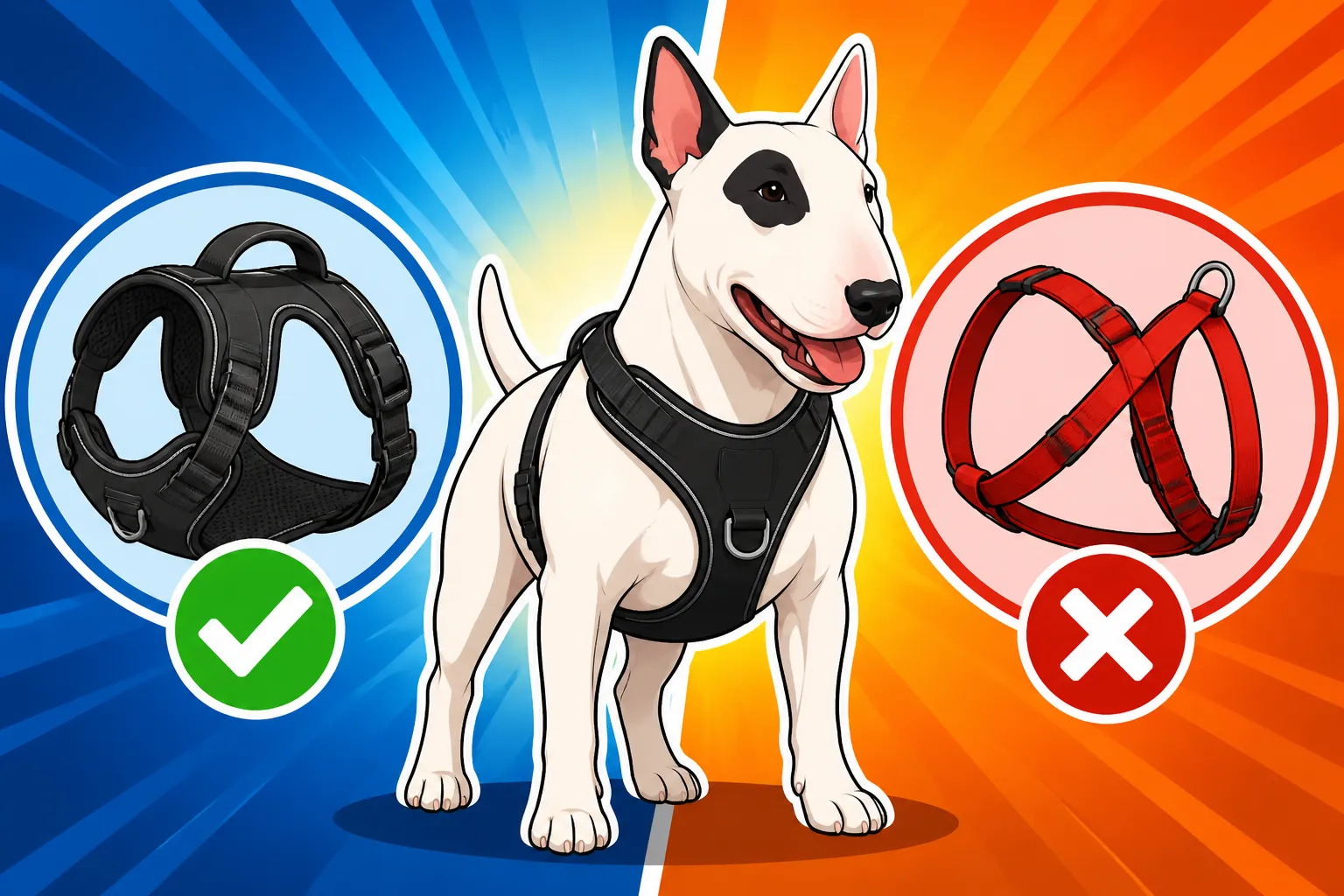
For the truly Houdini-like Bull Terrier, or those with very strong escape instincts, an escape-proof harness might be necessary. These often feature an additional strap around the waist or abdomen, behind the rib cage, making it virtually impossible for a dog to back out. They might not be the prettiest, but they prioritize safety above all else, which is exactly what we want for our spirited, determined Bull Terriers.
If your Bull Terrier has a history of slipping out of harnesses, or if you're concerned about them twisting free in a moment of excitement, an escape-proof design offers invaluable peace of mind. These harnesses often look a bit more like a vest or have multiple points of adjustment to hug their body securely. While they might take a little more time to put on, that extra security is worth every second, especially if you're navigating busy urban environments or open spaces where an escape could have serious consequences. Always ensure the fit is snug but not restrictive, checking carefully for any rubbing points.
Key Features to Look For in a Bull Terrier Harness
Choosing the right harness isn't just about the clip location; it's about the entire construction. For a breed as robust and energetic as the Bull Terrier, durability, adjustability, and comfort are non-negotiables. You want something that can withstand their power, fit their unique shape, and won't cause them any irritation during their daily adventures.
Durable Materials and Construction
Bull Terriers are known for their strength and sometimes their destructive tendencies. You need a harness made from robust materials that can withstand chewing, tugging, and general wear and tear. Look for thick, high-quality nylon webbing, strong metal D-rings, and sturdy buckles. Reinforced stitching is also a huge plus, especially at stress points where the leash attaches or where straps connect.
Flimsy plastic buckles or thin, easily frayed fabric simply won't cut it for a Bull Terrier. They'll snap, fray, or break under the strain, often at the worst possible moment. Think about a harness that could survive a tug-of-war with a small car! While that's an exaggeration, it highlights the need for gear that is built to last. Many owners find that investing in a higher-quality harness upfront saves money in the long run by avoiding constant replacements. This also extends to the leash – a durable, comfortable leash is just as important. Just as you'd seek out What Indestructible Toys Cost a Bull Terrier Owner, you should apply that same mindset to their walking gear.
Adjustable Fit for That Unique Body Shape
The key to a successful Bull Terrier harness is adjustability. Their deep chests and powerful shoulders mean that a "one-size-fits-all" approach rarely works. Look for harnesses with multiple adjustment points – ideally around the neck, chest, and girth. This allows you to customize the fit to your Bull Terrier's specific measurements, ensuring it's snug enough to prevent escapes but loose enough for comfort and full range of motion.
A harness that allows for precise adjustments at several points will minimize chafing and prevent your Bull Terrier from slipping out. Pay particular attention to how the straps sit behind their front legs; they should never rub. Also, ensure the neck opening isn't so wide that it can slip over their head, even if their head is slightly wider than their neck. Some brands specifically design harnesses with a more generous neck opening and secure chest straps to accommodate breeds with broader heads or necks.
Comfort and Breathability
While security is paramount, comfort shouldn't be overlooked. A harness that's uncomfortable will make your Bull Terrier resent walks, or they might try even harder to escape it. Look for harnesses with padding in key areas, such as under the chest strap or where the straps might rub against their armpits. Breathable materials are also important, especially if you live in a warmer climate or if your Bull Terrier is particularly active.
For a Bull Terrier with their short coat, any rubbing can quickly lead to irritation. Neoprene or fleece lining can add a layer of comfort and prevent chafing. Also, consider the weight of the harness. While you want durable materials, an excessively bulky or heavy harness can be cumbersome for your dog. The goal is for them to almost forget they're wearing it. Some of the more ergonomic designs prioritize both strength and comfort, making them a good option for regular use.
Fitting and Training with Your Bull Terrier's New Harness
Getting the right harness is only half the battle; ensuring it's fitted correctly and introducing it properly to your Bull Terrier are equally important. A perfectly designed harness will fail if it's too loose or if your dog associates it with an unpleasant experience. Patience and positive reinforcement are your best friends here.
How to Achieve the Perfect Fit
When fitting the harness, the general rule of thumb is that you should be able to slide two fingers comfortably under any strap. This ensures it's snug without being too tight. Check the fit around the neck, chest, and girth. For a Bull Terrier, pay extra attention to the chest strap to ensure it sits behind their front legs without impeding their movement or causing rubbing. Test the harness indoors first, encouraging them to walk, sit, and lie down to see how it moves with their body.
Many Bull Terriers have a very deep chest, so the girth strap needs to be far enough back to avoid rubbing their "armpits" but not so far back that they can wiggle out. If you're using a front-clip harness, ensure the chest strap sits relatively low on their chest, allowing their shoulder blades to move freely. A good fit will make them comfortable and significantly reduce the chances of escape. Remember, just like humans buying clothes, different brands might fit slightly differently, so don't be afraid to try a few options or measure carefully against size guides found on sites like Amazon.
Introducing the Harness with Positive Reinforcement
Some dogs, especially puppies or those not used to wearing gear, might be hesitant about a new harness. Introduce it slowly and positively. Let them sniff it, offer treats, and praise them. Start by simply laying it on their back, then briefly buckling it, immediately followed by a treat and praise. Gradually increase the time they wear it, always associating it with good things like food, praise, or a fun play session.
If your Bull Terrier is particularly wary, you might need to make this a multi-day process. Hold the harness, give a treat. Put the harness on for two seconds, give a treat and take it off. Build up very gradually. Never force it, as this can create a negative association that will be harder to overcome. Think of it like a fun new accessory that means exciting things are about to happen, rather than something they have to wear. Consider looking into resources like the BAXTER & Bella online puppy school for guidance on positive reinforcement and conditioning if you're struggling with this step. They have excellent strategies for making new experiences positive for your pup.
Training Tips for Harness Walking
Even with the best harness, consistent training is vital for polite leash manners. The harness is a tool, but it doesn't do the training for you. Work on loose-leash walking commands in a quiet environment first, gradually introducing more distractions. Reward your Bull Terrier heavily for walking nicely by your side, and stop walking the moment they pull, only resuming when the leash is slack. This teaches them that pulling gets them nowhere, while walking politely keeps the adventure going.
Remember that Bull Terriers can be incredibly intelligent and equally stubborn. A Bull Terrier Trains When It Sees the Point, so make sure that point is crystal clear: walking politely means good things happen, like continuing the walk, getting treats, or receiving praise. Consistency is key. Everyone who walks your Bull Terrier should use the same techniques. If you're using a front-clip harness, utilize its redirecting power to your advantage, gently guiding your dog back towards you when they pull. With dedication and the right tools, you and your Bull Terrier can enjoy many comfortable and controlled walks together.
| Harness Type | Pros for Bull Terriers | Cons for Bull Terriers | Best Use Cases |
|---|---|---|---|
| Back-Clip | Comfortable for non-pullers, freedom of movement | Encourages pulling, easy to slip out for strong pullers | Well-trained loose-leash walkers, short excursions in secure areas |
| Front-Clip | Redirects pulling effectively, good control, widely available | Can tangle legs if not fitted correctly, dog might resist initial turns | Managing strong pullers, everyday walks, initial leash training |
| Dual-Clip | Versatile (front/back), extra security with double-leash | Can be more complex to put on, might have more straps | Training versatility, extra security for high-drive dogs, advanced handlers |
| Escape-Proof | Nearly impossible to escape, high security | Can be bulky, takes longer to put on, less aesthetic | Bull Terriers with history of escape, very anxious dogs, busy environments |
Disclaimer
This article is for general informational purposes only and does not constitute professional advice. Laws, prices and regulations vary by location and change over time. Consult a qualified professional for guidance on your specific situation.