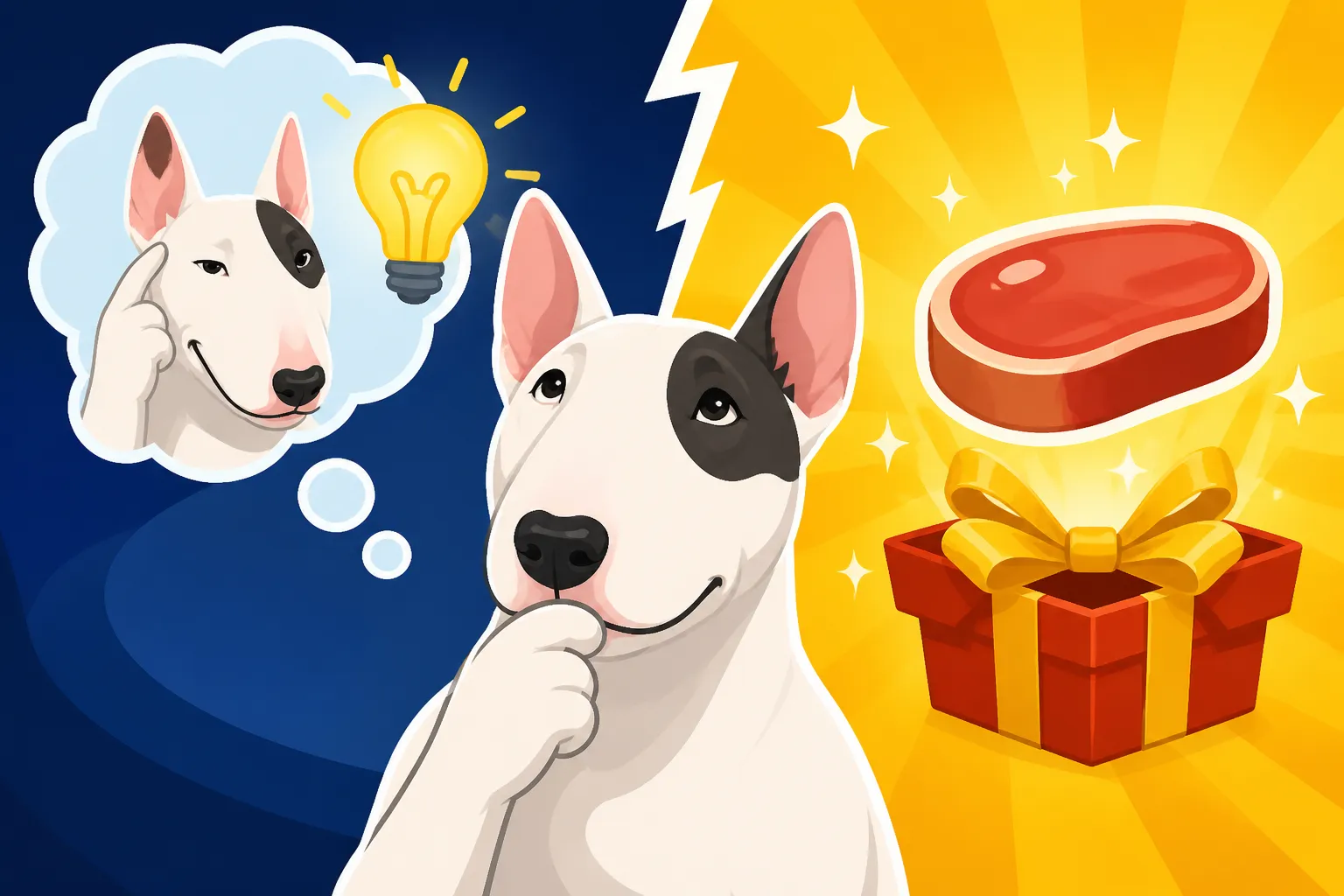
Which Reward Outranks a Bull Terrier’s Own Idea
There's nothing quite like the unique blend of love and exasperation a Bull Terrier owner experiences. One moment, they're the most charming, goofy companion, and the next, they've got an idea in their head—whether it's investigating a suspicious dust bunny or attempting to scale the sofa—and suddenly, your brilliant idea (like "sit" or "come") is the least interesting thing in the known universe. This guide is all about cracking that code: what rewards can possibly outrank your Bull Terrier's own spontaneous, often hilarious, but sometimes inconvenient, plans.
Unpacking the Bull Terrier's Independent Spirit in Training
If you've ever owned a Bull Terrier, you know they are utterly unique. They're intelligent, charming, and endlessly entertaining, but they also possess a stubborn streak that can make training feel like a chess match against a grandmaster who occasionally just decides to flip the board. Understanding this distinct personality is the first step in figuring out what truly motivates them.
The Bull Terrier's Inner Monologue: "What's In It For Me?"
Bull Terriers aren't being disobedient out of malice; they're simply weighing their options. Imagine your Bull Terrier, egg-shaped head tilted, watching you intently. They're not just listening to your command; they're simultaneously scanning the environment, assessing the scent of a crumb under the fridge, noticing the flicker of a shadow, or remembering that squeaky toy they abandoned five minutes ago. If your command doesn't immediately promise a reward that's more compelling than their current internal agenda, you're likely to get that classic Bull Terrier "side-eye" before they proceed with their own, far more interesting, plan. This isn't defiance; it's a genuine preference for their own self-determined activity.
Owners often feel frustrated when their otherwise brilliant dog seems to "forget" a simple command they've known for ages. But for a Bull Terrier, that moment of perceived distraction isn't a lapse in memory; it's a conscious decision that the reward for your idea just isn't worth giving up their idea at that particular moment. They're asking, quite plainly, "What's in it for me, and is it better than what I'm currently contemplating?" This independent streak is part of their charm, but it undeniably makes training a unique challenge. This is why Why a Bull Terrier Decides a Cue Is Optional is such a common phenomenon!
To truly outrank a Bull Terrier's own idea, your offering has to be undeniably, irresistibly better than whatever exciting thought bubble is currently floating above their head. It means being more captivating than the dust bunny, more thrilling than the potential sofa climb, and more delicious than the imaginary crumb. When you understand this fundamental aspect of their personality, you start to see training not as a battle of wills, but as a negotiation where you always need to bring the best possible offer to the table.
Short Attention Spans and the Need for High Engagement
Beyond their independent decision-making, Bull Terriers are also known for having relatively short attention spans, especially for repetitive or unstimulating tasks. They are dogs of action, energy, and zest, and they seek constant novelty and excitement. A boring, monotonous training session will quickly lose out to the rustle of a leaf outside the window or the sudden urge to investigate a new smell. They crave engagement, and if you're not providing it, they'll find it elsewhere.
This isn't a reflection on your training skills, but simply another facet of the Bull Terrier's unique wiring. Their high energy and boundless curiosity mean they're always "on," always seeking the next thrilling experience. If a training exercise isn't dynamic, fast-paced, and genuinely fun, they will disengage. You might find them suddenly "deaf," wandering off, or inventing their own, often less-than-helpful, games to inject some excitement into the situation. This is why How Short a Bull Terrier's Training Session Has to Be is a critical piece of advice for any Bull Terrier owner.
To keep a Bull Terrier engaged, you need to be dynamic. Your voice needs to be lively, your body language inviting, and your rewards nothing short of spectacular. Think of yourself as a captivating entertainer, constantly vying for their attention against a world full of intriguing distractions. The goal is to make you and your training game the most stimulating, unpredictable, and rewarding thing in their immediate environment. If you can achieve that, you're well on your way to making your ideas more appealing than their own.
The Arsenal of High-Value Rewards for Bull Terriers
So, what exactly constitutes a reward spectacular enough to capture a Bull Terrier's full attention and make your idea their best idea? It’s rarely just a pat on the head or a bland piece of kibble. For these discerning individuals, you need an arsenal of high-value motivators that speak directly to their powerful drives.
Food as Fuel for Cooperation: Beyond the Kibble
When it comes to food, your Bull Terrier isn't looking for a participation trophy. They're looking for the culinary equivalent of winning the lottery. Standard kibble, while perfectly fine for meals, rarely cuts it as a high-value training reward, especially in distracting environments. You need to upgrade your treat game significantly. This is truly where you learn Which Reward Outranks a Bull Terrier's Own Idea.
Think gourmet. Cooked chicken breast, lean beef, small pieces of mild cheese, hot dogs (plain, low-sodium varieties), or even a squeeze of liver paste from a tube can be absolute gold for a Bull Terrier. The key is to make them small, soft, and easy for your dog to swallow quickly without breaking their focus or creating a choking hazard. You want them to get that burst of flavor and immediately be ready for the next command, not spend five minutes meticulously chewing a biscuit.
Variety is also incredibly important to prevent "treat burnout." Don't stick to just one type of high-value reward. Rotate through a few favorites to keep your Bull Terrier guessing and excited about what might come next. Introduce a "jackpot" reward—a handful of extra-special treats—for breakthrough moments, like a perfect recall in a challenging environment. Many owners find success by buying a variety of treats online, and Amazon offers a huge selection of everything from freeze-dried meats to gourmet jerky that can help you keep your Bull Terrier interested and motivated.
Play as a Powerful Motivator: Tug, Chase, and Fetch
For many Bull Terriers, especially those with a strong prey drive or an undeniable love for toys, a vigorous play session can be an even higher reward than food. These are dogs who love to engage, to run, to tug, and to chase. Leveraging this natural drive can be incredibly effective in training, particularly for high-energy behaviors or when working on focus in distracting environments.
Consider durable tug toys made from materials like firehose or tough rubber. A quick, enthusiastic game of tug-of-war (with clear rules, like "let go" on command) can be a phenomenal reward. Short bursts of fetch with a favorite squeaky ball (if it can withstand their powerful jaws for more than a minute!) or a chase game with a flirt pole can also tap into their natural instincts and act as incredibly potent motivators. The key here is the interaction with you. You are part of the game, making it far more valuable than simply playing with a toy alone. This is often where you discover Which Toy a Bull Terrier Will Work For best.
Remember to always end play sessions before your Bull Terrier gets bored or overstimulated. This leaves them wanting more, building anticipation and value for the toy and the game as a reward for future training sessions. If you always put the toy away while they're still keen, they'll be even more eager to "earn" it next time.
Contextual Rewards: Attention, Freedom, and Environmental Perks
While food and toys are often the primary motivators, don't underestimate the power of other, more subtle, rewards for a social and curious Bull Terrier. Enthusiastic verbal praise ("YES! Good dog!") paired with genuine physical affection (a quick scratch behind the ears, a vigorous rub on their sturdy chest) can go a long way in reinforcing the bond and making your Bull Terrier want to work with you. These types of rewards often work best when combined with a primary motivator, like a treat or a quick game. For example, a crisp "Yes!" followed immediately by a tasty treat creates a powerful association. How Physically Affectionate a Bull Terrier Is can vary, but many absolutely thrive on positive attention from their people.
Beyond direct interaction, "life rewards" can also be incredibly effective. For a Bull Terrier who loves to sniff, a few seconds of free sniffing in a particularly interesting patch of grass can be a great reward for walking nicely on a leash for a short distance. If they love greeting people or specific dogs (and are well-socialized to do so respectfully), allowing them to do so after performing a quick "sit" or "watch me" can be a powerful motivator. This teaches them that good behavior unlocks desirable opportunities.
Think about what your individual Bull Terrier enjoys most in their daily life. Is it rolling in the grass? A quick splash in a puddle? Getting permission to jump on the sofa (if allowed)? These everyday perks, when earned through good behavior, become powerful tools in your reward arsenal. They teach your Bull Terrier that cooperating with your ideas leads to even better outcomes than their own spontaneous urges, reinforcing positive choices in real-world scenarios. This can even extend to specific social situations, impacting Whether a Bull Terrier Can Be Socialized Around Dogs effectively.
Crafting a Reward Strategy That Works for Your Bull Terrier
Knowing what rewards exist is one thing; figuring out how to use them effectively with your unique Bull Terrier is another. It requires observation, flexibility, and a commitment to understanding what truly makes your dog tick.
Building a Personalized Reward Hierarchy
Every Bull Terrier is an individual, and what sets one dog's tail wagging and eyes sparkling might be completely ignored by another. This is why building a personalized reward hierarchy is crucial. This isn't just about knowing their favorite treat; it's about understanding the relative value they place on different motivators in various situations. What's a jackpot reward in the living room might be barely a mid-level reward at a bustling park. Identifying What a Bull Terrier's Temperament Is Really Like will help you tailor your approach.
Start by making a list of everything your Bull Terrier loves: specific foods, toys, types of play, forms of affection, and environmental privileges. Then, observe them. When presented with two options, which do they consistently choose? Which causes the most excitement? Which will they work hardest for? This will help you rank them from "low value" (e.g., kibble) to "super high-value" (e.g., cooked steak) to "jackpot" (e.g., a five-minute game of tug with their absolute favorite toy, paired with the cooked steak).
Here's an example of how a Bull Terrier reward hierarchy might look, but remember to customize it for your dog:
| Reward Value | Examples for a Bull Terrier | When to Use It |
|---|---|---|
| Low | Piece of kibble, bland dog biscuit, verbal "Good boy/girl" | For known, easy behaviors in a low-distraction environment. |
| Medium | Regular commercial dog treat, quick head scratch, gentle praise | For slightly more challenging behaviors or mild distractions. |
| High | Small piece of cheese, hot dog, favourite squeaky ball (short play) | For new behaviors, proofing in moderate distractions, or good effort. |
| Jackpot | Cooked chicken/steak, liver paste, intense tug-of-war session | For breakthrough moments, perfect recalls, or highly distracting environments. |
The Art of Timing and Delivery for Maximum Impact
Even the best reward is useless if delivered incorrectly. For a Bull Terrier, who can be quick to lose focus and just as quick to decide your idea isn't worth their time, precision in timing and delivery is paramount. The reward must be given within 1-3 seconds of the desired behavior. Any longer, and they might associate the reward with the subsequent sniff, scratch, or independent thought they had, rather than the behavior you wanted to reinforce.
Using a marker word ("Yes!" or "Good!") or a clicker can significantly improve your timing. This sharp, consistent sound marks the exact moment your Bull Terrier performs the correct action, telling them precisely what they're being rewarded for. Then, the treat or play follows immediately. Many Bull Terriers respond very well to a clicker because it's so clear and unambiguous. Understanding How a Clicker Lands With a Bull Terrier can revolutionize your training.
Keep your treats in an easily accessible pouch or pocket, and practice quick, smooth delivery. Avoid fumbling, as this creates a delay that can break their focus. And remember, keep training sessions short and frequent. A Bull Terrier will maintain enthusiasm and learn more effectively through 5-minute bursts of highly rewarded, engaging work than through one long, tedious session. Organizations like BAXTER & Bella emphasize these positive reinforcement techniques and precise reward timing in their online training programs, which are perfectly suited to a Bull Terrier's independent nature.
Adapting Rewards to Environment and Challenge
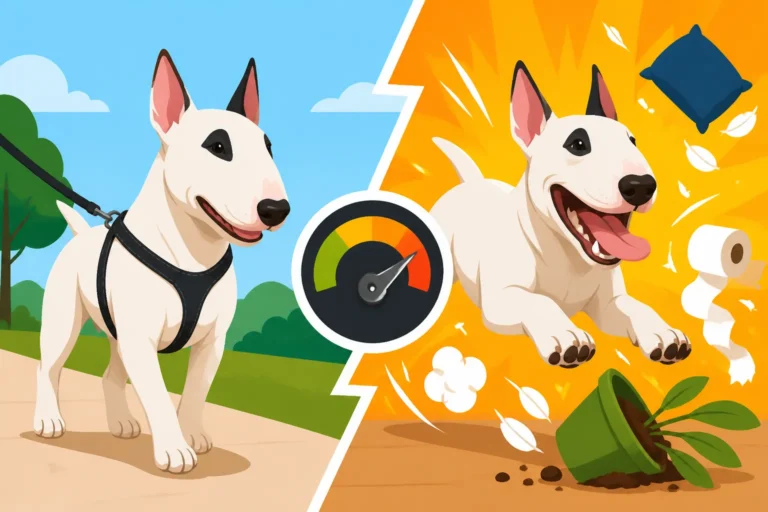
A common mistake is using the same reward in every situation. What motivates your Bull Terrier to sit politely in your quiet living room will likely be completely ignored when they're confronted with a squirrel at the park or another dog across the street. This is why you need to adapt your reward strategy based on the environment and the challenge level of the task. For example, getting Teaching a Bull Terrier to Come Back Mid Zoomie requires the highest level of motivation.
For easy, known behaviors in low-distraction environments, you can use lower-value rewards. This helps conserve your "jackpot" rewards for when you truly need them. If you constantly use boiled chicken for a simple "sit" in the kitchen, it loses its special appeal when you need it to get their attention away from a screaming child or a barking dog.
Reserve your highest-value food and most exciting play for new, difficult, or highly distracting situations. This ensures that your reward is genuinely more appealing than whatever enticing "Bull Terrier's own idea" is competing for their attention. As you work on new skills or proof behaviors in different places, gradually decrease the reward value as the behavior becomes more ingrained and reliable. Remember that a Bull Terrier has a natural limit to How Many Reps a Bull Terrier Gives You before they check out, so make those reps count with top-tier rewards.
By continually observing, adapting, and bringing your "A-game" to every training interaction, you’ll discover that motivating your Bull Terrier isn't a battle of wills, but a delightful dance of cooperation. Give them compelling reasons to choose your ideas over their own, and you'll find yourself with a happy, engaged, and wonderfully trained companion. For Bull Terriers, training isn't just about obedience; it's about giving them a job, a purpose, and making that purpose incredibly rewarding. This is why Why a Bull Terrier Needs a Job is so important for their overall well-being and willingness to engage.
Disclaimer
This article is for general informational purposes only and does not constitute professional advice. Laws, prices and regulations vary by location and change over time. Consult a qualified professional for guidance on your specific situation.