How Reliable a Bull Terrier’s Recall Is
There’s nothing quite like that heart-stopping moment: your Bull Terrier is off-leash, sees a squirrel, and bolts like a rocket, seemingly deaf to your panicked cries of "COME!" It’s a frustrating, terrifying experience that leaves many Bull Terrier owners wondering if a reliable recall is just a pipe dream. This guide is here to shed some light on the reality of Bull Terrier recall, why it can feel so elusive, and what practical, empathetic steps you can take to foster a stronger connection and a more reliable response from your beloved, stubborn clown.
The Bull Terrier's Independent Spirit and What It Means for Recall
Let's be honest, our Bull Terriers are unique. They're intelligent, yes, but often on their own terms. This strong sense of self and independent nature plays a huge role in how they perceive and respond to commands like "come." Understanding this fundamental aspect of their personality is the first step toward successful recall training.
Bred for Self-Reliance, Not Obedience
When you delve into the history of the Bull Terrier, you quickly realize they weren't originally designed for precision obedience or eagerly waiting for your next command. While their ancestors were bred for tasks that required courage and tenacity, they also needed to make independent decisions in dynamic, often chaotic, environments. This isn't a breed that evolved from centuries of herding sheep at a shepherd's beck and call or retrieving fallen birds on command. Instead, they were valued for their ability to think for themselves, to be resilient, and to possess an unwavering spirit.
This heritage means that a modern Bull Terrier often evaluates a situation and decides, in their magnificent egg-shaped head, whether your request is truly the best course of action at that precise moment. It’s not that your Bull Terrier can’t hear you; it’s that they often weigh your request against their current, far more exciting, agenda. This can be incredibly frustrating when you’re standing in a field, feeling increasingly desperate, while your dog is experiencing pure bliss chasing a scent. It's important to remember that this isn't defiance for defiance's sake, but rather an innate characteristic of a breed that thrives on self-determination.
The "What's In It For Me?" Mentality
Given their independent streak, Bull Terriers approach training with a distinctly practical mindset: "What's in it for me?" Unlike some breeds that live to please their owners, a Bull Terrier often needs a compelling reason to interrupt whatever fascinating activity they're engaged in. A simple "good dog" might suffice for some, but for a Bull Terrier, it’s usually not enough to outweigh the thrill of a chase or the intrigue of a new smell.
This means that building a reliable recall for a Bull Terrier isn't just about repetition; it's about consistently offering a reward that is more valuable than whatever distraction currently has their attention. If they decide that sniffing that interesting patch of grass or investigating the dog across the park is more rewarding than returning to you for a boring old kibble, they'll choose the grass or the dog every time. The key is to make returning to you the absolute best option available, every single time. This requires creativity, high-value motivators, and an unwavering commitment to making "come" a command associated with incredible benefits.
Common Scenarios Where Bull Terrier Recall Fails and Why
We've all been there – your Bull Terrier is trotting along, minding their own business, and then bam! – something catches their eye, and they're off. Understanding the triggers behind these recall failures is crucial for developing effective prevention and training strategies. It's about anticipating their natural inclinations.
The Lure of the Chase: High Prey Drive
One of the most significant challenges to a Bull Terrier's recall is their inherent and often powerful prey drive. This isn't a fault; it's a deeply ingrained instinct that can be incredibly difficult to override with a verbal command. A flash of a squirrel's tail, the flutter of a bird, or the rustle of a rabbit in the bushes can transform your calm companion into a single-minded hunter in an instant. This intense focus means that once that prey drive kicks in, your voice might as well be white noise. They are literally "in the zone," and their ears effectively turn off to anything but the pursuit.
Imagine your Bull Terrier spotting a squirrel darting up a tree. To them, that's not just a cute critter; it's an irresistible, fast-moving target that triggers an ancient hunting instinct. How Hard a Bull Terrier Chases Squirrels will give you an even deeper understanding of this phenomenon. This instinctual drive is why a sudden opening of the front door, a loose fence gate, or a slipped leash can lead to a frantic chase that can take your Bull Terrier miles away before they even think about stopping. It's why prevention, through secure environments and proper equipment, is paramount, even while you work on training.
Novelty and Excitement: The "Zoomie" Factor
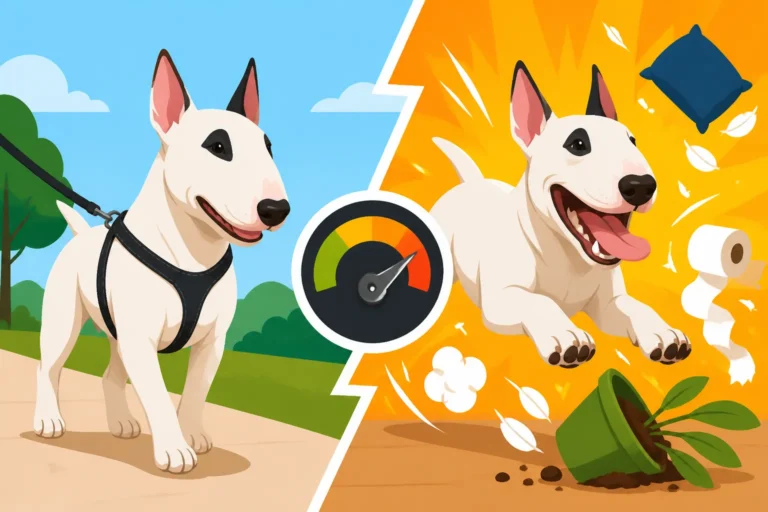
Another common culprit behind a disappearing Bull Terrier is sheer, unadulterated excitement, often manifesting as "zoomies." You know the drill: your dog is having a grand time, running, bouncing, and suddenly, they hit a burst of pure, unadulterated joy. In these moments, their brain is flooded with exhilaration, and their focus on anything but their own delightful antics dwindles to almost nothing. Commands can feel like unwelcome interruptions to their fun.
New environments, especially those with novel smells, sounds, and sights, can also overwhelm a Bull Terrier's senses and make recall virtually impossible. A busy dog park, a bustling hiking trail, or even a friend's new backyard offers a smorgasbord of captivating stimuli. For a Bull Terrier, these are playgrounds for exploration and excitement, and your call to "come" simply doesn't compete. What a Bull Terrier's Zoomies Look Like is a topic many Bull Terrier owners can relate to, and these bursts of energy are a major factor in why recall can be hit or miss. Their playful, sometimes chaotic, nature means that their attention span can be fleeting when something truly captivating captures their interest.
Selective Hearing in Familiar vs. Distracting Environments
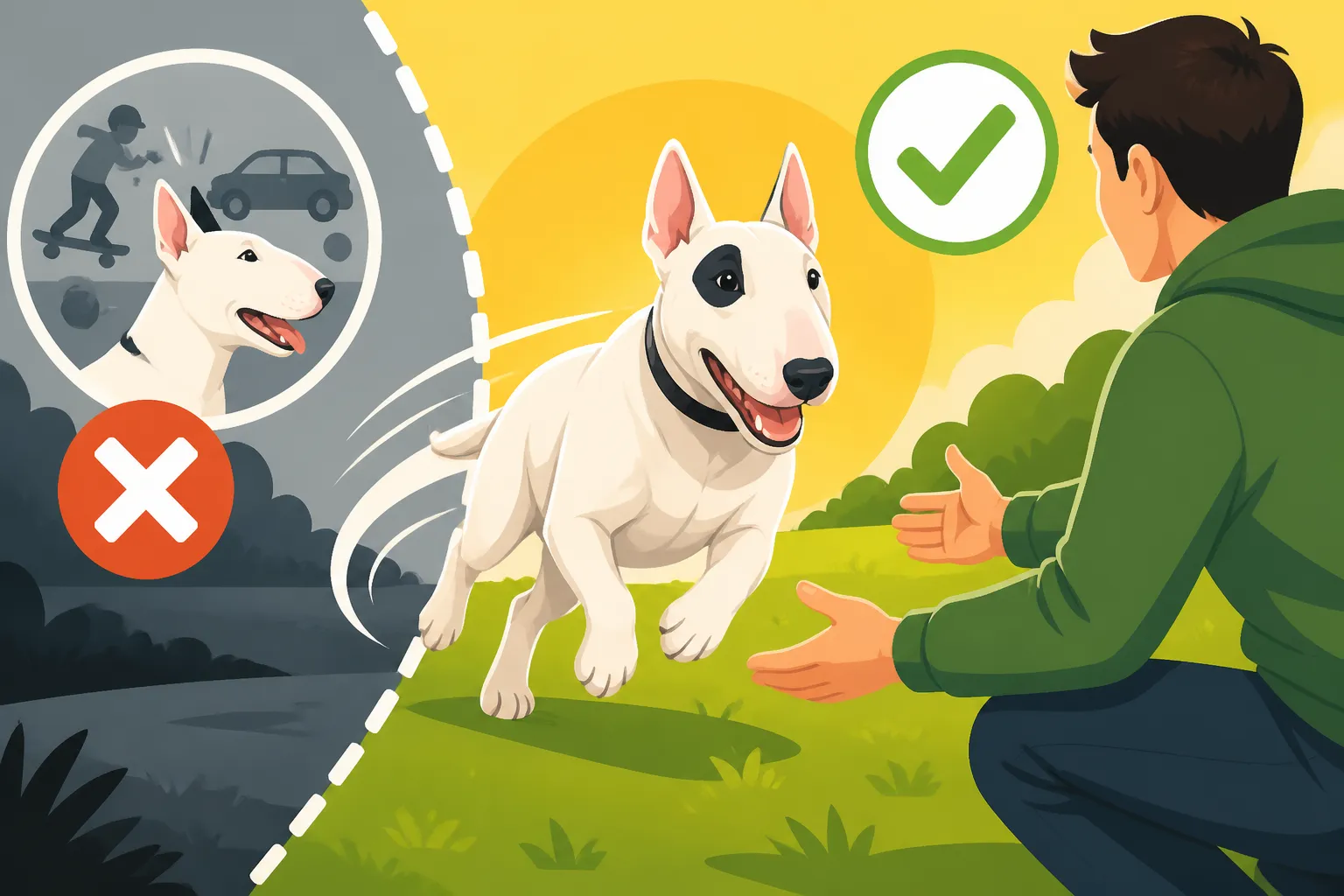
It’s a tale as old as time for Bull Terrier owners: "He has perfect recall in the backyard, but at the park? Forget about it!" This isn't just an urban legend; it's a very real phenomenon. Your Bull Terrier isn't being deliberately defiant; they are simply reacting to the context of their environment. In a familiar, low-distraction setting like your fenced yard, they've learned that you are the most interesting thing, and returning to you reliably brings rewards. There's usually nothing else competing for their attention.
However, once you introduce the outside world with its symphony of smells, sights, and sounds, the value proposition changes dramatically. Suddenly, you're competing with a thousand new things. The enticing scent trail left by a fox, the sight of another dog playing, or even just the novel texture of a new patch of grass can become far more compelling than your voice. This "selective hearing" highlights the critical need for a structured training approach that systematically introduces distractions, rather than expecting perfection in high-stimulus environments right from the start.
Building a Rock-Solid Recall: Strategies and Tools
Achieving a reliable recall with a Bull Terrier isn't a quick fix; it's a long-term project built on trust, consistency, and irresistible motivation. You'll need to outsmart their independence and make coming back to you the most appealing option in any given situation.
High-Value Motivation is Non-Negotiable
For a Bull Terrier, "good boy" is nice, but a chunk of roast chicken or a game of tug with their favorite toy is a whole different ballgame. When training recall, your rewards must be truly high-value. This means moving beyond standard kibble or generic treats. Think about what truly motivates your individual Bull Terrier. Is it a squeaky toy? A piece of cheese? Cooked meat? A quick, enthusiastic game of fetch? Whatever it is, reserve these ultimate motivators only for recall practice. This elevates the command, making it something truly special and worth interrupting whatever exciting thing they're doing.
Vary your rewards to keep things fresh and unpredictable. Sometimes it's a treat, sometimes it's a quick game, sometimes it's enthusiastic praise and belly rubs. The goal is to make your Bull Terrier excited about what they might get when they return. Remember, the reward needs to be more interesting than the distraction they're leaving behind. Which Reward Outranks a Bull Terrier's Own Idea is a crucial question to ask yourself. If you’re consistently using low-value rewards, you’re setting yourself up for disappointment, especially with a breed as discerning as the Bull Terrier.
The Power of Proofing: Practicing in Layers
You wouldn't expect your Bull Terrier to ace a complicated agility course after only practicing in the living room, right? The same logic applies to recall. "Proofing" is the process of practicing a behavior in increasingly distracting environments, building your dog's reliability step by step. Start with zero distractions: your quiet living room or hallway. Get them excited, call "come," reward heavily. Repeat.
Once they're solid indoors, move to a mildly distracting environment, like your securely fenced backyard. Again, call, reward, repeat. Slowly, incrementally, introduce more distractions: a quiet park, then a slightly busier one, maybe with another calm dog in the distance. The key is to set your Bull Terrier up for success at each stage. If they fail, you've moved too quickly. Dial back the distractions and rebuild. This layered approach is absolutely essential for a breed like the Bull Terrier. For practicing in larger, open spaces, a long line (often available on Amazon in various lengths and materials) can be an invaluable tool. It allows your Bull Terrier to explore safely while you maintain control and practice recall commands from a distance, without the risk of them bolting. Don't be afraid to keep a long line a part of your routine for a long time, especially when working on a solid recall. It can be a vital bridge to eventual off-leash reliability. Teaching a Bull Terrier to Come Back Mid Zoomie becomes much more achievable with this kind of systematic proofing.
Making "Come" the Best Thing Ever
The command "come" should always be associated with positive, joyful experiences, never with something negative. This means:
- Never use "come" to punish your dog. If you call them and then scold them, they’ll quickly learn to associate coming to you with unpleasantness.
- Never use "come" to end a fun activity abruptly. If you call them, put them on a leash, and immediately leave the park, they'll learn that "come" signals the end of their fun. Instead, call them, reward them, let them go play again for a minute or two, then call them again, reward, and then put the leash on.
- Play recall games! Hide behind a tree and call them. Have family members take turns calling them back and forth. Make it a game they actively want to participate in. Every time they hear "come," they should anticipate something wonderful happening.
This positive association is vital for a Bull Terrier. They are highly attuned to energy and emotion. If your recall command sounds exasperated or frustrated, they’ll pick up on that. Keep it upbeat, exciting, and always end on a high note.
Training Methods and Professional Help
While Bull Terriers are smart, their independent nature means specific training methods are more effective than others. Knowing when to seek outside help can also make a huge difference in your success and your sanity!
Positive Reinforcement and Consistency
For a Bull Terrier, positive reinforcement is not just a training method; it's practically the only effective way to build a strong bond and reliable behaviors. They are highly sensitive, and harsh corrections or punishment can easily lead them to shut down, become resentful, or simply decide you're not worth listening to. Instead of correcting a "wrong" behavior, focus entirely on rewarding the "right" one. When they even think about turning towards you, reward it! When they take a step in your direction, throw a party!
Consistency is the bedrock of all Bull Terrier training, especially recall. Every single member of your household needs to use the same command, the same tone, and offer equally compelling rewards. If one person lets them get away with ignoring "come," it undermines everyone else's efforts. Bull Terriers are excellent at exploiting inconsistencies. They'll quickly learn who to listen to and who they can get away with ignoring. What a Harsh Correction Does to a Bull Terrier highlights why this breed responds so poorly to punitive methods. Their stubbornness can solidify into defiance if not approached with patience and positive encouragement.
Enlisting Professional Guidance
Sometimes, despite your best efforts, you hit a wall. This is where a certified professional dog trainer, especially one experienced with strong-willed breeds like Bull Terriers, can be an invaluable resource. They can observe your specific dog, identify hidden motivators, and troubleshoot issues you might not even realize exist. They can also help you understand your Bull Terrier's unique learning style and tailor exercises that resonate with their personality. Don't hesitate to invest in puppy classes or advanced obedience courses. These structured environments offer controlled distractions and expert guidance.
Online platforms like BAXTER & Bella also provide fantastic resources and structured programs that can guide you through recall training step-by-step from the comfort of your home. They often break down complex behaviors into manageable chunks, making the process less daunting. A good trainer doesn't just train your dog; they teach you how to communicate more effectively with your Bull Terrier, building a stronger partnership. Whether a Bull Terrier Owner Should Hire a Behaviorist is a common question, and for recall issues that seem intractable or stem from deeper behavioral patterns, a behaviorist can provide even more specialized insight.
Safety First: Managing the Off-Leash Dream
Let's be realistic: not every Bull Terrier, despite the most diligent training, will ever achieve 100% reliable off-leash recall in all environments. And that's okay. The primary goal is your dog's safety and the safety of others. While you work tirelessly on recall, you must implement strict management strategies. This means:
- Secure Fencing: Inspect your yard regularly for any weak spots or potential escape routes.
- Long Lines: As mentioned, a long line (15-30 feet) allows your Bull Terrier some freedom to roam and sniff safely while you practice recall.
- Appropriate Public Spaces: Only allow off-leash freedom in designated, securely fenced dog parks or areas where you are certain there are no unexpected hazards and where your Bull Terrier's recall has been extensively proofed.
- Proper Equipment: Always use a secure, well-fitting harness or collar that your Bull Terrier cannot slip out of, even if they pull. Why a Bull Terrier Pulls Toward Everything is a related challenge that good equipment can help mitigate, keeping them safe on lead while recall is still a work in progress.
Many Bull Terrier owners ultimately decide that off-leash privileges in unfenced areas are simply too risky. And that's a perfectly responsible decision. A life of safe, leashed adventures is far better than one fraught with the danger of a runaway dog. For more on this, consider reading Whether a Bull Terrier Ever Earns Off Leash Freedom.
Bull Terrier Recall: Expectations vs. Reality
It’s easy to get caught up in the ideal image of a dog bounding back to you on command, but with a Bull Terrier, setting realistic expectations is key to preventing frustration and celebrating the progress you do make.
Understanding the "Good Enough" Recall
For a Bull Terrier, a truly "rock-solid" recall might not mean 100% perfection in every single scenario, every single time. Instead, it often means a high percentage of reliability in most situations, especially those critical for safety. It means your dog will generally return when called, even with some distractions, and you can rely on them when it truly matters. The "good enough" recall is one where you feel confident taking them to varied environments without constant fear, understanding that occasional lapses might happen, but they are rare and manageable.
The journey to this "good enough" point is deeply personal to each Bull Terrier. Some might surprise you with their aptitude, while others will be a constant work in progress. The important thing is to focus on what your dog can achieve reliably and to manage the environments accordingly. Don't compare your Bull Terrier to the Border Collie next door; celebrate your Bull Terrier's unique progress and temperament. The goal isn't necessarily a show-ring perfect response, but a response that ensures their well-being and strengthens your bond. To keep training engaging and effective, remember How Short a Bull Terrier's Training Session Has to Be to match their attention span.
Lifelong Learning and Adaptability
Recall training isn't a one-and-done project that you can check off a list. It's a lifelong commitment to reinforcement, practice, and adaptability. As your Bull Terrier ages, their environment changes, or new distractions emerge, their recall might need refreshing. What worked beautifully when they were a puppy might need tweaking as they enter their adolescent "teenager" phase or as a senior dog.
It's also important to remember that recall can be impacted by underlying breed traits. For a deeper dive into their character, consider exploring What a Bull Terrier's Temperament Is Really Like and How Stubborn a Bull Terrier Is. These articles can provide context on why consistent effort, even after initial success, is so vital. Regular, short bursts of recall practice, even in low-stakes environments, will keep the behavior sharp and keep your Bull Terrier thinking that coming to you is always the best decision. Think of it like maintaining a skill; if you don't use it, you might lose some of its sharpness. Stay vigilant, stay positive, and keep making "come" the most wonderful word your Bull Terrier hears. For those interested in seeing how Bull Terriers stack up in formal training, Whether a Bull Terrier Can Pass a Canine Good Citizen Test offers an interesting perspective on advanced obedience goals.
Here's a quick look at common recall challenges and strategies:
| Challenge Type | Example Scenario | Why It's a Problem for Bull Terriers | Effective Strategy | Tool/Resource |
|---|---|---|---|---|
| High Prey Drive | Squirrel darts across the path in the park | Instinct overpowers commands; tunnel vision | Practice in controlled settings with "planted" distractions; use high-value rewards | Long line, squeaky toy, extra tasty treats (e.g., hot dogs) |
| Over-Excitement (Zoomies) | Sudden burst of energy in a new field | Brain too stimulated to process commands; playful deafness | Practice recall before peak excitement; use a "reset" command; proof in layers | Interactive toys, calm praise, consistency in training |
| Novelty/New Environment | Exploring a new hiking trail with many new smells | Sensory overload makes owner less appealing | Start in low-distraction environments; gradually introduce novelty; proofing | Secure harness, long line, new types of high-value treats |
| Selective Hearing | Ignores you at the dog park, perfect at home | Your value is diluted by other stimuli | Make yourself the biggest "paycheck"; increase reward value dramatically; practice consistently | Variety of high-value rewards, engaging games, professional trainer |
| Lack of Motivation | Prefers to sniff a distant bush over returning to you | Reward isn't compelling enough to leave current activity | Elevate reward value; make returning unpredictable and fun | Jackpot rewards (multiple treats), special toys, surprise belly rubs |
Disclaimer
This article is for general informational purposes only and does not constitute professional advice. Laws, prices and regulations vary by location and change over time. Consult a qualified professional for guidance on your specific situation.