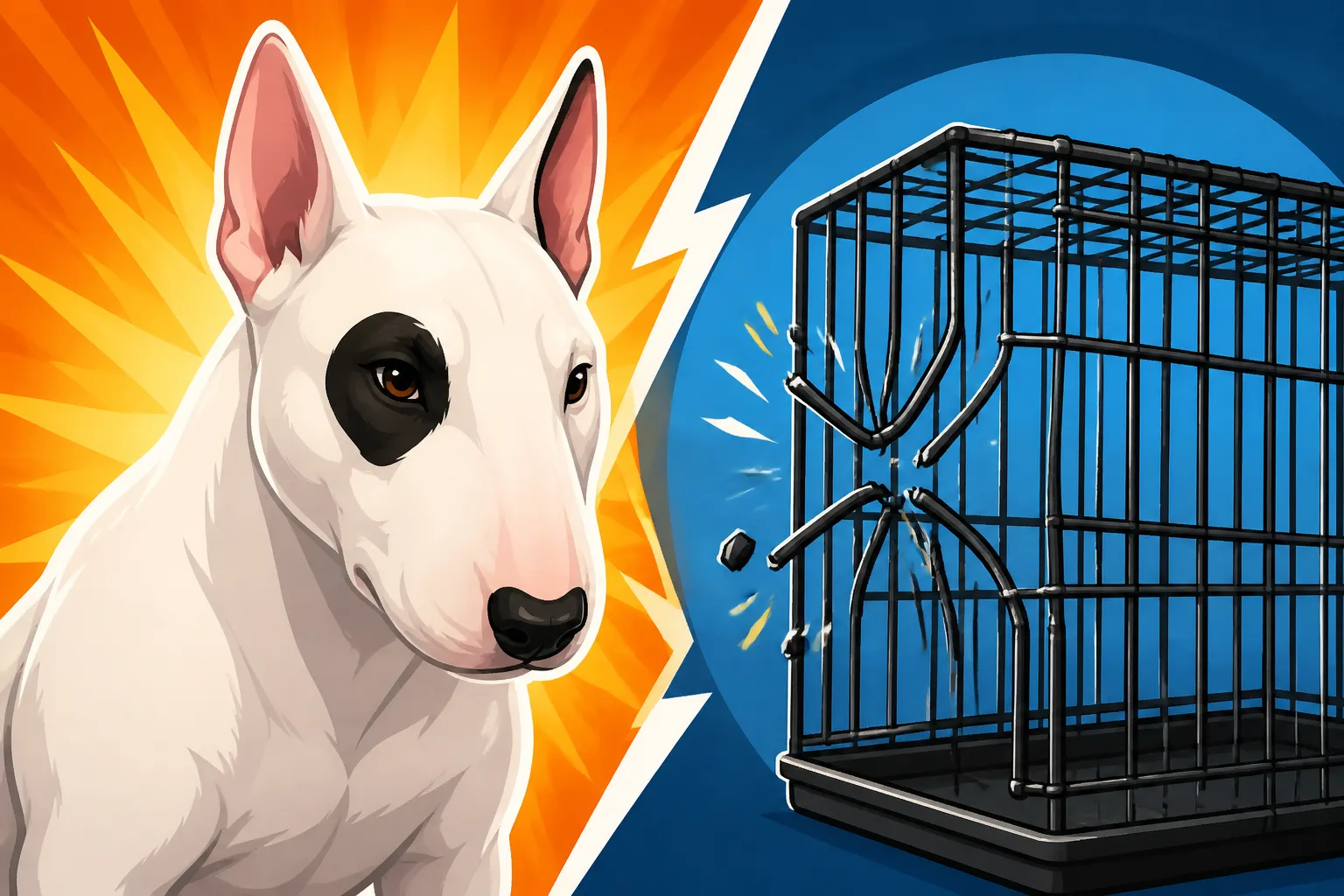
Whether a Bull Terrier Can Break a Wire Crate
One of the most common anxieties for any Bull Terrier owner, new or seasoned, is the sheer destructive power these incredible dogs possess. You invest in what seems like a sturdy wire crate, hoping it will be a safe haven for your beloved clown, only to return home to a mangled mess of metal, a dog looking far too pleased with itself, and a gaping hole where the crate door used to be. This guide is here to address that exact frustration, delving into why Bull Terriers are notorious crate Houdinis and what you can realistically do about it.
The Bull Terrier's Unique Strength and Determination: More Than Just a Pretty Head
Let's be honest, the Bull Terrier is a marvel of canine engineering. They're built like little tanks, packed with muscle, and possess a tenacious spirit that can make them seem invincible. This combination, while admirable in many ways, means that a standard wire crate often stands little chance against a determined Bull Terrier. It's not just about brute force; it's about their unique blend of physical prowess and mental fortitude.
Why Their Build Makes Them Escape Artists
Picture this: a compact, powerful dog with jaws designed for gripping, a low center of gravity, and a remarkable ability to leverage its entire body weight. That's your Bull Terrier. They might look like silly clowns, but beneath that goofy exterior is an athlete. When faced with a wire crate, they don't just push; they work. They'll use their powerful shoulders to ram the sides, their strong necks to pry at the top, and those formidable jaws to test every single bar and weld. Many owners underestimate the sheer physical strength a Bull Terrier can apply to a perceived barrier. It’s a testament to their heritage, a breed developed for resilience and unyielding spirit. This isn't a fluffy little lap dog; it's a dog that truly embodies its "bull" lineage in terms of sheer physical power.
The Mental Game: Boredom and Frustration as Motivators
Beyond their physical capabilities, Bull Terriers are incredibly intelligent and, let's just say, opinionated. They don't just lie down and accept their fate if they're bored or unhappy. A wire crate, especially if not introduced properly or if the dog is left for too long, can quickly become a challenge to overcome. Their problem-solving skills are often directed towards escape, particularly if they suffer from separation anxiety or simply aren't getting enough mental and physical stimulation. They’re smart enough to realize that if one bar bends, maybe others will too. If a latch rattles, perhaps it can be manipulated.
If your Bull Terrier is left alone with nothing to do, the crate suddenly transforms from a den into a puzzle, and they are masters of puzzles. They’ll chew, push, dig, and paw relentlessly. This isn't malice; it's often a combination of boredom, pent-up energy, or genuine anxiety. Understanding What a Bull Terrier Does When It Is Bored is crucial here, as a destructive escape attempt from a crate often stems from these underlying issues, not just a desire to be naughty. They literally need a job, and if you don't give them one, they'll create their own: dismantling their confinement.
Common Ways Bull Terriers Break Wire Crates
When you consider a Bull Terrier's build and brainpower, it's not surprising that standard wire crates often fall short. They're not designed for the level of focused, sustained pressure a determined Bull Terrier can apply. Owners often share horror stories of finding their beloved pet free from their cage, leaving a scene that looks like something out of a cartoon, but with real consequences.
Bending Bars and Popping Welds
This is perhaps the most common failure point for wire crates. A Bull Terrier will often find a weak spot, usually near the door or a corner, and begin to push and pull. They use their powerful shoulders and chest to apply leverage, bending the thin gauge wire outward or inward. Once a single bar is bent, it creates a larger gap, providing more purchase for their jaws and paws. From there, it's a domino effect.
They might grab a bar in their mouth and twist, weakening the weld point until it snaps. The sound of metal groaning and popping under pressure is unfortunately familiar to many Bull Terrier owners. They have incredible jaw strength, capable of gnawing through things you wouldn't expect. If the wire is thin, it's just a matter of time before they find its breaking point, turning a seemingly secure enclosure into a twisted sculpture.
Defeating Latches and Doors
Standard wire crates typically come with simple slide-bolt latches, sometimes one or two. For many dogs, these are perfectly adequate. For a Bull Terrier? Not so much. These dogs are intelligent problem-solvers. They will paw at the latch, push against the door, and eventually, through trial and error, they often figure out how to manipulate it. A well-placed ram from a shoulder or a persistent pawing can cause the door to flex just enough for the latch to disengage.
Some Bull Terriers become experts at rattling the door until the vibration works the latch open. Others learn to use their nose or teeth to slide the bolt. It’s astonishing how quickly they can learn this, often after just one accidental escape. This isn't just a physical challenge; it's a mental one. They observe, they experiment, and they learn. If your Bull Terrier has ever managed to open a cabinet door or a baby gate, then a simple crate latch is well within their capabilities.
Chewing Through the Pan and Floor
Many wire crates come with a removable plastic pan for easy cleaning. While convenient for owners, this plastic pan is often no match for a bored or anxious Bull Terrier. They will chew at the edges, slowly but surely breaking off pieces. Once a significant section is gone, they might try to "dig" their way out, creating a hole large enough to squeeze through or at least destroy the pan entirely, potentially ingesting plastic pieces in the process.
Even if the pan is metal, some exceptionally determined Bull Terriers will attempt to chew at the very bottom wire mesh of the crate itself, especially if they are experiencing intense anxiety or are trying to "dig" an escape route. This can damage their teeth and cause serious internal injuries if they ingest wire. This type of behavior often signals deeper anxiety issues, where the dog is so desperate to escape confinement that they will go to extreme measures. It's a clear sign that the crate is not serving its purpose as a safe, comforting space. When considering What a Bull Terrier Chews, remember that a wire crate pan is often on that list of targets.
Assessing Your Wire Crate's Vulnerabilities
Before you throw in the towel on crating altogether or assume your Bull Terrier is simply untrainable, it's worth taking a hard look at the crate itself. Not all wire crates are created equal, and understanding the differences can help you identify why yours might be failing.
Gauge and Wire Thickness
The term "gauge" refers to the thickness of the wire used in the crate's construction. A lower gauge number means a thicker, stronger wire. Many standard consumer-grade wire crates are made with thinner, higher-gauge wire (e.g., 9- or 11-gauge). While these are fine for calmer, less powerful breeds, they are often woefully inadequate for a Bull Terrier. A Bull Terrier needs a heavy-duty crate, one made with much thicker, lower-gauge steel wire, often 6- or 7-gauge.
You can often feel the difference. Thicker wire is much harder to bend by hand and less likely to flex under pressure. When inspecting your current crate, pay attention to how much the bars give when you push on them. If there's significant give, it's a prime target for your Bull Terrier's efforts. The stronger the material, the less likely it is to be deformed by powerful pushing or chewing, which buys you time and prevents escapes.
Latch Security and Reinforcement
A single, flimsy slide-bolt latch is an open invitation for a Bull Terrier to test its limits. Look for crates with multiple locking points, or better yet, those with a more complex latching mechanism that requires more dexterity than a simple slide. Some heavy-duty crates incorporate a "positive latch" system that ensures the door is truly secure and cannot be jiggled or rammed open.
If you're determined to make your current wire crate work, you might consider reinforcing the latch. Heavy-duty carabiners or snap hooks can be used to add extra security to the door. Padlocks are another option, but ensure they are easy for you to open in an emergency. The key is to make it as difficult as possible for your Bull Terrier to outsmart the system. However, be aware that if the crate itself is too flimsy, reinforcing the latch might just encourage them to break through the wire elsewhere.
Considering Crate Size and Placement
Believe it or not, the size of the crate can play a role in your Bull Terrier's escape attempts. A crate that's too small can make a dog feel trapped and claustrophobic, increasing their anxiety and motivation to break out. Conversely, a crate that's too large can give them too much room to maneuver, allowing them to gain momentum for ramming or giving them space to practice their bending and chewing techniques without feeling cramped. The ideal size allows them to stand up, turn around, and lie down comfortably, but not much more.
The placement of the crate is also important. If it's placed against a wall or in a corner, your Bull Terrier might use these surfaces for leverage, pushing off them to exert more force on the crate bars. Ensure the crate is in a low-traffic, comfortable area where your Bull Terrier feels safe, away from drafts or direct sunlight, and without external surfaces it can push against. This helps reduce anxiety and the feeling of needing to escape.
Strategies for Crate Training a Bull Terrier That Tests Boundaries
If your Bull Terrier has already demonstrated a knack for breaking out of wire crates, it's time for a multi-faceted approach. This isn't just about buying a stronger crate; it's about addressing the underlying reasons for their escape artist tendencies and creating a positive, secure environment.
Building Positive Associations
The crate should be a happy place, a den, not a punishment chamber. This is paramount for a Bull Terrier, who will absolutely refuse to cooperate if they feel unfairly treated. Start by feeding all meals in the crate, offering high-value treats (Chewy has a great selection of durable chews and enticing treats) and special toys only when they are inside. Play crate games, tossing treats in and letting them go retrieve them, then closing the door for a second before opening it again. Gradually increase the duration.
Never use the crate for punishment. If your Bull Terrier associates the crate with negative experiences, they will actively work to get out. Make it comfortable with a soft bed that they can't immediately destroy (you might need to invest in a chew-proof one!). The goal is for them to choose to go into their crate because it's where good things happen and where they feel safe. This is a crucial step in preventing anxiety-driven escapes.
Exercise and Mental Stimulation
A tired Bull Terrier is a good Bull Terrier. These dogs are robust and energetic, and insufficient exercise or mental engagement will inevitably lead to boredom, frustration, and destructive behavior, including crate escapes. Daily walks are a start, but Bull Terriers often need more. Think about vigorous play sessions, flirt poles, or even short training bursts throughout the day. They thrive on having a job to do.
Mental stimulation is equally vital. Puzzle toys filled with a portion of their meal, treat-dispensing toys, or even scent work games can tire their brains out. A happy, well-exercised, and mentally stimulated Bull Terrier is far less likely to feel the overwhelming urge to destroy their confinement. Consider the advice in How Much Exercise a Bull Terrier Actually Needs to ensure your dog is getting enough activity to settle down when crated. If you're looking for quality, nutritionally dense food for puzzle toys, brands like Ollie can be a great option.
Investing in a Truly Secure Crate
For many Bull Terrier owners, the ultimate solution to a wire crate breaker is to upgrade to a heavy-duty, impact-resistant crate. These are often made from strong steel tubing or aircraft-grade aluminum and feature reinforced welds, secure multi-point latch systems, and solid construction that a Bull Terrier simply cannot bend, chew, or break.
While the initial cost is significantly higher than a standard wire crate, consider it an investment in your peace of mind and your home's integrity. It's often cheaper in the long run than replacing multiple destroyed wire crates, repairing chewed furniture, or dealing with vet bills from ingested crate parts. These crates are designed specifically for powerful, escape-prone dogs and offer a level of security that wire crates cannot match. If you're wondering Which Crate Holds a Bull Terrier or What a Heavy Duty Bull Terrier Crate Costs, be prepared for a higher price point, but also a solution that truly works.
Here's a quick comparison of common crate types:
| Crate Type | Material | Wire Gauge (Approx.) | Latch Security | Ideal Dog Temperament | Suitability for Bull Terriers |
|---|---|---|---|---|---|
| Standard Wire | Thin Steel Wire | 9-12 gauge | 1-2 slide bolts | Calm, less powerful breeds, no escape history | Low to Moderate (often fails) |
| Heavy-Duty Wire | Thicker Steel Wire | 7-8 gauge | 2-3 slide bolts, reinforced | Moderately powerful, mild escape attempts | Moderate (better, but still vulnerable) |
| Heavy-Duty Impact | Steel Tubing/Aluminum | N/A (Solid Frame) | Multi-point, often key-locked | Powerful, anxious, persistent escape artists | High |
| Plastic/Airline | Hard Plastic | N/A (Solid Walls) | Snap closures, metal bolts | Travel, calmer dogs, less destructive | Low (can be chewed/broken) |
Addressing Separation Anxiety
Sometimes, crate destruction isn't just boredom; it's a symptom of deeper separation anxiety. If your Bull Terrier vocalizes excessively, paces, drools, or attempts to escape every time you leave, even for short periods, you might be dealing with anxiety. Simply providing a stronger crate won't solve the underlying issue; it will only contain the panicked behavior, which can be detrimental to your dog's mental well-being.
If you suspect separation anxiety, consult with a professional dog trainer or a veterinary behaviorist. They can help you develop a desensitization and counter-conditioning protocol, potentially alongside medication, to help your Bull Terrier feel more comfortable when alone. Ignoring true separation anxiety can lead to escalating destructive behavior and significant distress for your dog. For more information, check out Signs a Bull Terrier Has Separation Anxiety. And it's always wise to consider pet insurance, like Healthy Paws, which can help cover unexpected vet costs if anxiety-related destruction leads to injuries or if professional behavioral therapy is recommended.
Disclaimer
This article is for general informational purposes only and does not constitute professional advice. Laws, prices and regulations vary by location and change over time. Consult a qualified professional for guidance on your specific situation.