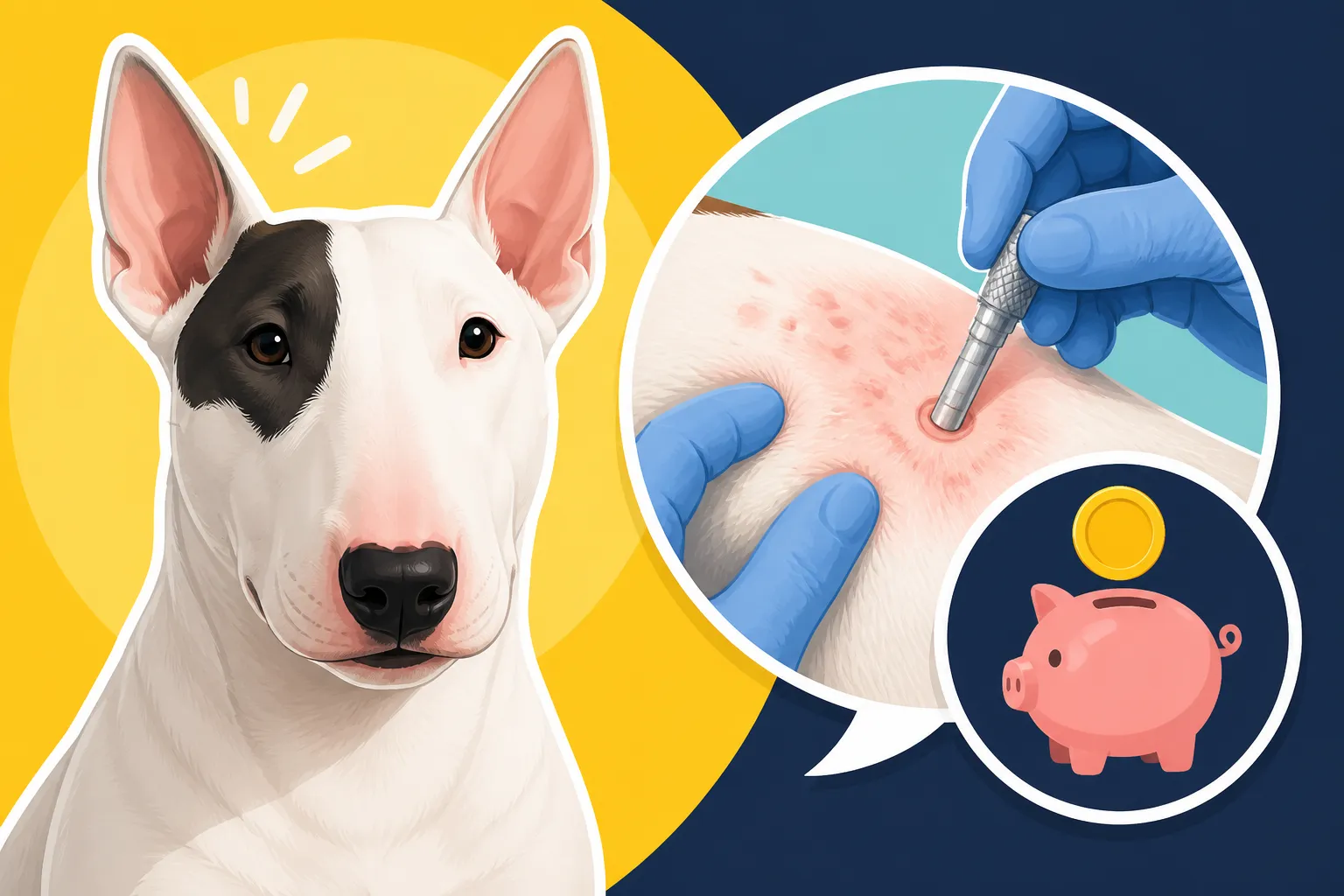
What a Bull Terrier’s Skin Biopsy Costs
It's incredibly frustrating when your beloved Bull Terrier develops a persistent skin issue that just won't clear up. You try all the over-the-counter remedies, follow your vet's initial advice, and yet the itching, the redness, the hair loss keeps coming back, leaving you worried and your dog miserable. When things get to this point, your vet might suggest a skin biopsy to finally get a definitive diagnosis. This guide is here to walk you through what a Bull Terrier skin biopsy entails, and more importantly, what those costs generally look like, so you can be prepared.
Why a Skin Biopsy Becomes Necessary for Your Bull Terrier
When your Bull Terrier's skin isn't right, it’s not just an aesthetic problem; it can be a source of constant discomfort, pain, and even secondary infections. As owners, we often hope for a quick fix, but sometimes the underlying cause is more complex than a simple allergy or parasite. That's when your vet starts talking about a biopsy.
When Persistent Skin Issues Demand Deeper Investigation
You've probably been down the road of countless baths with medicated shampoos, trying different foods, giving antihistamines, and perhaps even tackling suspected fleas or mites. For many Bull Terrier owners, chronic skin problems are a recurring nightmare. You see your dog scratching relentlessly, rubbing against furniture, developing hot spots, and losing patches of fur. It's heartbreaking to witness, and even more frustrating when nothing seems to stick. This persistent, non-responsive nature of the skin problem is often the first red flag that a deeper diagnostic tool is needed. It’s not about giving up on simpler treatments, but acknowledging that those simpler treatments aren't addressing the real issue. Sometimes, your Bull Terrier might develop bald patches, like those discussed in What a Bull Terrier's Bald Patch Means, and while many things can cause hair loss, a biopsy helps to narrow down the culprits to cellular levels.
Ruling Out Common Ailments vs. Identifying the Root Cause
Veterinarians, quite rightly, start with the most common and easily treatable conditions. They'll perform skin scrapes to look for mites, suggest flea treatments, or run allergy tests. But what if those come back negative, or the treatments provide only temporary relief? That's the diagnostic puzzle where a skin biopsy truly shines. It allows the veterinary pathologist to examine tissue samples under a microscope, looking at the actual cells and structures within the skin. This isn't just about identifying a bacteria or fungus; it's about seeing if there are inflammatory cells indicating an autoimmune disease, abnormal cell growth suggesting cancer, or specific patterns that point to genetic conditions. This detailed, microscopic view can differentiate between, say, a severe environmental allergy and a less common condition like zinc-responsive dermatosis, or even something more serious that requires very specific medication, which you can read more about in A Bull Terrier's Skin Is Its Weakest Point.
The Anxiety of the Unknown: What a Biopsy Can Reveal
As a Bull Terrier owner, you're deeply invested in your dog's well-being. The anxiety of not knowing what's wrong can be immense. You might spend sleepless nights watching your dog itch, worrying about their quality of life, and dreading what the next vet bill might bring. A skin biopsy, while an additional cost and procedure, offers the invaluable gift of a definitive answer. It can identify bacterial or fungal infections that are resistant to common antibiotics, uncover rare parasitic infestations, or, in more concerning cases, detect cancerous growths or autoimmune disorders. Even if the diagnosis is serious, knowing exactly what you're dealing with empowers you and your vet to formulate a targeted, effective treatment plan. This clarity can bring a huge sense of relief, replacing vague worries with concrete steps forward, helping you understand how best to manage your Bull Terrier's health, rather than just treating symptoms.
Breaking Down the Costs: What Goes Into a Bull Terrier Skin Biopsy
Understanding the components of a skin biopsy can help demystify the overall cost. It's not just one lump sum for "the biopsy"; rather, it's a culmination of several critical steps, each with its own associated fees.
The Initial Consultation and Preliminary Diagnostics
Before your vet even suggests a biopsy, there's usually a history of prior consultations and basic tests. These initial visits, where you explain the symptoms and your vet performs a physical exam, carry a consultation fee. Think of it as the starting point for any investigation. Beyond that, a range of preliminary diagnostic tests are often performed to rule out simpler conditions. These can include:
- Skin scrapes: Looking for mites like those responsible for Demodectic Mange in a Bull Terrier.
- Fungal cultures: To identify ringworm or other fungal infections.
- Cytology: Examining cells from the skin surface (via tape prep or impression smears) to identify bacteria, yeast, or inflammatory cells.
- Blood tests: To check for underlying systemic issues that might manifest as skin problems, like thyroid imbalances or other conditions that might make a Bull Terrier more susceptible to skin trouble.
Each of these steps adds to the overall investigative cost, and they are usually necessary before a biopsy is even considered, ensuring that simpler, less invasive causes haven't been overlooked. Sometimes, the answers are found here, saving you the biopsy expense.
The Biopsy Procedure Itself: Anesthesia and Sample Collection
This is where a significant portion of the cost comes into play because a skin biopsy in a Bull Terrier usually requires sedation or general anesthesia. Bull Terriers, with their strong wills and often clownish natures, don't typically lie perfectly still for a precise tissue collection. The anesthesia process itself involves several cost factors:
- Pre-anesthetic bloodwork: Essential to ensure your Bull Terrier's organs (like kidneys and liver) can safely process anesthetic drugs. This might be similar to What a Bull Terrier's Yearly Bloodwork Should Cover if not more specific.
- Anesthetic drugs and administration: The medications used to induce and maintain anesthesia.
- Anesthetic monitoring: During the procedure, your Bull Terrier's heart rate, respiration, blood pressure, and oxygen saturation are closely monitored by a veterinary technician, ensuring their safety.
- The biopsy collection: This can be done in a couple of ways:
- Punch biopsy: A small circular tool (like a cookie cutter) is used to take small, deep samples of skin. Several punches might be taken from different affected areas. This is less invasive and usually requires small sutures.
- Excisional biopsy: A larger section of tissue, often including a lesion, is surgically removed. This is more invasive and requires more extensive suturing.
The choice of biopsy type and the amount of anesthesia needed will impact the final bill. Bull Terriers can be tricky patients due to their strong build, and vets will take every precaution to ensure their safety, adding to the meticulous care and therefore, the cost.
Laboratory Analysis: The Pathologist's Role
Once the tissue samples are collected, they aren't just examined by your local vet. They are meticulously preserved and sent off to a specialized veterinary pathology laboratory. This is a crucial step, and the cost here reflects the highly specialized expertise involved.
- Tissue processing: The samples undergo various steps, including fixation, embedding in wax, and slicing into incredibly thin sections.
- Staining: These thin sections are then stained with special dyes that highlight different cell types and structures, making them visible under a microscope.
- Pathologist's interpretation: A board-certified veterinary pathologist, a specialist in diagnosing diseases by examining tissues, then studies these slides. They look for abnormal cells, inflammatory patterns, and specific characteristics that point to a diagnosis. Their report will detail their findings, including the type of inflammation, presence of infection, or specific cellular changes indicative of conditions like autoimmune disease or cancer. The accuracy of this interpretation is paramount, as it directly guides the future treatment plan. This is where the real value of the biopsy lies, as a definitive diagnosis can prevent years of ineffective treatments and discomfort for your Bull Terrier. For a deeper understanding of specialist costs, you might consider What a Bull Terrier's Dermatologist Charges.
Here's a simplified breakdown of the common cost components:
| Cost Component | Description |
|---|---|
| Initial Consultation | Vet examination, discussion of history, preliminary assessment |
| Preliminary Diagnostics | Skin scrapes, cytology, fungal cultures, bloodwork (to rule out common issues) |
| Pre-Anesthetic Workup | Blood tests (CBC, chemistry panel) to assess anesthetic risk |
| Anesthesia & Monitoring | Drugs, administration, constant monitoring during the procedure |
| Biopsy Procedure | Surgical time, tools (punch or excisional), suture materials |
| Tissue Handling & Shipping | Preparation of samples for the lab, courier fees |
| Pathology Lab Analysis | Specialized interpretation by a veterinary pathologist, written report |
| Post-Procedure Care/Medication | Pain relief, antibiotics, E-collar, follow-up wound checks |
Factors Influencing the Final Bill for a Skin Biopsy
While the general steps remain consistent, several variables can cause the final cost of a Bull Terrier's skin biopsy to fluctuate significantly. It's important to be aware of these so you're not caught off guard.
Geographic Location and Veterinary Practice Type
Just like human healthcare, veterinary costs can vary dramatically based on where you live and the type of practice you visit.
- Urban vs. Rural: Veterinary practices in major metropolitan areas often have higher overheads (rent, staff salaries, specialized equipment) compared to those in rural or smaller towns. This difference in operating costs is naturally reflected in their service fees. A biopsy in New York City might be notably more expensive than one in a small town in, say, Nebraska.
- General Practice vs. Specialty Dermatology Clinic vs. University Hospital: Your primary care veterinarian can often perform basic skin biopsies. However, if the case is particularly complex, or if your vet prefers to refer to a specialist, you might end up at a veterinary dermatology clinic or a university teaching hospital. These specialized facilities offer advanced diagnostic equipment, board-certified specialists (who have undergone extensive additional training), and often 24/7 care, all of which come with a higher price tag. They might be better equipped to handle conditions like Whether a Bull Terrier Gets Skin Allergies if they are unusually severe or resistant. Their expertise is invaluable for difficult cases, but it does mean a steeper bill.
Number of Biopsy Sites and Type of Biopsy
The extent of the biopsy procedure itself directly impacts the cost.
- Multiple Sites: If your Bull Terrier has lesions scattered across different parts of their body, or if the vet needs to assess various stages of a skin condition, they might take multiple biopsy samples. Each additional sample requires more time, more anesthetic, and more individual processing and analysis by the pathologist. It’s like sending multiple distinct pieces of evidence to a forensics lab – each one adds to the investigative effort.
- Punch vs. Excisional Biopsy: As mentioned earlier, punch biopsies are generally less invasive and quicker, usually leading to a lower procedural cost. Excisional biopsies, which remove larger areas of tissue (often for suspected tumors or very localized lesions), require more surgical time, more intricate suturing, and potentially more post-operative care, thus increasing the overall expense. The more complex the surgical removal, the higher the procedural fee.
Anesthesia Protocols and Monitoring
Anesthesia is never a "one-size-fits-all" situation, especially with a breed as unique as the Bull Terrier. The cost of anesthesia can vary based on your dog's individual health status and the safety measures implemented.
- Patient Health Status: An older Bull Terrier, or one with pre-existing conditions (like a known heart murmur, kidney issues, or obesity), will require a more tailored and cautious anesthetic protocol. This might involve more extensive pre-anesthetic testing (beyond basic bloodwork), specialized anesthetic drugs, and more intensive monitoring by experienced staff. The goal is always patient safety, and achieving that for a higher-risk patient naturally incurs more costs. For example, if your Bull Terrier is already receiving care for heart issues, the cardiac monitoring during anesthesia would be more vigilant, and therefore, potentially more expensive.
- Duration of Anesthesia: Longer procedures mean more anesthetic drugs used and more time spent under monitoring, directly impacting the cost. If multiple, intricate biopsies are required, the anesthesia time will be extended.
- Advanced Monitoring: Some clinics offer or require advanced monitoring equipment (e.g., capnography, direct blood pressure measurement) which, while increasing safety, also adds to the cost. It's an investment in your Bull Terrier's well-being during a vulnerable time. Knowing How a Bull Terrier Hides Pain can sometimes make these assessments more challenging, necessitating closer monitoring during and after the procedure.
Additional Treatments or Medications
The biopsy isn't always the very last step in your Bull Terrier's journey. There are often follow-up costs involved:
- Pain management: After the biopsy, your Bull Terrier will likely be sent home with pain medication to ensure their comfort, especially if an excisional biopsy was performed.
- Antibiotics: If a secondary infection is present, or as a prophylactic measure to prevent infection at the biopsy sites, antibiotics may be prescribed.
- E-collar (Cone of Shame): Essential to prevent your Bull Terrier from licking or chewing at the biopsy sites, which could lead to infection or reopening of sutures. While a seemingly small item, it's a necessary one.
- Follow-up visits: Your vet will likely want to recheck the biopsy sites to ensure proper healing and suture removal (if non-dissolvable sutures were used). There might also be a follow-up consultation to discuss the biopsy results in detail and formulate a long-term treatment plan. This might include discussing whether diet (Whether a Bull Terrier's Skin Improves With Diet) could be a factor in recovery.
These "aftercare" costs are an integral part of the overall expense and should be factored into your budget.
Navigating the Costs: Insurance and Financial Planning
Facing a potentially significant veterinary bill for a skin biopsy can be daunting, but there are resources and strategies to help manage the financial burden. Being prepared can make all the difference.
Does Pet Insurance Cover Skin Biopsies?
This is often one of the first questions Bull Terrier owners ask, and thankfully, the answer is generally yes, if certain conditions are met. Most pet insurance providers, including popular options like Healthy Paws, consider diagnostic procedures like skin biopsies to be covered events, especially when investigating a new, unexpected illness.
However, there are crucial details to consider:
- Deductibles and Reimbursement Rates: Most pet insurance plans have a deductible you must meet before coverage kicks in, and they reimburse a percentage of the vet bill (e.g., 70%, 80%, or 90%) after that. You'll still be responsible for a portion of the cost.
- Waiting Periods: Almost all pet insurance policies have waiting periods before certain conditions are covered. For accidents, it might be a few days; for illnesses, it's typically 14 days or longer. If your Bull Terrier develops the skin condition before these waiting periods are over, or before you even enroll in a plan, it might not be covered.
- Pre-existing Conditions: This is the biggest caveat. If the skin condition for which the biopsy is needed started before you purchased the insurance or during the waiting period, it will almost certainly be considered a pre-existing condition and excluded from coverage. This is why it's so vital to get your Bull Terrier insured when they are young and healthy, ideally as soon as you bring them home. You can learn more about this in Insuring a Bull Terrier Against What It Actually Gets. Always review the specific terms and conditions of your policy or contact your provider (like Healthy Paws) directly to confirm coverage for diagnostic tests.
Exploring Payment Plans and Veterinary Aid Programs
If you don't have pet insurance or if the biopsy is for a pre-existing condition, don't despair. There are still options to explore:
- Veterinary Clinic Payment Plans: Many veterinary clinics understand the financial strain of unexpected medical costs and offer internal payment plans, allowing you to pay the bill over several installments. It never hurts to ask your vet's office about their policies.
- Third-Party Financing: Services like CareCredit or Scratchpay function like credit cards specifically for healthcare expenses, often offering deferred interest periods if you pay off the balance within a certain timeframe. This can be a good option for spreading out the cost without incurring immediate interest.
- Breed-Specific Rescues and Charities: Some Bull Terrier rescues or breed-specific health foundations might offer financial assistance for diagnostic procedures or treatments for conditions common to the breed. While a skin biopsy isn't unique to Bull Terriers, if the underlying diagnosis turns out to be a breed-specific ailment, they might be a resource. You might consider looking into organizations associated with Adopting a Bull Terrier From Rescue.
- General Pet Aid Organizations: There are also national and local organizations dedicated to helping pet owners afford veterinary care. A quick online search for "pet financial aid" or "veterinary assistance" in your area can yield several possibilities.
Long-Term Financial Planning for Bull Terrier Health
The cost of a skin biopsy is just one potential expense in a lifetime of caring for your Bull Terrier. Being proactive with financial planning can significantly reduce stress when unexpected health issues arise.
- Emergency Fund: Building a dedicated "pet emergency fund" is perhaps the most straightforward way to prepare. Even putting aside a small amount each month can accumulate into a substantial safety net for unexpected vet bills. Many Bull Terrier owners suggest banking funds, anticipating potential health concerns, as explored in Whether a Bull Terrier Owner Should Bank for Kidneys for instance.
- Wellness Plans: Some veterinary clinics offer wellness plans that bundle routine care (exams, vaccinations, basic bloodwork) into monthly payments, often at a slight discount. While these usually don't cover biopsies, they can help manage predictable costs and ensure your Bull Terrier gets regular check-ups, which can sometimes catch issues before they become severe. Regular check-ups are key, as detailed in How Often a Bull Terrier Needs a Wellness Exam.
- Budgeting for Chronic Conditions: Bull Terriers, like any purebred dog, can be predisposed to certain health issues. Researching common Bull Terrier ailments (skin allergies, kidney issues, heart conditions) and understanding their potential long-term management costs can help you budget more realistically. Consider factors like special diets (such as those you might find on Chewy for specific needs) or ongoing medications. Knowing What the First Year With a Bull Terrier Costs or What a Bull Terrier Costs Over Its Lifetime will give you an idea of the bigger picture. Even considering a brand like Ollie for quality, customized food might be part of preventative health to support skin health over time, though not directly related to biopsy costs.
Ultimately, a skin biopsy for your Bull Terrier, while an expense, is an investment in their health and your peace of mind. It provides crucial information that guesswork simply cannot, leading to more effective treatment and a better quality of life for your quirky, beloved companion.
Disclaimer
This article is for general informational purposes only and does not constitute professional advice. Laws, prices and regulations vary by location and change over time. Consult a qualified professional for guidance on your specific situation.